

 In echtem Maßstab anzeigen
 Versenden als Grußkarte
 Teilen
 Details anzeigen
 Leitfaden öffnen

 Herunterladen
 Ähnliche Objekte
 Röntgenaufnahme
 Diashow
 Besucherstatistiken
Fuji


 Mehr anzeigen
Die auf dieser Seite dargestellten Kunstwerke sind urheberrechtlich geschützt, was bedeutet, dass wir keine identische Reproduktion rechtmäßig erstellen oder verkaufen dürfen. Dieser Schutz wird durch internationale Abkommen wie die Berner Übereinkunft und durch nationale Gesetze, einschließlich derer, die von den ... festgelegt wurden US-Urheberrecht – Titel 17.
Diese Methode entspricht vollumfänglich den Urheberrechtsbestimmungen, da sie keine Kopie oder Vervielfältigung des geschützten Kunstwerks darstellt. Stattdessen handelt es sich um eine kreative Neuinterpretation – ein neues Gemälde, das vom Original inspiriert, aber nicht identisch mit ihm ist.
Giclée / Kunstdruck
Giclée- oder Leinwanddruck in Museumsqualität mit schneller Produktion und flexiblen Veredelungsoptionen. ( Handgemalte Reproduktion kaufen Zum digitalen Bild wechseln)




P118B €10

P118H €10

P118W €10

P438Z €10

P508JH €12

P508YH €12

P805H €10

P805Z €10

P919BZ €10

P919G €10

P919XJ €10

P959ZH €10

P968JZ €12

W106C €8

W218G €10

W218JH €8

W218Y €10

W307PJ €10

W316G €10

W316PJ €8

W316Y €10

W398PJ €8

W4111J €10

W500HY €15

W500JH €15

W692G €12

W849H €8

W940BG €15

W953PJ €8




Wählen Sie aus unseren vordefinierten Formaten, die den ursprünglichen Proportionen des Kunstwerks entsprechen.

Geben Sie die Breite und die Höhe an, die Sie benötigen, damit der Druck perfekt in Ihren Rahmen oder an Ihre Wand passt. Ein Druck kann nur beschnitten werden und niemals größer als das Originalbild gemacht werden; daher verliert ein Format mit einer anderen Proportion einen Teil des Bildes. Wir senden Ihnen ein digitales Mockup zur Freigabe, bevor wir den Druck ausführen. Das auf dieser Seite gezeigte Bild zeigt nicht den tatsächlichen Beschnitt – dies ist nur im Mockup ersichtlich.
Weltweiter Versand () innerhalb von 2 Wochen statt der üblichen 4/5 Wochen. (22 Oktober)

Kostenloser weltweiter Expressversand

Hochwertige Leinenleinwand

Vollständiger Versicherungsschutz beim Versand

Zollgebühren-Rückerstattungsgarantie

Garantie für exakte Farbtreue

100-tägiges Rückgaberecht (nur bei Mängeln)

100% Geld-zurück-Garantie

Angebot für Mengenrabatt
 Die Glasoption ist nur für Größen unter 110 cm verfügbar.

Fuji
Giclée / Kunstdruck
Format der Reproduktion
-


Gesamtpreis
€ 70
The Enigmatic Landscape: An Introduction to Gerhard Richter's "Fuji"
Gerhard Richter’s “Fuji,” a work that exists primarily as meticulously rendered reproductions, isn’t merely a depiction of the iconic Japanese mountain; it’s an exploration of memory, perception, and the elusive nature of reality itself. Painted in 2013, this piece embodies a core element of Richter's oeuvre – his masterful manipulation of photographic source material. Rather than striving for immediate representation, he employs a technique that deliberately obscures, inviting viewers to contemplate the process of seeing and the inherent subjectivity involved in translating an image into paint.
The painting’s palette is deceptively simple: primarily shades of red, orange, and blue, arranged within a complex network of layered brushstrokes. These aren't vibrant, assertive colors; instead, they are muted, almost melancholic, suggesting a faded memory or a dreamlike state. The composition itself is deliberately ambiguous. While the central form undeniably evokes Mount Fuji’s recognizable silhouette – its distinctive conical shape rising above a hazy backdrop – it’s rendered with an unsettling softness, as if viewed through a veil of mist or watercolor. This deliberate blurring creates a sense of detachment, pulling us away from a literal representation and into a realm of emotional resonance.
Richter's Method: Appropriation and the Illusion of Reality
Richter’s approach to painting is famously rooted in appropriation – he frequently utilizes photographs as his starting point. “Fuji” exemplifies this practice perfectly. He doesn’t attempt to recreate a photograph directly; instead, he builds upon it, adding layers of paint, manipulating textures, and subtly altering the image's tonal values. This process isn’t about deception, but rather about revealing the inherent limitations of representation. As Richter himself has stated, his goal is not to create an accurate likeness, but to capture a feeling or mood associated with the original photograph.
The technique employed in “Fuji” is particularly noteworthy. Richter utilizes a layering method, applying thin washes of color over previous layers, creating a sense of depth and translucency. The brushstrokes are often loose and gestural, suggesting movement and spontaneity – a deliberate contrast to the seemingly static nature of the subject matter. This interplay between control and chance contributes significantly to the painting’s captivating quality.
Symbolism and the Weight of History
Mount Fuji holds profound cultural significance in Japan, representing beauty, spirituality, and resilience. It's a symbol deeply intertwined with Japanese history and mythology, frequently depicted in art and literature as a sacred mountain. Richter’s choice to focus on this iconic subject is therefore laden with meaning. Considering the artist’s own background – born in Dresden during a period of immense political upheaval in Germany – “Fuji” can be interpreted as a meditation on memory, displacement, and the enduring power of nature to transcend historical trauma.
The muted color palette and the painting's overall sense of ambiguity also evoke feelings of nostalgia and loss. It’s possible that Richter is drawing upon his own experiences of displacement and uncertainty, translating them into a visual language that speaks to the broader human condition. The mountain itself, standing as a silent witness to centuries of change, becomes a potent symbol of continuity and endurance.
Collecting “Fuji”: A Window into Richter’s World
Reproductions of Gerhard Richter's "Fuji" offer an accessible entry point into the artist’s complex and rewarding body of work. OriginalUniqueArt.com provides meticulously crafted, hand-painted reproductions that capture the essence of Richter’s unique style. These aren’t simply prints; they are faithful interpretations of his layered brushwork and subtle color shifts, allowing you to experience the painting's emotional depth and intellectual richness in your own space.
Whether displayed as a statement piece in a contemporary interior or studied for its artistic merits, “Fuji” remains a compelling testament to Richter’s mastery of abstraction and his profound engagement with the complexities of perception and memory. It is an artwork that invites contemplation, sparking dialogue about art, history, and the enduring power of visual representation.
Fragen & Antworten
Wie finde ich Kunstwerke, die "Fuji" von Gerhard Richter ähneln?
Die Seite Ähnliche Werke von "Fuji" von Gerhard Richter zeigt verwandte Kunstwerke.
Wie gesättigt ist die Farbpalette von "Fuji"?
Die Farben von "Fuji" von Gerhard Richter weisen eine Ausgewogen sanft Sättigung auf. Die Sättigung beschreibt, wie lebhaft oder gedämpft die Farben sind.
Welches Gefühl wird mit "Fuji" assoziiert?
„Fuji“ ist mit einem Reflektierend Gefühl verbunden. Der emotionale Ton beschreibt den Eindruck, den das Werk vermittelt.
Biografie des Künstlers
**frühes Leben und Ausbildung**
Gerhard Richter, ein renommierter deutscher visueller Künstler, wurde am 9. Februar 1932 in einem Krankenhaus in Dresden-Neustadt, Dresden, Sachsen, geboren. Er wuchs in Reichenau, Niederschlesien (heute Bogatynia, Polen), und Waltersdorf (Zittauer Gebirge) im oberen Lusatianenländischen Land auf. Richards Vater, Horst Richter, war Mathematik- und Physikstudent an der Technischen Hochschule in Dresden.**Künstlerische Karriere**
Richter begann seine künstlerische Reise als Geselle für einen Schaukunstmaler und studierte später an der Dresdner Kunstakademie. Seine frühen Arbeiten wurden von den Stilen von Picasso und Jean Arp beeinflusst, was sich in seinen abstrakten und fotorealistischen Gemälden zeigt. Im Jahr 1957 arbeitete Richter als Meisterschüler an der Akademie und nahm Aufträge für das damalige Staatliche Gebiet der DDR entgegen.**Bekannte Werke und Leistungen**
* Abstraktes Bild (2012) erzielte einen Rekordverkaufspreis für ein Gemälde eines lebenden Künstlers von 34 Millionen Dollar (£21 Millionen). * Domplatz, Mailand (Kathedralplatz, Mailand) (1968) wurde in New York für 37,1 Millionen Dollar (£24,4 Millionen) verkauft. * Abstraktes Bild (2015) wurde bei der Sotheby's Contemporary Evening Sale für 44,52 Millionen Dollar (£30,4 Millionen) versteigert.**Künstlerischer Stil und Bewegung**
Richards Werke zeichnen sich durch ihre Vielseitigkeit aus, die abstrakte und fotorealistische Stile verbindet. Zusammen mit Sigmar Polke führte er den Begriff Kapitalistischer Realismus, einen Anti-Stil der Kunst, der die bildliche Kürze des Werbebildes übernimmt.**Privatleben**
Richter heiratete Marianne Eufinger im Jahr 1957 und hatte eine Tochter. Später heiratete er Isa Genzken im Jahr 1982 und Sabine Moritz im Jahr 1995, mit der er zwei Söhne und eine Tochter hatte. **Hinweis:** Dieser Artikel basiert auf den bereitgestellten Informationen und ist möglicherweise keine umfassende Biografie. Für detailliertere Informationen besuchen Sie bitte die verlinkten Quellen.
Gerhard Richter
1932 - , Deutschland
Eckdaten zum Künstler
- Bemerkenswerte Werke:
- Abstraktes Bild (2012)
- Domplatz, Mailand (1968)
- S. mit Kind (1995)
- Geburtsdatum: 09. Februar 1932
- Geburtsort (Stadt, Land): Dresden, Deutschland
- Künstler Oder Bewegungen, Die Von Diesem Künstler Beeinflusst Wurden: ['Zeitgenössische Maler']
- Künstler, Die Diesen Künstler Beeinflussten:
- Pablo Picasso
- Jean Arp
- Künstlerische Bewegung/Stil:
- Abstrakte Kunst
- Fotorealismus
- Nationalität: Deutsch
- Vollständiger Name: Gerhard Richter
Verwandte Artikel

Gerhard Richter: A Retrospective on Abstraction, Memory & the Photographic Source
Explore the profound world of Gerhard Richter's abstract paintings. Discover his techniques, influences, and lasting impact on contemporary art – a guide for discerning collectors.

Abstrakter Expressionismus: Die 10 Meisterwerke, die eine Kunstbewegung prägten |
Entdecken Sie die 10 Meisterwerke des Abstrakten Expressionismus! Von Jackson Pollock bis Mark Rothko – erfahren Sie die Geschichten hinter ikonischen Gemälde und finden Sie hochwertige Reproduktionen für Ihr Zuhause. Jetzt bei entdecken!

Kandinsky: Die 25 Meisterwerke des Abstrakten – Kunst für Ihr Zuhause | OriginalUniqueArt
Entdecken Sie die 25 bedeutendsten Gemälde von Wassily Kandinsky! Tauchen Sie ein in die Welt der abstrakten Kunst, des Expressionismus und der Farbkomposition. Hochwertige Kunstdrucke & Inspiration für Ihr Zuhause auf OriginalUniqueArt.com.

Geometrische Abstraktion: Die 10 Meisterwerke, die Kunstgeschichte prägten | OriginalUniqueArt.com
Entdecken Sie die 10 Meisterwerke der geometrischen Abstraktion! Von Kandinsky bis Mondrian – erleben Sie die Geschichte, Farben & Formen dieser revolutionären Kunstrichtung. Hochwertige Kunstreproduktionen auf OriginalUniqueArt.com
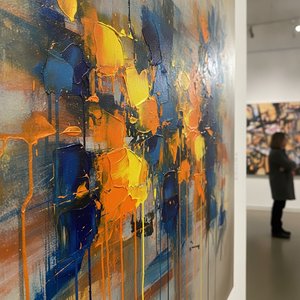
Beyond the Lines: Mastering the High-Impact World of Contemporary Abstraction
Master the high-impact world of contemporary abstraction. Discover how bold colors, textures, and modern movements like Abstract Expressionism can transform your space with premium, high-energy art curated for the design-conscious professional.


