In echtem Maßstab anzeigen
 Versenden als Grußkarte
 Teilen
 Details anzeigen
 Leitfaden

 Herunterladen
 Ähnliche Objekte
 Röntgenaufnahme
 Diashow
 Besucherstatistiken
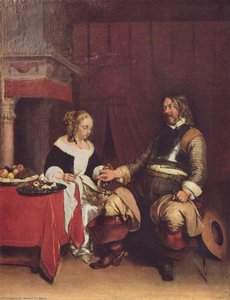
The Music Lesson
 Acrylic On Canvas
- WallArt
- Baroque
 69.0 x 58.0 cm
 Pushkin-Museum
 Mehr anzeigen
Handgefertigte Ölreproduktion
Handgemaltes Ölgemälde auf Leinwand in Ihrer Wunschgröße und mit Rahmen, auf Bestellung von unseren Künstlern angefertigt. ( Zum Druck wechseln Zum digitalen Bild wechseln)




P118B $10

P118H $10

P118W $10

P438Z $10

P508JH $12

P508YH $12

P805H $10

P805Z $10

P919BZ $10

P919G $10

P919XJ $10

P959ZH $10

P968JZ $12

W106C $8

W218G $10

W218JH $8

W218Y $10

W307PJ $10

W316G $10

W316PJ $8

W316Y $10

W398PJ $8

W4111J $10

W500HY $15

W500JH $15

W692G $12

W849H $8

W940BG $15

W953PJ $8




Wählen Sie aus unseren vordefinierten Formaten, die den ursprünglichen Proportionen des Kunstwerks entsprechen.

Sie können Ihre eigenen Maße eingeben, um einen bestimmten Rahmen oder Platz auszufüllen. Wenn die gewählte Größe nicht den Proportionen des Originalbildes entspricht, werden wir das Kunstwerk entweder beschneiden oder das Gemälde durch zusätzliche, handgemalte Elemente erweitern. Ein digitales Mockup wird Ihnen zur Genehmigung zugesandt, bevor die Produktion beginnt.
Bitte beachten Sie, dass die Bildschirmvorschau nicht die tatsächliche Beschneidung oder Erweiterung widerspiegelt. Nur das Mockup zeigt die endgültige Komposition exakt an.
Obwohl Sondermaße verfügbar sind, empfehlen wir, eine Größe aus der vordefinierten Liste zu wählen, um die ursprünglichen Proportionen beizubehalten.
Nach der Bestellung wird das OriginalUniqueArt.com-Team dem Kunden Anweisungen per E-Mail zusenden und eine Mockup-Vorschau bereitstellen.
Weltweiter Versand () in nur 3 bis 4 Wochen statt der üblichen 5 Wochen. (20 September). Keine Kompromisse bei der Qualität.

Kostenloser weltweiter Expressversand

Hochwertige Leinenleinwand

Vollständiger Versicherungsschutz beim Versand

Zollgebühren-Rückerstattungsgarantie

Garantie für exakte Farbtreue

100-tägiges Rückgaberecht (nur bei Mängeln)

100% Geld-zurück-Garantie

Angebot für Mengenrabatt
 Die Glasoption ist nur für Größen unter 110 cm verfügbar.

The Music Lesson
Reproduktionsmedium
Format der Reproduktion
-


Gesamtpreis
$ 300
The Music Lesson: A Portrait of Intimacy and Artistic Mastery
Gerard ter Borch’s “The Music Lesson,” painted around 1670, is not merely a depiction of a musical scene; it's a profound exploration of human connection, quiet contemplation, and the subtle dance between instruction and absorption. This small-scale masterpiece, now residing within The Art Institute of Chicago, offers an intimate glimpse into a private moment, revealing layers of psychological depth rarely found in Dutch genre paintings of its era. Ter Borch’s genius lies not just in his technical skill—the meticulous rendering of fabrics, the delicate modeling of faces—but in his ability to capture the unspoken narratives that reside within seemingly simple scenes.
The painting centers on a young woman, poised at a table draped with a richly patterned rug, her attention entirely focused on the double-headed lute before her. Her posture suggests both eagerness and slight uncertainty as she receives instruction from a man standing behind her. He’s not aggressively teaching; rather, he seems to be subtly guiding, his hand lightly resting upon her shoulder – a gesture of gentle encouragement rather than forceful direction. The room itself is bathed in soft light filtering through a window, creating an atmosphere of warmth and domestic tranquility. Notice the details: the partially open window, hinting at the outside world, the tiled floor reflecting the light, and the carefully arranged objects—a jug of water, a small stool – all contributing to a sense of lived-in comfort.
A Window into 17th-Century Dutch Life
“The Music Lesson” is firmly rooted in the artistic conventions of the Dutch Golden Age. Ter Borch was a pioneer in capturing everyday life with remarkable realism and psychological acuity, moving beyond the grand historical narratives favored by many of his contemporaries. He specialized in scenes featuring members of the upper class—merchants, military officers, and women—engaged in quiet domestic activities. This focus on intimate portraits offered a refreshing contrast to the often-heroic depictions of Dutch history. The painting reflects the burgeoning interest in realism and humanism that characterized the period, as artists sought to portray the complexities of human experience with greater honesty and nuance.
The inclusion of musical instruments—the lute, a symbol of refinement and learning—underscores the importance of culture and education within Dutch society. Music was not simply entertainment; it was considered an essential part of a well-rounded upbringing, particularly for young women. The scene subtly suggests the role of music in shaping character and fostering social connections. Furthermore, the presence of another man in the background, partially obscured by the window curtain, hints at a potential romantic interest or a more complex relationship between the two figures – adding an element of intrigue to the otherwise serene composition.
Technique and Artistic Detail
Ter Borch’s technical mastery is immediately apparent. He employed a meticulous approach to rendering texture, evident in the intricate folds of the rug, the delicate sheen of the lute strings, and the subtle variations in the fabric of the woman's dress. His use of light and shadow creates a sense of depth and volume, drawing the viewer’s eye into the scene. The artist’s palette is restrained yet sophisticated, dominated by earthy tones—browns, ochres, and grays—that contribute to the painting’s overall atmosphere of quiet intimacy. Notably, Ter Borch was known for his use of *pointillé*, a technique involving numerous tiny dots to create texture and form – this is particularly evident in the rendering of the fabrics.
The artist's attention to detail extends beyond mere representation; he seems to be conveying an emotional atmosphere. The woman’s slightly furrowed brow, her focused gaze, and the man’s gentle gesture all suggest a moment of intense concentration and quiet understanding. It is this ability to capture subtle nuances of emotion that elevates “The Music Lesson” from a simple genre scene to a profound meditation on human connection.
Symbolism and Emotional Resonance
Beyond its immediate depiction, "The Music Lesson" resonates with deeper symbolic meanings. The act of teaching itself represents the transmission of knowledge, values, and traditions – a cornerstone of societal stability. The music serves as a metaphor for harmony and balance, while the quiet intimacy of the scene suggests a world beyond the public sphere. The painting’s enduring appeal lies in its ability to evoke feelings of nostalgia, curiosity, and a sense of shared humanity. It invites us to contemplate the beauty of simple moments and the power of human connection.
Reproductions of “The Music Lesson” offer a remarkable opportunity to bring this exquisite artwork into your home or office. Whether you are an art enthusiast, a collector seeking a unique addition to your collection, or simply someone who appreciates beautiful and evocative imagery, this painting is sure to captivate and inspire.
Biografie des Künstlers
Gerard ter Borch: Ein Pionier der niederländischen Genre Malerei
Gerard ter Borch, auch Gerard Terburg genannt, wurde am 16. Dezember 1617 in Zwolle geboren und starb am 8. Dezember 1681. Er war ein bedeutender niederländischer Barockmaler, der für seine Genre-Szenen bekannt ist, die das alltägliche Leben des 17. Jahrhunderts mit bemerkenswerter Detailtreue und Lichtbeherrschung darstellen.
Frühes Leben und künstlerische Entwicklung
Ter Borch stammte aus einer Künstlerfamilie; sein Vater, Gerard ter Borch der Ältere, war ebenfalls Maler und Dichter. Der junge Gerard erhielt eine ausgezeichnete Ausbildung von seinem Vater und zeigte schon früh Talent. Er reiste im Alter von 13 Jahren nach Amsterdam und später nach Haarlem, wo er ab 1634 bei Pieter de Molijn studierte. Seine Reisen führten ihn auch nach England, Deutschland, Frankreich, Spanien und Italien. Diese Erfahrungen erweiterten seinen künstlerischen Horizont und beeinflussten seinen einzigartigen Stil.
Wichtige Werke und Errungenschaften
- Der Briefschreiber: Ein Meisterwerk, das Ter Borchs Fähigkeit zeigt, Texturen und Licht einzufangen.
- Das elegante Gespräch: Eine von Johann Georg Wille gravierte Darstellung, die die subtile emotionale Tiefe des Künstlers verdeutlicht.
- Mann zu Pferd (1634): Ein frühes Werk, das Ter Borchs aufstrebendes Talent demonstriert.
- Adrians Pauws Ankunft in Münster (1646): Ein bedeutendes Werk, das die erzählerischen Fähigkeiten des Künstlers hervorhebt.
Ter Borch entwickelte einen unverwechselbaren Stil, der sich durch eine feine Beobachtungsgabe und eine meisterhafte Darstellung von Licht und Schatten auszeichnete. Seine Gemälde vermitteln oft eine Atmosphäre von Intimität und Ruhe.
Einfluss und Bedeutung
Gerard ter Borch hatte einen bedeutenden Einfluss auf nachfolgende niederländische Maler wie Gabriel Metsu, Gerrit Dou, Eglon van der Neer und Johannes Vermeer. Seine innovative Herangehensweise an die Genre Malerei trug dazu bei, das Genre zu definieren und beeinflusste Generationen von Künstlern. Er gilt als einer der wichtigsten Vertreter des niederländischen Goldenen Zeitalters.
Museen und Sammlungen
Werke von Gerard ter Borch sind in renommierten Museen weltweit zu finden:
- Das Ermitage (St. Petersburg): Besitzt eine der umfangreichsten Sammlungen mit sechs seiner Werke.
- Berliner Museum: Zeigt sechs Gemälde und unterstreicht Ter Borchs internationale Anerkennung.
- Getty Center (Los Angeles): Beherbergt drei seiner Gemälde in einer angesehenen Sammlung.
Gerard ter Borch hinterließ ein bleibendes Erbe als Pionier der niederländischen Genre Malerei, dessen Werke bis heute Kunstliebhaber und -historiker begeistern.

Gerard ter Borch
1617 - 1681 , Niederlande
Eckdaten zum Künstler
- Bemerkenswerte Werke:
- Das Mädchen im Bauernkostüm
- Der Briefschreiber
- Mann zu Pferd (1634)
- Geburtsdatum: Dezember 1617
- Geburtsort (Stadt, Land): Zwolle, Niederlande
- Künstler Oder Bewegungen, Die Von Diesem Künstler Beeinflusst Wurden:
- Gabriel Metsu
- Gerrit Dou
- Eglon van der Neer
- Johannes Vermeer
- Künstler, Die Diesen Künstler Beeinflussten:
- Pieter de Molijn
- Willem Cornelisz Duyster
- Künstlerische Bewegung/Stil: Genre Malerei
- Nationalität: Niederländisch
- Todatum: 8. Dezember 1681
- Vollständiger Name: Gerard ter Borch
Verwandte Artikel

Golden Age Reflections: Dutch Baroque Painting & Cultural Innovation
Explore the Dutch Golden Age of painting! Discover key artists like Vermeer & ter Borch, their innovative techniques, and the rich cultural context behind these Baroque masterpieces. Learn about collecting & appreciating this iconic art period.

Mastering Light & Shadow: A Journey Through the Dutch Golden Age's Luminous Legacy
Embark on a cultural journey through the Dutch Golden Age. Explore the masterful interplay of light and shadow in 17th-century masterpieces, from Rembrandt to Vermeer, and discover how this era of profound realism continues to inspire fine art collectors today.

Die 10 Meisterwerke des Goldenen Zeitalters der niederländischen Malerei |
Entdecken Sie die 10 Meisterwerke des Niederländischen Goldenen Zeitalters! Von Rembrandt bis Vermeer – erleben Sie Kunstgeschichte, Techniken & Emotionen. Hochwertige Gemäldereproduktionen für Ihr Zuhause auf .

Gerard ter Borch: Intimität und Licht in der niederländischen Malerei des Goldenen Zeitalters
Entdecken Sie das Werk von Gerard ter Borch – Meister der niederländischen Malerei des Goldenen Zeitalters! Erfahren Sie mehr über seinen einzigartigen Stil, intime Genreszenen und sein Vermächtnis. Kunstgeschichte pur.

Golden Light & Dutch Skies: The Timeless Magic of Dutch Golden Age Landscapes
Discover the breathtaking beauty of Dutch Golden Age landscapes. Explore the mastery of light, chiaroscuro, and 17th-century realism through an expert art history lens, celebrating the enduring legacy of the Dutch Masters for discerning collectors and art lovers.