Vorschau anzeigen
 Versenden
 Teilen
 Details anzeigen
 Leitfaden

 Herunterladen
 Ähnliche Objekte
 Röntgenaufnahme
 Diashow
 Fragen & Antworten
 Statistiken
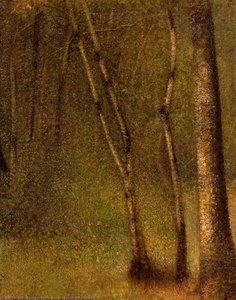
Der Marsch (Die Parade)


 Weiterlesen
Giclée / Kunstdruck
Giclée- oder Leinwanddruck in Museumsqualität mit schneller Produktion und flexiblen Veredelungsoptionen. ( Handgemalte Reproduktion bestellen Zum digitalen Bild wechseln)




P118B €10

P118H €10

P118W €10

P438Z €10

P508JH €12

P508YH €12

P805H €10

P805Z €10

P919BZ €10

P919G €10

P919XJ €10

P959ZH €10

P968JZ €12

W106C €8

W218G €10

W218JH €8

W218Y €10

W307PJ €10

W316G €10

W316PJ €8

W316Y €10

W398PJ €8

W4111J €10

W500HY €15

W500JH €15

W692G €12

W849H €8

W940BG €15

W953PJ €8




Wählen Sie aus unseren vordefinierten Formaten, die den ursprünglichen Proportionen des Kunstwerks entsprechen.

Geben Sie die benötigte Breite und Höhe an, damit der Druck perfekt in Ihren Rahmen oder an Ihre Wand passt. Ein Druck kann nur beschnitten, aber niemals größer als das Originalbild angefertigt werden; daher verliert ein Format mit anderen Proportionen einen Teil des Bildes. Wir senden Ihnen ein digitales Mockup zur Freigabe, bevor wir den Druck ausführen. Das auf dieser Seite gezeigte Bild zeigt nicht den tatsächlichen Beschnitt – dies ist nur im Mockup ersichtlich.
Weltweiter Versand () innerhalb von 2 Wochen statt der üblichen 4/5 Wochen. (9 November)

Kostenloser weltweiter Expressversand

Hochwertige Leinenleinwand

Umfassender Versicherungsschutz beim Versand

Zollgebühren-Rückerstattungsgarantie

Garantie für exakte Farbtreue

100 Tage Rückgaberecht (nur bei Mängeln)

100% Geld-zurück-Garantie

Mengenrabatt verfügbar
 Die Glasoption ist nur für Größen unter 110 cm verfügbar.

Der Marsch (Die Parade)
Giclée / Kunstdruck
Format der Reproduktion
-


Endpreis
€ 72
Georges Seurat’s “La Parade”: A Nocturne of Urban Spectacle
Georges Pierre Seurat, a pivotal figure in the transition from Impressionism to modern art, gifted us with an extraordinary vision – a world rendered not through fleeting impressions but through meticulously calculated observation and scientific precision. His masterpiece, "La Parade" (1887-88), housed within the Metropolitan Museum of Art in New York, offers a profound glimpse into his revolutionary technique: Pointillism. This painting isn’t merely a depiction of a Parisian circus scene; it's an exploration of light, color, and the very nature of perception – a testament to Seurat’s intellectual rigor and artistic genius.
The scene unfolds beneath a dusky sky, dominated by the artificial glow of gas lamps illuminating a modest circus parade. A line of musicians, rigidly posed on a raised platform, performs for a sparse audience gathered below. The composition is strikingly formal, almost geometric in its structure – a deliberate departure from the loose brushstrokes and atmospheric effects characteristic of Impressionism. Seurat eschewed the spontaneous capture of a moment in favor of constructing an image through the precise application of countless tiny dots of color, each meticulously chosen to create a specific hue and tone.
The Alchemy of Pointillism
Seurat’s innovation lay not just in the technique itself but in its underlying philosophy. He believed that color should be understood as an optical phenomenon – that the human eye blends colors together when viewed from a distance, creating a richer, more vibrant experience than could be achieved by mixing pigments on a palette. This theory informed his Pointillist approach, where individual dots of pure color are strategically placed to stimulate this blending process within the viewer’s retina. The result is an astonishing luminosity and depth – a shimmering effect that seems to defy the limitations of paint itself.
Notice how Seurat utilizes complementary colors—blues and reds, greens and oranges—to create visual contrast and heighten the sense of movement. The darker tones in the foreground are deliberately muted, drawing the eye towards the brighter, more energetic figures in the background. This careful orchestration of color is not simply decorative; it’s a deliberate attempt to mimic the way light interacts with surfaces and creates an illusion of three-dimensionality on the canvas.
A Study in Urban Alienation
"La Parade" isn't a celebration of entertainment, but rather a subtle commentary on modern life. The figures are largely static and detached, seemingly lost in their own thoughts or simply observing the spectacle with a certain distance. The scene evokes a sense of urban alienation – a feeling of being surrounded by people yet profoundly alone. This is further emphasized by the painting’s nocturnal setting, which transforms the familiar world of the circus into something slightly unsettling and dreamlike.
Furthermore, Seurat's choice to depict a working-class entertainment venue—a small traveling circus—adds another layer of complexity to the work. It suggests a critique of social hierarchies and a fascination with the everyday experiences of ordinary people. The parade itself becomes a metaphor for the fleeting nature of pleasure and the transient beauty of the urban landscape.
Bringing “La Parade” Home: A High-Quality Reproduction
At OriginalUniqueArt, we are proud to offer meticulously crafted hand-painted reproductions of Seurat’s "La Parade." Our skilled artists utilize traditional oil painting techniques, faithfully recreating the artist's nuanced color palette and intricate Pointillist detail. Each reproduction captures not only the visual beauty of the original but also its emotional depth and intellectual complexity.
Whether you are an art enthusiast, a collector seeking to expand your collection, or simply someone looking for a stunning piece of artwork to enhance your interior space, a hand-painted reproduction of "La Parade" is a remarkable investment. It’s a tangible connection to one of the most innovative and influential artists of the 19th century – a testament to Seurat's enduring legacy and his revolutionary approach to painting.
Fragen & Antworten
Wie harmonisch sind die Farben von "Der Marsch (Die Parade)" von Georges Pierre Seurat?
Die Farbharmonie von „Der Marsch (Die Parade)“ wird als Hohe farbliche Harmonie beschrieben.
Wie lässt sich die Stimmung von "Der Marsch (Die Parade)" von Georges Pierre Seurat beschreiben?
Die allgemeine Stimmung von "Der Marsch (Die Parade)" von Georges Pierre Seurat ist Nostalgisch angehaucht. Diese Stimmung beschreibt die Atmosphäre des Werkes.
Sind die Farben von "Der Marsch (Die Parade)" von Georges Pierre Seurat gesättigt oder gedämpft?
Die Farben von "Der Marsch (Die Parade)" von Georges Pierre Seurat weisen eine Dezent sanft Sättigung auf. Die Sättigung beschreibt, wie lebhaft oder gedämpft die Farben sind.
Künstlerbiografie
Georges Seurat: Ein Pionier des Neoimpressionismus
Frühes Leben und Ausbildung
- Geboren: 2. Dezember 1859 in Paris, Frankreich.
- Seurats Familie zog kurz nach seiner Geburt auf den Boulevard de Magenta um.
- Sein Vater, Antoine Chrysostome Seurat, war ein ehemaliger Jurist, der durch Immobilienhandel reich wurde.
- Er begann seine künstlerische Ausbildung an der École Municipale de Sculpture et Dessin, in der Nähe seines Zuhauses, unter dem Bildhauer Justin Lequien.
- Im Jahr 1878 meldete er sich an der renommierten École des Beaux-Arts an und studierte bei Henri Lehmann.
Künstlerische Entwicklung und Einflüsse
- Seurats künstlerliche Persönlichkeit war eine einzigartige Mischung aus Sensibilität und logischer Abstraktion. Er verband zarte Empfindsamkeit mit mathematischer Präzision.
- Einflüsse: Obwohl spezifische Einflüsse diskutiert werden, studierte er die Farbbtheorien von Wissenschaftlern wie Michel Eugène Chevreul und Ogden Rood.
- Er experimentierte zunächst mit traditionellen Zeichentechniken, bevor er seinen charakteristischen Stil entwickelte.
- Seine frühen Werke zeigen ein Interesse an akademischer Malerei, ging aber allmählich zu einem innovativeren Ansatz über.
Chromoluminarismus und Pointillismus
- Seurat entwickelte die Techniken des Chromoluminarismus (die Wissenschaft der Farbe) und des Pointillismus, indem er kleine, deutliche Punkte reiner Farbe auf eine Leinwand auftrug.
- Er verwendete Conté-Kreide für detaillierte Zeichnungen auf rauer Papiersubstanz als Teil seines Prozesses.
- Ziel des Pointillismus: Die Idee war, dass das Auge des Betrachters diese Farben optisch miteinander mischen und so einen lebendigen und leuchtenden Effekt erzeugt.
Wichtige Leistungen und bemerkenswerte Werke
- Ein Sonntagnachmittag auf der Île de la Grande Jatte (1884-1886): Sein berühmtestes Werk, das den Beginn des Neoimpressionismus markiert. Es veranschaulicht seine Pointillist-Technik und seinen methodischen Ansatz.
- Alfalfa, Saint-Denis (1886-1887): Demonstriert seine Anwendung der Farbbtheorie auf eine ländliche Landschaft.
- Landschaft bei Saint-Ouen (1882-1883): Ein frühes Beispiel, das seinen sich entwickelnden Stil und sein Interesse an Licht und Atmosphäre zeigt.
- Der Eiffelturm (1889): Eine Darstellung des ikonischen Pariser Wahrzeichens, dargestellt mit Pointillist-Techniken.
- Bäderer in Asnières (1884): Ein weiteres bedeutendes Werk, das Freizeit und modernen Lebensstil mit seinem unverwechselbaren Stil erforscht.
Historische Bedeutung und Vermächtnis
- Seureats Werk beeinflusste die Entwicklung der modernen Kunst nachhaltig, insbesondere durch seinen Schwerpunkt auf subjektivem Ausdruck und die Erforschung neuer Techniken.
- Legte den Grundstein: Er legte den Grundstein für Bewegungen wie Fauvismus, Kubismus und Expressionismus.
- Sein wissenschaftlicher Ansatz in der Malerei stellte traditionelle künstlerische Konventionen in Frage.
- Trotz seines kurzen Lebens (er starb im Alter von 31 Jahren) hinterließ Seurat einen unauslöschlichen Eindruck in der Kunstgeschichte und inspirierte Generationen von Künstlern mit seiner innovativen Vision.

Georges Pierre Seurat
1859 - 1891 , Frankreich
Kurzinfos
- Beeinflusste Künstler:
- Fauvismus
- Kubismus
- Bemerkenswerte Werke:
- Ein Sonntagnachmittag...
- Bäufer in Asnières
- Der Eiffelturm
- Einflüsse:
- Michel Eugène Chevreul
- Ogden Rood
- Geburtsdatum: 2. Dezember 1859
- Geburtsort: Paris, Frankreich
- Künstlerische Bewegung: Neo-Impressionismus
- Nationalität: Französisch
- Sterbedatum: 1891
- Vollständiger Name: Georges Pierre Seurat
Ähnliche Artikel

Die Präzision des Lichts: Seurats und Signacs wissenschaftliche Revolution der Farbwahrnehmung
Erfahren Sie alles über die wissenschaftliche Revolution von Seurat und Signac. Entdecken Sie die Magie des Pointillismus jetzt!

Beyond the Dots: How Pointillism Redefined Visual Impact and Modern Color Theory
Explore the revolutionary impact of Pointillism. Discover how Seurat and Signac used scientific color theory to redefine visual perception, paving the way for modern art, pixel-like precision, and high-impact contemporary design.

Georges Seurat: Die 25 Meisterwerke des Pointillismus für Ihr Zuhause | OriginalUniqueArt
Entdecken Sie die 25 ikonischsten Meisterwerke von Georges Seurat! Tauchen Sie ein in die Welt des Pointillismus, der Farbtheorie und des Impressionismus. Hochwertige Kunst reproduzieren für Ihr Zuhause – jetzt auf OriginalUniqueArt.com!

Farbe durch Licht: Die wissenschaftliche Revolution des Pointillismus
Erfahren Sie alles über Seurats wissenschaftliche Revolution des Pointillismus. Entdecken Sie die Magie der optischen Farbmischung jetzt.
Georges Seurat und der Pointillismus: Eine Revolution der Wahrnehmung
Entdecken Sie die faszinierende Welt des Pointillismus! Erfahren Sie alles über Georges Seurat, seine revolutionäre Maltechnik und die wissenschaftlichen Grundlagen dieser bedeutenden Kunstrichtung. Expertenwissen auf OriginalUniqueArt.