- Startseite

- Auf Leinwand drucken
- Georges Braque
- untitled (4262)

 Preview
 Gemälde kaufen Bild kaufen
 Versenden
 Teilen
 Details anzeigen
 Zu Favoriten hinzufügen

 Herunterladen
 Ähnliche Objekte
 Röntgenaufnahme
 Diashow anzeigen
untitled (4262)

 Weiterlesen
Giclée / Kunstdruck
Giclée- oder Leinwanddruck in Museumsqualität mit schneller Produktion und flexiblen Veredelungsoptionen.




P118B $10

P118H $10

P118W $10

P438Z $10

P508JH $12

P508YH $12

P805H $10

P805Z $10

P919BZ $10

P919G $10

P919XJ $10

P959ZH $10

P968JZ $12

W106C $8

W218G $10

W218JH $8

W218Y $10

W307PJ $10

W316G $10

W316PJ $8

W316Y $10

W398PJ $8

W4111J $10

W500HY $15

W500JH $15

W692G $12

W849H $8

W940BG $15

W953PJ $8




Wählen Sie aus unseren vordefinierten Größen, die den ursprünglichen Proportionen des Kunstwerks entsprechen.

Sie können Ihre eigenen Maße eingeben, um ein bestimmtes Format oder einen speziellen Platz einzupassen. Wenn das von Ihnen gewählte Format nicht den Proportionen des Originalbildes entspricht, werden wir das Kunstwerk entweder beschneiden oder das Bild mit einem gespiegelten oder einfarbigen Rand erweitern. Ein digitaler Entwurf wird Ihnen zur Genehmigung zugesandt, bevor die Produktion beginnt.
Bitte beachten Sie, dass die Vorschau auf dem Bildschirm nicht den tatsächlichen Zuschnitt oder die Erweiterung widerspiegelt. Nur der Entwurf zeigt die endgültige Komposition präzise an.
Obwohl Sondermaße verfügbar sind, empfehlen wir die Auswahl eines Maßes aus der vordefinierten Liste, um die ursprünglichen Proportionen zu bewahren.
Weltweiter Versand () innerhalb von 2 Wochen statt der üblichen 4/5 Wochen. (27 Juli)

Kostenloser weltweiter Expressversand

Hochwertige Leinenleinwand

Umfassender Versicherungsschutz beim Versand

Zollsteuer-Rückerstattungsgarantie

Garantie für echte Farbtreue

60-Tage-Rückgaberecht (nur bei Mängeln)

100% Geld-zurück-Garantie

Mengenrabatt verfügbar
 Die Glasoption ist nur in Größen unter 110 cm verfügbar.

untitled (4262)
Giclée / Kunstdruck
Größe der Reproduktion
-


Endpreis aller Optionen
-
Beschreibung des Sammlerstücks
The Genesis of Fragmentation: An Exploration of Cubism
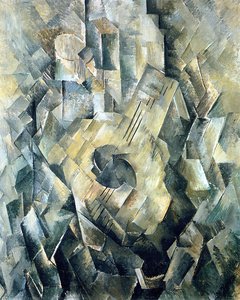
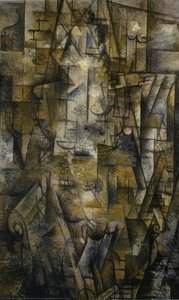
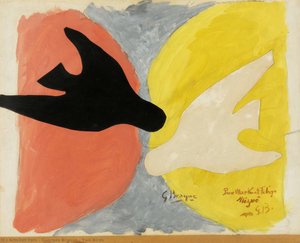
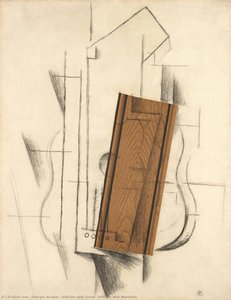
Georges Braque's "Untitled (4262)," a monochrome study rendered in the heart of the early 20th century, isn’t merely a depiction of still life; it’s a profound meditation on perception and representation. Born in Argenteuil in 1882, Braque’s artistic journey was inextricably linked to the burgeoning currents of modernism, particularly the revolutionary ideas taking shape alongside his close collaborator, Pablo Picasso. This particular work, created around 1962 (though its exact dating remains elusive), embodies the culmination of their shared exploration into Cubism – a movement that dared to dismantle traditional notions of space and form, inviting viewers to actively participate in reconstructing the image within their own minds.
The painting’s genesis lies within the broader context of early Cubism. Following the influence of Paul Cézanne's emphasis on geometric forms and multiple viewpoints, Braque and Picasso began to dissect objects into their constituent parts, reassembling them in a fractured, multi-faceted manner. “Untitled (4262)” exemplifies this approach with remarkable clarity. The central subject – a shark rendered in angular planes – isn’t presented as a singular, unified entity but rather as a collection of fragmented geometric shapes, each imbued with tonal variations that suggest depth and volume. This deliberate distortion challenges our conventional understanding of the fish, transforming it into an abstract emblem of power and mystery.
A Symphony of Grays: Color, Line, and Texture
The painting’s remarkable strength resides in its masterful manipulation of a restricted palette – primarily grayscale tones ranging from stark black to subtle shades of gray. This monochromatic approach isn't a limitation but rather a strategic tool, allowing Braque to focus entirely on the interplay of line, shape, and texture. Sharp, angular lines define the edges of each fragmented form, creating a sense of dynamic tension and visual complexity. The absence of vibrant color forces the viewer’s eye to navigate the intricate network of shapes and planes, fostering an intimate engagement with the artwork.
Furthermore, Braque skillfully employs subtle tonal shifts to suggest depth and volume. Areas of darker gray recede into the background, while lighter shades advance towards the viewer, creating a convincing illusion of spatial recession despite the abandonment of traditional perspective. The texture is deliberately understated – a smooth surface punctuated by carefully rendered shading—evoking a sense of quiet contemplation rather than overt visual drama. The overall effect is one of controlled elegance and intellectual rigor.
Symbolism and Emotional Resonance
The choice of the shark as the central motif is laden with symbolic weight. Often associated with danger, primal instinct, and the unknown depths of the ocean, the shark embodies a potent blend of power and vulnerability. Within the context of Braque’s Cubist exploration, it becomes an emblem of fragmented identity – a creature simultaneously recognizable and utterly transformed through the artist's deconstructive process.
The painting’s somber mood—a result of the monochromatic palette and the fractured composition—evokes a sense of quiet contemplation. It invites viewers to consider not just what they are seeing, but also *how* it is being seen. “Untitled (4262)” isn't simply a representation of objects; it’s an invitation to engage in a dialogue with the artwork itself, questioning our assumptions about reality and perception.
A Legacy of Innovation
“Untitled (4262)” stands as a testament to Georges Braque’s pivotal role in shaping the course of modern art. His collaboration with Picasso fundamentally altered the landscape of painting, paving the way for subsequent movements such as Futurism and Constructivism. This work exemplifies his commitment to exploring new ways of representing reality, challenging established conventions, and pushing the boundaries of artistic expression. Reproductions of this piece offer a captivating glimpse into the mind of a true innovator – a master of fragmentation who ultimately revealed the beauty within its chaos.
Biografie des Künstlers
**frühes Leben und Ausbildung**
Georges Braque, ein prominenter französischer Maler, Kollagist, Bleistrichzeichner, Grafiker und Bildhauer, wurde am 13. Mai 1882 in Argenteuil, Val-d'oise, geboren. Er wuchs in Le Havre auf und erhielt zunächst eine Ausbildung als Hausmaler und Dekorateur wie sein Vater und Großvater. Braques künstlerische Neigungen führten ihn jedoch dazu, von 1897 bis 1899 an der École des Beaux-Arts in Le Havre Malerei zu studieren.**Künstlerische Entwicklung und Fauvisme**
Im Jahr 1902, nachdem er seine Lehre bei einem Dekorateur in Paris abgeschlossen hatte, besuchte Braque bis 1904 die Académie Humbert. Dieser Zeitraum markierte seine Einführung ins Fauvismus, einen Stil, der durch lebendige Farben und emotionale Reaktionen gekennzeichnet ist. Beeinflusst von den Werken von Henri Matisse und André Derain, übernahm Braque einen fauvistischen Ansatz, wie in seinem Gemälde The Patience (Fauvismus, Öl auf Leinwand).**Beitrag zum Kubismus**
Braques Zusammenarbeit mit Pablo Picasso von 1908 bis 1912 führte zur Entwicklung des Kubismus. Ihre analytischen kubistischen Werke, wie z.B. Georges Braque: The Patience und Pablo Picasso: Clarinet(analytischer Kubismus, Öl auf Leinwand), gelten heute als Meilensteine der Kunstgeschichte.**Erbe und bemerkenswerte Werke**
* Houses at L'Estaques: Ein Zeugnis für Braques innovatives Einsatz von Geometrie und simultaner Perspektive. * The Patience(Fauvismus, Öl auf Leinwand): Demonstriert Braques fauvistischen Stil. * Clarinet(analytischer Kubismus, Öl auf Leinwand): Eine kollaborative kubistische Arbeit mit Picasso.**Museen und Sammlungen**
* Musée d'Orsay: Bietet eine umfangreiche Sammlung impressionistischer und postimpressionistischer Kunst, darunter Werke von Braque. * Musée de l'Orangerie: Zeigt eine breite Palette von Kunstwerken, darunter Werke von Braque und anderen bedeutenden Künstlern.- Erfahren Sie mehr über Georges Braques Leben und Werk auf OriginalUniqueArt.com
- Entdecken Sie die Sammlung des Musée d'Orsay, die Werke von Braque und anderen Künstlern umfasst, unter Musée d'Orsay - Wikipedia
- Erfahren Sie mehr über den Fauvismus und seinen Einfluss auf die Entwicklung des Kubismus mit Fauvismus Kunstbewegung auf OriginalUniqueArt.com
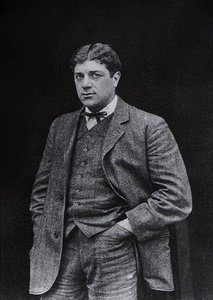
Georges Braque
1882 - 1963 , Frankreich
Kurzinfos
- Beeinflusste Künstler: ['Pablo Picasso']
- Bemerkenswerte Werke:
- Häuser in L'Estaque
- Die Geduld (Fauvismus)
- Stillleben mit Pfeife
- Mandola
- Einflussreiche Künstler:
- Henri Matisse
- André Derain
- Paul Cézanne
- Geburtsdatum: 13. Mai 1882
- Geburtsort: Argenteuil, Frankreich
- Künstlerischer Stil: Kubismus, Fauvismus
- Nationalität: Französisch
- Sterbedatum: 1963
- Vollständiger Name: Georges Braque
Ähnliche Artikel
Deconstructing Reality: A Comprehensive Exploration of Cubist Still Life
Explore the revolutionary world of Cubist Still Life with OriginalUniqueArt. Discover Picasso & Braque's groundbreaking techniques, its philosophical roots, and lasting impact on modern art. Expert insights for collectors.
Bernard Cathelin: A Poetic Realist's Exploration of Still Life and the French Landscape
Explore the captivating world of Bernard Cathelin, a master of French Poetic Realism. Discover his stunning still lifes & landscapes, and learn about his legacy with OriginalUniqueArt.

The Bountiful Still Life: Symbolism & Artistic Representation of Fruit Across Art History
Explore the rich history of still life painting & the symbolism of fruit across art movements. Discover masterpieces from Caravaggio to Cézanne with OriginalUniqueArt – expert guidance & museum-quality reproductions.
Deconstructing Reality: Analytical Cubism's Formative Years & Lasting Influence
Explore the revolutionary world of Analytical Cubism with OriginalUniqueArt. Discover Picasso & Braque's groundbreaking techniques, its philosophical roots, and lasting impact on modern art. Expert insights for collectors.
The Enduring Appeal of Still Life: A Historical & Contemporary Exploration
Explore the rich history & symbolism of still life painting with OriginalUniqueArt. Discover masterpieces from the Dutch Golden Age, learn about vanitas art, and find expert guidance for collecting timeless artworks.