- Startseite

- Digitales Bild
- Georges Braque
- The Studio (VIII)
 In echtem Maßstab anzeigen
 Versenden
 Teilen
 Details anzeigen

 Herunterladen
 Ähnliche Objekte
 Röntgenaufnahme
 Diashow starten
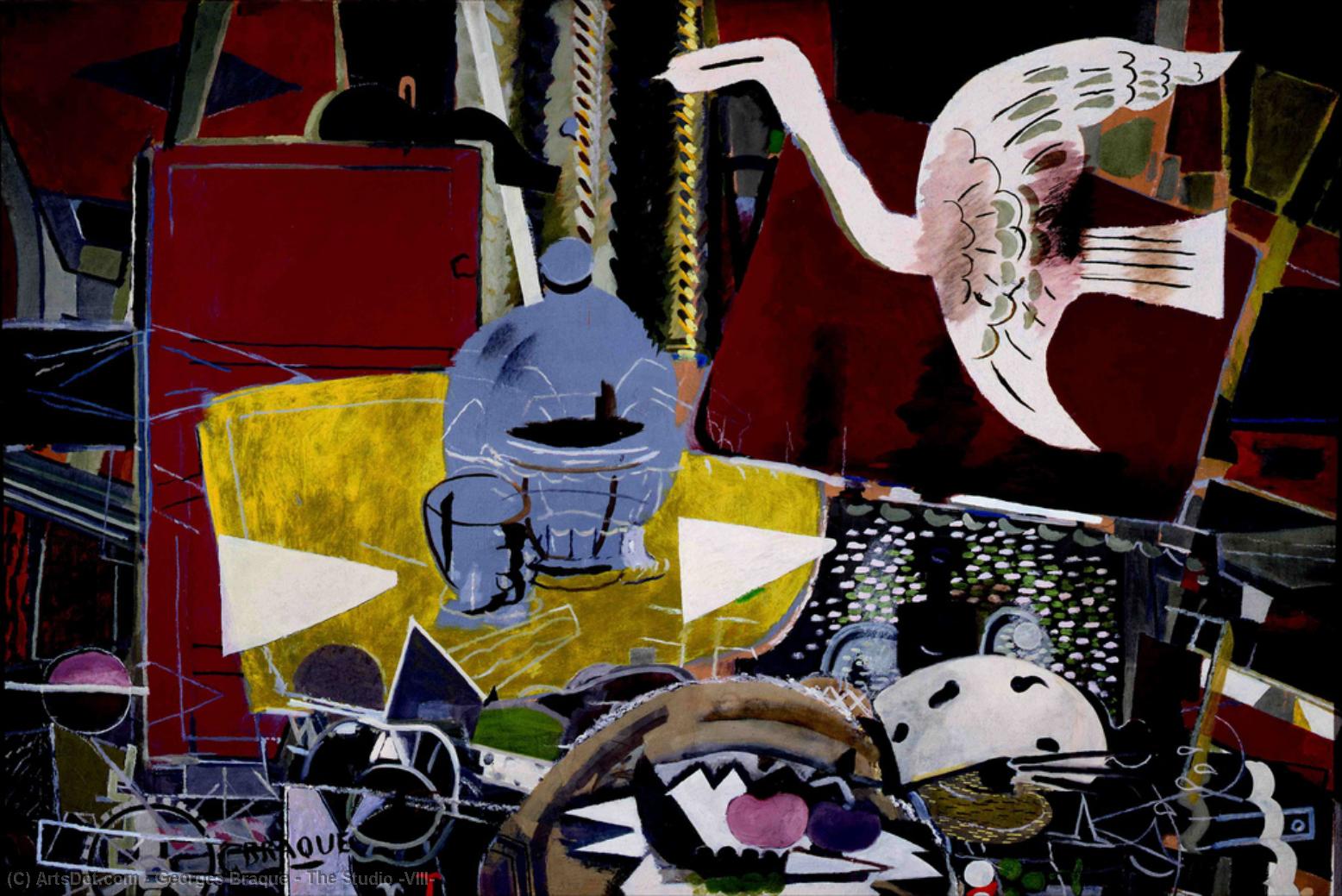
The Studio (VIII)
 Acrylic
- WallArt
- Cubist Still Life
 1954
1954 132.0 x 196.0 cm
 Mehr anzeigen
Erwerben Sie ein hochauflösendes, optimiertes digitales Bild, das der Online-Vorschau weit überlegen ist.
Jede Datei wird von unseren hauseigenen Spezialisten mit modernsten Werkzeugen und fachmännischer manueller Retusche sorgfältig vorbereitet. Wir stellen sicher, dass jedes Bild eine außergewöhnliche Klarheit, präzise Farbgenauigkeit und feinste Details aufweist.
Die endgültige Datei wird innerhalb von 72 Stunden per E-Mail zugestellt und ist für den sofortigen Einsatz in professionellen, redaktionellen und Druckumgebungen optimiert. Es handelt sich um dieselbe Qualität, der führende Designstudios, Verlage und Galerien vertrauen.
Digitales Bild
Laden Sie eine hochauflösende Datei für die persönliche Präsentation, den Druck und kreative Projekte herunter. ( Zum Druck bestellen Zur handgemalten Reproduktion wechseln)
In jeder Bestellung digitaler Bilder enthalten
Professionelle digitale Bereitstellung, garantiert
Wenn Sie sich für OriginalUniqueArt.com entscheiden, erhalten Sie nicht nur ein Bild – Sie erhalten ein professionell aufbereitetes digitales Kunstwerk, das mit höchster Präzision erstellt und durch eine Zufriedenheitsgarantie abgesichert wird. Hier ist alles, was automatisch mit Ihrer Bestellung geliefert wird:

Schnelle E-Mail-Zustellung
Ihre hochauflösende digitale Bilddatei wird Ihnen innerhalb von 72 Stunden nach der Bestellung per E-Mail zugestellt – bereit zur sofortigen Verwendung.

KI-optimierte digitale Datei
Ihre Kunstwerke werden professionell mithilfe fortschrittlicher KI-Tools und manueller Bearbeitung optimiert, um maximale Detailtreue, Klarheit und Farbgenauigkeit zu gewährleisten.

Kostenlose lebenslange Neulieferung
Datei versehentlich gelöscht oder verloren? Keine Sorge – wir senden sie Ihnen jederzeit kostenlos erneut zu.

Keine Einfuhrgebühren – jemals
Genießen Sie Ihr Kunstwerk sofort ohne Zollgebühren, Einfuhrabgaben oder Versandkosten – digitale Downloads sind immer steuerfrei.

Garantierte Farbtreue
Wir garantieren, dass Ihr digitales Bild mithilfe professioneller Werkzeuge und Farbmanagement die Originalfarben so präzise wie möglich wiedergibt.

60-Tage-Zufriedenheitsgarantie
Sollten Sie mit Ihrem digitalen Bild nicht zufrieden sein, werden wir es überarbeiten oder Ihnen innerhalb von 60 Tagen 100% erstatten – ohne Wenn und Aber.

100% Geld-zurück-Garantie
Nicht zufrieden? Erhalten Sie innerhalb von 60 Tagen nach Erhalt Ihrer digitalen Datei eine vollständige Rückerstattung – ohne Angabe von Gründen.

Mengenrabatte
3 Bilder kaufen, 10% sparen – 5 Bilder kaufen, 15% sparen – Ab 10 Bildern 20% sparen. Ideal für kreative Projekte, Galerien und Agenturen.
Beschreibung des Sammlerstücks
Georges Braque’s “The Studio” (VIII): A Symphony of Color and Geometric Precision
“The Studio (VIII)” by Georges Braque, painted in 1954, stands as a testament to the enduring legacy of Cubism and its subtle transformation into Fauvist tendencies. More than just a depiction of an artist’s workspace—a familiar motif in modern art—this canvas embodies a profound exploration of form, perception, and the interplay between observation and imagination. Captured with meticulous detail by WikiArt.com, this artwork invites viewers to delve deeper into Braque's artistic vision and appreciate its multifaceted significance.A Bold Embrace of Fauvist Color Palette
While firmly rooted in Cubist principles—specifically the fragmentation of objects into geometric planes—the painting exhibits a characteristic vibrancy that pushes beyond the austere aesthetic often associated with Cubism’s early years. The dominant hues – shades of ochre, crimson, and turquoise – aren't merely decorative; they are deliberately chosen to convey emotion and heighten visual impact. This chromatic boldness aligns Braque squarely within the Fauvist movement, spearheaded by Matisse and Derain, where artists prioritized expressive color over realistic representation. As WikiArt notes, “‘The Studio (VIII)’ was created in 1954 by Georges Braque in Cubism style. Find more prominent pieces of still life at Wikiart.org – best visual art database.” The artist’s masterful manipulation of pigment creates a luminous surface that pulsates with energy, mirroring the dynamism inherent in artistic creation itself.Deconstructing Space and Form: Cubist Foundations
At its core, “The Studio” retains the foundational tenets of Cubism, pioneered collaboratively by Braque and Pablo Picasso. Like many Cubist compositions, it abandons traditional perspective, presenting multiple viewpoints simultaneously to capture the complexity of visual experience. The bird—a recurring motif in Braque’s oeuvre—flies diagonally across the canvas, disrupting any sense of static spatial arrangement. Its fragmented form echoes the fractured planes characteristic of Cubism, forcing the viewer to actively reconstruct the image mentally. This technique isn't merely stylistic; it reflects Braque’s intellectual preoccupation with challenging conventional notions of representation and exploring alternative ways of perceiving reality.Symbolic Resonance: The Artist's Domain
The inclusion of various objects—a car, a chair, bottles—within the studio setting contributes to the painting’s symbolic richness. These items aren’t presented as mere props but rather serve as conduits for conveying ideas about creativity, contemplation, and the artist’s relationship with his environment. The bird itself can be interpreted as representing aspiration, freedom, or perhaps even inspiration – concepts central to Braque's artistic practice. As highlighted in “Georges Braque,” “Discover Georges Braque (1882-1963): Cubism pioneer & Fauvism master. Explore his innovative art, from ‘Houses at L’Estaque’ to stunning collages.” The careful arrangement of these elements underscores Braque's desire to capture not just what he sees but also what he feels—a sentiment powerfully conveyed through the painting’s expressive color palette and geometric structure.Emotional Impact: A Moment Frozen in Time
Ultimately, “The Studio (VIII)” transcends its formal qualities to evoke a palpable sense of atmosphere. The subdued lighting casts shadows that accentuate the contours of the objects and create an illusion of depth—a subtle nod to Impressionist techniques despite Braque’s adherence to Cubist principles. This juxtaposition speaks to the artist's ability to synthesize disparate influences into a cohesive artistic statement. “Georges Braque: Pioneering Cubism & the Evolution of Modern Form” elaborates on this point, stating "Explore the revolutionary art of Georges Braque, a pioneer of Cubism alongside Picasso. Discover his artistic evolution, key works, and lasting impact on modern art. A guide for discerning collectors.” The painting’s contemplative mood invites viewers to contemplate the process of artistic creation and appreciate the beauty found within simplicity—a timeless message resonating across generations.Künstlerbiografie
**frühes Leben und Ausbildung**
Georges Braque, ein prominenter französischer Maler, Kollagist, Bleistrichzeichner, Grafiker und Bildhauer, wurde am 13. Mai 1882 in Argenteuil, Val-d'oise, geboren. Er wuchs in Le Havre auf und erhielt zunächst eine Ausbildung als Hausmaler und Dekorateur wie sein Vater und Großvater. Braques künstlerische Neigungen führten ihn jedoch dazu, von 1897 bis 1899 an der École des Beaux-Arts in Le Havre Malerei zu studieren.**Künstlerische Entwicklung und Fauvisme**
Im Jahr 1902, nachdem er seine Lehre bei einem Dekorateur in Paris abgeschlossen hatte, besuchte Braque bis 1904 die Académie Humbert. Dieser Zeitraum markierte seine Einführung ins Fauvismus, einen Stil, der durch lebendige Farben und emotionale Reaktionen gekennzeichnet ist. Beeinflusst von den Werken von Henri Matisse und André Derain, übernahm Braque einen fauvistischen Ansatz, wie in seinem Gemälde The Patience (Fauvismus, Öl auf Leinwand).**Beitrag zum Kubismus**
Braques Zusammenarbeit mit Pablo Picasso von 1908 bis 1912 führte zur Entwicklung des Kubismus. Ihre analytischen kubistischen Werke, wie z.B. Georges Braque: The Patience und Pablo Picasso: Clarinet(analytischer Kubismus, Öl auf Leinwand), gelten heute als Meilensteine der Kunstgeschichte.**Erbe und bemerkenswerte Werke**
* Houses at L'Estaques: Ein Zeugnis für Braques innovatives Einsatz von Geometrie und simultaner Perspektive. * The Patience(Fauvismus, Öl auf Leinwand): Demonstriert Braques fauvistischen Stil. * Clarinet(analytischer Kubismus, Öl auf Leinwand): Eine kollaborative kubistische Arbeit mit Picasso.**Museen und Sammlungen**
* Musée d'Orsay: Bietet eine umfangreiche Sammlung impressionistischer und postimpressionistischer Kunst, darunter Werke von Braque. * Musée de l'Orangerie: Zeigt eine breite Palette von Kunstwerken, darunter Werke von Braque und anderen bedeutenden Künstlern.- Erfahren Sie mehr über Georges Braques Leben und Werk auf OriginalUniqueArt.com
- Entdecken Sie die Sammlung des Musée d'Orsay, die Werke von Braque und anderen Künstlern umfasst, unter Musée d'Orsay - Wikipedia
- Erfahren Sie mehr über den Fauvismus und seinen Einfluss auf die Entwicklung des Kubismus mit Fauvismus Kunstbewegung auf OriginalUniqueArt.com
Georges Braque
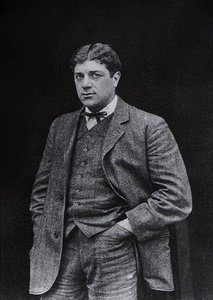
1882 - 1963 , Frankreich
Kurzprofil
- Beeinflusste Künstler: ['Pablo Picasso']
- Bemerkenswerte Werke:
- Häuser in L'Estaque
- Die Geduld (Fauvismus)
- Stillleben mit Pfeife
- Mandola
- Einflussreiche Künstler:
- Henri Matisse
- André Derain
- Paul Cézanne
- Geburtsdatum: 13. Mai 1882
- Geburtsort: Argenteuil, Frankreich
- Künstlerischer Stil: Kubismus, Fauvismus
- Nationalität: Französisch
- Sterbedatum: 1963
- Vollständiger Name: Georges Braque

