

 Vorschau anzeigen
 Versenden
 Teilen
 Details anzeigen
 Leitfaden

 Herunterladen
 Ähnliche Objekte
 Röntgenaufnahme
 Diashow
 Statistiken
Liebesbrief 3

 Weiterlesen
Die auf dieser Seite dargestellten Kunstwerke sind urheberrechtlich geschützt, was bedeutet, dass wir keine identische Reproduktion rechtmäßig erstellen oder verkaufen dürfen. Dieser Schutz wird durch internationale Abkommen wie die Berner Übereinkunft und durch nationale Gesetze, einschließlich derer, die von den US-Urheberrecht – Titel 17.
Als respektvolle und rechtlich einwandfreie Alternative bieten wir individuelle, handgemalte Kunstwerke an, die vom Original inspiriert sind. Unsere geschickten und professionellen Künstler studieren sorgfältig den Stil, die Stimmung und das künstlerische Wesen des Originals, um ein neues, einzigartiges Werk zu schaffen, das dasselbe Gefühl hervorruft – während es zugleich eine eigenständige Originalschöpfung bleibt.
Diese Methode entspricht vollumfänglich den Urheberrechtsbestimmungen, da sie keine Kopie oder Vervielfältigung des geschützten Kunstwerks darstellt. Stattdessen handelt es sich um eine kreative Neuinterpretation – ein neues Gemälde, das vom Original inspiriert, aber nicht identisch mit ihm ist.
Handgefertigte Ölreproduktion
Handgemaltes Ölgemälde auf Leinwand in Ihrer Wunschgröße und mit Rahmen, auf Bestellung von unseren Künstlern angefertigt. ( Zum Druck wechseln Zum digitalen Bild wechseln)




P118B €10

P118H €10

P118W €10

P438Z €10

P508JH €12

P508YH €12

P805H €10

P805Z €10

P919BZ €10

P919G €10

P919XJ €10

P959ZH €10

P968JZ €12

W106C €8

W218G €10

W218JH €8

W218Y €10

W307PJ €10

W316G €10

W316PJ €8

W316Y €10

W398PJ €8

W4111J €10

W500HY €15

W500JH €15

W692G €12

W849H €8

W940BG €15

W953PJ €8




Wählen Sie aus unseren vordefinierten Formaten, die den ursprünglichen Proportionen des Kunstwerks entsprechen.

Geben Sie die Breite und die Höhe an, die Sie für Ihren Rahmen oder Ihre Wand benötigen. Da dieses Werk handgemalt ist, kann der Künstler bei einer anderen Form etwas mehr um das Bild herum malen oder etwas abschneiden – Sie entscheiden. Wir senden Ihnen ein digitales Mockup zur Freigabe, bevor mit dem Malen begonnen wird. Das auf dieser Seite gezeigte Bild stellt nicht das tatsächliche Ergebnis dar – dies tut nur das Mockup.
Nach der Bestellung wird das OriginalUniqueArt.com-Team dem Kunden Anweisungen per E-Mail zusenden und eine Mockup-Vorschau bereitstellen.
Weltweiter Versand () in nur 3 bis 4 Wochen statt der üblichen 5 Wochen. (27 Oktober). Keine Kompromisse bei der Qualität.

Kostenloser weltweiter Expressversand

Hochwertige Leinenleinwand

Umfassender Versicherungsschutz beim Versand

Zollgebühren-Rückerstattungsgarantie

Garantie für exakte Farbtreue

100 Tage Rückgaberecht (nur bei Mängeln)

100% Geld-zurück-Garantie

Mengenrabatt verfügbar
 Die Glasoption ist nur für Größen unter 110 cm verfügbar.

Liebesbrief 3
Art der Reproduktion
Format der Reproduktion
-


Endpreis
€ 264
Georges Braque’s Intimate Floral Study: “Love Letter 3” – A Whisper of Impressionism
“Love Letter 3,” a captivating work by Georges Braque, offers a poignant glimpse into the artist's evolving artistic vision during a pivotal period in modern art. This seemingly simple depiction of two purple flowers and a small rock formation belies a complex layering of influences – from his early training in craftsmanship to his groundbreaking explorations within Cubism and beyond. The artwork’s power lies not in grand pronouncements, but rather in its quiet observation, its delicate handling of color and texture, and the subtle emotional resonance it evokes.
Born in Argenteuil in 1882, Braque's artistic journey was profoundly shaped by his family’s profession as house painters and decorators. This practical grounding instilled a deep understanding of materials – particularly pigments and their interactions – that would later inform his innovative approach to painting. Initially pursuing a similar path, he eventually found his true calling at the École des Beaux-Arts in Le Havre, where he honed his academic skills before relocating to Paris and immersing himself in the burgeoning artistic community. It was here, amidst the vibrant debates and experiments of the early 20th century, that Braque began to dismantle traditional notions of representation, laying the groundwork for his revolutionary collaboration with Pablo Picasso on Cubism.
A Botanical Reverie: Style, Technique, and Composition
“Love Letter 3” exemplifies a fascinating convergence of styles. While undeniably rooted in botanical illustration – evidenced by the meticulous rendering of the flower petals and the careful depiction of the rock’s texture – the work also possesses an unmistakable impressionistic quality. The loose brushstrokes, the subtle variations in color, and the emphasis on light and shadow create a sense of atmosphere and movement that transcends mere documentation. Braque masterfully employs watercolor techniques, layering washes to build depth and volume within the petals, mimicking the velvety sheen of silk or the delicate texture of velvet. The flattened perspective, typical of botanical studies aiming for accurate form rather than realistic spatial depth, further contributes to the artwork’s intimate and slightly melancholic mood.
- Color Palette: The muted palette – dominated by shades of purple, beige, and subtle greens – evokes a sense of quiet contemplation.
- Texture: Layered washes create a remarkable illusion of tactile depth, drawing the viewer into the delicate details of the flowers and rock.
- Composition: The tight cropping focuses attention entirely on the subjects, creating a feeling of intimacy and immediacy.
Symbolism and Emotional Resonance – A Silent Dialogue
While “Love Letter 3” avoids overt symbolism, it’s impossible to ignore the underlying emotional currents that flow through the work. The flowers themselves can be interpreted as symbols of beauty, fragility, and perhaps even transience—themes frequently explored by Braque in his later years. The small rock formation, a grounding element within the composition, suggests resilience and permanence amidst the ephemeral nature of the blossoms. The overall effect is one of quiet observation, inviting the viewer to pause and appreciate the subtle wonders of the natural world. It’s a piece that speaks not with words, but with a delicate, almost melancholic beauty.
Context within Braque's Oeuvre – A Bridge Between Styles
“Love Letter 3” represents a crucial transitional phase in Braque’s artistic development. Following his early explorations of Fauvism and Pointillism, he began to experiment with Cubist principles—analyzing objects from multiple viewpoints and reconstructing them on the canvas in fragmented forms. This work demonstrates a lingering affection for the meticulous observation characteristic of botanical illustration, yet it also hints at the more abstract concerns that would ultimately define his pivotal collaboration with Picasso. It’s a testament to Braque's ability to synthesize diverse influences into a uniquely personal and profoundly evocative style. Reproductions of “Love Letter 3” offer a beautiful opportunity to experience this remarkable artist’s vision firsthand, bringing a touch of understated elegance and intellectual depth to any interior space.
Fragen & Antworten
Unter welchen Pseudonymen oder Alternativnamen ist Georges Braque bekannt?
Weitere unter denen Georges Braque, Schöpfer von „Liebesbrief 3“, bekannt ist, umfassen Georges Braque (vollständiger Name).
Wie hoch ist die Leuchtkraft von "Liebesbrief 3" von Georges Braque?
"Liebesbrief 3" von Georges Braque weist eine Luminanz von Leuchtstark auf. Die Luminanz beschreibt, wie viel Licht die Farben scheinbar reflektieren.
Inwiefern steht das Sujet von „Liebesbrief 3“ in Beziehung zu den üblichen Themen von Georges Braque?
"Liebesbrief 3" stellt floral, purple, botanical, texture, watercolor, rock, braque, detail dar, während die dokumentierten Themen von Georges Braque deconstructed forms, early cubism, nature study, botanical detail, geometric abstraction, color field, braque’s exploration of form, minimalist floral composition sind. Ein Vergleich der beiden zeigt, wie das Werk mit den üblichen Sujets des Künstlers in Verbindung steht.
Künstlerbiografie
**frühes Leben und Ausbildung**
Georges Braque, ein prominenter französischer Maler, Kollagist, Bleistrichzeichner, Grafiker und Bildhauer, wurde am 13. Mai 1882 in Argenteuil, Val-d'oise, geboren. Er wuchs in Le Havre auf und erhielt zunächst eine Ausbildung als Hausmaler und Dekorateur wie sein Vater und Großvater. Braques künstlerische Neigungen führten ihn jedoch dazu, von 1897 bis 1899 an der École des Beaux-Arts in Le Havre Malerei zu studieren.**Künstlerische Entwicklung und Fauvisme**
Im Jahr 1902, nachdem er seine Lehre bei einem Dekorateur in Paris abgeschlossen hatte, besuchte Braque bis 1904 die Académie Humbert. Dieser Zeitraum markierte seine Einführung ins Fauvismus, einen Stil, der durch lebendige Farben und emotionale Reaktionen gekennzeichnet ist. Beeinflusst von den Werken von Henri Matisse und André Derain, übernahm Braque einen fauvistischen Ansatz, wie in seinem Gemälde The Patience (Fauvismus, Öl auf Leinwand).**Beitrag zum Kubismus**
Braques Zusammenarbeit mit Pablo Picasso von 1908 bis 1912 führte zur Entwicklung des Kubismus. Ihre analytischen kubistischen Werke, wie z.B. Georges Braque: The Patience und Pablo Picasso: Clarinet(analytischer Kubismus, Öl auf Leinwand), gelten heute als Meilensteine der Kunstgeschichte.**Erbe und bemerkenswerte Werke**
* Houses at L'Estaques: Ein Zeugnis für Braques innovatives Einsatz von Geometrie und simultaner Perspektive. * The Patience(Fauvismus, Öl auf Leinwand): Demonstriert Braques fauvistischen Stil. * Clarinet(analytischer Kubismus, Öl auf Leinwand): Eine kollaborative kubistische Arbeit mit Picasso.**Museen und Sammlungen**
* Musée d'Orsay: Bietet eine umfangreiche Sammlung impressionistischer und postimpressionistischer Kunst, darunter Werke von Braque. * Musée de l'Orangerie: Zeigt eine breite Palette von Kunstwerken, darunter Werke von Braque und anderen bedeutenden Künstlern.- Erfahren Sie mehr über Georges Braques Leben und Werk auf OriginalUniqueArt.com
- Entdecken Sie die Sammlung des Musée d'Orsay, die Werke von Braque und anderen Künstlern umfasst, unter Musée d'Orsay - Wikipedia
- Erfahren Sie mehr über den Fauvismus und seinen Einfluss auf die Entwicklung des Kubismus mit Fauvismus Kunstbewegung auf OriginalUniqueArt.com
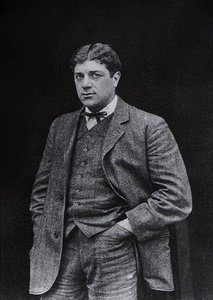
Georges Braque
1882 - 1963 , Frankreich
Kurzinfos
- Beeinflusste Künstler: ['Pablo Picasso']
- Bemerkenswerte Werke:
- Häuser in L'Estaque
- Die Geduld (Fauvismus)
- Stillleben mit Pfeife
- Mandola
- Einflussreiche Künstler:
- Henri Matisse
- André Derain
- Paul Cézanne
- Geburtsdatum: 13. Mai 1882
- Geburtsort: Argenteuil, Frankreich
- Künstlerischer Stil: Kubismus, Fauvismus
- Nationalität: Französisch
- Sterbedatum: 1963
- Vollständiger Name: Georges Braque
Ähnliche Artikel

Georges Braque: Die 25 Meisterwerke des Kubismus für Ihr Zuhause | OriginalUniqueArt
Entdecken Sie die 25 bedeutendsten Kunstwerke von Georges Braque – vom Kubismus bis zum Fauvismus. Erfahren Sie die Geschichten hinter den Meisterwerken und finden Sie hochwertige Reproduktionen für Ihr Zuhause auf OriginalUniqueArt.com.

Die 10 legendärsten Aquarellwerke der Kunstgeschichte – Meisterwerke für Ihr Zuhause
Entdecken Sie die 10 legendärsten Aquarellwerke der Kunstgeschichte! Von Turner bis Monet – erleben Sie die Geschichten, Techniken & Farben dieser Meisterwerke. Finden Sie hochwertige Kunstdrucke auf OriginalUniqueArt.com und gestalten Sie Ihr Zuhause mit zeitloser Eleganz.

Flüchtige Visionen: Die Geschichte und emotionale Resonanz der Aquarellmalerei
Entdecken Sie die faszinierende Welt der Aquarellmalerei! Von historischen Ursprüngen bis zu modernen Techniken – wir bieten Expertenwissen, Inspiration und Tipps für Anfänger & Fortgeschrittene.

Ephemeral Visions: Exploring the Artistic Legacy & Contemporary Practice of Watercolor Painting
Explore the captivating world of watercolor painting! Discover its rich history, essential techniques, influential artists & collecting tips. A comprehensive guide for art enthusiasts from OriginalUniqueArt.

Georges Seurat: Die 25 Meisterwerke des Pointillismus für Ihr Zuhause | OriginalUniqueArt
Entdecken Sie die 25 ikonischsten Meisterwerke von Georges Seurat! Tauchen Sie ein in die Welt des Pointillismus, der Farbtheorie und des Impressionismus. Hochwertige Kunst reproduzieren für Ihr Zuhause – jetzt auf OriginalUniqueArt.com!


