- Startseite

- Auf Leinwand drucken
- Georges Braque
- Le Sacre Coeur

 Gemälde kaufen Bild kaufen
 Versenden
 Teilen
 Details anzeigen
 Zu Favoriten hinzufügen

 Herunterladen
 Ähnliche Objekte
 Röntgenaufnahme
 Diashow anzeigen
Le Sacre Coeur
 Acrylic On Canvas
- WallArt
- Cubist Analytical
 1910
1910- Modern
 55.0 x 40.0 cm
 Weiterlesen
Giclée / Kunstdruck
Giclée- oder Leinwanddruck in Museumsqualität mit schneller Produktion und flexiblen Veredelungsoptionen.




P118B $10

P118H $10

P118W $10

P438Z $10

P508JH $12

P508YH $12

P805H $10

P805Z $10

P919BZ $10

P919G $10

P919XJ $10

P959ZH $10

P968JZ $12

W106C $8

W218G $10

W218JH $8

W218Y $10

W307PJ $10

W316G $10

W316PJ $8

W316Y $10

W398PJ $8

W4111J $10

W500HY $15

W500JH $15

W692G $12

W849H $8

W940BG $15

W953PJ $8




Wählen Sie aus unseren vordefinierten Größen, die den ursprünglichen Proportionen des Kunstwerks entsprechen.

Sie können Ihre eigenen Maße eingeben, um ein bestimmtes Format oder einen speziellen Platz einzupassen. Wenn das von Ihnen gewählte Format nicht den Proportionen des Originalbildes entspricht, werden wir das Kunstwerk entweder beschneiden oder das Bild mit einem gespiegelten oder einfarbigen Rand erweitern. Ein digitaler Entwurf wird Ihnen zur Genehmigung zugesandt, bevor die Produktion beginnt.
Bitte beachten Sie, dass die Vorschau auf dem Bildschirm nicht den tatsächlichen Zuschnitt oder die Erweiterung widerspiegelt. Nur der Entwurf zeigt die endgültige Komposition präzise an.
Obwohl Sondermaße verfügbar sind, empfehlen wir die Auswahl eines Maßes aus der vordefinierten Liste, um die ursprünglichen Proportionen zu bewahren.
Weltweiter Versand () innerhalb von 2 Wochen statt der üblichen 4/5 Wochen. (23 Juli)

Kostenloser weltweiter Expressversand

Hochwertige Leinenleinwand

Umfassender Versicherungsschutz beim Versand

Zollsteuer-Rückerstattungsgarantie

Garantie für echte Farbtreue

60-Tage-Rückgaberecht (nur bei Mängeln)

100% Geld-zurück-Garantie

Mengenrabatt verfügbar
 Die Glasoption ist nur in Größen unter 110 cm verfügbar.

Le Sacre Coeur
Giclée / Kunstdruck
Größe der Reproduktion
-


Endpreis aller Optionen
-
Beschreibung des Sammlerstücks
Georges Braque's 'Le Sacre Coeur': A Window into Modernity
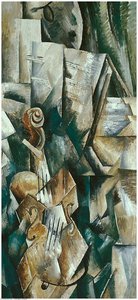
This meticulously crafted hand-painted reproduction of Georges Braque’s “Le Sacre Coeur” (1910) offers a profound glimpse into the nascent world of Cubism and its exploration of space, form, and human perception. Measuring 55 x 40 cm, this artwork transcends a simple depiction of a church scene; it's an invitation to contemplate the very nature of representation itself. Braque, born in Argenteuil in 1882, arrived at this pivotal moment in art history after years spent honing his skills – initially as a house painter and decorator, inheriting a deep understanding of materials and structure from his family – before embracing the revolutionary ideas brewing within Paris’s artistic circles.
- Subject Matter: The painting centers around a church dominated by a prominent cross, immediately grounding the viewer in a religious context. However, Braque deliberately disrupts this traditional representation through his innovative approach.
- Cubist Techniques: “Le Sacre Coeur” exemplifies Braque’s early explorations of Cubism, characterized by fragmented forms, multiple perspectives presented simultaneously, and an emphasis on geometric shapes. The figures are not rendered realistically but rather as abstracted planes, contributing to the overall sense of disorientation and challenge to conventional viewing habits.
- Color Palette: The subdued color palette – primarily browns, grays, and ochres – reinforces the painting’s solemn mood and contributes to its textural richness. These earthy tones were characteristic of Braque's early work, reflecting a move away from bright Impressionistic colors.
Historical Context and Artistic Influences
Created in 1910, “Le Sacre Coeur” emerged during a period of intense artistic experimentation following the rise of Paul Cézanne’s influence. Cézanne's focus on geometric forms and his exploration of multiple viewpoints paved the way for Braque’s revolutionary approach. Simultaneously, Braque was deeply engaged with the work of Pablo Picasso, with whom he developed many of the core principles of Cubism. This collaboration – often referred to as “Analytic Cubism” – involved systematically dissecting objects into their component parts and reassembling them on the canvas from multiple angles. The inclusion of birds perched upon the cross adds a layer of symbolic complexity, potentially referencing biblical narratives or representing spiritual aspiration—a common theme within religious art.
- Early Cubism: This work represents an early example of Analytical Cubism, a phase characterized by monochromatic palettes and a focus on deconstructing form.
- Cézanne’s Legacy: Braque's approach was profoundly shaped by Cézanne's insistence on reducing objects to their essential geometric forms.
Symbolic Layers and Emotional Impact
Beyond its formal innovations, “Le Sacre Coeur” evokes a powerful sense of mystery and contemplation. The fragmented figures and distorted perspective create an unsettling yet captivating atmosphere, inviting the viewer to actively participate in the construction of meaning. The presence of birds – often associated with spirituality and messengers – adds another layer of symbolism, suggesting themes of faith, transcendence, or perhaps even a critique of established religious dogma. The overall composition generates a feeling of looking through a window—a portal into an altered reality—a hallmark of Braque’s artistic vision. This reproduction allows you to experience this evocative artwork in your own space, bringing a touch of modern art history and intellectual depth to your interior design.
Perfect for Collection & Interior Design
This hand-painted reproduction offers a unique opportunity to own a piece of art history. Its dimensions (55 x 40 cm) make it suitable for a variety of settings, from smaller studies to larger living rooms or offices. The meticulous detail and high-quality materials ensure that this reproduction will be a treasured addition to any art collection or a striking focal point in your interior design scheme.
Biografie des Künstlers
**frühes Leben und Ausbildung**
Georges Braque, ein prominenter französischer Maler, Kollagist, Bleistrichzeichner, Grafiker und Bildhauer, wurde am 13. Mai 1882 in Argenteuil, Val-d'oise, geboren. Er wuchs in Le Havre auf und erhielt zunächst eine Ausbildung als Hausmaler und Dekorateur wie sein Vater und Großvater. Braques künstlerische Neigungen führten ihn jedoch dazu, von 1897 bis 1899 an der École des Beaux-Arts in Le Havre Malerei zu studieren.**Künstlerische Entwicklung und Fauvisme**
Im Jahr 1902, nachdem er seine Lehre bei einem Dekorateur in Paris abgeschlossen hatte, besuchte Braque bis 1904 die Académie Humbert. Dieser Zeitraum markierte seine Einführung ins Fauvismus, einen Stil, der durch lebendige Farben und emotionale Reaktionen gekennzeichnet ist. Beeinflusst von den Werken von Henri Matisse und André Derain, übernahm Braque einen fauvistischen Ansatz, wie in seinem Gemälde The Patience (Fauvismus, Öl auf Leinwand).**Beitrag zum Kubismus**
Braques Zusammenarbeit mit Pablo Picasso von 1908 bis 1912 führte zur Entwicklung des Kubismus. Ihre analytischen kubistischen Werke, wie z.B. Georges Braque: The Patience und Pablo Picasso: Clarinet(analytischer Kubismus, Öl auf Leinwand), gelten heute als Meilensteine der Kunstgeschichte.**Erbe und bemerkenswerte Werke**
* Houses at L'Estaques: Ein Zeugnis für Braques innovatives Einsatz von Geometrie und simultaner Perspektive. * The Patience(Fauvismus, Öl auf Leinwand): Demonstriert Braques fauvistischen Stil. * Clarinet(analytischer Kubismus, Öl auf Leinwand): Eine kollaborative kubistische Arbeit mit Picasso.**Museen und Sammlungen**
* Musée d'Orsay: Bietet eine umfangreiche Sammlung impressionistischer und postimpressionistischer Kunst, darunter Werke von Braque. * Musée de l'Orangerie: Zeigt eine breite Palette von Kunstwerken, darunter Werke von Braque und anderen bedeutenden Künstlern.- Erfahren Sie mehr über Georges Braques Leben und Werk auf OriginalUniqueArt.com
- Entdecken Sie die Sammlung des Musée d'Orsay, die Werke von Braque und anderen Künstlern umfasst, unter Musée d'Orsay - Wikipedia
- Erfahren Sie mehr über den Fauvismus und seinen Einfluss auf die Entwicklung des Kubismus mit Fauvismus Kunstbewegung auf OriginalUniqueArt.com
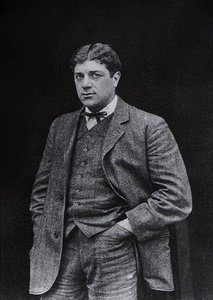
Georges Braque
1882 - 1963 , Frankreich
Kurzinfos
- Beeinflusste Künstler: ['Pablo Picasso']
- Bemerkenswerte Werke:
- Häuser in L'Estaque
- Die Geduld (Fauvismus)
- Stillleben mit Pfeife
- Mandola
- Einflussreiche Künstler:
- Henri Matisse
- André Derain
- Paul Cézanne
- Geburtsdatum: 13. Mai 1882
- Geburtsort: Argenteuil, Frankreich
- Künstlerischer Stil: Kubismus, Fauvismus
- Nationalität: Französisch
- Sterbedatum: 1963
- Vollständiger Name: Georges Braque
Ähnliche Artikel
Édouard Manet: Die 25 Meisterwerke des Impressionismus für Ihr Zuhause | OriginalUniqueArt
Entdecken Sie die 25 Meisterwerke von Édouard Manet! Tauchen Sie ein in Impressionismus, Pariser Leben & revolutionäre Kunst. Hochwertige Reproduktionen für Ihr Zuhause – jetzt auf OriginalUniqueArt.com!
Die Top 10 berühmter Gemälde für ein stilvolles Wohnzimmer |
Entdecken Sie die Top 10 berühmter Gemälde für Ihr Wohnzimmer! Von Van Gogh bis Monet – erfahren Sie die Geschichten hinter Meisterwerken & finden Sie Kunstreproduktionen in Museumsqualiät auf .
Kubismus: Die 10 Meisterwerke, die eine Revolution definierten | OriginalUniqueArt
Entdecken Sie die 10 Meisterwerke des Kubismus! Von Picasso bis Braque – erleben Sie die Revolution abstrakter Kunst. Kunstdrucke & Wandbilder für Ihr Zuhause auf OriginalUniqueArt.com.
Die 10 Meisterwerke des Kubismus: Revolutionäre Porträts für Ihr Zuhause | OriginalUniqueArt
Entdecken Sie die 10 revolutionärsten kubistischen Porträts von Picasso, Braque & Co.! Erfahren Sie die Geschichten hinter Meisterwerken der Moderne und lassen Sie sich für Ihre Wohnraumgestaltung inspirieren. Museum-Qualität bei OriginalUniqueArt.
Georges Braque: Pionier des Kubismus und die Evolution moderner Formensprache
Entdecken Sie Georges Braques revolutionären Einfluss auf den Kubismus und die moderne Kunstgeschichte. Expertenanalyse seiner Formensprache, Werke & Bedeutung. Jetzt lesen!