

 In echtem Maßstab anzeigen
 Versenden als Grußkarte
 Teilen
 Details anzeigen
 Leitfaden öffnen

 Herunterladen
 Ähnliche Objekte
 Röntgenaufnahme
 Diashow
 Besucherstatistiken
Fruchtwanentisch und Mandoline


 Mehr anzeigen
Erwerben Sie ein hochauflösendes, optimiertes digitales Bild, das der Online-Vorschau weit überlegen ist.
Jede Datei wird von unseren hauseigenen Spezialisten mit modernsten Werkzeugen und fachmännischer manueller Retusche sorgfältig vorbereitet. Wir stellen sicher, dass jedes Bild eine außergewöhnliche Klarheit, präzise Farbgenauigkeit und feinste Details aufweist.
Die endgültige Datei wird innerhalb von 72 Stunden per E-Mail zugestellt und ist für den sofortigen Einsatz in professionellen, redaktionellen und Druckumgebungen optimiert. Es handelt sich um dieselbe Qualität, der führende Designstudios, Verlage und Galerien vertrauen.
Digitales Bild
Laden Sie eine hochauflösende Datei für die persönliche Präsentation, den Druck und kreative Projekte herunter. ( Zum Druck wechseln Handgemalte Reproduktion kaufen)
In jeder Bestellung digitaler Bilder enthalten
Professionelle digitale Bereitstellung, garantiert
Wenn Sie sich für OriginalUniqueArt.com entscheiden, erhalten Sie nicht nur ein Bild – Sie erhalten ein professionell aufbereitetes digitales Kunstwerk, das mit höchster Präzision erstellt und durch eine Zufriedenheitsgarantie abgesichert wird. Hier ist alles, was automatisch mit Ihrer Bestellung geliefert wird:

Schnelle E-Mail-Zustellung
Ihre hochauflösende digitale Bilddatei wird Ihnen innerhalb von 72 Stunden nach der Bestellung per E-Mail zugestellt – bereit zur sofortigen Verwendung.

KI-optimierte digitale Datei
Ihre Kunstwerke werden professionell mithilfe fortschrittlicher KI-Tools und manueller Bearbeitung optimiert, um maximale Detailtreue, Klarheit und Farbgenauigkeit zu gewährleisten.

Kostenloser lebenslanger Neudruckservice
Datei versehentlich gelöscht oder verloren? Keine Sorge – wir senden sie Ihnen jederzeit kostenlos erneut zu.

Keine Einfuhrgebühren – jemals
Genießen Sie Ihr Kunstwerk sofort ohne Zollgebühren, Einfuhrabgaben oder Versandkosten – digitale Downloads sind immer steuerfrei.

Garantierte Farbtreue
Wir garantieren, dass Ihr digitales Bild mithilfe professioneller Werkzeuge und Farbmanagement die Originalfarben so präzise wie möglich wiedergibt.

100-Tage-Zufriedenheitsgarantie
Sollten Sie mit Ihrem digitalen Bild nicht zufrieden sein, werden wir es überarbeiten oder 100% innerhalb von 100 Tagen erstatten – ohne Wenn und Aber.

100% Geld-zurück-Garantie
Nicht zufrieden? Erhalten Sie innerhalb von 100 Tagen nach Erhalt Ihrer digitalen Datei eine vollständige Rückerstattung – ohne Wenn und Aber.

Rabatte bei Großbestellungen
3 Bilder kaufen, 10% sparen – 5 Bilder kaufen, 15% sparen – Ab 10 Bildern 20% sparen. Ideal für kreative Projekte, Galerien und Agenturen.
Georges Braques Still Life – Eine Symphonie der Fragmentierung
Georges Braque’s “Fruit Dish and Mandolin” (1927) isn't merely a depiction of everyday objects; it’s an invitation into the heart of Cubism, a radical reimagining of space and perception. This seemingly simple still life – a bowl brimming with apples, a pitcher, and a mandolin – unfolds as a complex geometric puzzle, demanding that we actively participate in its construction. The painting immediately captivates with its stark monochrome palette: shades of grey and black dominate, creating an atmosphere of quiet intensity and emphasizing the angularity of every form. It’s a world stripped bare, reduced to essential shapes and lines – a deliberate choice by Braque to liberate his subject from the constraints of naturalistic representation.
The genius of this work lies in its masterful manipulation of perspective. Rather than offering a single, fixed viewpoint, Braque presents multiple perspectives simultaneously, as if we’re peering at the scene through a fractured lens. The bowl itself is a marvel of fragmented planes, overlapping and intersecting to create a sense of volume despite the absence of color. Each apple, each curve of the pitcher, is broken down into its constituent geometric elements – triangles, rectangles, circles – all rendered with meticulous detail and a confident hand. This deliberate deconstruction isn’t arbitrary; it reflects Braque's core Cubist philosophy: to explore the underlying structure of objects rather than simply imitating their appearance.
Die Technik der Linie und des Schattens
Braque’s technique is characterized by an extraordinary control of line and shadow. The painting is built almost entirely from hatching – a series of closely spaced parallel lines – and cross-hatching, creating a rich tapestry of tonal values that suggests depth and texture without relying on traditional shading methods. This meticulous layering of lines not only simulates the play of light but also contributes to the overall sense of dynamism and movement within the composition. The artist’s hand is visible in every stroke, lending a palpable intimacy to the work.
Notably, Braque introduced sand into his paint during this period, particularly in the background, creating an intriguing textural effect that mimics the roughness of a wall or surface. This subtle detail adds another layer of complexity and reinforces the painting’s exploration of perception – suggesting that what we see is not simply a reflection of reality but rather a constructed interpretation.
Symbolik und Kontext
“Fruit Dish and Mandolin” resonates with symbolic weight, inviting contemplation beyond its purely formal qualities. The inclusion of fruit and musical instruments—a bowl overflowing with apples and a mandolin—evokes themes of abundance, domesticity, and the pleasures of everyday life. However, the fragmented composition subtly undermines these straightforward interpretations. The deconstructed forms suggest a questioning of traditional representations, hinting at a deeper commentary on the nature of perception itself.
Considering the historical context, this work emerged during a period of intense artistic experimentation and intellectual ferment in Paris. Braque was deeply involved with Pablo Picasso and Juan Gris in developing Cubism, a revolutionary movement that challenged established notions of perspective and representation. “Fruit Dish and Mandolin” stands as a pivotal example of this innovative approach, demonstrating the power of abstraction to convey complex ideas and emotions.
Ein Meisterwerk für Sammler und Liebhaber
“Fruit Dish and Mandolin” is more than just a painting; it’s a testament to Georges Braque's artistic vision and his profound impact on the course of modern art. Its geometric precision, masterful technique, and subtle symbolism continue to fascinate viewers today. A high-quality reproduction captures not only the visual beauty of this iconic work but also its underlying intellectual depth. Whether you’re an avid collector, a discerning interior designer seeking a statement piece, or simply an admirer of groundbreaking art, “Fruit Dish and Mandolin” offers a unique opportunity to engage with one of the 20th century's most influential masterpieces.
Fragen & Antworten
Ist "Fruchtwanentisch und Mandoline" von Georges Braque gemeinfrei?
"Fruchtwanentisch und Mandoline" von Georges Braque ist noch urheberrechtlich geschützt. Dieser Status bestimmt, wie das Bild des Werkes vervielfältigt werden darf.
Welche Gemeinsamkeiten weist "Fruchtwanentisch und Mandoline" mit dem restlichen Werk von Georges Braque auf?
"Fruchtwanentisch und Mandoline" teilt mit anderen Werken von Georges Braque den Cubist Still Life-Stil sowie die wiederkehrenden Themen: cubism, geometric abstraction, modernist experimentation, form, domesticity, still life”, “deconstructed reality, fragmentation”.
Welche Emotion vermittelt das Werk der Cubist Still Life „Fruchtwanentisch und Mandoline“?
"Fruchtwanentisch und Mandoline" vermittelt eine Reflektierend emotionale Stimmung innerhalb der Cubist Still Life-Strömung.
Künstlerbiografie
**frühes Leben und Ausbildung**
Georges Braque, ein prominenter französischer Maler, Kollagist, Bleistrichzeichner, Grafiker und Bildhauer, wurde am 13. Mai 1882 in Argenteuil, Val-d'oise, geboren. Er wuchs in Le Havre auf und erhielt zunächst eine Ausbildung als Hausmaler und Dekorateur wie sein Vater und Großvater. Braques künstlerische Neigungen führten ihn jedoch dazu, von 1897 bis 1899 an der École des Beaux-Arts in Le Havre Malerei zu studieren.**Künstlerische Entwicklung und Fauvisme**
Im Jahr 1902, nachdem er seine Lehre bei einem Dekorateur in Paris abgeschlossen hatte, besuchte Braque bis 1904 die Académie Humbert. Dieser Zeitraum markierte seine Einführung ins Fauvismus, einen Stil, der durch lebendige Farben und emotionale Reaktionen gekennzeichnet ist. Beeinflusst von den Werken von Henri Matisse und André Derain, übernahm Braque einen fauvistischen Ansatz, wie in seinem Gemälde The Patience (Fauvismus, Öl auf Leinwand).**Beitrag zum Kubismus**
Braques Zusammenarbeit mit Pablo Picasso von 1908 bis 1912 führte zur Entwicklung des Kubismus. Ihre analytischen kubistischen Werke, wie z.B. Georges Braque: The Patience und Pablo Picasso: Clarinet(analytischer Kubismus, Öl auf Leinwand), gelten heute als Meilensteine der Kunstgeschichte.**Erbe und bemerkenswerte Werke**
* Houses at L'Estaques: Ein Zeugnis für Braques innovatives Einsatz von Geometrie und simultaner Perspektive. * The Patience(Fauvismus, Öl auf Leinwand): Demonstriert Braques fauvistischen Stil. * Clarinet(analytischer Kubismus, Öl auf Leinwand): Eine kollaborative kubistische Arbeit mit Picasso.**Museen und Sammlungen**
* Musée d'Orsay: Bietet eine umfangreiche Sammlung impressionistischer und postimpressionistischer Kunst, darunter Werke von Braque. * Musée de l'Orangerie: Zeigt eine breite Palette von Kunstwerken, darunter Werke von Braque und anderen bedeutenden Künstlern.- Erfahren Sie mehr über Georges Braques Leben und Werk auf OriginalUniqueArt.com
- Entdecken Sie die Sammlung des Musée d'Orsay, die Werke von Braque und anderen Künstlern umfasst, unter Musée d'Orsay - Wikipedia
- Erfahren Sie mehr über den Fauvismus und seinen Einfluss auf die Entwicklung des Kubismus mit Fauvismus Kunstbewegung auf OriginalUniqueArt.com
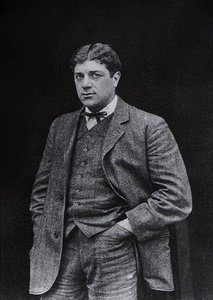
Georges Braque
1882 - 1963 , Frankreich
Kurzprofil
- Beeinflusste Künstler: ['Pablo Picasso']
- Bemerkenswerte Werke:
- Häuser in L'Estaque
- Die Geduld (Fauvismus)
- Stillleben mit Pfeife
- Mandola
- Einflussreiche Künstler:
- Henri Matisse
- André Derain
- Paul Cézanne
- Geburtsdatum: 13. Mai 1882
- Geburtsort: Argenteuil, Frankreich
- Künstlerischer Stil: Kubismus, Fauvismus
- Nationalität: Französisch
- Sterbedatum: 1963
- Vollständiger Name: Georges Braque