

 Vorschau anzeigen
 Versenden
 Teilen
 Details anzeigen

 Herunterladen
 Ähnliche Objekte
 Röntgenaufnahme
 Diashow
Bird On A Carmine

 Weiterlesen
Giclée / Kunstdruck
Giclée- oder Leinwanddruck in Museumsqualität mit schneller Produktion und flexiblen Veredelungsoptionen. ( Handgemalte Reproduktion bestellen Bild kaufen)




P118B $10

P118H $10

P118W $10

P438Z $10

P508JH $12

P508YH $12

P805H $10

P805Z $10

P919BZ $10

P919G $10

P919XJ $10

P959ZH $10

P968JZ $12

W106C $8

W218G $10

W218JH $8

W218Y $10

W307PJ $10

W316G $10

W316PJ $8

W316Y $10

W398PJ $8

W4111J $10

W500HY $15

W500JH $15

W692G $12

W849H $8

W940BG $15

W953PJ $8




Wählen Sie aus unseren vordefinierten Formaten, die den ursprünglichen Proportionen des Kunstwerks entsprechen.

Sie können Ihre eigenen Maße eingeben, um ein bestimmtes Format oder einen speziellen Platz einzupassen. Wenn das von Ihnen gewählte Format nicht den Proportionen des Originalbildes entspricht, werden wir das Kunstwerk entweder beschneiden oder das Bild mit einem gespiegelten oder einfarbigen Rand erweitern. Ein digitaler Entwurf wird Ihnen zur Genehmigung zugesandt, bevor die Produktion beginnt.
Bitte beachten Sie, dass die Vorschau auf dem Bildschirm nicht den tatsächlichen Zuschnitt oder die Erweiterung widerspiegelt. Nur der Entwurf zeigt die endgültige Komposition präzise an.
Obwohl Sondermaße verfügbar sind, empfehlen wir die Auswahl eines Maßes aus der vordefinierten Liste, um die ursprünglichen Proportionen zu bewahren.
Weltweiter Versand () innerhalb von 2 Wochen statt der üblichen 4/5 Wochen. (26 August)

Kostenloser weltweiter Expressversand

Hochwertige Leinenleinwand

Umfassender Versicherungsschutz beim Versand

Zollgebühren-Rückerstattungsgarantie

Garantie für exakte Farbtreue

60 Tage Rückgaberecht (nur bei Mängeln)

100% Geld-zurück-Garantie

Mengenrabatt verfügbar
 Die Glasoption ist nur für Größen unter 110 cm verfügbar.

Bird On A Carmine
Giclée / Kunstdruck
Format der Reproduktion
-


Gesamtpreis
$ 80
Sammlerstück-Beschreibung
Georges Braque’s “Bird on a Carmine”: A Fragmented Vision of Flight
Georges Braque's "Bird on a Carmine," a captivating example of his pivotal role in the development of Cubism, isn’t merely a depiction of a bird; it’s an exploration of perception and form rendered with remarkable intensity. Painted around 1912 – a period of intense experimentation within the burgeoning movement – the artwork presents a seemingly simple subject: a bird poised atop a vibrant red circle. However, beneath this initial impression lies a complex layering of geometric shapes, fractured planes, and subtly shifting perspectives that demand close observation. The painting’s power resides not in its realistic representation but in its ability to dismantle traditional notions of space and volume, offering instead a fragmented, multi-faceted view of the subject.
The technique employed by Braque is characteristic of Analytic Cubism, a phase deeply rooted in his collaboration with Pablo Picasso. He meticulously analyzed objects – in this case, the bird – breaking them down into their constituent geometric elements: cubes, cones, and cylinders. These fragments are then reassembled on the canvas not as unified forms, but as overlapping planes that create an illusion of depth and volume through a deliberate distortion of perspective. Notice how the bird’s wings, rendered with sharp angles and intersecting lines, seem to both extend outwards towards the viewer and simultaneously recede into the background – a masterful manipulation of spatial relationships.
The Carmine Circle: Symbolism and Color
The crimson circle itself is far from arbitrary. The color “carmine,” a deep, rich shade of red derived from cochineal dye, carries significant symbolic weight. Red has historically represented passion, energy, and even danger – qualities that resonate powerfully within the context of flight. The bird’s ascent, framed by this intense hue, suggests a yearning for freedom, a desire to break free from earthly constraints. Furthermore, the circle itself can be interpreted as an enclosure, a boundary that the bird is actively attempting to transcend. It's a visual metaphor for the struggle between confinement and liberation.
The stark black border surrounding the red circle further emphasizes this dynamic. The sharp delineation creates a sense of containment, highlighting the bird’s precarious position – balanced on the edge of its journey. This deliberate contrast between the vibrant color and the restrictive line amplifies the painting's emotional impact, conveying both excitement and uncertainty.
Historical Context: Braque and the Birth of Cubism
To fully appreciate “Bird on a Carmine,” it’s crucial to understand its place within the broader context of early 20th-century art. Following the influence of Paul Cézanne, whose emphasis on geometric forms and multiple viewpoints paved the way, Braque and Picasso embarked on a radical reimagining of pictorial representation. They rejected traditional techniques of perspective and illusionism, instead prioritizing the exploration of form and structure as ends in themselves. This period marked a decisive shift away from representational art towards abstraction – a move that profoundly impacted the course of modern art.
Braque’s contribution to this revolutionary movement was particularly significant. While Picasso often focused on dynamism and narrative, Braque tended toward a more contemplative approach, meticulously dissecting objects and reconstructing them in a way that emphasized their underlying geometric structure. His work during 1908-1912 is considered the cornerstone of Analytic Cubism, characterized by monochromatic palettes and intricate fragmentation.
A Legacy of Fragmentation: Reproduction and Interpretation
OriginalUniqueArt offers meticulously crafted hand-painted reproductions of “Bird on a Carmine,” allowing art lovers to experience Braque’s groundbreaking vision in stunning detail. Each reproduction is created using traditional oil painting techniques, faithfully capturing the nuances of color, texture, and form that define the original artwork. The result is a piece that not only celebrates Braque's artistic genius but also invites viewers to engage with the complexities of Cubism – to question their own perceptions of space, time, and representation.
Whether displayed in a contemporary interior or as a cherished addition to an art collection, “Bird on a Carmine” remains a powerful testament to the transformative potential of modern art. It’s a painting that continues to resonate with viewers today, prompting reflection on themes of freedom, confinement, and the ever-evolving nature of artistic expression.
Über den Künstler
**frühes Leben und Ausbildung**
Georges Braque, ein prominenter französischer Maler, Kollagist, Bleistrichzeichner, Grafiker und Bildhauer, wurde am 13. Mai 1882 in Argenteuil, Val-d'oise, geboren. Er wuchs in Le Havre auf und erhielt zunächst eine Ausbildung als Hausmaler und Dekorateur wie sein Vater und Großvater. Braques künstlerische Neigungen führten ihn jedoch dazu, von 1897 bis 1899 an der École des Beaux-Arts in Le Havre Malerei zu studieren.**Künstlerische Entwicklung und Fauvisme**
Im Jahr 1902, nachdem er seine Lehre bei einem Dekorateur in Paris abgeschlossen hatte, besuchte Braque bis 1904 die Académie Humbert. Dieser Zeitraum markierte seine Einführung ins Fauvismus, einen Stil, der durch lebendige Farben und emotionale Reaktionen gekennzeichnet ist. Beeinflusst von den Werken von Henri Matisse und André Derain, übernahm Braque einen fauvistischen Ansatz, wie in seinem Gemälde The Patience (Fauvismus, Öl auf Leinwand).**Beitrag zum Kubismus**
Braques Zusammenarbeit mit Pablo Picasso von 1908 bis 1912 führte zur Entwicklung des Kubismus. Ihre analytischen kubistischen Werke, wie z.B. Georges Braque: The Patience und Pablo Picasso: Clarinet(analytischer Kubismus, Öl auf Leinwand), gelten heute als Meilensteine der Kunstgeschichte.**Erbe und bemerkenswerte Werke**
* Houses at L'Estaques: Ein Zeugnis für Braques innovatives Einsatz von Geometrie und simultaner Perspektive. * The Patience(Fauvismus, Öl auf Leinwand): Demonstriert Braques fauvistischen Stil. * Clarinet(analytischer Kubismus, Öl auf Leinwand): Eine kollaborative kubistische Arbeit mit Picasso.**Museen und Sammlungen**
* Musée d'Orsay: Bietet eine umfangreiche Sammlung impressionistischer und postimpressionistischer Kunst, darunter Werke von Braque. * Musée de l'Orangerie: Zeigt eine breite Palette von Kunstwerken, darunter Werke von Braque und anderen bedeutenden Künstlern.- Erfahren Sie mehr über Georges Braques Leben und Werk auf OriginalUniqueArt.com
- Entdecken Sie die Sammlung des Musée d'Orsay, die Werke von Braque und anderen Künstlern umfasst, unter Musée d'Orsay - Wikipedia
- Erfahren Sie mehr über den Fauvismus und seinen Einfluss auf die Entwicklung des Kubismus mit Fauvismus Kunstbewegung auf OriginalUniqueArt.com
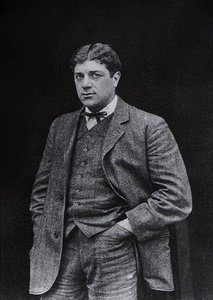
Georges Braque
1882 - 1963 , Frankreich
Kurzinfos
- Beeinflusste Künstler: ['Pablo Picasso']
- Bemerkenswerte Werke:
- Häuser in L'Estaque
- Die Geduld (Fauvismus)
- Stillleben mit Pfeife
- Mandola
- Einflussreiche Künstler:
- Henri Matisse
- André Derain
- Paul Cézanne
- Geburtsdatum: 13. Mai 1882
- Geburtsort: Argenteuil, Frankreich
- Künstlerischer Stil: Kubismus, Fauvismus
- Nationalität: Französisch
- Sterbedatum: 1963
- Vollständiger Name: Georges Braque
Ähnliche Artikel

Georges Braque: Die 25 Meisterwerke des Kubismus für Ihr Zuhause | OriginalUniqueArt
Entdecken Sie die 25 bedeutendsten Kunstwerke von Georges Braque – vom Kubismus bis zum Fauvismus. Erfahren Sie die Geschichten hinter den Meisterwerken und finden Sie hochwertige Reproduktionen für Ihr Zuhause auf OriginalUniqueArt.com.

Georges Seurat: Die 25 Meisterwerke des Pointillismus für Ihr Zuhause | OriginalUniqueArt
Entdecken Sie die 25 ikonischsten Meisterwerke von Georges Seurat! Tauchen Sie ein in die Welt des Pointillismus, der Farbtheorie und des Impressionismus. Hochwertige Kunst reproduzieren für Ihr Zuhause – jetzt auf OriginalUniqueArt.com!

Cubism Unveiled: How Picasso and Braque Redefined Modern Art through Geometric Revolution
Explore the revolutionary world of Cubism. Discover how Pablo Picasso and Georges Braque dismantled perspective to redefine modern art through geometric innovation and analytical mastery. An essential guide for art students, collectors, and history enthusiasts.
Georges Braque: Pionier des Kubismus und die Evolution moderner Formensprache
Entdecken Sie Georges Braques revolutionären Einfluss auf den Kubismus und die moderne Kunstgeschichte. Expertenanalyse seiner Formensprache, Werke & Bedeutung. Jetzt lesen!
Cubism Unveiled: How Picasso and Braque Redefined Reality Through Geometric Abstraction
Explore the revolutionary world of Cubism. Discover how masters Pablo Picasso and Georges Braque dismantled reality through geometric abstraction to redefine modern art history.



