In echtem Maßstab anzeigen
 Versenden als Grußkarte
 Teilen
 Details anzeigen
 Leitfaden öffnen

 Herunterladen
 Ähnliche Objekte
 Röntgenaufnahme
 Diashow
 Besucherstatistiken
James Stanley
 Oil On Canvas
- WallArt
- Romanticism
 1755
1755- Early Modern
 625.0 x 750.0 cm
 Walker Art Gallery
 Mehr anzeigen
Giclée / Kunstdruck
Giclée- oder Leinwanddruck in Museumsqualität mit schneller Produktion und flexiblen Veredelungsoptionen. ( Handgemalte Reproduktion kaufen Zum digitalen Bild wechseln)




P118B €10

P118H €10

P118W €10

P438Z €10

P508JH €12

P508YH €12

P805H €10

P805Z €10

P919BZ €10

P919G €10

P919XJ €10

P959ZH €10

P968JZ €12

W106C €8

W218G €10

W218JH €8

W218Y €10

W307PJ €10

W316G €10

W316PJ €8

W316Y €10

W398PJ €8

W4111J €10

W500HY €15

W500JH €15

W692G €12

W849H €8

W940BG €15

W953PJ €8




Wählen Sie aus unseren vordefinierten Formaten, die den ursprünglichen Proportionen des Kunstwerks entsprechen.

Sie können Ihre eigenen Maße eingeben, um ein bestimmtes Format oder einen speziellen Platz einzupassen. Wenn das von Ihnen gewählte Format nicht den Proportionen des Originalbildes entspricht, werden wir das Kunstwerk entweder beschneiden oder das Bild mit einem gespiegelten oder einfarbigen Rand erweitern. Ein digitaler Entwurf wird Ihnen zur Genehmigung zugesandt, bevor die Produktion beginnt.
Bitte beachten Sie, dass die Vorschau auf dem Bildschirm nicht den tatsächlichen Zuschnitt oder die Erweiterung widerspiegelt. Nur der Entwurf zeigt die endgültige Komposition präzise an.
Obwohl Sondermaße verfügbar sind, empfehlen wir die Auswahl eines Maßes aus der vordefinierten Liste, um die ursprünglichen Proportionen zu bewahren.
Weltweiter Versand () innerhalb von 2 Wochen statt der üblichen 4/5 Wochen. (8 Oktober)

Kostenloser weltweiter Expressversand

Hochwertige Leinenleinwand

Vollständiger Versicherungsschutz beim Versand

Zollgebühren-Rückerstattungsgarantie

Garantie für exakte Farbtreue

100-tägiges Rückgaberecht (nur bei Mängeln)

100% Geld-zurück-Garantie

Angebot für Mengenrabatt
 Die Glasoption ist nur für Größen unter 110 cm verfügbar.

James Stanley
Giclée / Kunstdruck
Format der Reproduktion
-


Gesamtpreis
€ 69
A Glimpse into Georgian Elegance
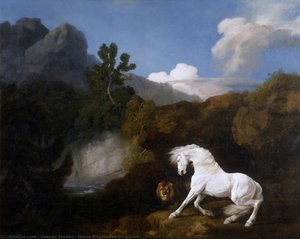
In the quiet, dignified presence of George Stubbs’s 1755 portrait, James Stanley, we encounter more than just a likeness; we step into the very heart of the Enlightenment. Before he became the preeminent master of equine anatomy, known for capturing the raw power of horses with scientific precision, Stubbs demonstrated a profound command over the human form. This early work serves as a captivating window into the social fabric of 18th-century Britain, presenting a gentleman whose identity remains shrouded in the mists of time, yet whose character radiates through the canvas. The sitter, identified only by an inscription noting his name and age of thirty-three, stands against a subtly textured, dark background that acts as a stage, stripping away all worldly distractions to focus the viewer’s entire attention upon the man himself.
The composition is masterfully understated, eschewing the grandiosity often found in aristocratic portraiture of the era in favor of a quiet, introspective intimacy. There is an immediate rapport established as Stanley’s gaze meets ours, inviting a moment of shared contemplation. This sense of connection is heightened by the artist's ability to balance formal dignity with a palpable human warmth. For the collector or interior designer, such a piece offers a sophisticated anchor for a room, providing a focal point that commands respect while maintaining an air of approachable grace.
The Intersection of Science and Artistry
What distinguishes this portrait is Stubbs’s unique ability to marry meticulous anatomical accuracy with a burgeoning impressionistic sensibility. While his later works would be celebrated for their rigorous study of musculature and bone structure, in James Stanley, we see the seeds of this scientific devotion applied to the human countenance. Every detail, from the subtle contours of the face to the texture of his attire, is rendered with a dedication to truth that was radical for its time. He avoids the trap of idealized beauty, choosing instead to honor the authentic features of his subject, a choice that lends the painting an enduring, timeless quality.
Technically, the work is a triumph of tonal variation. Stubbs employs a sophisticated play of light and shadow—chiaroscuro—to sculpt the figure out of the darkness. The edges of the subject are not harshly defined; rather, they softly bleed into the atmospheric background, creating a sense of depth and movement that prevents the portrait from feeling static. This technique anticipates the more fluid styles of later centuries, making the piece feel remarkably modern despite its mid-18th-century origins. The rich textures suggested by his clothing—the weight of the fabric and the glint of gold buttons—provide a tactile richness that makes the painting feel alive under varying light conditions.
An Enduring Legacy for the Discerning Eye
To possess a reproduction of this caliber is to bring a piece of British art history into one's personal sanctuary. James Stanley is not merely a decorative object; it is a conversation starter, a testament to an era where the pursuit of knowledge and the appreciation of beauty were inextricably linked. The painting evokes a sense of nostalgia for the Georgian age—a period of intellectual curiosity and refined elegance. Its somber palette and commanding presence make it an ideal choice for curated galleries, traditional studies, or contemporary spaces seeking a touch of historical gravity.
For those looking to inspire awe and reflection within a home or professional design project, this work offers unparalleled emotional resonance. It embodies the spirit of a pioneer—an artist who dared to look closer at the world around him. Whether viewed as a study in light, a masterclass in portraiture, or a relic of a bygone social landscape, Stubbs’s James Stanley remains a profound achievement that continues to captivate the soul of the art lover.
Fragen & Antworten
In welchem Alter schuf George Stubbs „James Stanley"?
George Stubbs war 31 Jahre alt, als James Stanley im Jahr 1755 geschaffen wurde. Das Alter berechnet sich aus dem Geburtsjahr des Künstlers, 1724.
Was ist das Entstehungsdatum von "James Stanley" von George Stubbs?
"James Stanley" von George Stubbs entstand im Jahr 1755.
Wie hoch ist die Leuchtkraft von "James Stanley" von George Stubbs?
Die Farben von "James Stanley" weisen eine Dark Luminanz auf.
Wer hat "James Stanley" erschaffen?
Der Künstler hinter „James Stanley“ ist George Stubbs. Das Werk ist unter dem Namen von George Stubbs katalogisiert.
Ist "James Stanley" urheberrechtlich frei?
Was das Urheberrecht betrifft, so ist "James Stanley" gemeinfrei – das Urheberrecht ist abgelaufen.
In welchem Museum befindet sich das Original von „James Stanley“?
"James Stanley" von George Stubbs wird im Walker Art Gallery, Liverpool, Vereinigtes Königreich ausgestellt. Die Museumsangabe bezieht sich auf das Originalwerk, nicht auf Reproduktionen.
Welchen kunsthistorischen Stellenwert nimmt "James Stanley" von George Stubbs ein?
"James Stanley" von George Stubbs gehört der Romanticism-Strömung innerhalb der Early Modern-Epoche an. Zusammen verleihen sie dem Werk seinen Platz in der Kunstgeschichte.
Biografie des Künstlers
Frühes Leben und Ausbildung
George Stubbs, ein renommierter englischer Maler, wurde am 25. August 1724 in Liverpool, im Vereinigten Königreich, geboren. Seine frühen Jahre waren von einer spärlichen Aufzeichnung seiner Aktivitäten bis zum Alter von 35 Jahren geprägt, wobei die meisten Informationen aus den Memoiren von Ozias Humphry stammen, die auf Gesprächen mit Stubbs im Jahr 1794 basieren. Stubbs begann seine künstlerische Laufbahn im Alter von 15 Jahren und arbeitete zunächst unter seinem Vater, einem Ledergerber. Später suchte er das Gespräch mit Hamlet Winstanley, einem Maler und Kupferstecher aus Lancashire, um eine kurze Lehrzeit zu absolvieren. Dieser kurze Aufenthalt ermöglichte es ihm, die Sammlung in Knowsley Hall zu studieren.Künstlerische Entwicklung und bemerkenswerte Werke
Stubbs' Leidenschaft für Anatomie führte ihn 1744 nach York, wo er unter dem Chirurgen Charles Atkinson im York County Hospital studierte. Eines seiner frühesten erhaltenen Werke ist eine Reihe von Illustrationen für John Burtons Lehrbuch über Hebammenkunst, das 1751 veröffentlicht wurde. Im Jahr 1756 mietete Stubbs einen Bauernhof in Lincolnshire und verbrachte 18 Monate mit der Sektion von Pferden, unterstützt von seiner Lebensgefährtin Mary Spencer. Dies führte zur Veröffentlichung der Anatomie des Pferdes im Jahr 1766, wobei die Originalzeichnungen heute im Royal Academy aufbewahrt werden. Stubbs' Arbeit wurde bald von führenden aristokratischen Mäzenen erkannt, darunter der 3. Herzog von Richmond, der 1759 drei große Gemälde in Auftrag gab. Dies markierte den Beginn seiner erfolgreichen Karriere, wobei Werke für mehrere Herzöge und Lords entstanden, die mit dem Kauf eines Hauses in Marylebone, London, gipfelten.Vermächtnis und bemerkenswerte Gemälde
Stubbs' berühmtestes Werk ist Whistlejacket, ein Gemälde eines eleganten Pferdes, das vom 2. Marquess of Rockingham in Auftrag gegeben wurde und sich heute in der National Gallery in London befindet. Dieses und zwei weitere Gemälde für Rockingham brechen mit der Konvention, da sie schlichte Hintergründe aufweisen.- Whistlejacket, ein Vollblutrennpferd, das sich auf seinen Hinterbeinen erhebt, zeigt Stubbs' unvergleichliche Fähigkeit, die Essenz von Pferden einzufangen.
- Betrachten Sie Stubbs' Kunstwerke unter https://OriginalUniqueArt.com/@/george_stubbs
- Erkunden Sie die Sammlung der National Gallery in London, die Stubbs' bemerkenswerte Werke zeigt, unter /de/art/show/art-8xyffg-de/
- Erfahren Sie mehr über Stubbs' Leben und Werk auf Wikipedia unter https://de.wikipedia.org/wiki/George_Stubbs
Studien zur Anatomie
Stubbs, der bis zum Alter von 16 Jahren im väterlichen Gerberei- und Ledergeschäft arbeitete, war der Umgang mit Tierkadavern nicht fremd, und laut seinen eigenen Aussagen interessierte er sich schon früh für Anatomie. 1745 zog er nach York, wo er in den späten 1740er Jahren ein Studium der Anatomie im York County Hospital aufnahm und bald selbst Anatomie unterrichtete. Dort sezierte er eine im Kindbett verstorbene Frau und fertigte Zeichnungen des Fötus an. Diese frühen Versuche fehlten jedoch die Präzision seiner späteren anatomischen Zeichnungen: dargestellt sind auf den Bildtafeln keine Föten, sondern eher ausgewachsene Säuglinge. Diese Zeichnungen dienten als Grundlage für seine Illustrationen zu John Burtons „Essays towards a Complete New System of Midwifery“. Das Buch wurde 1751 veröffentlicht, ohne Stubbs als Autor der Bildtafeln zu nennen. Nach seiner Rückkehr aus Italien mietete er das Haus in Lincolnshire, wo er von 1756 bis 1758 Pferde sezierte. Nachdem die Pferde durch einen Schnitt in die Halsvene (vena jugularis) ausgeblutet waren, wurde ein flüssiges Wachs injiziert, um den Verlauf der Gefäße während des Sezierens besser zu erkennen. Der Kadaver wurde danach an einer Spezialkonstruktion an der Decke aufgehängt.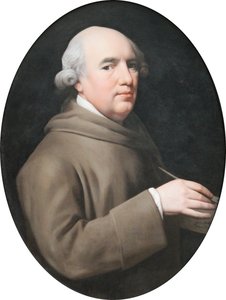
George Stubbs
1724 - 1806 , Vereinigtes Königreich
Eckdaten zum Künstler
- Bemerkenswerte Werke:
- Whistlejacket
- Löwe Angriff auf ein Pferd
- Die Grosvenor Hunt
- Ein Schwarzbeiger Wasserhund
- Geburtsdatum: 25. August 1724
- Geburtsort: Liverpool, Vereinigtes Königreich
- Künstlerische Richtung: Romantik, Tierporträt
- Nationalität: Britisch
- Sterbedatum: 10. Juli 1806
- Vollständiger Name: George Stubbs
Verwandte Artikel
Animalia: Die bleibende Präsenz von Tieren in Kunst und Innenarchitektur
Entdecken Sie die faszinierende Welt der Animalia! Von historischen Tierdarstellungen bis zur modernen Innenarchitektur – wir bieten Expertise, hochwertige Reproduktionen & Kunstberatung.
Die 10 Meisterwerke des Neoklassizismus: Kunst für Ihr Zuhause |
Entdecken Sie die 10 Meisterwerke des Neoklassizismus! Von David bis Canova – erleben Sie Kunstgeschichte, elegante Ästhetik & zeitlose Schönheit. Hochwertige Reproduktionen auf .
George Stubbs: Anatomische Präzision und romantische Vision in der britischen Kunst des 18. Jahrhunderts
Entdecken Sie das faszinierende Werk von George Stubbs – ein Meister der Tierporträts und Pionier anatomischer Studien. Erfahren Sie mehr über seine einzigartige Verbindung von Kunst und Wissenschaft in unserer Expertenanalyse.
Beastly Brushstrokes: A Historical Journey Through Animal Painting & Aesthetic Movements
Explore the rich history of animal painting across cultures & movements. Discover iconic artists, symbolism, collecting trends & expert art consultation at OriginalUniqueArt.com.
Thomas Hudson: A Study in 18th-Century Portraiture & British Artistic Identity
Explore the life & work of Thomas Hudson, a leading 18th-century British portraitist. Discover his mastery of the 'Grand Manner,' influential style, and lasting impact on British art. Learn about his notable portraits like Judge William Noel & Alexander Van Aken.