

 Vorschau anzeigen
 Versenden
 Teilen
 Details anzeigen

 Herunterladen
 Ähnliche Objekte
 Röntgenaufnahme
 Diashow
Napoleon I

 Weiterlesen
Erwerben Sie ein hochauflösendes, optimiertes digitales Bild, das der Online-Vorschau weit überlegen ist.
Jede Datei wird von unseren hauseigenen Spezialisten mit modernsten Werkzeugen und fachmännischer manueller Retusche sorgfältig vorbereitet. Wir stellen sicher, dass jedes Bild eine außergewöhnliche Klarheit, präzise Farbgenauigkeit und feinste Details aufweist.
Die endgültige Datei wird innerhalb von 72 Stunden per E-Mail zugestellt und ist für den sofortigen Einsatz in professionellen, redaktionellen und Druckumgebungen optimiert. Es handelt sich um dieselbe Qualität, der führende Designstudios, Verlage und Galerien vertrauen.
Digitales Bild
Laden Sie eine hochauflösende Datei für die persönliche Präsentation, den Druck und kreative Projekte herunter. ( Druck bestellen Handgemalte Reproduktion bestellen)
In jeder Bestellung digitaler Bilder enthalten
Professionelle digitale Bereitstellung, garantiert
Wenn Sie sich für OriginalUniqueArt.com entscheiden, erhalten Sie nicht nur ein Bild – Sie erhalten ein professionell aufbereitetes digitales Kunstwerk, das mit höchster Präzision erstellt und durch eine Zufriedenheitsgarantie abgesichert wird. Hier ist alles, was automatisch mit Ihrer Bestellung geliefert wird:

Schnelle E-Mail-Zustellung
Ihre hochauflösende digitale Bilddatei wird Ihnen innerhalb von 72 Stunden nach der Bestellung per E-Mail zugestellt – bereit zur sofortigen Verwendung.

KI-optimierte digitale Datei
Ihre Kunstwerke werden professionell mithilfe fortschrittlicher KI-Tools und manueller Bearbeitung optimiert, um maximale Detailtreue, Klarheit und Farbgenauigkeit zu gewährleisten.

Lebenslanger kostenloser Neudruckservice
Datei versehentlich gelöscht oder verloren? Keine Sorge – wir senden sie Ihnen jederzeit kostenlos erneut zu.

Keine Einfuhrgebühren – jemals
Genießen Sie Ihr Kunstwerk sofort ohne Zollgebühren, Einfuhrabgaben oder Versandkosten – digitale Downloads sind immer steuerfrei.

Garantierte Farbtreue
Wir garantieren, dass Ihr digitales Bild mithilfe professioneller Werkzeuge und Farbmanagement die Originalfarben so präzise wie möglich wiedergibt.

60-Tage-Zufriedenheitsgarantie
Sollten Sie mit Ihrem digitalen Bild nicht zufrieden sein, werden wir es überarbeiten oder Ihnen innerhalb von 60 Tagen 100% erstatten – ohne Wenn und Aber.

100% Geld-zurück-Garantie
Nicht zufrieden? Erhalten Sie innerhalb von 60 Tagen nach Erhalt Ihrer digitalen Datei eine vollständige Rückerstattung – ohne Angabe von Gründen.

Rabatte bei Großbestellungen
3 Bilder kaufen, 10% sparen – 5 Bilder kaufen, 15% sparen – Ab 10 Bildern 20% sparen. Ideal für kreative Projekte, Galerien und Agenturen.
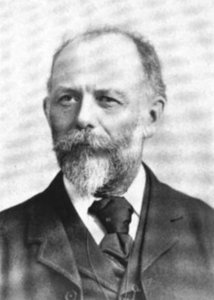
Biografie des Künstlers
The Sculptor of Remembrance and Light
In the grand tapestry of American art, few figures captured the intersection of historical gravity and ethereal beauty as profoundly as George Edwin Bissell. Born on February 16, 1839, in the quiet enclave of New Preston, Connecticut, Bissell’s destiny was etched into the very stone he would later master. The son of a quarryman and marble-cutter, his earliest memories were likely shaped by the rhythmic strike of the chisel and the raw, tactile presence of earth-bound minerals. This foundational connection to the medium provided him with more than just technical familiarity; it instilled a lifelong reverence for the permanence of stone, a quality that would define his monumental contributions to the American landscape.
Bissell’s life was not merely one of quiet studio contemplation but was forged in the crucible of national upheaval. During the American Civil War, he served with distinction as a private in the 23rd Connecticut Volunteers and later as an acting assistant paymaster in the South Atlantic Squadron. These experiences of conflict and duty infused his later works with a profound sense of civic responsibility and a deep-seated need to commemorate the fallen. The scars of war and the weight of history became the silent subjects of his most enduring monuments, transforming cold marble into vessels of collective memory.
A Journey Through European Mastery
While his roots were firmly planted in American soil, Bissell’s artistic soul was nurtured by the classical traditions of Europe. Seeking to refine his innate talent, he embarked on a transformative period of study abroad during the 1870s. His education at the English Academy in Rome and the prestigious École des Beaux-Arts in Paris allowed him to absorb the sophisticated techniques of the masters. This era was particularly pivotal; residing extensively in Paris between 1883 and 1896, Bissell breathed in the atmosphere of the Impressionistic movement. He began to move beyond the rigid boundaries of traditional portraiture, seeking instead to capture the fleeting nuances of light and the subtle textures of life, imbuing his sculptural forms with a sense of movement and atmospheric grace.
This period of Parisian refinement allowed him to collaborate with contemporary luminaries like Larkin G. Mead, further expanding his stylistic repertoire. The influence of Impressionism brought a new softness to his work, where the interplay of shadow and light on polished surfaces could evoke the ephemeral quality of a moment caught in time. It was during these years that Bissell truly bridged the gap between the monumental permanence of classical sculpture and the delicate, sensory experience of modern art.
Legacy in Stone and Spirit
The sheer breadth of Bissell’s commissions stands as a testament to his status as a sculptor of distinction. His portfolio is a remarkable dialogue between the individual and the state, ranging from intimate portraits to massive public monuments. He possessed a unique ability to render the likeness of prominent figures with both dignity and humanity, seen in his evocative busts of President Abraham Lincoln and Chancellor James Kent. His work served as a bridge between generations, ensuring that the faces of leaders and heroes remained etched in the public consciousness.
His contributions to the American landscape are scattered like precious gems across several states, most notably in Connecticut and Pennsylvania. Some of his most significant achievements include:
- The Commemorative Monuments: His profound dedication to Civil War memorials, such as the Union Soldier monument in Colchester and various soldiers' monuments in Waterbury and Winsted, which serve as eternal sentinels of history.
- Portraiture of Distinction: Masterful depictions of historical figures like Frederic de Peyster and Colonel Abraham de Peyster, which brought a sense of aristocratic grace to public spaces.
- Civic Grandeur: Large-scale works such as the statue of Chester A. Arthur in New York City, demonstrating his ability to command urban environments with monumental presence.
When George Edwin Bissell passed away in Mount Vernon, New York, on August 30, 1920, he left behind a legacy that transcends the mere physical properties of marble and bronze. He was an artist who understood that sculpture is not just about occupying space, but about holding time. Through his hands, the heavy weight of history was made light by the touch of artistry, leaving us with a permanent record of our shared human experience.
Kurzinfos
- Artistic Movement Or Style: Victorian Sculpture
- Artists Or Movements Influenced By This Artist: ['American Impressionism']
- Artists Who Influenced This Artist:
- Frederick Olmsted
- Larkin G. Mead
- Date Of Birth: February 16, 1839
- Date Of Death: August 30, 1920
- Full Name: George Edwin Bissell
- Nationality: American
- Notable Artworks:
- Lincoln Statue
- De Peyster Statue
- Place Of Birth: New Preston, Connecticut

