Versenden als Grußkarte
 Teilen
 Details anzeigen
 Leitfaden öffnen

 Herunterladen
 Ähnliche Objekte
 Diashow
 Besucherstatistiken
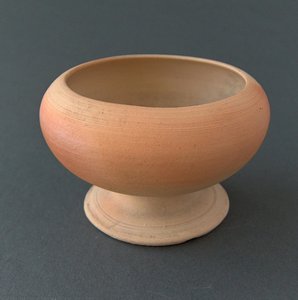
Schale


 Mehr anzeigen
Giclée / Kunstdruck
Giclée- oder Leinwanddruck in Museumsqualität mit schneller Produktion und flexiblen Veredelungsoptionen. ( Handgemalte Reproduktion kaufen Zum digitalen Bild wechseln)




































Wählen Sie aus unseren vordefinierten Formaten, die den ursprünglichen Proportionen des Kunstwerks entsprechen.

Geben Sie die Breite und die Höhe an, die Sie benötigen, damit der Druck perfekt in Ihren Rahmen oder an Ihre Wand passt. Ein Druck kann nur beschnitten werden und niemals größer als das Originalbild gemacht werden; daher verliert ein Format mit einer anderen Proportion einen Teil des Bildes. Wir senden Ihnen ein digitales Mockup zur Freigabe, bevor wir den Druck ausführen. Das auf dieser Seite gezeigte Bild zeigt nicht den tatsächlichen Beschnitt – dies ist nur im Mockup ersichtlich.
Weltweiter Versand () innerhalb von 2 Wochen statt der üblichen 4/5 Wochen. (25 Oktober)

Kostenloser weltweiter Expressversand

Hochwertige Leinenleinwand

Vollständiger Versicherungsschutz beim Versand

Zollgebühren-Rückerstattungsgarantie

Garantie für exakte Farbtreue

100-tägiges Rückgaberecht (nur bei Mängeln)

100% Geld-zurück-Garantie

Angebot für Mengenrabatt
 Die Glasoption ist nur für Größen unter 110 cm verfügbar.

Schale
Giclée / Kunstdruck
Format der Reproduktion
-


Gesamtpreis
€ 70
The Soul of the Clay: Embracing Imperfection
In the quiet, salt-misted atmosphere of Biloxi, Mississippi, a revolution was quietly being molded by hands that refused to follow the rules. George Edgar Ohr, famously known as the "Mad Potter of Biloxi," did not merely create vessels; he breathed life into the very earth itself. His Bowl stands as a profound testament to this radical philosophy, where the beauty of the piece is found not in the precision of its rim or the smoothness of its surface, but in the raw, tactile energy of its creation. To look upon this work is to witness a deliberate departure from the polished, predictable ceramics of the late 19th century, offering instead a window into a world where texture and form dance in an unpredictable, organic embrace.
The piece serves as a captivating bridge between the traditional folk art of the American South and the burgeoning whispers of modern abstraction. For the discerning collector or interior designer, this bowl offers more than just a decorative element; it provides a focal point of profound character. Its earthy brown tones, punctuated by unexpected accents, evoke the rugged landscapes of the Gulf Coast, reminding us that true artistry often lies in the ability to find elegance within the irregular and the weathered. It is an object that demands attention not through flashiness, but through its deep, resonant presence.
A Masterclass in Texture and Technique
The allure of Ohr’s work lies heavily in his revolutionary use of slip-trailing and incising. Unlike his contemporaries who sought to erase the marks of the maker, Ohr celebrated them. By pouring thin layers of liquid clay onto the vessel's surface, he built up a topographical landscape of ridges and valleys that invite the touch as much as the eye. This technique creates a rhythmic, almost musical quality to the surface, where light and shadow play across the raised motifs, changing the bowl's appearance with every shift in the room's illumination.
This mastery of materiality transforms a simple ceramic object into a sculptural experience. The bowl’s organic, slightly asymmetrical form exhibits irregular curves and ridges that suggest a hand-thrown technique, far removed from the sterile perfection of industrial production. The color palette, consisting primarily of muted greens and browns, creates a naturalistic feel that grounds the piece in the physical world, while the deliberate use of texture ensures that it remains a dynamic subject for any curated space.
The Legacy of a Singular Vision
To understand this bowl is to understand the spirit of George Edgar Ohr himself. Born into a landscape rich with clay deposits and artisan traditions, Ohr used his medium to embark on a radical exploration of form and materiality—a quest to liberate ceramics from convention. His work foreshadowed the Abstract Expressionist movement, embracing imperfection as an inherent element of artistic expression. He rejected the symmetrical and the polished, favoring instead the visceral and the spontaneous.
For those seeking to bring a piece of American art history into their homes, a reproduction of this bowl offers an opportunity to possess a fragment of that rebellious spirit. It is an ideal acquisition for those who appreciate the Arts and Crafts movement's emphasis on craftsmanship and the modern desire for organic, soulful decor. Whether placed as a centerpiece on a minimalist pedestal or integrated into a rich, textured collection, this work continues to inspire awe through its unwavering dedication to artistic freedom.
Fragen & Antworten
Wer hat "Schale" geschaffen und in welchem Stil ist es gehalten?
"Schale" wurde von George Edgar Ohr (Der Wahnsinnige Töpfer von Biloxi) im Stil der Studio-Keramik geschaffen. Künstler und Epoche bestimmen die Tradition des Werkes.
Aus welcher Epoche stammt "Schale" von George Edgar Ohr (Der Wahnsinnige Töpfer von Biloxi)?
"Schale" von George Edgar Ohr (Der Wahnsinnige Töpfer von Biloxi) stammt aus der Epoche der – 19. Jahrhundert. Diese Zeitspanne liefert den historischen Kontext des Werkes.
Welcher Raum passt farblich zu "Schale" von George Edgar Ohr (Der Wahnsinnige Töpfer von Biloxi)?
Mit seiner Neutrale Töne-Palette wird "Schale" von George Edgar Ohr (Der Wahnsinnige Töpfer von Biloxi) für ein Wohnbereich empfohlen. Die Farben sind einer der Gründe für diese Empfehlung.
Biografie des Künstlers
George Edgar Ohr: The Singular Vision of Biloxi
George Edgar Ohr, a name synonymous with innovation and eccentricity in the world of American ceramics, was born on July 12, 1857, in the coastal city of Biloxi, Mississippi. His parents, German immigrants seeking new opportunities, instilled in him a strong work ethic and perhaps a touch of the Old World’s artistic sensibility. However, it was the unique environment of Biloxi – a melting pot of cultures and a source of readily available clay – that truly nurtured his burgeoning talent. Ohr wasn’t simply a potter; he was an explorer of form, texture, and glaze, relentlessly pushing the boundaries of what ceramic art could be. He embraced the moniker “Mad Potter of Biloxi,” not as a dismissal, but as a proud declaration of his unconventional approach and unwavering dedication to artistic freedom.
Early Influences and Artistic Awakening
Ohr’s journey into ceramics began somewhat serendipitously. After a restless youth spent trying various trades in New Orleans, he found himself apprenticed to Joseph Fortune Meyer, a potter with connections to the Arts & Crafts movement. This apprenticeship provided Ohr with a solid foundation in traditional techniques, but it was his subsequent travels – a sixteen-state tour of American potteries – that ignited his creative spark. He absorbed diverse methods and styles, yet he wasn’t content to merely replicate; he sought to transcend convention. He returned to Biloxi determined to forge his own path, establishing his “Biloxi Art and Novelty Pottery” where he could fully realize his artistic vision. The clay from the nearby Tchoutacabouffa River became his medium, and his hands, his instruments of transformation.
A Revolution in Clay: Technique and Innovation
Ohr’s work stands apart due to its radical departure from prevailing ceramic norms. While many potters focused on functionality and symmetrical forms, Ohr embraced asymmetry, distortion, and a deliberate rejection of perfection. He pioneered techniques like twisting, crumpling, folding, and stretching the clay while still wet, creating vessels that seemed to defy gravity and challenge expectations. His glazes were equally experimental – vibrant, unpredictable, and often resembling molten metal or iridescent jewels. He wasn’t interested in simply decorating pottery; he was sculpting with color and light. He thinned his walls to an almost impossible degree, achieving a delicacy rarely seen in ceramics. This daring approach, combined with his unique glazes, resulted in pieces that were both visually stunning and structurally audacious. His work foreshadowed the abstract expressionist movement decades before it fully emerged, demonstrating a willingness to prioritize form and emotion over representational accuracy.
Years of Isolation and Rediscovery
Despite his innovative spirit, Ohr struggled for recognition during his lifetime. The public wasn’t always ready for his radical designs, and he often found himself at odds with prevailing tastes. Frustrated by the lack of appreciation and unwilling to compromise his artistic integrity, he ceased production around 1910, meticulously packing away thousands of pieces in his studio. He requested that his family leave the collection untouched for fifty years after his death, believing that future generations would be more receptive to his work. Sadly, Ohr passed away on April 7, 1918, during the influenza pandemic, largely unknown outside of Biloxi. It wasn’t until the late 1960s and early 1970s that his genius was finally recognized. James Carpenter, an antiques dealer, discovered the hidden trove of pottery and began to champion Ohr's work, introducing it to a wider audience. The rediscovery sparked a renewed interest in American ceramics and cemented Ohr’s place as a visionary artist.
Legacy and Enduring Influence
Today, George Edgar Ohr is celebrated as one of the most important figures in American ceramic history. His pioneering spirit continues to inspire artists around the world. His work can be found in major museums, including the Smithsonian Institution and the Metropolitan Museum of Art, and a dedicated museum – the Ohr–O'Keefe Museum of Art in Biloxi – stands as a testament to his enduring legacy.
- Ohr’s influence extends beyond ceramics.
- His willingness to challenge conventions resonates with artists across disciplines.
- He demonstrated that true artistic expression requires courage, independence, and an unwavering commitment to one's vision.

George Edgar Ohr (Der Wahnsinnige Töpfer von Biloxi)
1857 - 1918 , Vereinigte Staaten von Amerika
Eckdaten zum Künstler
- Artistic Movement Or Style: Abstrakt Expressionismus
- Artists Or Movements Influenced By This Artist: ['Henry Portman']
- Artists Who Influenced This Artist: ['Joseph Fortune Meyer']
- Date Of Birth: 12 Juli 1857
- Date Of Death: 7 Apríl 1918
- Full Name: George Edgar Ohr
- Nationality: Amerikaner
- Notable Artworks:
- Tasse
- Schüssel
- Krümelgefäß
- Place Of Birth: Biloxi, USA
Verwandte Artikel

Georges Seurat: Die 25 Meisterwerke des Pointillismus für Ihr Zuhause | OriginalUniqueArt
Entdecken Sie die 25 ikonischsten Meisterwerke von Georges Seurat! Tauchen Sie ein in die Welt des Pointillismus, der Farbtheorie und des Impressionismus. Hochwertige Kunst reproduzieren für Ihr Zuhause – jetzt auf OriginalUniqueArt.com!
The Art of Ceramics: A Guide to Mastery, Texture, and Timeless Form for the Discerning Collector
Explore the profound elegance of ceramic art. From master glazes to sculptural forms, our expert guide offers discerning collectors deep insights into the mastery, texture, and timeless value of fine ceramics for sophisticated collections and luxury interiors.

George Stubbs: Anatomische Präzision und romantische Vision in der britischen Kunst des 18. Jahrhunderts
Entdecken Sie das faszinierende Werk von George Stubbs – ein Meister der Tierporträts und Pionier anatomischer Studien. Erfahren Sie mehr über seine einzigartige Verbindung von Kunst und Wissenschaft in unserer Expertenanalyse.

Georges Braque: Die 25 Meisterwerke des Kubismus für Ihr Zuhause | OriginalUniqueArt
Entdecken Sie die 25 bedeutendsten Kunstwerke von Georges Braque – vom Kubismus bis zum Fauvismus. Erfahren Sie die Geschichten hinter den Meisterwerken und finden Sie hochwertige Reproduktionen für Ihr Zuhause auf OriginalUniqueArt.com.

The Alchemy of Clay: A Collector's Guide to the Mastery, Texture, and Timeless Form of Ceramic Art
Discover the profound beauty of ceramic art. Our expert guide explores the alchemy of clay, texture, and glaze, offering collectors deep insights into mastering earth and fire to create timeless, sculptural masterpieces for any curated collection.