

 Vorschau anzeigen
 Versenden
 Teilen
 Details anzeigen

 Herunterladen
 Ähnliche Objekte
 Röntgenaufnahme
 Diashow
Mounted War Party Scouring a Thicket
 Acrylfarbe
- Wandkunst
- Romantic Landscape Painting
 1848
1848 50.0 x 69.0 cm
 Smithsonian American Art Museum
 Weiterlesen
Handgefertigte Ölreproduktion
Handgemaltes Ölgemälde auf Leinwand in Ihrer Wunschgröße und mit Rahmen, auf Bestellung von unseren Künstlern angefertigt. ( Druck bestellen Bild kaufen)




P118B $10

P118H $10

P118W $10

P438Z $10

P508JH $12

P508YH $12

P805H $10

P805Z $10

P919BZ $10

P919G $10

P919XJ $10

P959ZH $10

P968JZ $12

W106C $8

W218G $10

W218JH $8

W218Y $10

W307PJ $10

W316G $10

W316PJ $8

W316Y $10

W398PJ $8

W4111J $10

W500HY $15

W500JH $15

W692G $12

W849H $8

W940BG $15

W953PJ $8




Wählen Sie aus unseren vordefinierten Formaten, die den ursprünglichen Proportionen des Kunstwerks entsprechen.

Sie können Ihre eigenen Maße eingeben, um einen bestimmten Rahmen oder Platz auszufüllen. Wenn die gewählte Größe nicht den Proportionen des Originalbildes entspricht, werden wir das Kunstwerk entweder beschneiden oder das Gemälde durch zusätzliche, handgemalte Elemente erweitern. Ein digitales Mockup wird Ihnen zur Genehmigung zugesandt, bevor die Produktion beginnt.
Bitte beachten Sie, dass die Bildschirmvorschau nicht die tatsächliche Beschneidung oder Erweiterung widerspiegelt. Nur das Mockup zeigt die endgültige Komposition exakt an.
Obwohl Sondermaße verfügbar sind, empfehlen wir, eine Größe aus der vordefinierten Liste zu wählen, um die ursprünglichen Proportionen beizubehalten.
Nach der Bestellung wird das OriginalUniqueArt.com-Team dem Kunden Anweisungen per E-Mail zusenden und eine Mockup-Vorschau bereitstellen.
Weltweiter Versand () in nur 3 bis 4 Wochen statt der üblichen 5 Wochen. (21 August). Keine Kompromisse bei der Qualität.

Kostenloser weltweiter Expressversand

Hochwertige Leinenleinwand

Umfassender Versicherungsschutz beim Versand

Zollgebühren-Rückerstattungsgarantie

Garantie für exakte Farbtreue

60 Tage Rückgaberecht (nur bei Mängeln)

100% Geld-zurück-Garantie

Mengenrabatt verfügbar
 Die Glasoption ist nur für Größen unter 110 cm verfügbar.

Mounted War Party Scouring a Thicket
Art der Reproduktion
Format der Reproduktion
-


Gesamtpreis
$ 300
Beschreibung des Kunstwerks
A Pioneer’s Vision: Exploring George Catlin's Mounted War Party Scouring a Thicket
George Catlin’s *Mounted War Party Scouring a Thicket*, completed between 1846 and 1848, stands as a monumental achievement in American art history—a testament to both meticulous observation and fervent advocacy for Native American culture. More than just a depiction of a hunting expedition, it embodies Catlin's profound belief that the disappearing traditions of the Plains tribes deserved unwavering documentation before they vanished entirely from the landscape. This conviction fueled his ambitious project: to portray Native Americans not as primitive savages but as noble warriors embodying the spirit of their ancestral heritage.Subject Matter and Composition
The painting captures a pivotal moment in Plains Indian life—a war party venturing into dense woodland terrain, actively pursuing game animals like deer and elk. Catlin’s masterful composition draws the viewer's eye immediately to the central figures: several horseback riders dominate the foreground, their postures conveying determination and readiness for action. Scattered amongst them are additional individuals – likely members of the tribe – adding depth and dynamism to the scene. The artist skillfully utilizes perspective to convey the vastness of the prairie environment juxtaposed against the claustrophobia of the thicket, creating a visual narrative that speaks volumes about survival and resilience.Style and Technique: Romantic Idealization
Catlin’s style aligns firmly with the Romantic movement prevalent in mid-19th century America. Rejecting academic conventions, he prioritized capturing the immediacy of experience—the raw beauty and drama of the frontier wilderness. His technique is characterized by bold brushstrokes and vibrant color palettes – particularly reds and yellows – reflecting the fiery hues of the prairie sunset and emphasizing the heroic qualities of his subjects. Catlin employed a method known as “Indian Painting,” which involved applying pigment directly onto canvas, resulting in textured surfaces that convey a palpable sense of physicality and authenticity. This approach deliberately departed from traditional European portraiture, prioritizing expressive color and gesture over meticulous detail.Historical Context: The Quest for Documentation
Painted during a period of intense westward expansion and increasing pressure on Native American lands, *Mounted War Party Scouring a Thicket* reflects Catlin’s deep concern for preserving the cultural heritage of tribes facing imminent displacement. He tirelessly traveled across the Plains, documenting their customs, ceremonies, and artistic traditions through sketches and paintings—a pioneering effort to counteract prevailing stereotypes portraying Native Americans as uncivilized barbarians. The painting served as part of a larger series aimed at raising public awareness about the plight of these communities and advocating for governmental protection.Symbolism: Noble Warrior Spirit
Beyond its visual splendor, *Mounted War Party Scouring a Thicket* is laden with symbolic significance. Catlin consciously idealized his subjects—presenting them as embodiments of courage, honor, and spiritual fortitude. The warriors’ attire – adorned with feathers and beads – symbolizes tribal identity and connection to ancestral traditions. Their gaze directs towards the viewer, conveying confidence and asserting their rightful place within the natural order. Catlin's intention was not merely to record a hunting expedition but to elevate Native American culture to the level of heroic grandeur—a powerful statement about preserving cultural heritage in an era of rapid change.Emotional Impact: Reverence for Tradition
Ultimately, *Mounted War Party Scouring a Thicket* evokes a profound sense of reverence for tradition and a poignant awareness of cultural loss. Catlin’s artwork transcends mere representation; it communicates an emotional response—a deep admiration for the resilience and dignity of Native American peoples facing the encroaching forces of civilization. It remains a captivating image, transporting viewers back to a bygone era and prompting contemplation on the importance of safeguarding cultural legacies for generations to come.Über den Künstler
Frühes Leben und Karriere
- Geboren: 26. Juli 1796, Wilkes-Barre, Luzerne County, Pennsylvania
- Gestorben: 23. Dezember 1872
- Catlins Faszination für die amerikanischen Ureinwohner wurde durch Geschichten seiner Mutter über die Westgrenze und ihre Gefangennahme durch einen Stamm geweckt.
- Frühe Arbeiten umfassten Radierungen von Sehenswürdigkeiten entlang der Route des Erie-Kanals in New York State, die in Cadwallader D. Coldens Memoiren veröffentlicht wurden.
Künstlerische Beiträge und Stil
- Catlins Hauptaugenmerk wurde die Dokumentation des Lebens und der Kultur der amerikanischen Ureinwohner durch Malerei.
- Er unternahm fünf Expeditionen in den amerikanischen Westen während der 1830er Jahre, beobachtete und dokumentierte seine Erfahrungen sorgfältig.
- Bemerkenswerte Werke:
- Ball-Play of the Choctaw – Zeigt Aufmerksamkeit für Details und die Erfassung der Kultur der amerikanischen Ureinwohner.
- Mó-sho-la-túb-bee, He Who Puts Out and Kills, Chief of the Tribe – Demonstriert Geschicklichkeit im Porträt und Engagement für die Bewahrung des kulturellen Erbes.
- A Seminole Woman – Hervorhebung der Fähigkeit, Schönheit und Würde einzufangen.
- Stil: Catlins Stil ist gekennzeichnet durch Realismus, lebendige Farben und den Wunsch, die Bräuche und Traditionen der amerikanischen Ureinwohner genau darzustellen. Er fügte oft detaillierte Hintergründe und Landschaften hinzu, um seinen Motiven Kontext zu geben.
Wichtige Errungenschaften & Die Indian Gallery
- Catlin schuf eine umfangreiche Sammlung von über 500 Gemälden, die verschiedene Stämme und Aspekte ihres Lebens darstellen.
- Er stellte diese Werke in das sogenannte "Indian Gallery" zusammen, ein umfassendes visuelles Dokument der Kultur der amerikanischen Ureinwohner.
- Die Indian Gallery wurde in London, Paris und Berlin ausgestellt und erlangte internationale Anerkennung für Catlins Arbeit.
- Seine Veröffentlichungen, darunter Manners, Customs, and Condition of the North American Indians (1841) und Last Rambles Amongst the Indians of the Rocky Mountains and the Andes (1868), festigten seinen Ruf als Autorität über die Kultur der amerikanischen Ureinwohner.
Späteres Leben & Vermächtnis
- Catlin verbrachte seine späteren Jahre damit, zu versuchen, seine Indian Gallery an die US-Regierung zu verkaufen und stieß dabei auf anfängliche Ablehnung.
- Er reproduzierte über 400 Gemälde in einer "Cartoon Collection".
- Trotz Herausforderungen hat Catlins Arbeit einen bleibenden Einfluss darauf gehabt, wie amerikanische Ureinwohner in der Kunst und Populärkultur dargestellt werden.
- Historische Bedeutung: Catlins sorgfältige Dokumentation liefert wertvolle Einblicke in das Leben der Stämme der amerikanischen Ureinwohner vor bedeutenden kulturellen Veränderungen aufgrund der Westexpansion. Seine Arbeit gilt als wichtige historische Aufzeichnung sowie künstlerische Leistung.
Einflüsse & Weitere Informationen

George Catlin
1796 - 1872 , Vereinigte Staaten von Amerika
Kurzinfos
- Bemerkenswerte Werke:
- Ball-Play of the Choctaw
- Mó-sho-la-túb-bee, Chief
- A Seminole Woman
- Geburtsdatum: 26. Juli 1796
- Geburtsort: Wilkes-Barre, Vereinigte Staaten
- Künstlerischer Stil: Frontier Malerei
- Nationalität: Amerikanisch
- Sterbedatum: 23. Dezember 1872
- Vollständiger Name: George Catlin
Ähnliche Artikel

Georges Braque: Die 25 Meisterwerke des Kubismus für Ihr Zuhause | OriginalUniqueArt
Entdecken Sie die 25 bedeutendsten Kunstwerke von Georges Braque – vom Kubismus bis zum Fauvismus. Erfahren Sie die Geschichten hinter den Meisterwerken und finden Sie hochwertige Reproduktionen für Ihr Zuhause auf OriginalUniqueArt.com.

Georges Seurat: Die 25 Meisterwerke des Pointillismus für Ihr Zuhause | OriginalUniqueArt
Entdecken Sie die 25 ikonischsten Meisterwerke von Georges Seurat! Tauchen Sie ein in die Welt des Pointillismus, der Farbtheorie und des Impressionismus. Hochwertige Kunst reproduzieren für Ihr Zuhause – jetzt auf OriginalUniqueArt.com!
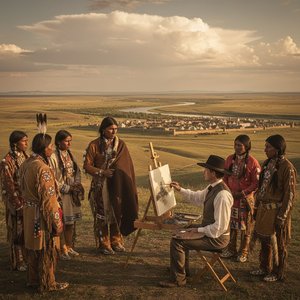
George Catlin und die Bewahrung des amerikanischen Westens: Eine visuelle Dokumentation indigener Lebensweisen im Zeitalter des Wandels
Entdecken Sie das faszinierende Werk von George Catlin und seine einzigartige Dokumentation der indigenen Kulturen des amerikanischen Westens. Erfahren Sie mehr über die Lebensweisen, Rituale und Traditionen der Native Americans im Zeitalter des Wandels.

The Enduring Legacy of Oil on Canvas: Technique, History & Aesthetic Impact
Explore the rich history & techniques of oil painting – from Renaissance masters to Impressionism. Discover pigments, layering methods, and why this timeless medium endures. Expert insights for artists & art enthusiasts.

Öl auf Leinwand: Eine historische und technische Erkundung eines zeitlosen künstlerischen Mediums
Entdecken Sie die faszinierende Welt der Ölmalerei! Von historischen Techniken bis zur modernen Anwendung – wir bieten Expertenwissen, Restaurierungstipps und hochwertige Reproduktionen. Jetzt informieren!



