In echtem Maßstab anzeigen
 Versenden als Grußkarte
 Teilen
 Details anzeigen
 Leitfaden öffnen

 Herunterladen
 Ähnliche Objekte
 Röntgenaufnahme
 Diashow
 Besucherstatistiken
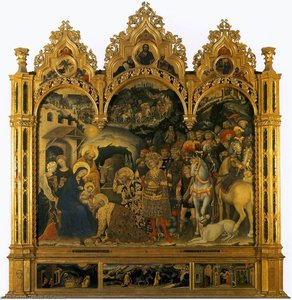
Two saints from the Quaratesi Polyptych: St. Mary Magdalen and St. Nicholas


 Mehr anzeigen
Giclée / Kunstdruck
Giclée- oder Leinwanddruck in Museumsqualität mit schneller Produktion und flexiblen Veredelungsoptionen. ( Handgemalte Reproduktion kaufen Zum digitalen Bild wechseln)




P118B $10

P118H $10

P118W $10

P438Z $10

P508JH $12

P508YH $12

P805H $10

P805Z $10

P919BZ $10

P919G $10

P919XJ $10

P959ZH $10

P968JZ $12

W106C $8

W218G $10

W218JH $8

W218Y $10

W307PJ $10

W316G $10

W316PJ $8

W316Y $10

W398PJ $8

W4111J $10

W500HY $15

W500JH $15

W692G $12

W849H $8

W940BG $15

W953PJ $8




Wählen Sie aus unseren vordefinierten Formaten, die den ursprünglichen Proportionen des Kunstwerks entsprechen.

Sie können Ihre eigenen Maße eingeben, um ein bestimmtes Format oder einen speziellen Platz einzupassen. Wenn das von Ihnen gewählte Format nicht den Proportionen des Originalbildes entspricht, werden wir das Kunstwerk entweder beschneiden oder das Bild mit einem gespiegelten oder einfarbigen Rand erweitern. Ein digitaler Entwurf wird Ihnen zur Genehmigung zugesandt, bevor die Produktion beginnt.
Bitte beachten Sie, dass die Vorschau auf dem Bildschirm nicht den tatsächlichen Zuschnitt oder die Erweiterung widerspiegelt. Nur der Entwurf zeigt die endgültige Komposition präzise an.
Obwohl Sondermaße verfügbar sind, empfehlen wir die Auswahl eines Maßes aus der vordefinierten Liste, um die ursprünglichen Proportionen zu bewahren.
Weltweiter Versand () innerhalb von 2 Wochen statt der üblichen 4/5 Wochen. (27 September)

Kostenloser weltweiter Expressversand

Hochwertige Leinenleinwand

Vollständiger Versicherungsschutz beim Versand

Zollgebühren-Rückerstattungsgarantie

Garantie für exakte Farbtreue

100-tägiges Rückgaberecht (nur bei Mängeln)

100% Geld-zurück-Garantie

Angebot für Mengenrabatt
 Die Glasoption ist nur für Größen unter 110 cm verfügbar.

Two saints from the Quaratesi Polyptych: St. Mary Magdalen and St. Nicholas
Giclée / Kunstdruck
Format der Reproduktion
-


Gesamtpreis
$ 80
A Glimpse into Late Gothic Splendor: Gentile da Fabriano’s ‘Two Saints’
Gentile da Fabriano's “Two Saints from the Quaratesi Polyptych: St. Mary Magdalen and St. Nicholas” is more than just a depiction of two biblical figures; it’s a vibrant window into the opulent world of 15th-century Italy, specifically the flourishing artistic scene of late Gothic painting. Created around 1425 in Fabriano, the heartland of paper making and a center for burgeoning artistic innovation, this panel embodies the International Gothic style at its most dazzling – a testament to meticulous detail, luxurious materials, and a profound reverence for religious subject matter. The work’s immediate impact is one of rich color and intricate ornamentation, drawing the viewer into a carefully constructed tableau of piety and beauty.
The Composition and Symbolism of Faith
Within the panel, St. Mary Magdalene and St. Nicholas are presented as figures of profound grace and solemnity. Both women are draped in flowing crimson robes – a color historically associated with penitence, sacrifice, and divine grace – immediately conveying their spiritual significance. The vibrant red contrasts sharply with the gold accents that adorn their garments and halos, further emphasizing their sanctity. Notice the delicate rendering of Magdalene’s face, etched with an expression of humility and sorrow, reflecting her past as a repentant sinner. St. Nicholas, in contrast, exudes authority and benevolence, his posture suggesting guidance and protection. The inclusion of other figures – men surrounding them – hints at the importance of faith within a community setting, representing the role of the saints as intercessors for humanity.
The backdrop, though seemingly simple, is crucial to understanding the work’s context. It suggests a church or perhaps even a castle interior, grounding the scene in a recognizable earthly realm while simultaneously elevating it to a spiritual plane. The architectural elements subtly reinforce the theme of divine authority and the sanctity of the space.
Technique and Materials: A Masterclass in Gothic Detail
Gentile da Fabriano’s mastery lies not only in his composition but also in his extraordinary technical skill. He was a pioneer in using gold leaf, meticulously applied to create shimmering surfaces that catch the light and draw the eye. The use of translucent red over silver leaf, as documented in the Quaratesi Polyptych, demonstrates an innovative approach to color layering – a technique that creates depth and luminosity. The intricate detailing—the folds of the drapery, the textures of the fabrics, the expressions on the faces—are executed with astonishing precision, showcasing the artist’s deep understanding of human anatomy and his ability to capture subtle nuances of emotion.
Furthermore, the painting's integration within the larger Quaratesi Polyptych is significant. The panel’s placement alongside depictions of other saints – John the Baptist and George – contributes to a cohesive narrative and reinforces the polyptych’s function as a devotional altarpiece intended for private or public veneration.
A Legacy Preserved: The Uffizi and Beyond
Today, “Two Saints from the Quaratesi Polyptych” resides within the prestigious Uffizi Gallery in Florence, where it continues to captivate visitors with its beauty and historical significance. Its preservation is a testament to the enduring value of this masterpiece and the importance of safeguarding artistic heritage for future generations. OriginalUniqueArt offers meticulously crafted hand-painted reproductions that allow you to experience the splendor of Gentile da Fabriano’s work in your own home, bringing a touch of Renaissance elegance and spiritual depth to any space.
Biografie des Künstlers
Frühes Leben und Werdegang
Gentile da Fabriano, ein italienischer Maler, wurde um 1370 in oder nahe Fabriano im Marche-Gebiet Italiens geboren. Seine Mutter verstarb vor 1380, und sein Vater, Niccolò di Giovanni Massi, zog 1385 in ein Kloster. Über Gentiles frühe künstlerische Ausbildung ist wenig bekannt, aber eines seiner ersten bekannten Werke, die Madonna mit Kind (ca. 1395-1400, heute in Berlin), zeigt den Einfluss der spätgotischen Malerei Norditaliens.Karrierehöhepunkte
* Um 1405 arbeitete Gentile da Fabriano in Venedig, wo er ein Tafelbild für die Kirche Santa Sofia malte (heute verloren). Er kooperierte auch mit Jacopo Bellini und kannte Pisanello und Michelino da Besozzo. * Zwischen 1410 und 1412 schuf er eines seiner Meisterwerke, das Valle Romita Polyptychon (heute in der Pinacoteca di Brera). * Im Jahr 1423 malte Gentile da Fabriano sein berühmtes Altarbild, die Anbetung der Heiligen Drei Könige, heute in den Uffizien, das als eines der Meisterwerke des Internationalen Gotischen Stils gilt.Wichtige Werke und Standorte
- Gentile da Fabriano: Anbetung der Heiligen Drei Könige (10) (300 x 282 cm, Galleria degli Uffizi, Florenz, Italien)
- Valle Romita Polyptychon (Pinacoteca di Brera)
- Madonna mit Kind (verloren, ehemals im Palazzo dei Notai auf der Piazza del Campo, Siena)
Stil und Bedeutung
Gentile da Fabriano gilt als einer der Hauptvertreter des Internationalen Gotischen Stils in Italien. Sein Stil zeichnet sich durch eine detailreiche Darstellung, elegante Figuren und eine harmonische Farbgebung aus. Er kombinierte naive Erzählfreude mit höfischer Eleganz. Gentiles Werke beeinflussten die florentinischen Maler und bildeten das Gegenstück zum kargen Realismus Masaccios. Er war der Erste in der Reihe glänzender Maler Umbriens. Zu seinen Schülern zählen bedeutende Maler wie Pisanello oder Jacopo Bellini.Tod und Vermächtnis
Gentile da Fabriano starb vor dem 14. Oktober 1427. Er wurde in der Kirche Santa Maria in Trastevere, Rom, oder möglicherweise in der heute als S. Francesca Romana bekannte Kirche in Florenz begraben, obwohl sein Grab verschwunden ist. Sein Einfluss auf die Malerei des 15. Jahrhunderts war bedeutend und seine Werke werden bis heute für ihre Schönheit und ihren Detailreichtum geschätzt.
Gentile Da Fabriano
1370 - 1427 , Italien
Eckdaten zum Künstler
- Bemerkenswerte Kunstwerke:
- Anbetung der Heiligen Drei Könige
- Valle Romita Polyptychon
- Madonna mit Kind (Berlin)
- Geburtsdatum: ca. 1370
- Geburtsort (Stadt, Land): Fabriano, Italien
- Künstler Oder Bewegungen, Die Von Diesem Künstler Beeinflusst Wurden:
- Florentinische Maler
- Frührenaissance
- Künstler, Die Diesen Künstler Beeinflussten: ['Norditalienische Gotik']
- Künstlerische Bewegung/Stil: International Gotik
- Nationalität: Italienisch
- Todatum: 1427
- Vollständiger Name: Gentile da Fabriano
Verwandte Artikel

Leonardo da Vinci: Synthese von Kunst, Wissenschaft und menschlicher Beobachtung – Eine Renaissance-Meisterleistung für den Kenner
Entdecken Sie Leonardo da Vincis revolutionäre Kunst und Wissenschaft! Expertenanalyse seiner Meisterwerke, Techniken wie Sfumato & Chiaroscuro. Für Kenner und Sammler.
Leonardo da Vinci: Die 25 Meisterwerke für Ihr Zuhause | OriginalUniqueArt
Entdecken Sie die 25 Meisterwerke von Leonardo da Vinci! Erfahren Sie faszinierende Geschichten hinter Gemälden wie der Mona Lisa & Das letzte Abendmahl. Hochwertige Reproduktionen für Ihr Zuhause – jetzt bei OriginalUniqueArt entdecken!

Beyond Borders: The Spiritual & Stylistic Innovations of International Gothic Art
Explore the exquisite beauty & spiritual depth of International Gothic art. Discover key artists like Simone Martini & Pol de Limbourg, its origins, symbolism, and lasting influence on European painting. Expert insights at OriginalUniqueArt.

International Gothic Style: The Elegant Dawn of European Art History and the Transition to Renaissance Naturalism
Explore the elegance of International Gothic art. Discover how masters like Simone Martini bridged medieval symbolism and Renaissance naturalism through courtly grace, luminous gold, and intricate detail in this expert guide to European art history.

Gothic Vibes: From Dark Shadows to Bold Modern Edge | The Ultimate Trend Forecast
Explore the evolution of Gothic vibes, from historical shadows to bold modern edge. Discover how dark aesthetics, noir interiors, and contemporary subcultures are redefining modern design through a high-impact, trend-focused lens.