 Vorschau anzeigen
 Versenden
 Teilen
 Details anzeigen

 Herunterladen
 Ähnliche Objekte
 Röntgenaufnahme
 Diashow
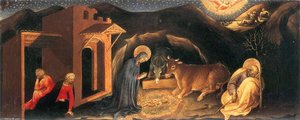
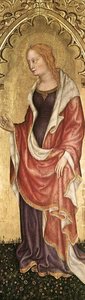
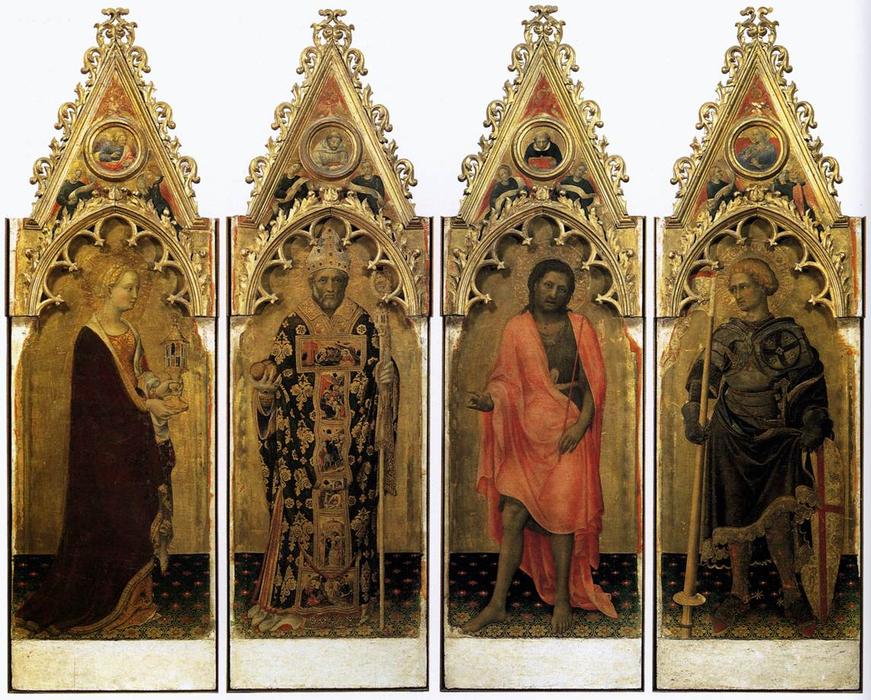
Quaratesi Polyptych: Four Saints
 Eitempera auf Holztafel
- International Gothic Style
 1425
1425- Spätmittelalter
 197.0 x 57.0 cm
 Galleria degli Uffizi
 Weiterlesen
Handgefertigte Ölreproduktion
Handgemaltes Ölgemälde auf Leinwand in Ihrer Wunschgröße und mit Rahmen, auf Bestellung von unseren Künstlern angefertigt. ( Druck bestellen Bild kaufen)




P118B $10

P118H $10

P118W $10

P438Z $10

P508JH $12

P508YH $12

P805H $10

P805Z $10

P919BZ $10

P919G $10

P919XJ $10

P959ZH $10

P968JZ $12

W106C $8

W218G $10

W218JH $8

W218Y $10

W307PJ $10

W316G $10

W316PJ $8

W316Y $10

W398PJ $8

W4111J $10

W500HY $15

W500JH $15

W692G $12

W849H $8

W940BG $15

W953PJ $8




Wählen Sie aus unseren vordefinierten Formaten, die den ursprünglichen Proportionen des Kunstwerks entsprechen.

Sie können Ihre eigenen Maße eingeben, um einen bestimmten Rahmen oder Platz auszufüllen. Wenn die gewählte Größe nicht den Proportionen des Originalbildes entspricht, werden wir das Kunstwerk entweder beschneiden oder das Gemälde durch zusätzliche, handgemalte Elemente erweitern. Ein digitales Mockup wird Ihnen zur Genehmigung zugesandt, bevor die Produktion beginnt.
Bitte beachten Sie, dass die Bildschirmvorschau nicht die tatsächliche Beschneidung oder Erweiterung widerspiegelt. Nur das Mockup zeigt die endgültige Komposition exakt an.
Obwohl Sondermaße verfügbar sind, empfehlen wir, eine Größe aus der vordefinierten Liste zu wählen, um die ursprünglichen Proportionen beizubehalten.
Nach der Bestellung wird das OriginalUniqueArt.com-Team dem Kunden Anweisungen per E-Mail zusenden und eine Mockup-Vorschau bereitstellen.
Weltweiter Versand () in nur 3 bis 4 Wochen statt der üblichen 5 Wochen. (21 August). Keine Kompromisse bei der Qualität.

Kostenloser weltweiter Expressversand

Hochwertige Leinenleinwand

Umfassender Versicherungsschutz beim Versand

Zollgebühren-Rückerstattungsgarantie

Garantie für exakte Farbtreue

60 Tage Rückgaberecht (nur bei Mängeln)

100% Geld-zurück-Garantie

Mengenrabatt verfügbar
 Die Glasoption ist nur für Größen unter 110 cm verfügbar.

Quaratesi Polyptych: Four Saints
Art der Reproduktion
Format der Reproduktion
-


Gesamtpreis
$ 300
Beschreibung des Kunstwerks
Gentile da Fabriano’s Quaratesi Polyptych: A Symphony of Gothic Grace
Gentile da Fabriano stands as a beacon of the International Gothic style, a movement that flourished in late medieval Italy and epitomized an unparalleled fusion of elegance and meticulous detail. Born around 1370 in Fabriano, nestled within the Marche region—a town renowned for its textile industry and artistic heritage—his early life remains shrouded in relative obscurity. Records indicate his mother succumbed to illness before 1380, and his father, Niccolò di Giovanni Massi, sought solace in monastic devotion by 1385 – formative experiences undoubtedly shaping the young Fabriano’s artistic sensibilities. While biographical information is sparse, the undeniable brilliance of his oeuvre speaks volumes about his prodigious talent and unwavering dedication to mastering the stylistic conventions of his time.The Quintessence of Gothic Refinement
Fabriano's artistic journey commenced with a masterful depiction of Mary Magdalene and Child (c. 1395-1400), now housed in Berlin, establishing him as an immediate disciple of the Venetian aesthetic. This early work already showcased the hallmark characteristics of the International Gothic: luminous color palettes achieved through glazing techniques—a revolutionary departure from preceding styles—delicate modeling effects that imbue figures with palpable fleshiness, and a profound sense of spatial depth conveyed through innovative perspective. These innovations weren’t merely stylistic flourishes; they represented a conscious effort to elevate painting beyond mere representation toward capturing the spiritual essence of its subjects.A Commission for Florentine Patronage: The Quaratesi Polyptych
Fabriano's reputation swiftly ascended, culminating in his arrival in Florence around 1420—a pivotal moment that cemented his place within the burgeoning artistic milieu of the Renaissance. He was commissioned to create a monumental altarpiece for the Quaratesi chapel in San Niccolò Oltrarno – a project that would solidify his legacy as one of the era’s foremost artists. Dismembered centuries later, this polyptych originally comprised five panels depicting scenes from the life of Saint Nicholas of Bari and Saint Bernard of Clairvaux, alongside depictions of Mary Magdalene and John the Baptist. The central panel showcases the Virgin Mary cradling the infant Jesus amidst a richly ornamented architectural setting—a testament to Fabriano’s unparalleled skill in rendering complex spatial relationships and conveying profound emotional resonance.Technique and Symbolism: Layers of Artistic Mastery
Fabriano employed tempera on wood, a technique favored for its durability and ability to achieve vibrant colors. The meticulous layering of translucent glazes—a hallmark of Gothic painting—created an ethereal luminosity that permeated the entire composition. Furthermore, Fabriano’s attention to detail extended beyond mere visual accuracy; he infused his artwork with symbolic significance, reflecting the theological preoccupations of his time. The saints themselves embody virtues such as compassion, humility, and piety – qualities deemed essential for spiritual contemplation. The architectural elements—particularly the pyramidal structure—were deliberately chosen to evoke notions of divine majesty and stability.A Lasting Impression: Influence Beyond Florence
Gentile da Fabriano’s influence reverberated throughout Europe, inspiring artists across disciplines. His meticulous observation of nature combined with his masterful command of artistic conventions established him as a cornerstone of the International Gothic style—a movement that bridged the gap between medieval tradition and Renaissance innovation. The Quaratesi Polyptych remains an enduring symbol of artistic excellence, inviting viewers to contemplate not only its breathtaking beauty but also the profound spiritual values it embodies. Its reproductions offer a tangible connection to this extraordinary period in art history, allowing admirers worldwide to experience Fabriano’s visionary artistry firsthand.Über den Künstler
Frühes Leben und Werdegang
Gentile da Fabriano, ein italienischer Maler, wurde um 1370 in oder nahe Fabriano im Marche-Gebiet Italiens geboren. Seine Mutter verstarb vor 1380, und sein Vater, Niccolò di Giovanni Massi, zog 1385 in ein Kloster. Über Gentiles frühe künstlerische Ausbildung ist wenig bekannt, aber eines seiner ersten bekannten Werke, die Madonna mit Kind (ca. 1395-1400, heute in Berlin), zeigt den Einfluss der spätgotischen Malerei Norditaliens.Karrierehöhepunkte
* Um 1405 arbeitete Gentile da Fabriano in Venedig, wo er ein Tafelbild für die Kirche Santa Sofia malte (heute verloren). Er kooperierte auch mit Jacopo Bellini und kannte Pisanello und Michelino da Besozzo. * Zwischen 1410 und 1412 schuf er eines seiner Meisterwerke, das Valle Romita Polyptychon (heute in der Pinacoteca di Brera). * Im Jahr 1423 malte Gentile da Fabriano sein berühmtes Altarbild, die Anbetung der Heiligen Drei Könige, heute in den Uffizien, das als eines der Meisterwerke des Internationalen Gotischen Stils gilt.Wichtige Werke und Standorte
- Gentile da Fabriano: Anbetung der Heiligen Drei Könige (10) (300 x 282 cm, Galleria degli Uffizi, Florenz, Italien)
- Valle Romita Polyptychon (Pinacoteca di Brera)
- Madonna mit Kind (verloren, ehemals im Palazzo dei Notai auf der Piazza del Campo, Siena)
Stil und Bedeutung
Gentile da Fabriano gilt als einer der Hauptvertreter des Internationalen Gotischen Stils in Italien. Sein Stil zeichnet sich durch eine detailreiche Darstellung, elegante Figuren und eine harmonische Farbgebung aus. Er kombinierte naive Erzählfreude mit höfischer Eleganz. Gentiles Werke beeinflussten die florentinischen Maler und bildeten das Gegenstück zum kargen Realismus Masaccios. Er war der Erste in der Reihe glänzender Maler Umbriens. Zu seinen Schülern zählen bedeutende Maler wie Pisanello oder Jacopo Bellini.Tod und Vermächtnis
Gentile da Fabriano starb vor dem 14. Oktober 1427. Er wurde in der Kirche Santa Maria in Trastevere, Rom, oder möglicherweise in der heute als S. Francesca Romana bekannte Kirche in Florenz begraben, obwohl sein Grab verschwunden ist. Sein Einfluss auf die Malerei des 15. Jahrhunderts war bedeutend und seine Werke werden bis heute für ihre Schönheit und ihren Detailreichtum geschätzt.
Gentile Da Fabriano
1370 - 1427 , Italien
Kurzinfos
- Bemerkenswerte Kunstwerke:
- Anbetung der Heiligen Drei Könige
- Valle Romita Polyptychon
- Madonna mit Kind (Berlin)
- Geburtsdatum: ca. 1370
- Geburtsort (Stadt, Land): Fabriano, Italien
- Künstler Oder Bewegungen, Die Von Diesem Künstler Beeinflusst Wurden:
- Florentinische Maler
- Frührenaissance
- Künstler, Die Diesen Künstler Beeinflussten: ['Norditalienische Gotik']
- Künstlerische Bewegung/Stil: International Gotik
- Nationalität: Italienisch
- Todatum: 1427
- Vollständiger Name: Gentile da Fabriano
Ähnliche Artikel
Leonardo da Vinci: Die 25 Meisterwerke für Ihr Zuhause | OriginalUniqueArt
Entdecken Sie die 25 Meisterwerke von Leonardo da Vinci! Erfahren Sie faszinierende Geschichten hinter Gemälden wie der Mona Lisa & Das letzte Abendmahl. Hochwertige Reproduktionen für Ihr Zuhause – jetzt bei OriginalUniqueArt entdecken!
Giclée Prints: Archival Quality & Aesthetic Nuances for the Discerning Collector
Explore the world of giclée prints with OriginalUniqueArt. Learn about archival quality, aesthetic nuances & investment potential. Expert guidance for discerning art collectors seeking museum-quality reproductions and lasting value.

Beyond Borders: The Spiritual & Stylistic Innovations of International Gothic Art
Explore the exquisite beauty & spiritual depth of International Gothic art. Discover key artists like Simone Martini & Pol de Limbourg, its origins, symbolism, and lasting influence on European painting. Expert insights at OriginalUniqueArt.

The Enduring Legacy of Fine Art Prints: Technique, History & Aesthetic Impact
Explore the rich history & techniques of fine art prints. Discover investment potential, assess authenticity, and learn how to preserve your collection with expert guidance. Trusted insights for discerning collectors.

Gothic Vibes: From Dark Shadows to Bold Modern Edge | The Ultimate Trend Forecast
Explore the evolution of Gothic vibes, from historical shadows to bold modern edge. Discover how dark aesthetics, noir interiors, and contemporary subcultures are redefining modern design through a high-impact, trend-focused lens.