

 Versenden
 Teilen
 Details anzeigen

 Herunterladen
 Ähnliche Objekte
 Diashow
Boschi Di Stefano Home: Studiolo


 Weiterlesen
Handgefertigte Ölreproduktion
Handgemaltes Ölgemälde auf Leinwand in Ihrer Wunschgröße und mit Rahmen, auf Bestellung von unseren Künstlern angefertigt. ( Druck bestellen Bild kaufen)




































Wählen Sie aus unseren vordefinierten Formaten, die den ursprünglichen Proportionen des Kunstwerks entsprechen.

Sie können Ihre eigenen Maße eingeben, um einen bestimmten Rahmen oder Platz auszufüllen. Wenn die gewählte Größe nicht den Proportionen des Originalbildes entspricht, werden wir das Kunstwerk entweder beschneiden oder das Gemälde durch zusätzliche, handgemalte Elemente erweitern. Ein digitales Mockup wird Ihnen zur Genehmigung zugesandt, bevor die Produktion beginnt.
Bitte beachten Sie, dass die Bildschirmvorschau nicht die tatsächliche Beschneidung oder Erweiterung widerspiegelt. Nur das Mockup zeigt die endgültige Komposition exakt an.
Obwohl Sondermaße verfügbar sind, empfehlen wir, eine Größe aus der vordefinierten Liste zu wählen, um die ursprünglichen Proportionen beizubehalten.
Nach der Bestellung wird das OriginalUniqueArt.com-Team dem Kunden Anweisungen per E-Mail zusenden und eine Mockup-Vorschau bereitstellen.
Weltweiter Versand () in nur 3 bis 4 Wochen statt der üblichen 5 Wochen. (22 August). Keine Kompromisse bei der Qualität.

Kostenloser weltweiter Expressversand

Hochwertige Leinenleinwand

Umfassender Versicherungsschutz beim Versand

Zollgebühren-Rückerstattungsgarantie

Garantie für exakte Farbtreue

60 Tage Rückgaberecht (nur bei Mängeln)

100% Geld-zurück-Garantie

Mengenrabatt verfügbar
 Die Glasoption ist nur für Größen unter 110 cm verfügbar.

Boschi Di Stefano Home: Studiolo
Art der Reproduktion
Format der Reproduktion
-


Gesamtpreis
$ 300
Beschreibung des Kunstwerks
Gabriele Carelli’s “Boschi Di Stefano Home: Studiolo” – A Window into Neapolitan Grandeur
The photograph presented here offers a rare glimpse into the meticulously curated world of Gabriele Carelli, a pivotal figure in 19th-century Italian landscape painting. “Boschi Di Stefano Home: Studiolo,” created in 1982, isn’t merely a depiction of a room; it's an evocative tableau capturing the essence of aristocratic taste and the burgeoning appreciation for art collecting within Naples during Carelli’s lifetime. The scene unfolds within what appears to be a “studiolo,” a private study or salon – a space traditionally designed for contemplation, artistic pursuits, and the display of prized possessions – reflecting the refined sensibilities of the wealthy Boschi family.
- The Artist's Context: Gabriele Carelli (1821-1900), born in Naples, was deeply rooted in the tradition of Posillipo painting, a school renowned for its romanticized depictions of the Bay of Naples. His early training under his father, Raffaele Carelli, solidified his connection to this legacy, characterized by luminous color palettes and an emphasis on capturing the sublime beauty of the natural world.
- Travels and Inspiration: Carelli’s artistic journey was significantly shaped by his extensive travels, particularly his tours with the 6th Duke of Devonshire across Sicily, Greece, Asia Minor, and Constantinople. These expeditions provided him with a wealth of subject matter – dramatic landscapes, ancient ruins, and glimpses into diverse cultures – enriching his artistic vocabulary and broadening his perspective.
A Symphony of Light and Color: Carelli’s Technique
Carelli's style is immediately recognizable through his masterful use of light and color. The photograph reveals a deliberate application of tonal variation, creating a sense of depth and atmosphere within the room. The dominant black and white palette emphasizes the textures – the plush red carpet, the polished surfaces of the furniture, and the intricate details of the paintings themselves. His technique leans heavily on watercolor principles, evident in the delicate washes and subtle gradations that define the forms. He skillfully employed atmospheric perspective, a hallmark of Neapolitan landscape painting, to convey distance and create a sense of vastness, even within this intimate interior setting.
- Watercolor’s Influence: Carelli's frequent use of watercolor during his travels directly informed his oil paintings. The fluidity and transparency of watercolor allowed him to capture the ephemeral qualities of light and atmosphere with remarkable precision.
- Genre Blending: Characteristic of his work, Carelli seamlessly integrates genre elements – depictions of human activity and domestic scenes – into his landscape compositions, adding layers of narrative and social commentary.
Symbolism and Emotional Resonance
Beyond a simple room interior, “Boschi Di Stefano Home: Studiolo” speaks to broader themes of wealth, taste, and the pursuit of beauty. The carefully arranged paintings, the luxurious furnishings, and the grand chandelier all contribute to an atmosphere of opulence and refinement. The presence of the chair suggests a space for quiet contemplation or convivial conversation – a stage upon which social interactions unfolded. The room itself embodies the concept of *sprezzatura*—a deliberate nonchalance that conveyed both sophistication and effortless grace, highly valued within Neapolitan aristocratic circles.
- The Studiolo as a Concept: The “studiolo” was more than just a room; it represented an individual’s intellectual and artistic identity. It served as a sanctuary for study, reflection, and the display of one's accomplishments.
- Evoking Nostalgia: The photograph possesses a powerful sense of nostalgia, transporting us to a bygone era of aristocratic elegance and artistic patronage.
A Reproduction Opportunity
OriginalUniqueArt offers a meticulously crafted hand-painted reproduction of Gabriele Carelli’s “Boschi Di Stefano Home: Studiolo,” allowing you to bring this captivating artwork into your own space. Our skilled artisans employ traditional techniques and archival materials to faithfully recreate Carelli's vision, ensuring that the beauty and detail of the original are preserved for generations to come. This reproduction is more than just a print; it’s an investment in art history and a testament to the enduring legacy of Gabriele Carelli.
Über den Künstler
Frühleben und Ausbildung
Gabriele Carelli, ein italienischer Maler, wurde im Jahr 1821 in Neapel geboren. Er war der Sohn von Raffaele Carelli, ebenfalls ein Maler der Schule von Posillipo. Gabriele’s frühes Leben und seine Ausbildung waren von dem Einfluss seines Vaters geprägt, und er entwickelte sich zu einem renommierten Landschaftsmaler auf eigene Faust. Seine künstlerische Entwicklung begann in Neapel, wo er die Grundlagen des Malens erlernte, wobei sein Vater als Mentor fungierte. Die Schule von Posillipo, einer Gruppe von Künstlern, die für ihre Darstellung der Schönheit der italienischen Landschaft bekannt waren, spielte eine entscheidende Rolle bei seiner Ausbildung und beeinflusste seinen Stil nachhaltig.Künstlerischer Stil und Beiträge
Gabriele Carelli ist vor allem für seine Landschaftsbilder bekannt, die oft Genre-Szenen mit seinen Werken verbanden. Er begleitete den 6. Herzog von Devonshire auf Reisen durch Sizilien, Griechenland, Kleinasien und Konstantinopel und schuf Aquarelle verschiedener Sehenswürdigkeiten. Diese Erfahrungen erweiterten seinen künstlerischen Horizont und ermöglichten ihm, die Vielfalt der Landschaften zu erkunden. Seine Malweise zeichnete sich durch eine ruhige Beobachtungsgabe und eine meisterhafte Farbwahl aus, die den Eindruck von Licht und Atmosphäre erzeugte. Er war besonders daran interessiert, die Schönheit der italienischen Landschaft einzufangen, wobei er oft Elemente des Alltags in seine Werke einbaute.Bedeutende Werke und Ausstellungen
Zu seinen bemerkenswertesten Werken gehören:- „Das Innere des Sakristei der Kirche S. Maria del Parto mit einem Denkmal für Jacopo Sannazzaro“ (Palast von Capodimonte, Neapel, Italien)
- „Ruinen von Paestum“ (Aquarell, Palast von Capodimonte, Neapel, Italien)
Erbe und königliche Patenschaft
Gabriele Carellis Werk erregte die Aufmerksamkeit Königin Victoria, die ihn zu ihrer Patonin ernannte. Seine Aquarellansichten Englands, Italiens und Frankreichs sind heute Teil der königlichen Sammlung im Osborne House und Schloss Windsor. Sein Einfluss auf die Kunst des 19. Jahrhunderts ist unbestreitbar, und seine Werke werden weiterhin von Sammlern und Kunstliebhabern geschätzt.Zugehörigkeit zur Schule von Posillipo
Als Mitglied der Schule von Posillipo trug Gabriele Carelli zur Entwicklung der Landschaftsmalerei in Italien bei. Diese lose Gruppe von Künstlern, die sich in Neapel befand, konzentrierte sich auf die Darstellung der Schönheit der italienischen Landschaft und schuf Werke, die sowohl die natürliche Schönheit als auch den menschlichen Einfluss widerspiegelten.Spätere Jahre und Tod
Gabriele Carelli starb im Jahr 1900 und hinterließ ein Vermächtnis an wunderschöne Landschaftsbilder, die Kunstliebhaber bis heute inspirieren. Sein Werk ist ein Zeugnis für die künstlerische Tradition Neapels und die Bedeutung der italienischen Landschaft in der europäischen Kunst des 19. Jahrhunderts.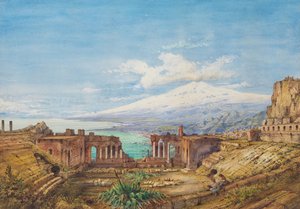
Gabriele Carelli
1821 - 1900 , Italien
Kurzinfos
- Artistic Movement Or Style: Schule von Posillipo
- Artists Or Movements Influenced By This Artist: ['Schule von Posillipo']
- Artists Who Influenced This Artist: ['Raffaele Carelli']
- Date Of Birth: 1821 Naples, Italien
- Date Of Death: 1900
- Full Name: Gabriele Carelli
- Nationality: Italiener
- Notable Artworks:
- Innenhof der Kirche S. Maria del Parto
- Ruinen von Paestum
- Place Of Birth: Neapel, Italien
Ähnliche Artikel

Weiße Meisterwerke: Die Top 10 berühmtesten Gemälde und ihre zeitlose Eleganz
Entdecken Sie die Top 10 berühmter Gemälde, dominiert von Weiß! Von Malewitsch bis Rothko – erfahren Sie Geschichten hinter ikonischen Kunstwerke und lassen Sie sich für Ihre Wohnraumgestaltung inspirieren. Kunstreproduktionen in Museumsqualiät auf

Katsushika Hokusai: Die 25 Meisterwerke des Ukiyo-e – Kunst für Ihr Zuhause | OriginalUniqueArt
Entdecken Sie die 25 Meisterwerke von Katsushika Hokusai! Tauchen Sie ein in die Welt des Ukiyo-e, berühmte Holzschnitte wie 'Die große Welle' & Fuji-Ansichten. Hochwertige Kunstdrucke für Ihr Zuhause – jetzt auf OriginalUniqueArt.com!

Romantische Landschaften: Die 10 Meisterwerke, die eine Epoche prägten | OriginalUniqueArt
Entdecken Sie die 10 Meisterwerke der Romantischen Landschaftsmalerei! Von Caspar David Friedrich bis Turner – erleben Sie die Kunst, Emotion & Natur. Hochwertige Reproduktionen auf OriginalUniqueArt.com

Die Top 10 berühmter Gemälde im Reich der dunklen Töne |
Entdecken Sie die Top 10 berühmter Gemälde, beherrscht von dunklen Tönen! Von Caravaggio bis Manet – erfahren Sie die Geschichten hinter Meisterwerken der Kunstgeschichte. Finden Sie Ihre perfekte Reproduktion auf .
Giclée Prints: Archival Quality & Aesthetic Nuances for the Discerning Collector
Explore the world of giclée prints with OriginalUniqueArt. Learn about archival quality, aesthetic nuances & investment potential. Expert guidance for discerning art collectors seeking museum-quality reproductions and lasting value.

