In echtem Maßstab anzeigen
 Versenden als Grußkarte
 Teilen
 Details anzeigen
 Leitfaden öffnen

 Herunterladen
 Ähnliche Objekte
 Röntgenaufnahme
 Diashow
 Besucherstatistiken
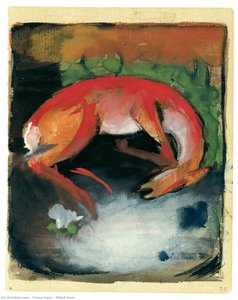
Hirsch am Waldrand


 Mehr anzeigen
Giclée / Kunstdruck
Giclée- oder Leinwanddruck in Museumsqualität mit schneller Produktion und flexiblen Veredelungsoptionen. ( Handgemalte Reproduktion kaufen Zum digitalen Bild wechseln)




P118B €10

P118H €10

P118W €10

P438Z €10

P508JH €12

P508YH €12

P805H €10

P805Z €10

P919BZ €10

P919G €10

P919XJ €10

P959ZH €10

P968JZ €12

W106C €8

W218G €10

W218JH €8

W218Y €10

W307PJ €10

W316G €10

W316PJ €8

W316Y €10

W398PJ €8

W4111J €10

W500HY €15

W500JH €15

W692G €12

W849H €8

W940BG €15

W953PJ €8




Wählen Sie aus unseren vordefinierten Formaten, die den ursprünglichen Proportionen des Kunstwerks entsprechen.

Geben Sie die Breite und die Höhe an, die Sie benötigen, damit der Druck perfekt in Ihren Rahmen oder an Ihre Wand passt. Ein Druck kann nur beschnitten werden und niemals größer als das Originalbild gemacht werden; daher verliert ein Format mit einer anderen Proportion einen Teil des Bildes. Wir senden Ihnen ein digitales Mockup zur Freigabe, bevor wir den Druck ausführen. Das auf dieser Seite gezeigte Bild zeigt nicht den tatsächlichen Beschnitt – dies ist nur im Mockup ersichtlich.
Weltweiter Versand () innerhalb von 2 Wochen statt der üblichen 4/5 Wochen. (22 Oktober)

Kostenloser weltweiter Expressversand

Hochwertige Leinenleinwand

Vollständiger Versicherungsschutz beim Versand

Zollgebühren-Rückerstattungsgarantie

Garantie für exakte Farbtreue

100-tägiges Rückgaberecht (nur bei Mängeln)

100% Geld-zurück-Garantie

Angebot für Mengenrabatt
 Die Glasoption ist nur für Größen unter 110 cm verfügbar.

Hirsch am Waldrand
Giclée / Kunstdruck
Format der Reproduktion
-


Gesamtpreis
€ 70
Franz Marc’s “Deer at the Edge of Forest”: A Symphony of Color and Spirit
Franz Marc's "Deer at the Edge of Forest," painted in 1908, is more than just a depiction of woodland creatures; it’s a profound meditation on nature, spirituality, and the very essence of existence. This watercolor masterpiece, now available as a stunning reproduction through OriginalUniqueArt.com, invites us into a world where the boundaries between reality and dream blur, offering a serene yet deeply resonant experience for the viewer. Marc, a pivotal figure in the Expressionist movement, sought to capture not merely what he saw, but what he *felt* – a connection to the natural world that transcended purely visual representation.
Composition and Technique: A Dance of Light and Shadow
The painting immediately draws the eye into a softly rendered forest scene. Several deer, rendered with an almost ethereal quality, move gracefully through the undergrowth, their forms dissolving slightly into the surrounding foliage. The composition is carefully balanced, utilizing a sense of depth achieved through subtle variations in color and tone. Marc masterfully employs watercolor as his primary medium, allowing for delicate washes and luminous effects that imbue the scene with a remarkable sense of fragility and atmosphere. Notice how he builds up layers of translucent color, creating an illusion of light filtering through the trees – a technique characteristic of Impressionism but imbued with Marc’s intensely personal Expressionist sensibility. The bold brushstrokes, particularly visible in the darker areas of the forest, add to the painting's dynamic energy, preventing it from feeling static or overly sentimental.
Symbolism and Spiritual Resonance
Beyond its aesthetic beauty, “Deer at the Edge of Forest” is rich in symbolic meaning. Marc’s fascination with animals stemmed from his belief that they possessed a purity and innocence unattainable by humankind. The deer, frequently interpreted as symbols of vulnerability, gentleness, and connection to the divine, are presented here not as wild beasts but as creatures imbued with a quiet dignity. The presence of the horse on the right side of the frame introduces an element of domesticity and human interaction – perhaps suggesting the potential for harmony between humanity and nature, or conversely, a subtle commentary on our encroachment upon the wilderness. The painting’s roots in Marc's early theological explorations are evident; he sought to translate his spiritual experiences into visual form, creating works that could evoke a sense of awe and reverence.
Historical Context and Artistic Legacy
Created during a period of intense artistic experimentation and social upheaval, “Deer at the Edge of Forest” reflects the broader spirit of the Blue Rider movement – a group of artists and intellectuals dedicated to exploring spiritual themes through art. Franz Marc’s work is inextricably linked to this movement, which sought to break free from traditional academic conventions and embrace a more intuitive and expressive approach to painting. The painting's influence can be seen in the works of later Expressionist painters such as Wassily Kandinsky, with whom Marc shared a close artistic friendship. The Museum Münster (Ulm, Germany) proudly houses several examples of Marc’s oeuvre, including “Shepherdess with Sheep” and “Red Deer,” offering visitors a comprehensive understanding of his artistic development. Consider also the work of Hermann Max Pechstein, another significant figure in German Expressionism, whose paintings explore similar themes of nature and spirituality. For those seeking to delve deeper into Marc’s world, OriginalUniqueArt.com offers high-quality reproductions that faithfully capture the nuances of this extraordinary painting.
Explore more about Franz Marc's life and work on our website: Franz Marc
Fragen & Antworten
Welches Format hat "Hirsch am Waldrand" von Franz Marc?
Das Format von „Hirsch am Waldrand“ ist Panoramaformat. Dies ist hilfreich bei der Planung, wo eine Reproduktion platziert werden soll.
Wie lässt sich "Hirsch am Waldrand" von Franz Marc in der Inneneinrichtung verwenden?
"Hirsch am Waldrand" von Franz Marc wird für Akzentuierung empfohlen, idealerweise in einem Wohnbereich. Verwendung und Raumgestaltung geben gemeinsam Aufschluss darüber, wo eine Reproduktion am besten zur Geltung kommt.
Wer ist der Urheber von "Hirsch am Waldrand" und welcher Stilrichtung ist das Werk zuzuordnen?
Hinter "Hirsch am Waldrand" stehen Franz Marc und die Expressionism-Bewegung.
Biografie des Künstlers
Franz Marc: Ein Pionier des Deutschen Expressionismus
Frühes Leben und Ausbildung
- Franz Moritz Wilhelm Marc wurde am 8. Februar 1880 in München, Deutschland, geboren.
- Sein Vater, Wilhelm Marc, war Landschaftsmaler und beeinflusste seinen Sohn zunächst durch seine künstlerischen Neigungen.
- Marc erwog kurz Theologie, bevor er sich der Kunst widmete und nach dem Besuch der Universität München an der Akademie der Bildenden Künste in München studierte.
- Zu den frühen Studien gehörten das Kopieren von Meistern und die Erforschung verschiedener künstlerischer Techniken.
Künstlerische Entwicklung und Einflüsse
- Anfangs wurden Marcs Werke von Impressionismus und akademischen Malstilen beeinflusst.
- Ein entscheidender Moment war seine Besuche in Paris, wo er die Werke von Vincent van Gogh entdeckte und seine Verwendung von Farbe und emotionaler Ausdruck maßgeblich prägte.
- Er experimentierte mit verschiedenen künstlerischen Gruppen wie der Neuen Künstlervereinigung München, bevor er Der Blaue Reiter gemeinsam gründete.
- Auch Robert Delaunays Werk beeinflusste Marcs Erkundung abstrakter Formen und lebendiger Farben.
Der Blaue Reiter und Schlüsselwerke
- Im Jahr 1911 gründete Marc gemeinsam mit Wassily Kandinsky Der Blaue Reiter (Der Blaue Reiter), eine Zeitschrift und Künstlergruppe, die für den deutschen Expressionismus von zentraler Bedeutung wurde.
- Diese Gruppe suchte nach spiritueller Bedeutung in der Kunst und lehnte traditionelle künstlerische Konventionen ab.
- Bekannte Werke aus dieser Zeit sind:
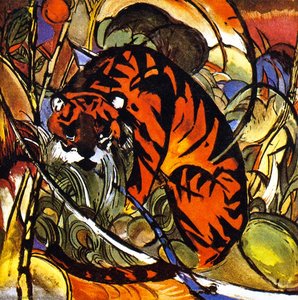
- Der Tiger (1912) – zeigend seinen sich entwickelnden Stil und seine symbolische Verwendung von Tieren.
- Rehdamee (1912) - demonstrierend eine wachsende Konzentration auf Tierdarstellungen.
- Der Turm der blauen Pferde, Die Füchse und das Schicksal der Tiere (1913) – repräsentierend die Culmination seiner künstlerischen Vision.
Themen und Künstlerischer Stil
- Marcs Kunst ist durch ihre lebendigen Farben, vereinfachte Formen und symbolische Darstellung von Tieren gekennzeichnet.
- Er glaubte, dass Tiere eine Reinheit und eine spirituelle Verbindung zur Natur besaßen, die der Mensch verloren hatte.
- Seine Verwendung von Farbe diente nicht nur der Beschreibung, sondern auch dem Ausdruck, Emotionen und innere Zustände zu vermitteln.
- Er versuchte, die Essenz seiner Motive darzustellen, anstatt realistische Darstellungen.
Erster Weltkrieg und tragisches Ende
- Mit dem Ausbruch des Ersten Weltkriegs im Jahr 1914 wurde Marc in die deutsche Armee eingezogen.
- Trotz seines Versuchs, aufgrund seiner künstlerischen Tätigkeit von der Dienstpflicht freigestellt zu werden, diente er als Kavallerieoffizier.
- Er starb am 4. März 1916 im Verlauf der Schlacht an der Verdun tragisch.
- Sein Tod beendete eine vielversprechende Karriere, festigte aber gleichzeitig seinen Platz in der Kunstgeschichte.
Vermächtnis und historische Bedeutung
- Marcs Werk bleibt hoch einflussreich für seine expressive Verwendung von Farbe, symbolische Bilder und spirituelle Tiefe.
- Er gilt als eine Schlüsselgestalt bei der Entwicklung des Deutschen Expressionismus und als Vorläufer der abstrakten Kunst.
- Seine Gemälde werden in großen Museen auf der ganzen Welt ausgestellt, darunter das Lenbachhaus in München, das eine umfangreiche Sammlung seiner Werke beherbergt.
- Marcs künstlerische Vision inspiriert weiterhin Künstler und fesselt das Publikum bis heute.

Franz Marc
1880 - 1916 , Deutschland
Eckdaten zum Künstler
- Beeinflusste Kunstrichtungen: ['Abstrakte Kunst']
- Beeinflusste Künstler: ['Vincent van Gogh']
- Bekannte Werke:
- Der Tiger (1912)
- Rehdamee (1912)
- Turm der blauen Pferde (1913)
- Die Füchse und das Schicksal
- Geburtsdatum: 08. Februar 1880
- Geburtsort: München, Deutschland
- Künstlerische Richtung: Deutscher Expressionismus
- Nationalität: Deutsch
- Todatum: 4. März 1916
- Vollständiger Name: Franz Marc
Verwandte Artikel

Franz Marc: Expressionismus, Spiritualität und die Tier-Symbolik eines modernen Meisters
Entdecken Sie das faszinierende Werk von Franz Marc! Erfahren Sie mehr über seine spirituelle Kunst, die Tierdarstellungen und seinen Einfluss auf den Expressionismus. Expertenanalyse & Hintergrundinformationen.
Animalia: Die bleibende Präsenz von Tieren in Kunst und Innenarchitektur
Entdecken Sie die faszinierende Welt der Animalia! Von historischen Tierdarstellungen bis zur modernen Innenarchitektur – wir bieten Expertise, hochwertige Reproduktionen & Kunstberatung.

Die 10 legendärsten Aquarellwerke der Kunstgeschichte – Meisterwerke für Ihr Zuhause
Entdecken Sie die 10 legendärsten Aquarellwerke der Kunstgeschichte! Von Turner bis Monet – erleben Sie die Geschichten, Techniken & Farben dieser Meisterwerke. Finden Sie hochwertige Kunstdrucke auf OriginalUniqueArt.com und gestalten Sie Ihr Zuhause mit zeitloser Eleganz.

Deutsche Expressionismus Meisterwerke: Die 10 wichtigsten Kunstwerke für Ihr Zuhause
Entdecken Sie die 10 bedeutendsten Werke des Deutschen Expressionismus! Kirchner, Nolde & Co. – ihre Geschichten, Techniken und zeitlose Schönheit. Hochwertige Kunstdrucke auf OriginalUniqueArt.com kaufen und Ihr Zuhause mit emotionaler Kunst bereichern. Jetzt entdecken!

Ephemeral Visions: Exploring the Artistic Legacy & Contemporary Practice of Watercolor Painting
Explore the captivating world of watercolor painting! Discover its rich history, essential techniques, influential artists & collecting tips. A comprehensive guide for art enthusiasts from OriginalUniqueArt.