Textgröße

() ·

Ein Gemälde, von Hand für Sie geschaffen

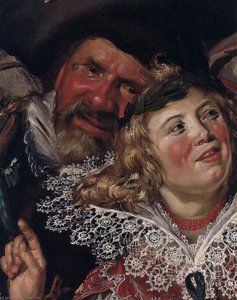
Singing Boy with a Flute

Handgefertigte Ölreproduktion

Handgemaltes Ölgemälde auf Leinwand in Ihrer Wunschgröße und mit Rahmen, auf Bestellung von unseren Künstlern angefertigt. ( Zum Druck wechseln Zum digitalen Bild wechseln)

Beschreibung des Sammlerstücks

Experience the captivating realism of Frans Hals' "Singing Boy with a Flute." This 1623 portrait showcases his signature loose brushwork and vibrant depiction of youth, capturing a moment of joyful music.

Künstlerbiografie

Erkunden Sie Frans Hals I: Meister der Porträtmalerei und Genreszenen aus dem Goldenen Zeitalter der Niederlande. Bekannt für seine lockere Pinselstrichtechnik und die Fähigkeit, Persönlichkeit einzufangen! #FransHals #NiederlandischeKunst

ab ·

Kapitel 1

Welche Größe soll es haben?

Wischen Sie, um die Größe zu ändern; das Bild auf der linken Seite zeigt den Rahmen in seiner tatsächlichen Breite. Die Proportionen des Originals bleiben erhalten.

Standardformat
individuell anpassbar
CM
INCH

Wählen Sie aus unseren vordefinierten Formaten, die den ursprünglichen Proportionen des Kunstwerks entsprechen.

Breite
Höhe

Geben Sie die Breite und die Höhe an, die Sie für Ihren Rahmen oder Ihre Wand benötigen. Da dieses Werk handgemalt ist, kann der Künstler bei einer anderen Form etwas mehr um das Bild herum malen oder etwas abschneiden – Sie entscheiden. Wir senden Ihnen ein digitales Mockup zur Freigabe, bevor mit dem Malen begonnen wird. Das auf dieser Seite gezeigte Bild stellt nicht das tatsächliche Ergebnis dar – dies tut nur das Mockup.

Kapitel 2

Wie soll es geliefert werden?

Wählen Sie die Kanten der Leinwand aus

Wählen Sie Ihren Rahmen

Corner sample of the WhiteWrap canvas edge finish, stretched on Massivholz bars
Weißer Rand €1
Corner sample of the BlurSideWrap canvas edge finish, stretched on Massivholz bars
verlaufende Kanten €1
Corner sample of the ExtendedWrap canvas edge finish, stretched on Massivholz bars
Umrandung €1
Corner sample of the P118B picture frame: formgepresstes Polystyrol, 5 cm wide and 3 cm thick
P118B €10
Corner sample of the P118H picture frame: formgepresstes Polystyrol, 5 cm wide and 3 cm thick
P118H €10
Corner sample of the P118W picture frame: formgepresstes Polystyrol, 5 cm wide and 3 cm thick
P118W €10
Corner sample of the P438Z picture frame: formgepresstes Polystyrol, 5.5 cm wide and 3.5 cm thick
P438Z €10
Corner sample of the P508JH picture frame: formgepresstes Polystyrol, 7 cm wide and 3.5 cm thick
P508JH €12
Corner sample of the P508YH picture frame: formgepresstes Polystyrol, 7 cm wide and 3.5 cm thick
P508YH €12
Corner sample of the P805H picture frame: formgepresstes Polystyrol, 5 cm wide and 3.5 cm thick
P805H €10
Corner sample of the P805Z picture frame: formgepresstes Polystyrol, 5 cm wide and 3.5 cm thick
P805Z €10
Corner sample of the P919BZ picture frame: formgepresstes Polystyrol, 7 cm wide and 3.5 cm thick
P919BZ €10
Corner sample of the P919G picture frame: formgepresstes Polystyrol, 7 cm wide and 3.5 cm thick
P919G €10
Corner sample of the P919XJ picture frame: formgepresstes Polystyrol, 7 cm wide and 3.5 cm thick
P919XJ €10
Corner sample of the P959ZH picture frame: formgepresstes Polystyrol, 5 cm wide and 3 cm thick
P959ZH €10
Corner sample of the P968JZ picture frame: formgepresstes Polystyrol, 6 cm wide and 4 cm thick
P968JZ €12
Corner sample of the W106C picture frame: Massivholz, 5 cm wide and 3 cm thick
W106C €8
Corner sample of the W218G picture frame: Massivholz, 5 cm wide and 3 cm thick
W218G €10
Corner sample of the W218JH picture frame: Massivholz, 5 cm wide and 3 cm thick
W218JH €8
Corner sample of the W218Y picture frame: Massivholz, 5 cm wide and 3 cm thick
W218Y €10
Corner sample of the W307PJ picture frame: Massivholz, 6 cm wide and 3 cm thick
W307PJ €10
Corner sample of the W316G picture frame: Massivholz, 6 cm wide and 3 cm thick
W316G €10
Corner sample of the W316PJ picture frame: Massivholz, 6 cm wide and 3 cm thick
W316PJ €8
Corner sample of the W316Y picture frame: Massivholz, 6 cm wide and 3 cm thick
W316Y €10
Corner sample of the W398PJ picture frame: Massivholz, 5 cm wide and 3 cm thick
W398PJ €8
Corner sample of the W4111J picture frame: Massivholz, 6.5 cm wide and 3.5 cm thick
W4111J €10
Corner sample of the W500HY picture frame: Massivholz, 7 cm wide and 5 cm thick
W500HY €15
Corner sample of the W500JH picture frame: Massivholz, 7 cm wide and 5 cm thick
W500JH €15
Corner sample of the W692G picture frame: Massivholz, 8 cm wide and 4 cm thick
W692G €12
Corner sample of the W849H picture frame: Massivholz, 5 cm wide and 3 cm thick
W849H €8
Corner sample of the W940BG picture frame: Massivholz, 7.5 cm wide and 4.5 cm thick
W940BG €15
Corner sample of the W953PJ picture frame: Massivholz, 6 cm wide and 3.5 cm thick
W953PJ €8
Corner sample of the H24-GOLD picture frame: geschnitztes Holz mit Gesso, 10 cm wide and 6 cm thick
H24-GOLD €30
Corner sample of the H24-SILVER picture frame: geschnitztes Holz mit Gesso, 10 cm wide and 6 cm thick
H24-SILVER €30
Corner sample of the H36-GOLD picture frame: geschnitztes Holz mit Gesso, 15 cm wide and 6.5 cm thick
H36-GOLD €45
Corner sample of the H36-SILVER picture frame: geschnitztes Holz mit Gesso, 15 cm wide and 6.5 cm thick
H36-SILVER €45

Profil: . Gesamtgröße mit Rahmen: .

Kapitel 3

Wer malt es, und sollte etwas geändert werden?

Beispiele für Anpassungsmöglichkeiten: Gesicht durch Kundenfoto ersetzen; Haustier hinzufügen (z. B. Katze durch Hund ersetzen); Versteckte Botschaft im Hintergrund einfügen; Hintergrundlandschaft oder Elemente ändern.
Nach der Bestellung wird das Team von OriginalUniqueArt.com den Kunden per E-Mail kontaktieren, um Anweisungen einzuholen und eine Vorschau des Entwurfs bereitzustellen

Weltweiter Versand () in nur 3 bis 4 Wochen statt der üblichen 5 Wochen. (7 November). Keine Kompromisse bei der Qualität.

Kapitel 4

Der letzte Schliff

Ein Namensschild, wie im Museum?

Details der gravierten Bronzetafel

This elegant plaque features the artist's name and the title of the artwork, finely engraved for a timeless presentation.

It is made from bronze with a refined, elegant finish. The text is precisely laser-engraved for a sharp and permanent result. Measuring 9x2 cm, the plaque is compact yet easy to read. It's built to be durable and scratch-resistant, offering a professional, museum-quality look. Mounting is simple thanks to the included adhesive backing.

Details zur Acrylglas-Plakette (transparent)

The plaque includes essential engraved details such as the artist's name, the title of the artwork, the date it was created, the type of media used-like oil on canvas or watercolor-a brief description of the piece, and a QR code that links to the complete artwork information.

It is crafted from clear acrylic, offering a sleek, modern appearance. The text is UV-engraved in black to ensure strong visual contrast. With a size of 10x15 cm, it ensures optimal readability. It comes equipped with two metal hooks for secure wall mounting. The plaque is designed to be weather-resistant, making it suitable for various environments, and it includes interactive features that work seamlessly with smartphone scanning.

Details zur schwarzen Acryltafel

This elegant plaque includes engraved information such as the artist's name, the title of the artwork, the date it was created, the type of media used (like oil on canvas or watercolor), a short description of the artwork, and a QR code for quick access to more information.

The plaque itself is made from refined black acrylic with a premium finish. The text is laser-engraved in white for high contrast and readability. Its size is 10x15 cm, designed to be easy to read. It comes with two metal hooks for professional mounting. The design is sleek and fits any interior style. It is also weather-resistant and durable, with built-in digital integration for mobile compatibility.

Ein Schutzlack?

Bis wann benötigen Sie es?

Kapitel 5

Ihr Gemälde, wie von Ihnen bestellt

Singing Boy with a Flute

Art der Reproduktion

Format der Reproduktion

-

Erstklassige Meisterkünstler

Mehr Detailtiefe, Raffinesse und zusätzliche Produktionszeit

-

Rahmen für Reproduktionen

-

-

Bei Kunstwerken oder Reproduktionen, die an einer Seite größer als 105 cm (ca. 41 Zoll) sind, wird der Rahmen zerlegt als Bausatz geliefert. Diese Methode gewährleistet eine sichere Zustellung und verhindert Schäden während des Transports.

Professionelle Montage erforderlich – dies ist kein DIY-Produkt.
Der Bausatz muss von einem erfahrenen professionellen Rahmenmacher zusammengebaut und die Leinwand gespannt werden. Hierfür werden Holzleim (nicht im Lieferumfang enthalten), eine Leinwandspannzange sowie Klemmen benötigt, um die Keilleisten während des Trocknungsvorgangs rechtwinklig zu halten. Eine unsachgemäße Montage oder eine ungleichmäßige Spannung der Leinwand kann das Kunstwerk dauerhaft beschädigen und ist nicht durch unsere Garantie abgedeckt.

  • Alle Vollholzkomponenten sind enthalten, präzise auf Maß zugeschnitten.

  • Der Zusammenbau erfolgt mit den mitgelieferten Schrauben sowie Holzkleber für die Eckverbindungen, der nicht im Lieferumfang enthalten ist und vom Rahmenbauer selbst beschafft werden muss.

  • Professionelles Werkzeug ist erforderlich und nicht im Lieferumfang enthalten: eine Keilrahmenzange (Spannwerkzeug) sowie Klammern, um die Leisten während der Trocknungszeit des Klebers rechtwinklig zu fixieren.

Wichtiger Hinweis:
Für die Eckverbindungen wird Holzleim benötigt, die Leisten müssen mit Zwingen fixiert werden, bis der Leim vollständig getrocknet ist, und das Spannen der Leinwand auf dem fertigen Rahmen erfordert eine Keilrahmen-Zange. Keines dieser Utensilien ist im Set enthalten. Bitte stellen Sie sicher, dass ein erfahrener Rahmenmacher zur Verfügung steht, bevor Sie diese Größe bestellen.

Beschriftung

-

-

Schutzlackierung

Glanzlack (verstärkt die Farben, schützt vor Licht und Feuchtigkeit)

-

Mein Kunstwerk personalisieren

Beispiele für Anpassungsmöglichkeiten: Gesicht durch Kundenfoto ersetzen; Haustier hinzufügen (z. B. Katze durch Hund ersetzen); Versteckte Nachricht im Hintergrund einfügen; Hintergrundlandschaft oder -elemente ändern.

-

Eilt sehr

Weltweiter Versand () in nur 3 bis 4 Wochen statt der üblichen 5 Wochen. (7 November). Keine Kompromisse bei der Qualität.

-

Expressversand

Weltweiter Versand () innerhalb von 5 Wochen. (14 November).

Inklusive Versand

Endpreis

€ 268

Gesamtpreis € 268

Die Glasoption ist nur für Größen unter 110 cm verfügbar.

In jeder Bestellung enthalten

  • Kostenloser weltweiter Expressversand
  • Hochwertige Leinenleinwand
  • Umfassender Versicherungsschutz beim Versand
  • Zollgebühren-Rückerstattungsgarantie
  • Garantie für exakte Farbtreue
  • 100 Tage Rückgaberecht (nur bei Mängeln)
  • 100% Geld-zurück-Garantie
  • Mengenrabatt verfügbar

Singing Boy with a Flute: A Window into Dutch Golden Age Life

Frans Hals’ “Singing Boy with a Flute,” painted in 1623, isn't merely a portrait; it’s a vibrant snapshot of a fleeting moment, a testament to the artist’s revolutionary approach to capturing human character and emotion. This intimate piece, measuring just 62 x 55 cm, immediately draws the viewer into a scene brimming with youthful exuberance and quiet contemplation. The subject, a young man dressed in a simple yet elegant black hat adorned with a striking white feather – a detail that hints at both status and perhaps a touch of playful vanity – holds a flute to his lips, poised as if about to release a cascade of melody. His gaze, directed squarely at the viewer, is not one of grand pronouncements but rather an expression of absorbed enjoyment, suggesting he’s lost in the pleasure of the music itself.

Hals' genius lies in his masterful manipulation of brushwork. Unlike many of his contemporaries who meticulously rendered every detail with painstaking precision, Hals employed a remarkably loose and expressive technique. Notice how the paint seems to dance across the canvas – short, broken strokes create an immediate sense of movement and vitality. This spontaneity isn’t haphazard; it's deliberate, designed to capture not just the appearance of the boy but also his spirit, his energy, and the very essence of a joyful moment. The background, a deceptively simple blue sky, provides a crucial contrast, emphasizing the figure and adding depth to the composition without distracting from the central subject.

The Artist and His Time: Frans Hals’ Revolutionary Portraiture

Frans Hals I (1582-1585), though his life was tragically short, left an indelible mark on the art world. Born in Antwerp and trained initially in that vibrant artistic hub, he later found a home in Haarlem, where he quickly established himself as one of the most important figures of the Dutch Golden Age. Hals’s work stands apart from the prevailing trends of his era. While other artists focused on idealized representations or elaborate courtly scenes, Hals favored capturing everyday life – portraits of merchants, militia members, and ordinary citizens. This shift reflected a broader cultural change in the Netherlands, where there was growing interest in depicting the lives of common people.

His innovative approach to portraiture wasn’t simply about recording likenesses; it was about revealing personality. Hals frequently used informal poses, direct gazes, and subtle gestures to convey character. He understood that a truly compelling portrait wasn't just a visual representation but an intimate glimpse into the soul of his subject. The inclusion of the feather, for example, is not merely decorative; it’s a detail that adds to the boy’s personality, suggesting perhaps a youthful confidence or a connection to social standing.

Symbolism and Context: A Portrait of Youthful Joy

Beyond the immediate depiction of a young man enjoying music, “Singing Boy with a Flute” offers clues about the cultural context of 17th-century Haarlem. The flute itself was a popular instrument during this period, often associated with entertainment and leisure. The boy’s attire – the simple black hat and clothing – suggests he is likely from a modest background, yet his posture and expression convey a sense of self-possession and contentment. It's a scene that speaks to the pleasures of youth, the importance of community, and the value of artistic expression.

The painting’s placement within the Gemäldegalerie in Berlin is particularly significant. It stands as a cornerstone of Hals’s oeuvre, demonstrating his mastery of capturing fleeting moments and conveying profound emotion with remarkable economy. The work's enduring appeal lies not just in its technical brilliance but also in its ability to transport us back to a specific time and place – a vibrant corner of the Dutch Golden Age where youthful joy and artistic spirit flourished.

Bringing Hals’ Masterpiece Home: A High-Quality Reproduction

OriginalUniqueArt offers meticulously crafted, hand-painted reproductions of “Singing Boy with a Flute,” allowing you to experience the artistry of Frans Hals in your own home. Our skilled artisans replicate Hals's distinctive brushwork and vibrant colors with exceptional accuracy, ensuring that your reproduction captures the essence of this iconic painting. Whether you’re an art enthusiast, a collector, or simply seeking a beautiful addition to your interior décor, our reproductions provide a stunning way to connect with one of the greatest masters of the Dutch Golden Age. Explore our collection today and bring a touch of Hals's brilliance into your life.

Fragen & Antworten

In welche Phase von Frans Hals Is Schaffen lässt sich "Singing Boy with a Flute" einordnen?

„Singing Boy with a Flute“ entstammt der Mature Period von Frans Hals I. Diese Einordnung setzt das Werk in Bezug zur künstlerischen Entwicklung des Künstlers.

Welcher Raum eignet sich aufgrund der Farben von "Singing Boy with a Flute" von Frans Hals I am besten?

Die Erdig-Farben von "Singing Boy with a Flute" von Frans Hals I passen perfekt zum empfohlenen Raum: einem Wohnbereich.

Warum ist der Urheberrechtsstatus von "Singing Boy with a Flute" so, wie er ist?

"Singing Boy with a Flute" von Frans Hals I ist gemeinfrei – das Urheberrecht ist abgelaufen. Die Urheberrechtsfristen werden ab dem Todesjahr des Künstlers berechnet, und Frans Hals I verstarb im Jahr 1585.

Mehr über dieses Gemälde

Vorschau anzeigen In AR ansehen Zum Druck wechseln Zum digitalen Bild wechseln Versenden
Details anzeigen Leitfaden Zu Favoriten hinzufügen Herunterladen Ähnliche Objekte Röntgenaufnahme Diashow Fragen & Antworten Statistiken

In Zahlen

  • 1623das Jahr der Entstehung
  • 29Rahmen zur Auswahl
  • Standardformate, in ihren eigenen Proportionen
  • 5Wochen für die Bemalung und Lieferung
Frans Hals I

Frans Hals I

1580 - 1585, Belgien

Kurzinfos zu Frans Hals I

  • Artistic Movement Or Style: Dutch Golden Age
  • Artists Or Movements Influenced By This Artist: ['Johannes Vermeer']
  • Artists Who Influenced This Artist: ['Pieter Bruegel den Älteren']
  • Date Of Birth: c. 1580
  • Full Name: Frans Hals I
  • Nationality: Niederländisch
  • Notable Artworks:
    • Der Lachende Ritter
    • Malle Babbe
    • Porträts der Regents der Alten Haus
  • Place Of Birth: Antwerpen, Belgien

Künstlerbiografie

Frans Hals I: Ein Leben in Farbe

Frans Hals I war ein niederländischer Maler, der in Antwerpen, Belgien, um 1580 geboren wurde. Obwohl sein frühes Leben bis zu einigen Details unklar ist, stieg er zum wichtigsten Vertreter der holländischen Goldenen Zeit auf und wurde für seine innovativen Porträts und Genreszenen gefeiert.

Frühes Leben und Ausbildung

Die Umstände seines frühen Lebens sind spärlich dokumentiert. Es wird vermutet, dass er in Antwerpen, einem damals bedeutenden Zentrum der Malerei, eine erste künstlerische Ausbildung erhielt. Aufgrund religiöser und politischer Unruhen verlegte seine Familie jedoch nach Haarlem in den Niederlanden. Er trat 1610 dem Zunftzirkel St. Lukas in Haarlem bei und markierte damit den formellen Beginn seiner beruflichen Karriere.

Künstlerischer Stil und Entwicklung

Hals unterschied sich durch einen bemerkenswert frischen und spontanen Stil. Im Gegensatz zu vielen seiner Zeitgenossen, die Wert auf akribische Details legten, setzte er eine lockere und ausdrucksstarke Pinselstrich ein. Diese Technik verlieh seinen Gemälden ein Gefühl von unmittelbarer Präsenz und Lebendigkeit und fing die Persönlichkeit und den Charakter seiner Sujets auf eine Weise ein, die für seine Zeit revolutionär war.

  • Seine Porträts waren nicht einfach nur Abbildungen; sie waren psychologische Studien.
  • Er brillierte darin, flüchtige Momente – Lachen, Gespräche oder Kontemplation – darzustellen.
  • Hals’ Einsatz von Licht und Schatten verlieh seinen Kompositionen Tiefe und Dramatik.

Bekannte Werke

Während Hals eine breite Palette an Werken produzierte, ist er vor allem für seine Porträts bekannt. Zu seinen bekanntesten Gemälden gehören:

  • Der Lachende Ritter (1624) – Ein typisches Beispiel für seine Fähigkeit, Charakter und Bewegung einzufangen.
  • Malle Babbe (ca. 1633-1635) – Eine eindrucksvolle Darstellung einer alten Frau, die Hals’s Können bei der Darstellung von Alter und Persönlichkeit demonstriert.
  • Porträts der Regents der Alten Haus in Haarlem (1664) - Demonstrieren seine Meisterschaft im Gruppenporträt.

Er schuf auch überzeugende Genreszenen – Darstellungen des Alltagslebens – die Einblicke in die niederländische Gesellschaft gewährten.

Einflüsse und Vermächtnis

Es ist schwierig, Hals’s direkten Einflüsse zu bestimmen, da er einen hochindividuellen Stil entwickelt hatte. Es ist jedoch wahrscheinlich, dass er sich mit der Arbeit früherer flämischer Maler wie Pieter Bruegel den Älteren vertraut gemacht hat. Sein innovativer Ansatz für das Porträtieren hatte tiefgreifenden Einfluss auf nachfolgende Generationen von Künstlern.

  • Er beeinflusste Künstler wie Adriaen Brouwer und Johannes Vermeer.
  • Sein Fokus auf die Erfassung der Persönlichkeit ebnete den Weg für intimere und psychologischere Porträts.
  • Spätere Künstler, darunter die Impressionisten, bewunderten seine lockere Pinselstrich und seinen Schwerpunkt auf Licht.

Historische Bedeutung

Frans Hals I spielte eine entscheidende Rolle bei der Gestaltung der niederländischen Malerei während der Goldenen Zeit. Sein Werk spiegelt den wachsenden Wohlstand und die Individualität der Niederlande dieser Zeit wider. Er verzichtete auf starre Formalität zugunsten eines natürlicheren und ausdrucksstärkeren Stils und hinterließ ein bleibendes Vermächtnis für die Kunstwelt.

Heute werden seine Gemälde sehr begehrt und befinden sich in wichtigen Museen weltweit, darunter das Frans Hals Museum in Haarlem, das die größte Sammlung seiner Werke beherbergt. Seine Beiträge inspirieren weiterhin Künstler und fesseln das Publikum seit Jahrhunderten.