 Vorschau anzeigen
 Versenden
 Teilen
 Details anzeigen

 Herunterladen
 Ähnliche Objekte
 Röntgenaufnahme
 Diashow
Girl Reading


 Weiterlesen
Handgefertigte Ölreproduktion
Handgemaltes Ölgemälde auf Leinwand in Ihrer Wunschgröße und mit Rahmen, auf Bestellung von unseren Künstlern angefertigt. ( Druck bestellen Bild kaufen)




P118B $10

P118H $10

P118W $10

P438Z $10

P508JH $12

P508YH $12

P805H $10

P805Z $10

P919BZ $10

P919G $10

P919XJ $10

P959ZH $10

P968JZ $12

W106C $8

W218G $10

W218JH $8

W218Y $10

W307PJ $10

W316G $10

W316PJ $8

W316Y $10

W398PJ $8

W4111J $10

W500HY $15

W500JH $15

W692G $12

W849H $8

W940BG $15

W953PJ $8




Wählen Sie aus unseren vordefinierten Formaten, die den ursprünglichen Proportionen des Kunstwerks entsprechen.

Sie können Ihre eigenen Maße eingeben, um einen bestimmten Rahmen oder Platz auszufüllen. Wenn die gewählte Größe nicht den Proportionen des Originalbildes entspricht, werden wir das Kunstwerk entweder beschneiden oder das Gemälde durch zusätzliche, handgemalte Elemente erweitern. Ein digitales Mockup wird Ihnen zur Genehmigung zugesandt, bevor die Produktion beginnt.
Bitte beachten Sie, dass die Bildschirmvorschau nicht die tatsächliche Beschneidung oder Erweiterung widerspiegelt. Nur das Mockup zeigt die endgültige Komposition exakt an.
Obwohl Sondermaße verfügbar sind, empfehlen wir, eine Größe aus der vordefinierten Liste zu wählen, um die ursprünglichen Proportionen beizubehalten.
Nach der Bestellung wird das OriginalUniqueArt.com-Team dem Kunden Anweisungen per E-Mail zusenden und eine Mockup-Vorschau bereitstellen.
Weltweiter Versand () in nur 3 bis 4 Wochen statt der üblichen 5 Wochen. (21 August). Keine Kompromisse bei der Qualität.

Kostenloser weltweiter Expressversand

Hochwertige Leinenleinwand

Umfassender Versicherungsschutz beim Versand

Zollgebühren-Rückerstattungsgarantie

Garantie für exakte Farbtreue

60 Tage Rückgaberecht (nur bei Mängeln)

100% Geld-zurück-Garantie

Mengenrabatt verfügbar
 Die Glasoption ist nur für Größen unter 110 cm verfügbar.

Girl Reading
Art der Reproduktion
Format der Reproduktion
-


Gesamtpreis
$ 300
Beschreibung des Kunstwerks
A Moment of Quiet Reflection: Frank Duveneck’s “Girl Reading”
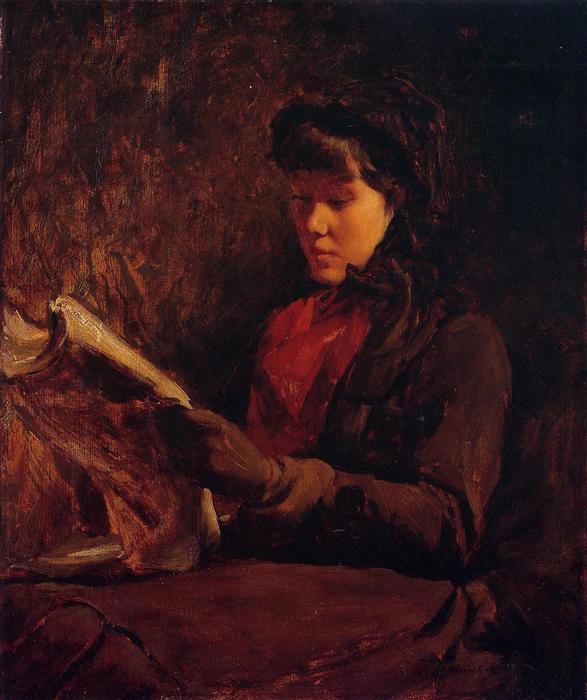
Frank Duveneck's "Girl Reading," painted in 1876, isn’t merely a portrait; it’s a carefully constructed tableau of domesticity and intellectual pursuit. The painting immediately draws the viewer into a scene of serene contemplation – a young woman lost within the pages of her book, bathed in a soft, diffused light that speaks to both intimacy and a certain melancholy. Duveneck, a remarkably prolific artist whose life was tragically cut short at the age of 71, masterfully captures this quiet moment, imbuing it with an emotional resonance that transcends its simple subject matter.
The composition is deceptively straightforward. The girl, dressed in a vibrant crimson gown – a bold and striking color choice for the era – sits poised on what appears to be a small stool or bench. Her posture suggests both comfort and concentration; her hand rests lightly upon the book, while her gaze is utterly absorbed by its contents. The dark shawl draped across her shoulders and the matching hat contribute to a sense of understated elegance and perhaps a touch of reserve. The background, rendered in muted browns and greens, serves as a subtle counterpoint to the girl’s vivid attire, directing the eye back to her central figure.
Impressionistic Realism: A Delicate Balance
Duveneck's style is often described as “impressionistic realism,” a term that perfectly encapsulates his approach. He skillfully blends elements of both movements – the loose brushstrokes and emphasis on capturing fleeting moments characteristic of Impressionism, with the meticulous detail and accurate representation favored by Realists. Notice how he uses broken color to create an atmospheric effect, particularly in the dappled light filtering through an unseen window. The paint isn’t blended smoothly; instead, it's applied in short, visible strokes that give the scene a sense of immediacy and vitality. This technique allows him to convey not just what he *sees*, but also how he *feels* about what he sees – a subtle emotional layering that elevates the painting beyond a simple likeness.
The artist’s use of light is particularly noteworthy. It's not harsh or dramatic, but rather soft and diffused, creating a sense of warmth and intimacy. This gentle illumination highlights the girl’s face and hands, drawing attention to her engagement with the book. The shadows are equally deliberate, adding depth and dimension to the scene and subtly hinting at the quiet solitude of the moment.
A Window into 19th-Century Life
"Girl Reading" offers a poignant glimpse into the domestic life of mid-19th century America. The painting reflects a time when education, particularly for women, was increasingly valued, though still often limited. The girl’s act of reading represents a burgeoning intellectual curiosity and a desire for knowledge – a subtle assertion of agency within a society that frequently confined women to traditional roles. Furthermore, the setting itself—a simple interior space—suggests a life centered around family and home, values deeply rooted in the era.
Considering Duveneck’s own biography adds another layer of meaning. His early life was marked by profound loss – the death of his father at a young age and the subsequent remarriage of his mother. These experiences undoubtedly shaped his artistic vision, imbuing his work with a sense of melancholy and perhaps a yearning for stability and connection. “Girl Reading,” therefore, can be interpreted as an exploration of these themes—a quiet meditation on loss, memory, and the solace found in intellectual pursuits.
Symbolism and Emotional Resonance
Beyond its historical context, "Girl Reading" is rich with symbolic meaning. The book itself represents knowledge, wisdom, and escape – a portal to other worlds and ideas. The girl’s posture suggests introspection and a desire for self-discovery. The crimson dress, while vibrant, also carries connotations of passion and perhaps even vulnerability. Duveneck masterfully uses color and composition to create an atmosphere of quiet contemplation, inviting the viewer to share in the girl's moment of solitude.
Ultimately, “Girl Reading” is a remarkably evocative work that transcends its simple subject matter. It’s a testament to Duveneck’s artistic skill and his ability to capture not just the physical appearance of his subjects, but also their inner lives. It remains a powerful reminder of the enduring appeal of quiet moments, intellectual pursuits, and the beauty found in the everyday.
Über den Künstler
Frühes Leben und Ausbildung
Frank Duveneck, geboren als Frank Decker, war ein bedeutender Vertreter der amerikanischen Kunstszene. Er erblickte am 9. Oktober 1848 in Covington, Kentucky, das Licht der Welt. Sein Vater, Bernhard Decker, ein deutscher Einwanderer, verstarb bereits früh, und seine Mutter heiratete später Joseph Duveneck. Diese familiäre Herkunft prägte Duvenecs künstlerische Entwicklung maßgeblich. Schon mit 15 Jahren begann er unter Johann Schmitt, einem lokalen Maler, sein Studium, und wurde anschließend bei einer deutschen Firme für Kirchenausmaler ausgebildet. Diese frühen Erfahrungen legten den Grundstein für seinen späteren Erfolg.Künstlerische Entwicklung und bedeutende Werke
Im Jahr 1869 reiste Duveneck nach München, um an der Königlichen Akademie in München bei Wilhelm von Diez und Wilhelm Leibl zu studieren. Dieser Aufenthalt markierte eine entscheidende Wendung in seinem Stil hin zu einem dunklen, realistischen und direkten Malansatz. Zu seinen bekanntesten Werken zählen:- Lady with Fan (1873), das seine Verbundenheit mit der dunklen Palette und den kraftvollen Pinselstrichen von Frans Hals widerspiegelt.
- The Whistling Boy (1872), ein weiteres Beispiel seines frühen, ausdrucksstarken Stils.
- The Cobbler's Apprentice (1877), Öl auf Leinwand, heute im Taft Museum of Art in Cincinnati, Ohio.
Lehre und Vermächtnis
Im Jahr 1878 eröffnete Duveneck eine Schule in München und später in Polling, Bayern. Seine Schüler, bekannt als die "Duveneck Boys", umfassten John Twachtman, Otto Bacher, Julius Rolshoven und John White Alexander. Nach seiner Rückkehr in Amerika unterrichtete Duveneck an der Art Academy of Cincinnati. Zu seinen bedeutenden Schülern gehörten Ida Holterhoff Holloway, John Christen Johansen, M. Jean McLane, Edward Charles Volkert, Russel Wright, Charles Mills sowie Herman und Bessie Wessel.Späteres Leben und Tod
Frank Duveneck verstarb am 3. Januar 1919 in Covington, Kentucky. Seine Werke sind heute in verschiedenen Museen zu finden, darunter das Metropolitan Museum of Art in New York City, die National Gallery of Art in Washington, D.C., und das Cincinnati Art Museum.Einflüsse und Bedeutung
Duveneck wurde stark von Frans Hals beeinflusst, was sich in seinen losen Pinselstrichen und der Verwendung dunkler Töne zeigt. Er trug maßgeblich zur Entwicklung des amerikanischen Realismus bei und gilt als einer der wichtigsten Vertreter dieser Kunstrichtung. Seine Betonung auf die Darstellung des Alltagslebens mit realistischer Detailgenauigkeit und emotionaler Tiefe machte ihn zu einem bedeutenden Künstler seiner Zeit. Sein Einfluss auf nachfolgende Generationen von Künstlern ist unbestreitbar, insbesondere durch seine Lehrtätigkeit und die zahlreichen Schüler, die er ausbildete.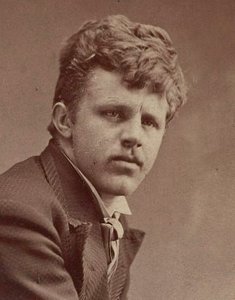
Frank Duveneck
1848 - 1919 , Vereinigte Staaten von Amerika
Kurzinfos
- Beeinflusste Künstler:
- John Twachtman
- Otto Bacher
- Julius Rolshoven
- Bemerkenswerte Werke:
- Lady with Fan (1873)
- The Whistling Boy (1872)
- The Cobbler’s Apprentice (1877)
- Geburtsdatum: 09. Oktober 1848
- Geburtsort: Covington, USA
- Künstlerische Einflüsse:
- Frans Hals
- Wilhelm von Diez
- Gustave Courbet
- Künstlerische Richtung: Amerikaner Realismus
- Nationalität: Amerikanisch
- Todatum: 03. Januar 1919
- Vollständiger Name: Frank Duveneck
Ähnliche Artikel

Romantic Realism's Finest: 10 Masterpieces for Your Home | OriginalUniqueArt
Explore 10 defining masterpieces of Romantic Realism! Discover Courbet, Millet & Daumier's powerful paintings—capturing emotion and social realities. Find museum-quality reproductions for your home at OriginalUniqueArt.com.
Realismus in der Kunst: Die 10 bedeutendsten Meisterwerke für Ihr Zuhause
Entdecken Sie die 10 bedeutendsten Meisterwerke des Realismus! Von Courbet bis Millet – erfahren Sie die Geschichten hinter ikonischen Gemälden und lassen Sie sich von der Detailtreue & emotionalen Tiefe inspirieren. Hochwertige Art Reproduktionen auf OriginalUniqueArt.com

Echoes of Society: Exploring Social Realism's Enduring Legacy in Art
Explore the powerful world of Social Realism art! Discover key artists, masterpieces & its profound social commentary. Expert insights into this influential movement's history and enduring legacy.
Realism in Art: A Professional Guide to Authentic Detail and Lifelike Masterpieces for Large-Scale Interior Projects
Master the use of Realism in professional interiors. This expert guide explores 19th-century masterpieces, offering procurement managers and designers technical insights into selecting authentic, hand-painted oil reproductions for high-end hotel and corporate projects.
The Raw Truth: A Definitive Guide to the Power and Legacy of Social Realism Art
Explore the profound impact of Social Realism. Discover how masters like Courbet rejected idealism to capture the raw, socio-political truths of the working class through powerful, unvarnished art history and enduring visual critique.