

 In echtem Maßstab anzeigen
 Versenden als Grußkarte
 Teilen
 Details anzeigen
 Leitfaden öffnen

 Herunterladen
 Ähnliche Objekte
 Röntgenaufnahme
 Diashow
 Besucherstatistiken
A Landscape Study
 Oil On Canvas
- WallArt
- Post-Impressionism
 1907
1907- Modern
 25.0 x 27.0 cm
 Leeds Art Gallery
 Mehr anzeigen
Giclée / Kunstdruck
Giclée- oder Leinwanddruck in Museumsqualität mit schneller Produktion und flexiblen Veredelungsoptionen. ( Handgemalte Reproduktion kaufen Zum digitalen Bild wechseln)




P118B €10

P118H €10

P118W €10

P438Z €10

P508JH €12

P508YH €12

P805H €10

P805Z €10

P919BZ €10

P919G €10

P919XJ €10

P959ZH €10

P968JZ €12

W106C €8

W218G €10

W218JH €8

W218Y €10

W307PJ €10

W316G €10

W316PJ €8

W316Y €10

W398PJ €8

W4111J €10

W500HY €15

W500JH €15

W692G €12

W849H €8

W940BG €15

W953PJ €8




Wählen Sie aus unseren vordefinierten Formaten, die den ursprünglichen Proportionen des Kunstwerks entsprechen.

Type the width and the height you need, to fit your frame or your wall. A print can only be cut, never made bigger than the picture, so a size with a different shape loses a part of the image. We send you a digital mockup to approve before we print anything. The picture shown on this page does not show the real cut — only the mockup does.
Weltweiter Versand () innerhalb von 2 Wochen statt der üblichen 4/5 Wochen. (15 Oktober)

Kostenloser weltweiter Expressversand

Hochwertige Leinenleinwand

Vollständiger Versicherungsschutz beim Versand

Zollgebühren-Rückerstattungsgarantie

Garantie für exakte Farbtreue

100-tägiges Rückgaberecht (nur bei Mängeln)

100% Geld-zurück-Garantie

Angebot für Mengenrabatt
 Die Glasoption ist nur für Größen unter 110 cm verfügbar.

A Landscape Study
Giclée / Kunstdruck
Format der Reproduktion
-


Gesamtpreis
€ 69
A Nocturnal Symphony of Light and Shadow
In the quiet depths of Frank Brangwyn’s 1907 masterpiece, A Landscape Study, the viewer is invited into a world where the boundaries between reality and dream dissolve. This evocative oil on canvas captures a nocturnal woodland vista, a scene that transcends mere representation to touch upon the sublime. As night descends upon the forest, Brangym does not merely paint trees; he orchestrates a dramatic interplay of light and darkness. Towering silhouettes of ancient wood rise against a deep indigo sky, which is itself alive with subtle streaks of violet and pale gold. The composition is masterfully arranged to draw the eye upward, following the luminous patches of light that cling to high branches, creating a sense of vertical grandeur that evokes both the mystery of the unknown and the spiritual awe found in the heart of nature.
The emotional resonance of this piece lies in its ability to evoke profound solitude and wonder. There is a theatrical quality to the lighting, as if a sudden, celestial glow has momentarily pierced the canopy, illuminating the textures of the bark and the delicate edges of the leaves. For the collector or interior designer, this painting offers more than just a visual focal point; it provides an atmospheric anchor for a space. It possesses the rare ability to instill a sense of tranquility and contemplation, making it an ideal centerpiece for rooms designed for reflection, such as a private study, a library, or a sophisticated lounge where the mood is one of quiet elegance.
Impressionistic Mastery and Tactile Beauty
Technically, A Landscape Study serves as a brilliant intersection between Impressionism and Post-Impressionism. Brangwyn eschews the rigid constraints of meticulous detail, choosing instead to capture the fleeting, ephemeral essence of a moment. His brushwork is bold and expressive, utilizing the technique of impasto to create a surface that is as much a sculptural experience as it is a visual one. The thick, textured application of paint allows light to physically catch on the ridges of the canvas, lending a palpable energy to the illuminated sections of the forest. This tactile richness ensures that the painting remains dynamic, shifting subtly as the viewer moves around it.
The artist’s command over color and tone is nothing short of masterful. By layering deep, receding shadows at the base of the composition against vibrant, luminous highlights above, Brangwyn achieves a profound sense of atmospheric perspective. The transition from the heavy, dark hues of the forest floor to the ethereal, glowing sky creates an illusion of immense depth within a relatively small-scale work. This sophisticated use of tonal painting ensures that the piece feels expansive and immersive. For those seeking a high-quality reproduction, this emphasis on texture and light makes it a breathtaking addition to any curated collection, offering a timeless window into the soul of the natural world.
Fragen & Antworten
Welches Gefühl wird mit "A Landscape Study" assoziiert?
„A Landscape Study“ ist mit einem Tranquil Gefühl verbunden. Der emotionale Ton beschreibt den Eindruck, den das Werk vermittelt.
In welchem Jahr wurde "A Landscape Study" von Frank Brangwyn geschaffen?
"A Landscape Study" stammt aus dem Jahr 1907. Dieses Datum ordnet das Werk in die Schaffensperiode von Frank Brangwyn sowie in dessen Epoche ein.
Welche Farbharmonie weist "A Landscape Study" von Frank Brangwyn auf?
Die Farbharmonie von „A Landscape Study“ wird als Balanced Harmony beschrieben.
Biografie des Künstlers
Frühes Leben und Ausbildung
- Geboren: Brügge, Belgien (1867) – Als Guillaume François registriert
- Gestorben: 1956
- Familienhintergrund: Sohn von William Curtis Brangwyn, einem erfolgreichen Designer, und Eleanor Griffiths. Sein Vater zog nach Belgien, nachdem er einen Wettbewerb gewonnen hatte, um eine Gemeindekirche zu entwerfen.
- Frühe Ausbildung: Besuchte die Westminster City School. Er verbrachte oft Zeit in der Werkstatt seines Vaters oder im South Kensington Museum, anstatt Unterricht zu besuchen.
- Ausbildungen: Kurze Ausbildungszeit bei Arthur Heygate Mackmurdo und William Morris, zunächst als Glaser, bevor er sich mit Stickerei und Tapeten beschäftigte.
- Frühe Anerkennung: Sein Gemälde „Funeral at Sea“ gewann 1891 eine Medaille im Pariser Salon, was sein Engagement für die Kunst festigte.
Künstlerische Entwicklung und Stil
- Anfängliche Themen: Konzentrierte sich hauptsächlich auf traditionelle Darstellungen des Meeres und des maritimen Lebens.
- Orientalistischer Einfluss: Reisen nach Istanbul (Konstantinopel), Spanien, Ägypten, der Türkei und Marokko in den 1890er Jahren beeinflussten seine Arbeit erheblich und führten zu einer helleren Farbpalette und der Erforschung orientalistischer Themen.
- Vielseitigkeit: Brangwyn war ein außergewöhnlich vielseitiger Künstler, der in verschiedenen Medien arbeitete, darunter Malerei, Zeichnung, Radierung, Illustration, Entwurf für Buntglasfenster, Möbeldesign, Keramik und Innendesign.
- Produktivität: Es wird geschätzt, dass er im Laufe seiner Karriere über 12.000 Werke geschaffen hat, darunter Gemälde, Zeichnungen, Radierungen, Holzschnitte, Lithographien, architektonische Entwürfe und mehr.
- Wandmalereien: Berühmt für großflächige Wandmalereien, die sich durch lebendige Farben und detaillierte Darstellungen von Pflanzen und Tieren auszeichnen, obwohl seine späteren Werke flacher wurden.
Hauptleistungen und bemerkenswerte Werke
- Galerie l'Art Nouveau Auftrag (1895): Siegfried Bing beauftragte ihn mit der Dekoration der Außenfassade seiner Pariser Galerie, was zu Arbeiten in verschiedenen dekorativen Kunstbereichen führte.
- Illustrationsarbeit: Illustrierte eine sechs-bändige Neuauflage von Edward William Lanes Übersetzung der „Tausend und Eine Nacht“ im Jahr 1896.
- Kooperationen: Arbeitete mit dem japanischen Künstler Urushibara Mokuchu an einer Reihe von Holzschnitten zusammen.
- Bemerkenswerte Gemälde:
- „Funeral at Sea“ (1890) – Gewann 1891 eine Medaille im Pariser Salon.
- "The Golden Horn, Constantinople" - Ein helleres und farbenfroheres Werk im Vergleich zu "Funeral at Sea".
- „Arab Musicians“
- „The Chairing of Edmund Burke in 1774“
- „Begonien“ (1920) – Bekannt für seinen strukturierten Realismus und seine warme Farbpalette.
Einflüsse und historische Bedeutung
- William Morris & die Arts and Crafts Bewegung: Seine frühe Ausbildung bei William Morris machte ihn mit den Prinzipien der Arts and Crafts-Bewegung vertraut, die Handwerkskunst und Designintegration betonte.
- Orientalismus: Seine Reisen und seine Begegnung mit Kulturen des Nahen Ostens beeinflussten seinen künstlerischen Stil und seine Themen stark.
- Anerkennung: Er erhielt Anerkennung von Kritikern in Kontinentaleuropa und Amerika für seine dekorativen Entwürfe, obwohl britische Kritiker ihn manchmal schwer einzuordnen wussten.
- Vermächtnis: Brangwyns produktiver Output und Vielseitigkeit etablierten ihn als eine bedeutende Figur in der Kunst des späten 19. und frühen 20. Jahrhunderts, die die Kluft zwischen traditioneller Malerei und modernem Design überbrückte. Seine Wandmalereien und dekorativen Arbeiten hinterließen einen bleibenden Eindruck auf die britische Kunstlandschaft.
Persönliches Leben
- Beziehungen: Hatte eine Affäre mit Ellen Kate Chesterfield, aus der ein Sohn, James Barron Chesterfield-Brangwyn, hervorging.
- Heirat: Heirate Lucy Ray (eine Krankenschwester) im Jahr 1896; sie hatten keine Kinder.
- Wohnsitze: Lebte von 1900 bis 1937/38 in Temple Lodge, Hammersmith, London und kaufte später The Jointure, Ditchling, Sussex, im Jahr 1918.

Frank Brangwyn
1867 - 1956 , Belgien
Eckdaten zum Künstler
- Beeinflusste Künstler:
- William Morris
- Arthur Heygate Mackmurdo
- Bemerkenswerte Werke:
- Funeral at Sea
- The Golden Horn
- Arab Musicians
- Begonien
- Geburtsdatum: 12. Mai 1867
- Geburtsort: Brügge, Belgien
- Künstlerische Richtung: Arts and Crafts, Orientalismus
- Nationalität: Britisch
- Sterbedatum: 11. Juni 1956
- Vollständiger Name: Sir Frank William Brangwyn
Verwandte Artikel

Paul Cézanne: Die 25 Meisterwerke des Impressionismus | OriginalUniqueArt
Entdecken Sie die 25 Meisterwerke von Paul Cézanne! Tauchen Sie ein in die Welt des Impressionismus und Postimpressionismus. Erfahren Sie mehr über seine Stillleben, Landschaften & berühmten Gemälde – jetzt hochwertige Kunstdrucke auf OriginalUniqueArt.com.

Beyond Impressionism: Exploring the Emotional Depth and Vibrant Textures of Post-Impressionist Landscapes
Discover the profound emotional depth of Post-Impressionist landscapes. Explore how masters like Van Gogh revolutionized art through vibrant color, textured impasto, and symbolic expression in this expert guide to the movement that redefined modern art history.

Impressionistische Landschaften: Die 10 Meisterwerke, die eine Epoche prägten | OriginalUniqueArt
Entdecken Sie die 10 Meisterwerke des Impressionismus! Von Monet bis Renoir – erleben Sie die Geschichte, Technik und zeitlose Schönheit ikonischer Landschaftsbilder. Hochwertige Kunstdrucke auf OriginalUniqueArt.com. Jetzt entdecken!

Impressionistische Landschaften: Die 10 Meisterwerke, die eine Kunstrichtung prägten | OriginalUniqueArt
Entdecken Sie die 10 Meisterwerke des Impressionismus! Von Monet bis Van Gogh – erleben Sie die Geschichten hinter berühmten Landschaftsbildern. Hochwertige Kunst Reproduktionen für Ihr Zuhause auf OriginalUniqueArt.com.
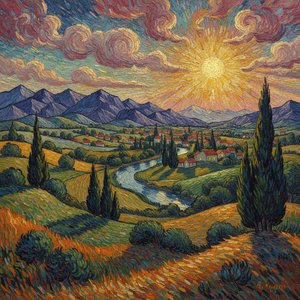
Beyond Impressionism: The Emotional Depth and Vibrant Evolution of Post-Impressionist Landscapes
Explore the profound evolution of Post-Impressionist landscapes. From Van Gogh's emotional brushwork to Cézanne's structural mastery, discover how these visionaries redefined art history through color and form in this expert guide for fine art enthusiasts.


