
 Vorschau anzeigen
 Versenden
 Teilen
 Details anzeigen
 Leitfaden

 Herunterladen
 Ähnliche Objekte
 Röntgenaufnahme
 Diashow
 Fragen & Antworten
 Statistiken
Dusk, Monte Mario, Rome

- 20.0 x 31.0 cm


 Weiterlesen
Giclée / Kunstdruck
Giclée- oder Leinwanddruck in Museumsqualität mit schneller Produktion und flexiblen Veredelungsoptionen. ( Handgemalte Reproduktion bestellen Zum digitalen Bild wechseln)




P118B €10

P118H €10

P118W €10

P438Z €10

P508JH €12

P508YH €12

P805H €10

P805Z €10

P919BZ €10

P919G €10

P919XJ €10

P959ZH €10

P968JZ €12

W106C €8

W218G €10

W218JH €8

W218Y €10

W307PJ €10

W316G €10

W316PJ €8

W316Y €10

W398PJ €8

W4111J €10

W500HY €15

W500JH €15

W692G €12

W849H €8

W940BG €15

W953PJ €8




Wählen Sie aus unseren vordefinierten Formaten, die den ursprünglichen Proportionen des Kunstwerks entsprechen.

Geben Sie die benötigte Breite und Höhe an, damit der Druck perfekt in Ihren Rahmen oder an Ihre Wand passt. Ein Druck kann nur beschnitten, aber niemals größer als das Originalbild angefertigt werden; daher verliert ein Format mit anderen Proportionen einen Teil des Bildes. Wir senden Ihnen ein digitales Mockup zur Freigabe, bevor wir den Druck ausführen. Das auf dieser Seite gezeigte Bild zeigt nicht den tatsächlichen Beschnitt – dies ist nur im Mockup ersichtlich.
Weltweiter Versand () innerhalb von 2 Wochen statt der üblichen 4/5 Wochen. (5 November)

Kostenloser weltweiter Expressversand

Hochwertige Leinenleinwand

Umfassender Versicherungsschutz beim Versand

Zollgebühren-Rückerstattungsgarantie

Garantie für exakte Farbtreue

100 Tage Rückgaberecht (nur bei Mängeln)

100% Geld-zurück-Garantie

Mengenrabatt verfügbar
 Die Glasoption ist nur für Größen unter 110 cm verfügbar.

Dusk, Monte Mario, Rome
Giclée / Kunstdruck
Format der Reproduktion
-


Endpreis
€ 72
The Ephemeral Majesty of Twilight
François Marius Granet’s “Dusk, Monte Mario, Rome” isn't merely a landscape; it’s a captured moment, a distillation of light and atmosphere that speaks to the profound beauty of fleeting time. Painted in 1804, during the brief window after sunset when color still clings stubbornly to the sky, this work transports us to the Pincian Hill overlooking Rome, offering a vista both familiar and imbued with an almost melancholic grace. The scene unfolds before us – a cityscape bathed in the last vestiges of daylight, punctuated by the subtle forms of buildings rising from the valley below. It’s a tableau that simultaneously celebrates the grandeur of the Eternal City and acknowledges its inherent transience.
Granet's genius lies not just in his technical skill—evident in the delicate rendering of clouds and the precise depiction of architectural details—but also in his ability to evoke an emotional response. The painting isn’t a literal representation; it’s a carefully constructed memory, filtered through the artist’s sensibility. The muted palette – dominated by shades of rose, lavender, and grey – creates a sense of quiet contemplation, inviting us to linger in this moment of suspended animation. There's an almost palpable stillness, as if time itself has slowed down within the frame.
A Roman Perspective: Monte Mario and the Academy
To understand “Dusk, Monte Mario,” we must first grasp the significance of its location. Monte Mario, a small hill overlooking Rome, held a strategic importance for centuries, serving as a defensive position and later becoming the site of the Villa Medici – the seat of the French Academy in 1803. This association with the Académie Française imbues the painting with an air of intellectual curiosity and artistic patronage. Granet, a student of David at the Louvre, was deeply influenced by the Neoclassical ideals prevalent during this period, yet he possessed a unique ability to infuse his work with a distinctly Romantic sensibility.
The vantage point from the Pincian Hill – where Granet positioned himself – offered an unparalleled view of Rome. This elevated perspective allowed him to capture not only the city’s physical form but also its atmospheric qualities, creating a sense of depth and spaciousness that is characteristic of his work. The composition itself—with the cityscape receding into the distance—mirrors the classical tradition of landscape painting, while simultaneously conveying a feeling of intimacy and personal observation.
The Language of Light: Technique and Style
Granet’s mastery of light is truly remarkable. He employs a technique known as “tonalism,” characterized by subtle gradations of tone and color rather than sharp contrasts. This approach creates a remarkably luminous effect, particularly in the depiction of the sky. The clouds are rendered with an almost ethereal quality, their edges softly blurred and imbued with a delicate sheen. The artist’s use of oil on cardboard is notable; this medium allowed for a remarkable level of detail and control, enabling him to capture the nuances of light and shadow with exceptional precision.
Furthermore, Granet's style can be described as Romantic Neoclassicism – blending the structured forms and classical subject matter favored by his teacher David with the emotional intensity and atmospheric effects associated with the Romantic movement. This fusion results in a work that is both intellectually stimulating and emotionally resonant.
A Legacy of Memory: The Painting’s Journey
“Dusk, Monte Mario, Rome” holds a fascinating history, having passed through the hands of Granet's pupil, Baptistin Martin, and subsequently descended within his family. This lineage adds another layer of intrigue to the painting’s story, suggesting that it represents not just an artistic achievement but also a cherished heirloom—a tangible link to a bygone era. The work is now part of the Thaw Collection at the Metropolitan Museum of Art, a testament to its enduring beauty and historical significance.
Reproductions of this captivating scene offer a remarkable opportunity to bring Granet’s evocative vision into your own space. Whether adorning a grand salon or a cozy study, “Dusk, Monte Mario, Rome” serves as a poignant reminder of the fleeting nature of beauty and the enduring power of memory.
Fragen & Antworten
Wo lässt sich eine Reproduktion von "Dusk, Monte Mario, Rome" von François Marius Granet am besten präsentieren?
Das Format Landscape von "Dusk, Monte Mario, Rome" von François Marius Granet wird für ein Living Room empfohlen. Format und Raumgestaltung leiten gemeinsam die Platzierung einer Reproduktion.
Wie lässt sich der urheberrechtliche Status von "Dusk, Monte Mario, Rome" von François Marius Granet erklären?
"Dusk, Monte Mario, Rome" von François Marius Granet ist gemeinfrei – das Urheberrecht ist abgelaufen. Die Schutzfrist des Urheberrechts beginnt mit dem Tod des Künstlers im Jahr 1849.
Welche Technik und welche Maße hat "Dusk, Monte Mario, Rome" von François Marius Granet?
"Dusk, Monte Mario, Rome" wurde in Oil On Paper erstellt und hat in seiner Originalform die Maße 20 x 31 cm.
Künstlerbiografie
Frühe Jahre und künstlerische Anfänge
François Marius Granet, geboren in Aix-en-Provence am 17. Dezember 1775, stammte aus bescheidenen Verhältnissen. Sein Vater war ein einfacher Baumeister, ein Leben, das weit entfernt von der Kunstwelt lag, die letztendlich die Leidenschaften seines Sohnes fesseln sollte. Bereits als junger Junge besaß Granet einen intensiven künstlerischen Drang, der seine Eltern veranlasste, für ihn Unterricht zu suchen – zuerst bei einem vorbeikommenden italienischen Künstler und später an einer freien Schule unter der Leitung von M. Constantin, einem angesehenen Landschaftsmaler. Diese frühe Erfahrung legte das Fundament für seine zukünftigen Bestrebungen, doch es waren seine Erfahrungen während der turbulenten Jahre der Französischen Revolution, die sein künstlerisches Empfinden erstmals prägten. Im Jahr 1793 schloss sich Granet den Freiwilligen von Aix beim Belagerung von Toulon an, nicht als Soldat, sondern als Dekorateur im Arsenal. Diese Zeit verschaffte ihm praktische Fähigkeiten und einen ersten Einblick in die Realitäten des Konflikts – ein Thema, das seine späteren Werke subtil durchziehen sollte. Eine entscheidende Begegnung mit dem jungen Comte de Forbin erwies sich als prägend; auf Einladung von Forbin reiste Granet 1797 nach Paris und trat in das prestigeträchtige Atelier von Jacques-Louis David ein.Das Atelier Davids und das Kapuzinerkloster
Davids strenger neoklassizistischer Stil beeinflusste Granet zunächst, doch bald begann er, seinen eigenen Weg zu bahnen. Er sicherte sich eine Zelle in dem ehemaligen Kapuzinerkloster – einem Ort, der einst zur Druckerei revolutionärer Assignaten diente und zu einem Zufluchtsort für Künstler geworden war. Hier, inmitten des Spiels von Licht und Schatten in den alten Korridoren, konzipierte Granet das, was sein lebenslanges Werk werden sollte: „Der Chor der Kapuziner“. Er widmete sich diesem Gemälde mit unerschütterlichem Engagement und verfeinerte es über Jahrzehnte hinweg immer wieder. Das Kloster selbst wurde mehr als nur ein Atelier; es war eine Umgebung, die seine künstlerische Sensibilität tiefgreifend prägte. Im Gegensatz zu vielen seiner Zeitgenossen, die sich auf große historische Erzählungen oder Porträts der Elite konzentrierten, fand Granet Schönheit und Bedeutung in der stillen Askese des klösterlichen Lebens und erforschte das Wechselspiel zwischen Architektur, Licht und menschlicher Präsenz. Dieser Fokus war nicht bloß ästhetisch; er spiegelte ein tieferes Interesse an Spiritualität und dem Lauf der Zeit wider.Die Jahre in Rom und die Entwicklung der Tonalen Malerei
Im Jahr 1802 unternahm Granet einen ausgedehnten Aufenthalt nach Rom, eine Periode, die für seine künstlerische Reifung entscheidend war. Er blieb bis 1819 dort und tauchte ein in das klassische Erbe der Stadt, wobei er ihre Atmosphäre von Größe und Verfall aufnahm. In diesen Jahren entwickelte er seinen unverwechselbaren tonalen Stil – eine Technik, die durch subtile Licht- und Schattengrade gekennzeichnet ist und atmosphärische Effekte über präzise Details stellt. Seine römischen Gemälde, wie „Stella malt Madonna an seiner Gefängniswand“ (1810) und „Sodoma im Krankenhaus“ (1815), veranschaulichen diesen sich entwickelnden Ansatz. Er war nicht daran interessiert, historische Ereignisse mit fotografischer Genauigkeit wiederzugeben; vielmehr suchte er danach, die emotionale Resonanz einer Szene durch sorgfältig orchestrierte Töne und Kompositionen einzufangen. Die Figuren in seinen Werken scheinen oft in die architektonische Umgebung integriert zu sein, fast so, als wären sie Erweiterungen des umgebenden Steins und Stuckes. Dieser Fokus auf den Ton wurde zu seiner Signatur und unterschied ihn von anderen Künstlern seiner Zeit.Spätere Karriere und Vermächtnis
Nach seiner Rückkehr nach Paris im Jahr 1819 verfeinerte Granet seinen einzigartigen Stil weiter und schuf eine Reihe bedeutender Werke, darunter „Basilica Basse di St François d'Assise“ (1823) und „Die Erlösung der Gefangenen“ (1831). Im Jahr 1829 wurde er Direktor der Académie de France in Rom ernannt, ein Zeugnis seines wachsenden Rufs. Seine Gemälde priorisierten stets die Atmosphäre und emotionale Tiefe über die narrative Klarheit. Selbst Werke mit historischen oder religiösen Themen – wie „Tod Poussins“ (1834) – wurden als Gelegenheiten betrachtet, tonale Effekte und architektonischen Raum zu erforschen. Granets Hingabe zum Ton stieß manchmal auf Kritik; manche empfanden seine Arbeit als mangelnd an dramatischer Intensität, doch er blieb fest in seiner künstlerischen Vision. Er war ein Meister darin, Stimmung zu schaffen und ein Gefühl stiller Kontemplation hervorzurufen. François Marius Granet starb 1849 und hinterließ einen Werdegang, der die Betrachter mit seiner subtilen Schönheit und einzigartigen Sensibilität weiterhin fesselt. Sein Einfluss ist in den späteren Werken von Künstlern sichtbar, die ähnliche Themen wie Spiritualität, Atmosphäre und das Wechselspiel zwischen Licht und Architektur erforschten. Das Musée Granet in Aix-en-Provence, nach seinem Tod gegründet, dient als bleibendes Denkmal an sein Leben und seine künstlerischen Leistungen, beherbergt viele seiner wichtigsten Gemälde und bietet den Besuchern einen Einblick in die Welt dieses bemerkenswerten französischen Malers.
François Marius Granet
1775 - 1849 , Frankreich
Kurzinfos
- Artistic Movement Or Style: Tönendes Malerei
- Artists Who Influenced This Artist: ['David']
- Date Of Birth: 17. Dezember 1775
- Date Of Death: 1849
- Full Name: François Marius Granet
- Nationality: Französisch
- Notable Artworks:
- Chœur des Capucins
- Stella painting a Madonna
- Sodoma à l'hôpital
- Rachat de prisonniers
- Mort de Poussin
- Place Of Birth: Aix-en-Provence, Frankreich
Ähnliche Artikel

Evocations of Place: A Historical Journey Through Landscape Art
Explore the rich history of landscape art with OriginalUniqueArt. Discover renowned artists, movements like Impressionism & Romanticism, and expert guidance for collecting timeless pieces. Find your perfect serene escape today!

Romantische Landschaften: Die 10 Meisterwerke, die eine Epoche prägten | OriginalUniqueArt
Entdecken Sie die 10 Meisterwerke der Romantischen Landschaftsmalerei! Von Caspar David Friedrich bis Turner – erleben Sie die Kunst, Emotion & Natur. Hochwertige Reproduktionen auf OriginalUniqueArt.com

Die 25 besten Kunstwerke von John Constable: Meisterwerke der englischen Landschaft
Entdecken Sie die 25 besten Werke von John Constable. Erleben Sie englische Romantik auf OriginalUniqueArt.com. Jetzt Meisterwerke online entdecken!
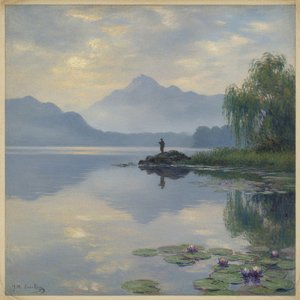
Capturing Stillness: A Curated Exploration of the Most Iconic Lake Landscapes in Art History
Journey through art history's most serene lake landscapes. From Romantic vistas to light-drenched Impressionist waters, discover the stories behind these iconic masterpieces and find museum-quality, hand-painted oil reproductions for your private collection.
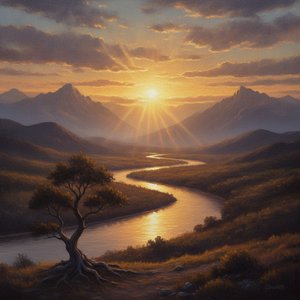
Golden Hour Magic: Capturing the Ethereal Beauty of Sunset Landscapes in Fine Art
Embark on a visual journey through the golden hour. Discover how master painters capture the ethereal glow of sunsets, from Monet's Impressionism to the Hudson River School. Explore timeless techniques and bring the magic of twilight into your home with exquisite fine art reproductions.


