 Vorschau anzeigen
 Versenden
 Teilen
 Details anzeigen

 Herunterladen
 Ähnliche Objekte
 Röntgenaufnahme
 Diashow
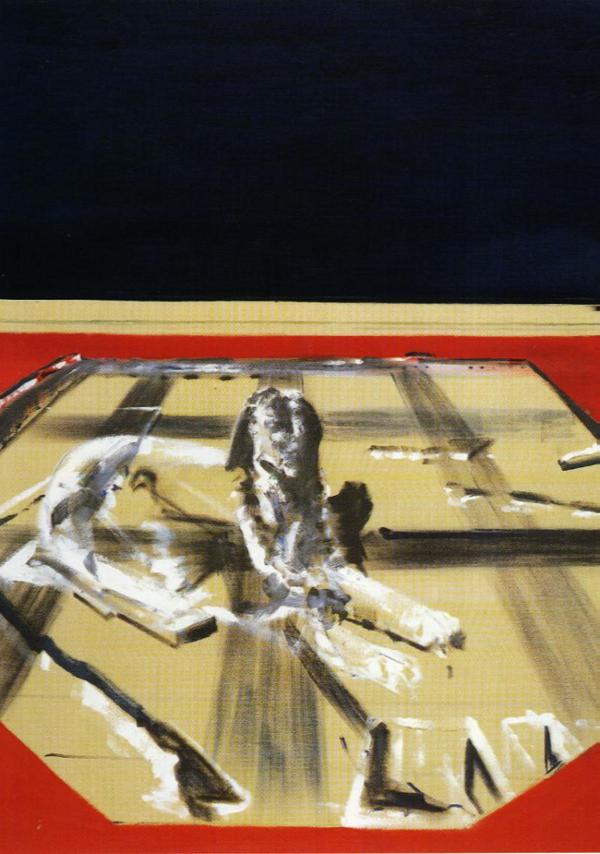
sphinx ii, 1952


 Weiterlesen
Giclée / Kunstdruck
Giclée- oder Leinwanddruck in Museumsqualität mit schneller Produktion und flexiblen Veredelungsoptionen. ( Handgemalte Reproduktion bestellen Bild kaufen)




P118B $10

P118H $10

P118W $10

P438Z $10

P508JH $12

P508YH $12

P805H $10

P805Z $10

P919BZ $10

P919G $10

P919XJ $10

P959ZH $10

P968JZ $12

W106C $8

W218G $10

W218JH $8

W218Y $10

W307PJ $10

W316G $10

W316PJ $8

W316Y $10

W398PJ $8

W4111J $10

W500HY $15

W500JH $15

W692G $12

W849H $8

W940BG $15

W953PJ $8




Wählen Sie aus unseren vordefinierten Formaten, die den ursprünglichen Proportionen des Kunstwerks entsprechen.

Sie können Ihre eigenen Maße eingeben, um ein bestimmtes Format oder einen speziellen Platz einzupassen. Wenn das von Ihnen gewählte Format nicht den Proportionen des Originalbildes entspricht, werden wir das Kunstwerk entweder beschneiden oder das Bild mit einem gespiegelten oder einfarbigen Rand erweitern. Ein digitaler Entwurf wird Ihnen zur Genehmigung zugesandt, bevor die Produktion beginnt.
Bitte beachten Sie, dass die Vorschau auf dem Bildschirm nicht den tatsächlichen Zuschnitt oder die Erweiterung widerspiegelt. Nur der Entwurf zeigt die endgültige Komposition präzise an.
Obwohl Sondermaße verfügbar sind, empfehlen wir die Auswahl eines Maßes aus der vordefinierten Liste, um die ursprünglichen Proportionen zu bewahren.
Weltweiter Versand () innerhalb von 2 Wochen statt der üblichen 4/5 Wochen. (17 August)

Kostenloser weltweiter Expressversand

Hochwertige Leinenleinwand

Umfassender Versicherungsschutz beim Versand

Zollgebühren-Rückerstattungsgarantie

Garantie für exakte Farbtreue

60 Tage Rückgaberecht (nur bei Mängeln)

100% Geld-zurück-Garantie

Mengenrabatt verfügbar
 Die Glasoption ist nur für Größen unter 110 cm verfügbar.

sphinx ii, 1952
Giclée / Kunstdruck
Format der Reproduktion
-


Gesamtpreis
$ 80
Sammlerstück-Beschreibung
The Echoes of a Fractured Era
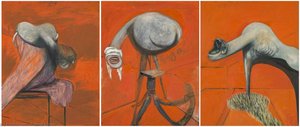
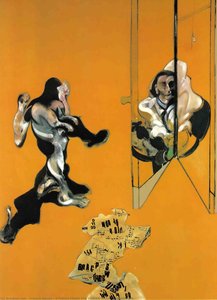
In the shadow of a world recovering from the devastation of World War II, Francis Bacon’s Sphinx II (1952) emerges as a haunting resonance of collective trauma. This was an era defined by the creeping anxieties of the burgeoning Cold War, a time when the intellectual elite of Europe grappled with profound existential uncertainty. Within this canvas, Bacon does not merely paint a figure; he captures the very essence of a psychological landscape in descent. The work serves as a visceral testament to the human condition during a period of unprecedented tension, translating the invisible tremors of political and social instability into a tangible, harrowing visual experience that continues to unsettle and captivate the modern viewer.A Descent into Distortion
The composition of Sphinx II is an arresting study in psychological intensity, where the boundaries between the physical body and emotional state begin to blur. At its heart lies a figure seated upon the floor, rendered with a grotesque distortion that defies traditional representation. A skull-like visage dominates the upper reaches of the frame, while limbs appear contorted and fragmented, as if the very concept of physical integrity is dissolving before our eyes. This sense of disintegration is amplified by the stark, crimson background—a hue that acts as both an emotional catalyst and a visual anchor. The deep red does not merely surround the subject; it presses against it, creating a claustrophobic atmosphere that evokes feelings of fear, anguish, and profound vulnerability. Through his Expressionist lens, Bacon eschews the comfort of perspective to prioritize the raw, unadulterated truth of human emotion.The Architecture of Agony
Bacon’s technical mastery lies in his ability to make the medium itself part of the narrative. Eschewing conventional brushwork, he utilized palette knives to apply thick, sculptural layers of impasto directly onto the canvas. This deliberate rejection of smoothness results in a surface that is violently textured, mirroring the internal turmoil of the subject. The paint possesses a palpable physicality, where every ridge and furrow of color contributes to the sense of movement and decay. By employing a reductive palette—primarily focused on the dramatic interplay between black and red—Bacon strips away all unnecessary distraction, leaving only the essential, jarring elements of his vision. For the discerning collector or interior designer, this intense texture offers a profound depth that makes a high-quality reproduction feel like a living, breathing entity within a curated space.A Timeless Mystery for the Modern Collector
Beyond its immediate visual shock, Sphinx II invites a deeper, more introspective engagement. The title itself alludes to the enigmatic nature of the Sphinx—a riddle that remains unsolved. This sense of mystery makes the piece an extraordinary centerpiece for those seeking art that provokes thought and conversation. Whether placed in a contemporary gallery setting or as a bold, dramatic statement in a sophisticated residential interior, the painting’s ability to evoke introspection is unparalleled. It is more than a depiction of a figure; it is an invitation to confront the complexities of the human psyche, making it an enduring icon for any collection dedicated to the transformative power of 20th-century Expressionism.Über den Künstler
**frühes Leben und Karriere**
francis bacon, ein irisch-geborener britischer figurative Maler, wurde am 28. Oktober 1909 in Dublin, Irland, geboren. Sein frühes Leben war von einer Reihe von Umzügen geprägt, da seine Familie nach einem geeigneten Klima für die Gesundheit seiner Mutter suchte. Diese wandernde Kindheit würde Bacon später seinen Ansatz in der Kunst beeinflussen.**Künstlerischer Stil und Themen**
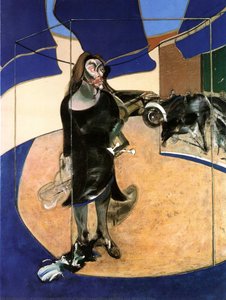
Bacon ist bekannt für sein mutiges, emotionales und oft groteskes Bildmaterial. Seine abstrahierten Figuren sind typischerweise in geometrischen, käfigartigen Räumen isoliert und stehen gegen flache, unauffällige Hintergründe. Dieser einzigartige Stil wurde sowohl gelobt als auch kritisiert von Kunstkritikern.- Portrait of Isabel Rawsthorne standing in a street in Soho, ein wegweisendes Werk, das Bacons Fähigkeit zeigt, die Essenz seiner Sujets in einer scheinbar abstrakten Umgebung einzufangen.
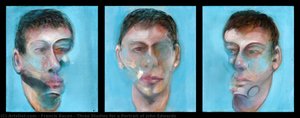
- Number vii from eight studies for a portrait, das die Erforschung der menschlichen Form durch eine Reihe von Studien des Künstlers veranschaulicht.
**Einflüsse und Vermächtnis**
Bacons Werk wurde von verschiedenen Quellen beeinflusst, darunter Maria Helena Vieira da Silva's Autoreportagen und der abstrakten Expressionismus von Piet Mondrian. Sein Vermächtnis inspiriert weiterhin neue Generationen von Künstlern, wobei sein mutiger, unerschrockener Stil ein Eckpfeiler der modernen Kunst bleibt.**Wichtige Ausstellungen und Sammlungen:**
- The Museum Fine Art Society (United Kingdom), das Bacons Werke neben anderen bedeutenden britischen Künstlern gezeigt hat. - Nationalgalerie (Norwegen), die eine umfassende Sammlung europäischer Kunst umfasst, darunter Werke von Bacon. **Wichtige Werke und Sammlungen:** - Francis Bacon: Portrait of Isabel Rawsthorne standing in a street in Soho - Francis Bacon: Number vii from eight studies for a portrait **Museen und Kunstgalerien:** - The Museum Fine Art Society (United Kingdom) - Nationalgalerie (Norwegen)**Fazit**
Bacons turbulentes Leben und sein innovativer Ansatz der figurativen Malerei haben einen unauslöschlichen Eindruck in der Kunstwelt hinterlassen. Sein Vermächtnis, das durch mutiges, emotionales Bildmaterial gekennzeichnet ist, inspiriert weiterhin zeitgenössische Künstler und fasziniert das Publikum gleichermaßen. **Empfohlene Literatur:** - Francis Bacons Biografie - Wikipedia: Francis Bacon (Künstler)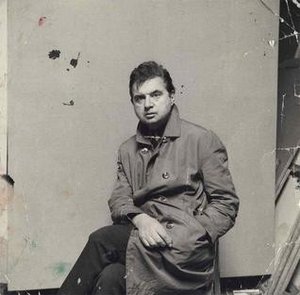
Francis Bacon
1909 - 1992 , Irland
Kurzinfos
- Beeinflusste Künstler:
- Pablo Picasso
- Egon Schiele
- Bemerkenswerte Werke:
- Drei Studien für Kreuzigung
- Porträt von Isabel Rawsthorne
- Studie nach Velázquez
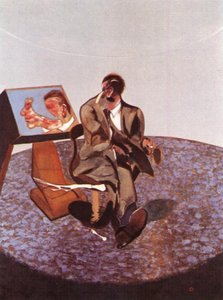
- George Dyer im Spiegel
- Geburtsdatum: 28. Oktober 1909
- Geburtsort: Dublin, Irland
- Künstlerische Richtung: Figuration, Expressionismus
- Nationalität: Irisch-Britisch
- Todatum: April 1992
- Vollständiger Name: Francis Bacon
- Von Künstlern Beeinflusst:
- Maria Helena Vieira da Silva
- Piet Mondrian
Ähnliche Artikel
Francis Bacon: Die 25 Meisterwerke des existentiellen Schmerzes | OriginalUniqueArt
Entdecken Sie die 25 Meisterwerke von Francis Bacon! Erleben Sie existenzielle Schmerz, expressive Porträts & dunkle Farben. Kunstreproduktionen in Museumsqualiät auf OriginalUniqueArt.com – für Ihre Wanddekoration.
Francis Bacons Existenzielle Angst: Trauma, Form und die Nachkriegszeit
Erforschen Sie Francis Bacons tiefgründige Auseinandersetzung mit existenzieller Angst und Trauma. Analyse seiner formalen Innovationen, seines Einflusses auf die Neue Figuration und seines philosophischen Weltbilds. Jetzt lesen!

Beyond Reality's Grasp: Surrealism & Expressionism in 20th-Century Art
Explore the captivating interplay of Surrealism & Expressionism in 20th-century art. Discover key artists like Masson and Pollock, automatism techniques, and their lasting influence. Expert insights for art enthusiasts.
John Francis Sartorius II: Equestrian Elegance & the Rise of British Portraiture
Explore the captivating world of Francis Sartorius II (1734-1804), a leading British painter renowned for his exquisite equestrian portraits and hunting scenes. Discover his life, techniques & enduring legacy.
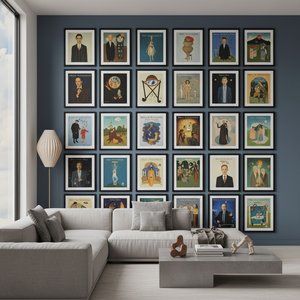
René Magritte: Die 25 Meisterwerke des Surrealismus für Ihr Zuhause | OriginalUniqueArt
Entdecken Sie die 25 ikonischsten Gemälde von René Magritte! Tauchen Sie ein in die surreale Welt des belgischen Künstlers – von 'Der verlorene Jockey' bis 'Golconda'. Hochwertige Reproduktionen & Kunst für Ihr Zuhause auf OriginalUniqueArt.com.