

 Vorschau anzeigen
 Versenden
 Teilen
 Details anzeigen
 Leitfaden

 Herunterladen
 Ähnliche Objekte
 Röntgenaufnahme
 Diashow
 Statistiken
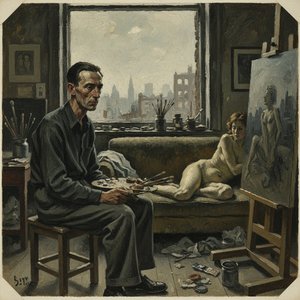
Portrait von Lucian Freud


 Weiterlesen
Die auf dieser Seite dargestellten Kunstwerke sind urheberrechtlich geschützt, was bedeutet, dass wir keine identische Reproduktion rechtmäßig erstellen oder verkaufen dürfen. Dieser Schutz wird durch internationale Abkommen wie die Berner Übereinkunft und durch nationale Gesetze, einschließlich derer, die von den US-Urheberrecht – Titel 17.
Diese Methode entspricht vollumfänglich den Urheberrechtsbestimmungen, da sie keine Kopie oder Vervielfältigung des geschützten Kunstwerks darstellt. Stattdessen handelt es sich um eine kreative Neuinterpretation – ein neues Gemälde, das vom Original inspiriert, aber nicht identisch mit ihm ist.
Giclée / Kunstdruck
Giclée- oder Leinwanddruck in Museumsqualität mit schneller Produktion und flexiblen Veredelungsoptionen. ( Handgemalte Reproduktion bestellen Zum digitalen Bild wechseln)




P118B €10

P118H €10

P118W €10

P438Z €10

P508JH €12

P508YH €12

P805H €10

P805Z €10

P919BZ €10

P919G €10

P919XJ €10

P959ZH €10

P968JZ €12

W106C €8

W218G €10

W218JH €8

W218Y €10

W307PJ €10

W316G €10

W316PJ €8

W316Y €10

W398PJ €8

W4111J €10

W500HY €15

W500JH €15

W692G €12

W849H €8

W940BG €15

W953PJ €8




Wählen Sie aus unseren vordefinierten Formaten, die den ursprünglichen Proportionen des Kunstwerks entsprechen.

Geben Sie die benötigte Breite und Höhe an, damit der Druck perfekt in Ihren Rahmen oder an Ihre Wand passt. Ein Druck kann nur beschnitten, aber niemals größer als das Originalbild angefertigt werden; daher verliert ein Format mit anderen Proportionen einen Teil des Bildes. Wir senden Ihnen ein digitales Mockup zur Freigabe, bevor wir den Druck ausführen. Das auf dieser Seite gezeigte Bild zeigt nicht den tatsächlichen Beschnitt – dies ist nur im Mockup ersichtlich.
Weltweiter Versand () innerhalb von 2 Wochen statt der üblichen 4/5 Wochen. (28 Oktober)

Kostenloser weltweiter Expressversand

Hochwertige Leinenleinwand

Umfassender Versicherungsschutz beim Versand

Zollgebühren-Rückerstattungsgarantie

Garantie für exakte Farbtreue

100 Tage Rückgaberecht (nur bei Mängeln)

100% Geld-zurück-Garantie

Mengenrabatt verfügbar
 Die Glasoption ist nur für Größen unter 110 cm verfügbar.

Portrait von Lucian Freud
Giclée / Kunstdruck
Format der Reproduktion
-


Endpreis
€ 70
Portrait of Lucian Freud
The Portrait of Lucian Freud, created by the renowned artist Francis Bacon in 1951, stands as a cornerstone of British Expressionism and embodies the profound artistic partnership between Bacon and Freud. More than just a depiction of a human figure, it’s an exploration of vulnerability, intimacy, and the unsettling beauty found within psychological complexity—a characteristic deeply rooted in the spirit of their time.The Artistic Bond Between Bacon and Freud
Francis Bacon and Lucian Freud were undeniably kindred spirits, united by a shared commitment to confronting uncomfortable truths about human existence through art. Despite diverging stylistic approaches – Bacon favoring abstraction and fragmentation while Freud championed meticulous realism – they nurtured an enduring friendship marked by daily encounters and mutual artistic influence. Their correspondence reveals a constant exchange of ideas and observations on the nature of perception and representation, cementing their bond as one of the most significant collaborations within the British art scene after World War II. This connection wasn’t merely social; it fueled each artist's creative process, pushing them to explore new boundaries of expression.Expressionism: A Subjective Perspective
At its core, Expressionism rejects objective representation in favor of conveying subjective emotion and experience—a principle vividly realized in Bacon’s Portrait of Lucian Freud. The painting abandons traditional perspective and color palettes, opting instead for distorted forms and muted hues that evoke a palpable sense of unease and movement. Bacon deliberately disrupts visual conventions to capture the inner turmoil simmering beneath the surface of his subject—a technique mirroring Freud’s own preoccupation with portraying psychological states with unflinching honesty.Artistic Techniques and Symbolism
Bacon's masterful use of thick impasto brushstrokes creates a textured surface that pulsates with energy, drawing the viewer’s eye directly to the face of Lucian Freud. The subdued background serves as a foil to the intensely rendered visage, emphasizing its vulnerability and highlighting the psychological depth inherent in Expressionist art. The color palette—primarily earthy browns and ochres punctuated by flashes of crimson—contributes to the painting's unsettling atmosphere, symbolizing not only physical discomfort but also emotional repression. Furthermore, the cage-like structure surrounding Freud represents confinement – both literal and metaphorical – reflecting anxieties about isolation and vulnerability prevalent in post-war Britain.Relevance in Art History
The Portrait of Lucian Freud aligns itself with a broader artistic tradition focused on portraying the nude human figure—a motif explored extensively by artists like Michelangelo and Rembrandt. However, Bacon’s work distinguishes itself through its uncompromising portrayal of psychological realism, anticipating developments in Surrealism and psychoanalysis that would profoundly influence art and culture throughout the 20th century. It stands as a testament to the enduring power of Expressionist aesthetics to provoke contemplation and elicit visceral emotional responses—a legacy continuing to inspire artists today.- Painting by 'Francis Bacon' | Francis Bacon:portrait of lucian freud (Expressionism,Oil,)
- Neo-Figurative Art
- Expressionism
- Nude (art)
Fragen & Antworten
Welche Farbe prägt die Komposition von "Portrait von Lucian Freud" von Francis Bacon?
Die dominante Farbe von "Portrait von Lucian Freud" von Francis Bacon ist Treibholzfarben (#cfa761).
Inwiefern steht das Sujet von „Portrait von Lucian Freud“ in Beziehung zu den üblichen Themen von Francis Bacon?
"Portrait von Lucian Freud" stellt portrait, lucian freud, expressionism, psychological depth, human figure, abstraction, red couch, dark hue dar, während die dokumentierten Themen von Francis Bacon influence of bacon & freud, psychological exploration, human condition reflection, expressionist style dominance, iconic portrait series, symbolism of turmoil, british post-war art legacy sind. Ein Vergleich der beiden zeigt, wie das Werk mit den üblichen Sujets des Künstlers in Verbindung steht.
Wie kann ich "Portrait von Lucian Freud" von Francis Bacon als Diashow ansehen?
Eine Diashow ist verfügbar: die Seite Diashow von "Portrait von Lucian Freud" von Francis Bacon.
Künstlerbiografie
**frühes Leben und Karriere**
francis bacon, ein irisch-geborener britischer figurative Maler, wurde am 28. Oktober 1909 in Dublin, Irland, geboren. Sein frühes Leben war von einer Reihe von Umzügen geprägt, da seine Familie nach einem geeigneten Klima für die Gesundheit seiner Mutter suchte. Diese wandernde Kindheit würde Bacon später seinen Ansatz in der Kunst beeinflussen.**Künstlerischer Stil und Themen**
Bacon ist bekannt für sein mutiges, emotionales und oft groteskes Bildmaterial. Seine abstrahierten Figuren sind typischerweise in geometrischen, käfigartigen Räumen isoliert und stehen gegen flache, unauffällige Hintergründe. Dieser einzigartige Stil wurde sowohl gelobt als auch kritisiert von Kunstkritikern.- Portrait of Isabel Rawsthorne standing in a street in Soho, ein wegweisendes Werk, das Bacons Fähigkeit zeigt, die Essenz seiner Sujets in einer scheinbar abstrakten Umgebung einzufangen.
- Number vii from eight studies for a portrait, das die Erforschung der menschlichen Form durch eine Reihe von Studien des Künstlers veranschaulicht.
**Einflüsse und Vermächtnis**
Bacons Werk wurde von verschiedenen Quellen beeinflusst, darunter Maria Helena Vieira da Silva's Autoreportagen und der abstrakten Expressionismus von Piet Mondrian. Sein Vermächtnis inspiriert weiterhin neue Generationen von Künstlern, wobei sein mutiger, unerschrockener Stil ein Eckpfeiler der modernen Kunst bleibt.**Wichtige Ausstellungen und Sammlungen:**
- The Museum Fine Art Society (United Kingdom), das Bacons Werke neben anderen bedeutenden britischen Künstlern gezeigt hat. - Nationalgalerie (Norwegen), die eine umfassende Sammlung europäischer Kunst umfasst, darunter Werke von Bacon. **Wichtige Werke und Sammlungen:** - Francis Bacon: Portrait of Isabel Rawsthorne standing in a street in Soho - Francis Bacon: Number vii from eight studies for a portrait **Museen und Kunstgalerien:** - The Museum Fine Art Society (United Kingdom) - Nationalgalerie (Norwegen)**Fazit**
Bacons turbulentes Leben und sein innovativer Ansatz der figurativen Malerei haben einen unauslöschlichen Eindruck in der Kunstwelt hinterlassen. Sein Vermächtnis, das durch mutiges, emotionales Bildmaterial gekennzeichnet ist, inspiriert weiterhin zeitgenössische Künstler und fasziniert das Publikum gleichermaßen. **Empfohlene Literatur:** - Francis Bacons Biografie - Wikipedia: Francis Bacon (Künstler)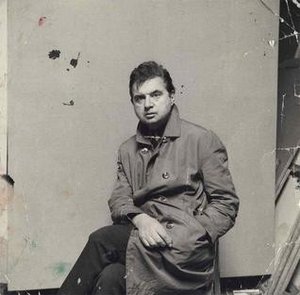
Francis Bacon
1909 - 1992 , Irland
Kurzinfos
- Beeinflusste Künstler:
- Pablo Picasso
- Egon Schiele
- Bemerkenswerte Werke:
- Drei Studien für Kreuzigung
- Porträt von Isabel Rawsthorne
- Studie nach Velázquez
- George Dyer im Spiegel
- Geburtsdatum: 28. Oktober 1909
- Geburtsort: Dublin, Irland
- Künstlerische Richtung: Figuration, Expressionismus
- Nationalität: Irisch-Britisch
- Todatum: April 1992
- Vollständiger Name: Francis Bacon
- Von Künstlern Beeinflusst:
- Maria Helena Vieira da Silva
- Piet Mondrian
Ähnliche Artikel
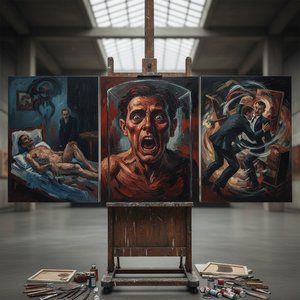
Francis Bacon: Die 25 Meisterwerke des existentiellen Schmerzes | OriginalUniqueArt
Entdecken Sie die 25 Meisterwerke von Francis Bacon! Erleben Sie existenzielle Schmerz, expressive Porträts & dunkle Farben. Kunstreproduktionen in Museumsqualiät auf OriginalUniqueArt.com – für Ihre Wanddekoration.

Unmasking Emotion: A Definitive Guide to the Psychological Depth of Expressionist Portraiture
Explore the profound psychological depth of Expressionist portraiture. From Munch to Schiele, discover how distorted forms and visceral brushstrokes unmask raw human emotion in this definitive guide for art enthusiasts and collectors.
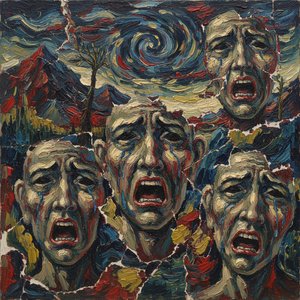
Unleashing Emotion: A Sophisticated Guide to the Power and Psychological Depth of Expressionist Art
Explore the profound psychological depth of Expressionist art. From Munch to Van Gogh, discover how distorted forms and bold colors convey raw human emotion through our expert guide on this transformative movement.
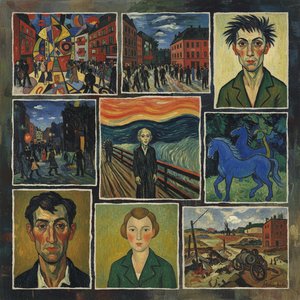
Expressionismus: Die 10 Meisterwerke, die eine Kunstepoche prägten | OriginalUniqueArt
Entdecken Sie die 10 prägendsten Meisterwerke des Expressionismus! Von Munchs Schrei bis Kandinskys Abstraktionen – erfahren Sie die Geschichten berühmter Maler und ihre emotionale Farbgebung. Kunstreproduktionen in Museumsqualiät auf OriginalUniqueArt.com.
Lucian Freud: Psychologische Porträts einer Nachkriegsgeneration
Entdecken Sie Lucian Freuds tiefgründige Porträts und ihren Einfluss auf die Nachkriegsmoderne. Analyse seiner Technik, Sujets und seines Vermächtnisses für Kunstsammler und Kenner.


