
 Vorschau anzeigen
 Versenden
 Teilen
 Details anzeigen
 Leitfaden

 Herunterladen
 Ähnliche Objekte
 Röntgenaufnahme
 Diashow
 Statistiken
Bacchanal
 Oil On Canvas
- WallArt
- Rococo Period
 1740
1740- Early Modern
 142.0 x 210.0 cm
 Gallerie dell’Accademia
 Weiterlesen
Giclée / Kunstdruck
Giclée- oder Leinwanddruck in Museumsqualität mit schneller Produktion und flexiblen Veredelungsoptionen. ( Handgemalte Reproduktion bestellen Zum digitalen Bild wechseln)




P118B €10

P118H €10

P118W €10

P438Z €10

P508JH €12

P508YH €12

P805H €10

P805Z €10

P919BZ €10

P919G €10

P919XJ €10

P959ZH €10

P968JZ €12

W106C €8

W218G €10

W218JH €8

W218Y €10

W307PJ €10

W316G €10

W316PJ €8

W316Y €10

W398PJ €8

W4111J €10

W500HY €15

W500JH €15

W692G €12

W849H €8

W940BG €15

W953PJ €8




Wählen Sie aus unseren vordefinierten Formaten, die den ursprünglichen Proportionen des Kunstwerks entsprechen.

Geben Sie die benötigte Breite und Höhe an, damit der Druck perfekt in Ihren Rahmen oder an Ihre Wand passt. Ein Druck kann nur beschnitten, aber niemals größer als das Originalbild angefertigt werden; daher verliert ein Format mit anderen Proportionen einen Teil des Bildes. Wir senden Ihnen ein digitales Mockup zur Freigabe, bevor wir den Druck ausführen. Das auf dieser Seite gezeigte Bild zeigt nicht den tatsächlichen Beschnitt – dies ist nur im Mockup ersichtlich.
Weltweiter Versand () innerhalb von 2 Wochen statt der üblichen 4/5 Wochen. (27 Oktober)

Kostenloser weltweiter Expressversand

Hochwertige Leinenleinwand

Umfassender Versicherungsschutz beim Versand

Zollgebühren-Rückerstattungsgarantie

Garantie für exakte Farbtreue

100 Tage Rückgaberecht (nur bei Mängeln)

100% Geld-zurück-Garantie

Mengenrabatt verfügbar
 Die Glasoption ist nur für Größen unter 110 cm verfügbar.

Bacchanal
Giclée / Kunstdruck
Format der Reproduktion
-


Endpreis
€ 70
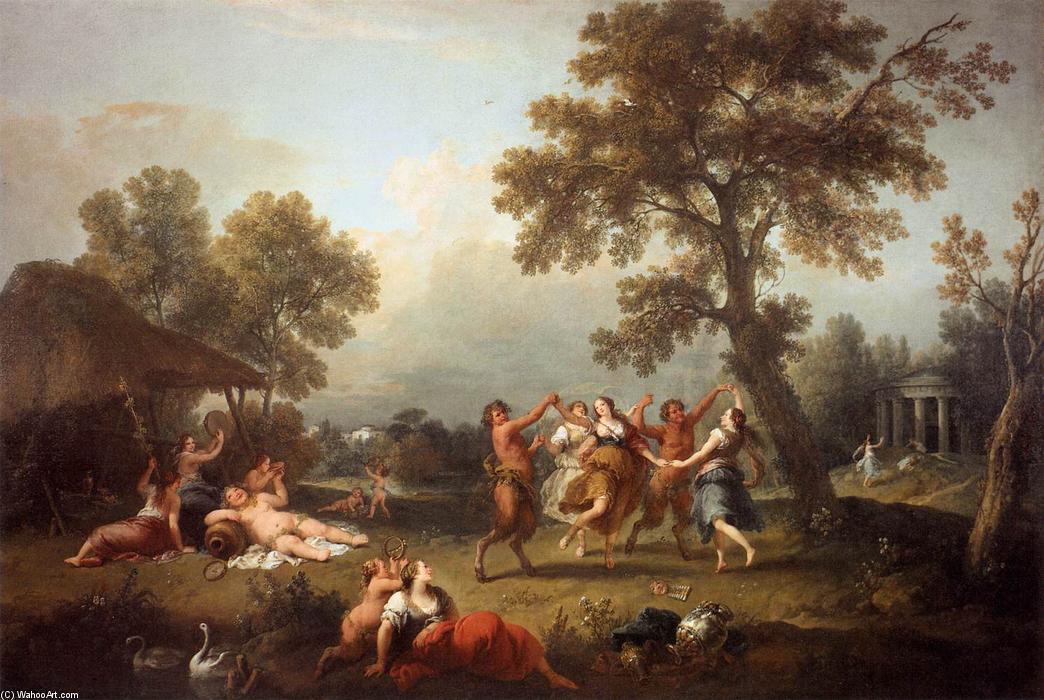
Francesco Zuccarelli’s Bacchanal: A Symphony of Pastoral Elegance
The Bacchanal by Francesco Zuccarelli stands as an emblem of the Rococo artistic movement, capturing not merely a scene but an entire ethos—one steeped in aristocratic indulgence and idealized beauty. Painted circa 1740-50, this oil on canvas masterpiece resides within the Gallerie dell’Accademia in Venice, Italy, offering visitors a glimpse into a period defined by opulent interiors and refined sensibilities. Zuccarelli's skill lies not just in depicting figures engaged in joyous revelry but in crafting an immersive experience that transports the viewer to a realm of pastoral serenity infused with vibrant color and masterful composition.Composition and Style: Balancing Chaos and Harmony
Zuccarelli’s approach distinguishes itself from the more dramatic Baroque tradition, prioritizing balance and grace over theatrical grandeur. The painting depicts a lively bacchanal—a celebration honoring Dionysus, the Greek god of wine and ecstasy—yet it avoids overwhelming visual sensation. A central group of figures dominates the canvas, their postures dynamic yet carefully arranged around a prominent architectural element: a classical structure reminiscent of Roman temples, subtly anchoring the scene in antiquity. The artist employs meticulous detailing to portray each participant’s attire and expression, conveying both physicality and emotion with remarkable precision. Notice how Zuccarelli utilizes light and shadow to sculpt forms, creating depth and enhancing the sense of movement—a hallmark of Rococo aesthetics.Color Palette and Technique: Embracing Pastel Radiance
The color palette is dominated by earthy tones – ochre, umber, Sienna – providing a grounding counterpoint to the splashes of vibrant hues adorning the figures’ clothing. Crimson reds, emerald greens, and sapphire blues punctuate the scene, symbolizing fertility, vitality, and divine inspiration. Zuccarelli's technique showcases exceptional brushwork, layering pigments with subtle gradations to achieve luminous surfaces that shimmer with reflected light. The artist skillfully blends colors on canvas, creating a velvety texture that contributes to the painting’s overall impression of luxurious softness. This meticulous attention to detail underscores Zuccarelli’s dedication to capturing not just what is seen but also how it feels—a testament to the transformative power of art.Historical Context: Venetian Aristocracy and Artistic Patronage
The Bacchanal reflects the cultural landscape of Venice during the mid-18th century, a city ruled by an aristocratic elite deeply invested in artistic patronage. Zuccarelli’s work exemplifies the Rococo style's fascination with idealized landscapes and mythological narratives—themes favored by Venetian noble families eager to express their status and sophistication. The painting aligns perfectly with broader European trends toward decorative art and emotional expression, signaling a shift away from Baroque solemnity towards a celebration of sensual pleasure and imaginative vision.Symbolism: Dionysian Ecstasy and Pastoral Tranquility
Beyond its visual splendor, Bacchanal is laden with symbolic significance. The bacchanalia itself represents the unrestrained pursuit of joy and indulgence—a deliberate rejection of Puritan morality—while simultaneously evoking images of Arcadia, the mythical pastoral paradise inhabited by shepherds and nymphs. The figures’ gestures convey a profound connection to nature and divine inspiration, mirroring the Rococo preoccupation with themes of beauty, harmony, and sensual experience. Zuccarelli's masterful depiction captures not only the outward spectacle of celebration but also its inner resonance—a reminder that art can transcend mere representation to communicate deeper truths about human emotion and spiritual aspiration.Legacy: Rediscovering Zuccarelli’s Vision
Francesco Zuccarelli’s reputation waned in the early 19th century, yet his work has experienced a resurgence of interest in recent decades, displayed prominently in museums worldwide. Bacchanal stands as a cornerstone of Rococo art history—a testament to Zuccarelli's artistic genius and his ability to distill the essence of an era into a single unforgettable image. Its enduring appeal lies in its exquisite beauty, balanced composition, and profound exploration of human emotion, continuing to inspire artists and collectors alike.Fragen & Antworten
Kann "Bacchanal" heruntergeladen werden?
"Bacchanal" von Francesco Zuccarelli kann auf der Download-Seite des Kunstwerks als hochauflösender digitaler Bild-Download heruntergeladen werden.
Wie hoch ist die Leuchtkraft von "Bacchanal" von Francesco Zuccarelli?
"Bacchanal" von Francesco Zuccarelli weist eine Luminanz von Gentle Luminance auf. Die Luminanz beschreibt, wie viel Licht die Farben scheinbar reflektieren.
In welchem Jahr wurde "Bacchanal" von Francesco Zuccarelli geschaffen?
"Bacchanal" von Francesco Zuccarelli entstand im Jahr 1740.
Künstlerbiografie
Francesco Zuccarelli: Ein Leben zwischen Barock und Rokoko
- Geboren: 15. August 1702 in Pitigliano, Italien
- Gestorben: 30. Dezember 1788 in Florenz, Italien
- Hauptwirkungsort: Venedig, England
- Bekannt für: Landschaftsmalerei, Rokoko- und Barockstil
Frühe Jahre und Ausbildung (1702-1732)
- Zuccarelli wurde in Pitigliano, Süd-Toskana, geboren. Sein Vater besaß Weinberge und einen Laden für Küchenutensilien.
- Mit etwa elf oder zwölf Jahren begann er seine Lehre in Rom bei den Porträtmalern Giovanni Maria Morandi und Pietro Nelli. Dort lernte er die Grundlagen des Designs und absorbierte die Lektionen des römischen Klassizismus.
- Zwischen 1725 und 1727 schuf er seine erste Auftragsarbeit in Pitigliano: ein Paar Altarbilder für eine Kapelle.
- Unter der Schirmherrschaft von Francesco Maria Niccolò Gabburri widmete er sich von 1728 bis 1731 hauptsächlich dem Radieren und fertigte mindestens 43 Drucke an, darunter Serien, die die verfallenen Fresken von Giovanni da San Giovanni und Andrea del Sarto dokumentierten.
- Während seiner Zeit in Florenz begann er, Landschaftsskizzen anzufertigen, was seinen späteren Stil beeinflusste.
- Paolo Anesi, ein römischer Landschaftsmaler und Radierer, gilt als sein wichtigster Mentor in der Landschaftsmalerei.
Die Venezianische Periode und Erfolg (1732-1768)
- 1732 zog Zuccarelli nach Venedig, wo er eine Marktlücke im Bereich der Landschaftsmalerei fand, die durch den Tod von Marco Ricci entstanden war.
- Er kombinierte religiöse und mythologische Themen mit Landschaften und entwickelte einen eigenen Stil, inspiriert von Claude Lorrain und der römischen Schule.
- Seine frühen Gemälde zeigten Einflüsse von Alessandro Magnasco und später von Marco Ricci. Er brachte eine sanftere Palette und höhere Lichtwerte in die venezianische Farbgebung ein.
- Er erlangte schnell Erfolg und Patronage von Persönlichkeiten wie Marshal Schulenburg, Joseph Smith (sein langjähriger Förderer) und Francesco Algarotti.
- 1735 heiratete er Giustina Agata Simonetti und hatte vier Kinder, von denen zwei im Kindesalter starben.
- Zusammen mit Antonio Visentini schuf er eine Serie mit neupalladianischer Architektur (Burlington House, 1746).
- Ein bemerkenswertes Projekt war ein Satz von 52 Spielkarten mit biblischen Themen (Altes Testament), die 1748 in Venedig veröffentlicht wurden.
- Eine Reihe von sieben Leinwänden, die Rebecca mit Jakob und Esau darstellen, befindet sich heute im Windsor Castle.
England und Anerkennung (1768-1788)
- 1768 wurde Zuccarelli zu einem Gründungsmitglied der Royal Academy of Arts in London ernannt.
- Er verbrachte zwei längere Zeiträume in England, wo seine Werke großen Anklang fanden.
- Seine Landschaftsbilder wurden von George III geschätzt.
- Nach seiner Rückkehr nach Italien wurde er zum Präsidenten der venezianischen Akademie gewählt.
- Obwohl er zu Lebzeiten berühmt war, sank sein Ruf im frühen 19. Jahrhundert mit dem Aufkommen des Naturalismus in der Landschaftsmalerei.
- Turner kritisierte ihn zwar mild, erkannte aber die Schönheit seiner Figuren an.
- Michael Levey argumentierte, dass Zuccarellis Erfolg auf der dekorativen Natur seiner Werke beruhte.
Bedeutung und Vermächtnis
- Zuccarelli gilt als einer der bedeutendsten Landschaftsmaler des venezianischen 18. Jahrhunderts.
- Seine Werke beeinflussten die englische Landschaftsmalerei maßgeblich.
- Seit den 1990er Jahren gibt es ein erneutes Interesse an seinem Werk durch italienische Gelehrte, was zu Ausstellungen und Publikationen geführt hat.
- Er schuf nicht nur Gemälde, sondern auch Radierungen, Zeichnungen, Entwürfe für Wandteppiche und sogar Spielkarten.

Francesco Zuccarelli
1702 - 1788 , Italien
Kurzinfos
- Beeinflusste Künstler:
- Paolo Anesi
- Alessandro Magnasco
- Marco Ricci
- Bemerkenswerte Werke:
- Bacchanal
- Landschaft mit Figuren
- Kapricio mit San Giorgio
- Pastorale Kapriccio
- Geburtsdatum: 15. August 1702
- Geburtsort: Pitigliano, Italien
- Künstlerische Bewegung: Rococo, Barock
- Nationalität: Italienisch
- Sterbedatum: 30. Dezember 1788
- Vollständiger Name: Francesco Zuccarelli
Ähnliche Artikel

The Rococo Aesthetic: Opulence, Rebellion & the Pursuit of Pleasure in 18th-Century Art
Explore the opulent world of Rococo art! Discover its origins, key artists like Watteau & Boucher, and lasting influence on design. Expert insights for collectors & enthusiasts.

Pietro Longhi's Venetian Scenes: A Study of Rococo Society & Domestic Life
Explore the captivating world of Pietro Longhi's Venetian scenes! Discover insightful analysis of his Rococo masterpieces & social commentary on 18th-century life. Learn about this 'Venetian Hogarth' and his lasting artistic legacy.

The Allure of Elegance in Art: A Historical & Aesthetic Exploration of Refinement & Grace
Explore the exquisite world of Rococo art! Discover its history, masters (Watteau, Boucher & more), and defining elegance. Expert insights for collectors seeking museum-quality reproductions & custom portraits.

Rococo Meisterwerke: Die Top 10, die eine Epoche prägten |
Entdecken Sie die Top 10 Rokoko Meisterwerke von Watteau, Boucher & Fragonard! Erfahren Sie die Geschichten hinter diesen ikonischen Gemälden und lassen Sie sich für Ihre Inneneinrichtung inspirieren. Hochwertige Kunstdrucke auf .

Francesco Guardi: Venezianisches Licht, Atmosphäre und der Übergang zum Neoklassizismus
Entdecken Sie Francesco Guardis Meisterwerke der venezianischen Vedutenmalerei! Erfahren Sie mehr über seinen einzigartigen Stil, den Übergang vom Rokoko und Investitionsmöglichkeiten für Kunstsammler. Expertenwissen auf OriginalUniqueArt.

