
 Vorschau anzeigen
 Versenden
 Teilen
 Details anzeigen
 Leitfaden

 Herunterladen
 Ähnliche Objekte
 Röntgenaufnahme
 Diashow
 Q&A
Q&A Statistiken
Seven caricatures

- 180.0 x 120.0 cm


 Weiterlesen
Giclée / Kunstdruck
Giclée- oder Leinwanddruck in Museumsqualität mit schneller Produktion und flexiblen Veredelungsoptionen. ( Handgemalte Reproduktion bestellen Zum digitalen Bild wechseln)




P118B €10

P118H €10

P118W €10

P438Z €10

P508JH €12

P508YH €12

P805H €10

P805Z €10

P919BZ €10

P919G €10

P919XJ €10

P959ZH €10

P968JZ €12

W106C €8

W218G €10

W218JH €8

W218Y €10

W307PJ €10

W316G €10

W316PJ €8

W316Y €10

W398PJ €8

W4111J €10

W500HY €15

W500JH €15

W692G €12

W849H €8

W940BG €15

W953PJ €8




Wählen Sie aus unseren vordefinierten Formaten, die den ursprünglichen Proportionen des Kunstwerks entsprechen.

Geben Sie die benötigte Breite und Höhe an, damit der Druck perfekt in Ihren Rahmen oder an Ihre Wand passt. Ein Druck kann nur beschnitten, aber niemals größer als das Originalbild angefertigt werden; daher verliert ein Format mit anderen Proportionen einen Teil des Bildes. Wir senden Ihnen ein digitales Mockup zur Freigabe, bevor wir den Druck ausführen. Das auf dieser Seite gezeigte Bild zeigt nicht den tatsächlichen Beschnitt – dies ist nur im Mockup ersichtlich.
Weltweiter Versand () innerhalb von 2 Wochen statt der üblichen 4/5 Wochen. (2 November)

Kostenloser weltweiter Expressversand

Hochwertige Leinenleinwand

Umfassender Versicherungsschutz beim Versand

Zollgebühren-Rückerstattungsgarantie

Garantie für exakte Farbtreue

100 Tage Rückgaberecht (nur bei Mängeln)

100% Geld-zurück-Garantie

Mengenrabatt verfügbar
 Die Glasoption ist nur für Größen unter 110 cm verfügbar.

Seven caricatures
Giclée / Kunstdruck
Format der Reproduktion
-


Endpreis
€ 71
Seven Caricatures by Francesco Melzi
Francesco Melzi’s “Seven Caricatures” stands as a poignant testament to the Renaissance fascination with human anatomy and psychological observation—a rare pen and ink study executed in 1515, capturing the essence of character through exaggerated features. Housed at the Gallerie dell'Accademia in Venice, Italy, this artwork transcends mere visual representation; it’s an invitation into a profound contemplation of humanity itself.
- Artist: Francesco Melzi (1491-1570)
- Date: 1515
- Medium: Pen and Ink on White Paper
- Dimensions: 180 x 120 mm
- Location: Gallerie dell'Accademia, Venice
Francesco Melzi’s contribution to art history isn’t defined by grand canvases or revolutionary innovations. Instead, he secured Leonardo da Vinci’s legacy—a devoted pupil who meticulously documented and preserved the genius of his mentor. This dedication is palpable in “Seven Caricatures,” where Melzi skillfully employs a technique rooted in anatomical study, mirroring Da Vinci's own groundbreaking explorations.
The High Renaissance, flourishing during Melzi’s lifetime, prioritized humanist ideals—a shift away from medieval dogma toward an appreciation for human intellect and physicality. This intellectual climate fueled artists like Melzi to dissect the human form, striving to capture not just its appearance but also its inner workings. The resulting sketches are imbued with a palpable sense of concentration; each caricature is rendered with painstaking detail, reflecting the artist’s unwavering commitment to accuracy.
Beyond mere technical prowess lies a deeper symbolic resonance. Melzi's deliberate exaggeration—the oversized nose, diminutive mouth—isn’t simply playful distortion; it serves as a conduit for conveying complex emotions and psychological states. Consider the first figure: its prominent chin speaks volumes about confidence and self-assuredness, while the fifth embodies melancholy and introspection. These caricatures tap into universal human experiences – ambition, vanity, sorrow – mirroring Da Vinci's own explorations of emotion.
Comparing Melzi’s work to Da Vinci’s “Study of a Rider” reveals striking similarities in stylistic approach and conceptual underpinning. Both artists prioritized anatomical precision alongside expressive rendering—a hallmark of Renaissance art that sought to elevate observation beyond mere imitation. The subtle shading employed by Melzi creates depth and dimensionality, mirroring Da Vinci's masterful manipulation of chiaroscuro.
For those seeking inspiration or contemplating acquiring a high-quality reproduction, “Seven Caricatures” offers more than just an aesthetically pleasing image; it embodies the spirit of the Renaissance—a celebration of human intellect and artistic mastery. To delve deeper into Melzi’s oeuvre and Leonardo da Vinci's enduring influence, visit OriginalUniqueArt.com’s page on the artist.
Fragen & Antworten
Welcher Raum passt farblich zu "Seven caricatures" von Francesco Melzi?
Aufgrund seiner Neutrals-Palette wird "Seven caricatures" von Francesco Melzi für ein Living Room empfohlen; die Farbstimmung ist einer der Gründe für diese Empfehlung.
Welchem Künstler wird "Seven caricatures" zugeschrieben?
"Seven caricatures" wurde von Francesco Melzi geschaffen. Die Informationen auf dieser Seite beschreiben das Originalwerk von Francesco Melzi.
Für welchen Raum im Zuhause eignet sich eine Reproduktion von "Seven caricatures" besonders gut?
Der empfohlene Raum für "Seven caricatures" von Francesco Melzi ist ein Living Room. Dieser Vorschlag kann natürlich an Ihr Interieur angepasst werden.
Künstlerbiografie
Frühes Leben und Ausbildung
- Geboren: Mailand, Italien (1491)
- Gestorben: 1570, Italien
- Familiärer Hintergrund: Francesco Melzi wurde in eine Familie des Mailänder Adels in der Lombardei geboren. Sein Vater, Gerolamo Melzi, diente als Ingenieur für Francesco II Sforza und später als Hauptmann in der Miliz unter Ludwig XII.
- Aufziehen: Er wuchs am Mailänder Hof auf und erhielt eine gute Ausbildung, die auch eine künstlerische Ausbildung umfasste. Diese Erziehung vermittelte ihm gute Manieren und ein Verantwortungsbewusstsein.
- Begegnung mit Leonardo da Vinci: Ein entscheidender Moment ereignete sich gegen 1505, als Leonardo da Vinci nach Mailand zurückkehrte und bei der Familie Melzi wohnte. Da Vinci war von Francesco's freundlichem Wesen und seiner Schönheit fasziniert, was zu einer Lehrlingsausbildung führte, die sein Leben tiefgreifend prägen sollte.
Die Lehrzeit unter Leonardo da Vinci
- Enge Beziehung: Francesco wurde schnell Leonardos Lieblingsschüler und ergebenster Assistent. Er begleitete Leonardo auf Reisen nach Rom (1513) und Frankreich (1516).
- Rolle als Assistent: Über die künstlerische Ausbildung hinaus diente Francesco als Begleiter, Sekretär und Testamentsvollstrecker für Leonardo. Zu seinen Aufgaben gehörte das Abschreiben von Manuskripten wie dem Codex Trivulzianus.
- Codex Urbinas: Ein bedeutender Beitrag war seine Rolle bei der Sammlung, Organisation und Bewahrung Leonardos Notizen zum Malen, die er in das Manuskript bekannt als Codex Urbinas verwandelte. Diese Arbeit sorgte für die Bewahrung Leonardos künstlerischen Erbes.
- Letzter Schüler: Francesco blieb bis zu Leonardos Tod im Jahr 1519 bei ihm und war damit der letzte von Leonardos Schülern, der an seiner Seite blieb.
Künstlerische Beiträge und Vermächtnis
- Begrenzter künstlerischer Output: Obwohl er ein fähiger Maler war, ist Francesco's künstlerisches Werk relativ begrenzt im Vergleich zu seinem Meister. Er ist in erster Linie für seine Verbindung zu Leonardo da Vinci bekannt und nicht für eigenständige Kunstwerke.
- Vollendung unvollendeter Werke: Nach Leonardos Tod vollendete Francesco einige Pläne und Gemälde, die Da Vinci unvollendet zurückgelassen hatte.
- Bewahrung von Leonardos Werk: Sein bleibendes Vermächtnis liegt in seiner Rolle als Testamentsvollstrecker Leonardos und seiner Verantwortung für die Pflege Leonardos Werke. Er sorgte dafür, dass Leonardos Ideen verbreitet wurden, wenn auch nicht sofort veröffentlicht.
- Einfluss auf die Kunstgeschichte: Obwohl er von Leonardo überschattet wurde, war Francesco's Beitrag zur Bewahrung Leonardos Notizen entscheidend für Kunsthistoriker und Wissenschaftler, die den Renaissance-Meister studieren. Sigmund Freud vermutete, dass seine Unfähigkeit, sich von seinem Meister abzugrenzen, sein eigenes künstlerisches Aufblühen behinderte.
Späteres Leben und Familie
- Heirat und Kinder: Nach Leonardos Tod kehrte Francesco nach Italien zurück und heiratete Angiola di Landriani. Sie hatten acht Kinder.
- Erbfolge der Manuskripte: Sein Sohn Orazio erbte Leonardos Manuskripte nach Francesco's Tod im Jahr 1569/70.
- Fortwährende Verbindung zu Leonardos Vermächtnis: Francesco blieb sein Leben lang mit Leonardos Vermächtnis verbunden und sorgte für die Bewahrung und schließlich die Verbreitung seines Meisters Werkes.

Francesco Melzi
1491 - 1570 , Italien
Kurzinfos
- Beeinflusste Künstler: ['Leonardo da Vinci']
- Geburtsdatum: 1491
- Geburtsort (Stadt Und Land): Mailand, Italien
- Künstlerische Bewegung Oder Stil: Hochrenaissance
- Nationalität: Italienisch
- Todatum: 1570
- Vollständiger Name: Francesco Melzi
Ähnliche Artikel
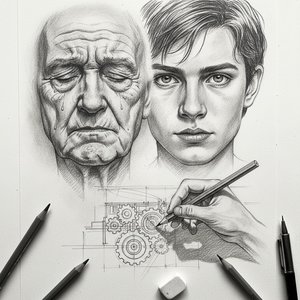
The Nuances of Graphite: Exploring Emotional Depth & Technical Mastery in Pencil Drawing
Explore the captivating world of graphite drawing! Discover its rich history, master essential techniques like chiaroscuro, and learn how artists evoke emotion through this timeless medium. Expert insights for art enthusiasts.
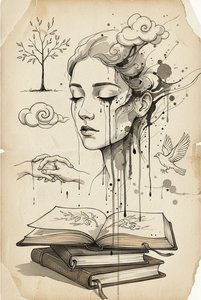
Ephemeral Lines: Exploring Emotional Resonance in Ink Sketching Traditions
Explore the profound art of ink sketching! Discover techniques to express emotion, master line work, and cultivate artistic sensitivity. Learn from historical masters & unlock your creative potential.

Ephemeral Expressions: Exploring the Nuances of Ink on Paper Through History & Contemporary Art
Explore the captivating world of ink wash painting – from its ancient origins to contemporary masters. Discover techniques, symbolism & conservation insights with OriginalUniqueArt.com.
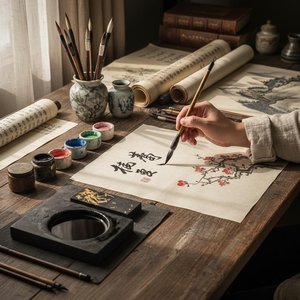
The Alchemy of Ink: Mastering the Timeless Beauty and Art History of Paper and Brush
Embark on a sophisticated exploration of ink wash painting and Sumi-e. Uncover the profound historical lineages, Zen philosophies, and technical mastery behind this timeless medium in our authoritative guide for fine art enthusiasts.

Mastering Ink on Paper: The Timeless Art of Precision, Flow, and Calligraphic Heritage
Explore the profound mastery of ink on paper. From Japanese haiku traditions to Ming Dynasty calligraphy, discover the delicate balance of precision and flow that defines this timeless art form through an expert historical lens.


