In echtem Maßstab anzeigen
 Versenden als Grußkarte
 Teilen
 Details anzeigen
 Leitfaden

 Herunterladen
 Ähnliche Objekte
 Röntgenaufnahme
 Diashow
 Besucherstatistiken
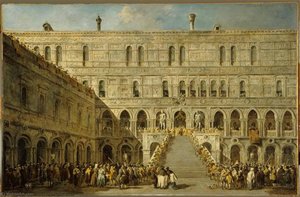
Landscape – Capriccio
 Acrylic On Canvas
- WallArt
- Venetian Twilight
 1780
1780 46.0 x 34.0 cm
 Courtauld-Galerie
 Mehr anzeigen
Giclée / Kunstdruck
Giclée- oder Leinwanddruck in Museumsqualität mit schneller Produktion und flexiblen Veredelungsoptionen. ( Handgemalte Reproduktion kaufen Zum digitalen Bild wechseln)




P118B $10

P118H $10

P118W $10

P438Z $10

P508JH $12

P508YH $12

P805H $10

P805Z $10

P919BZ $10

P919G $10

P919XJ $10

P959ZH $10

P968JZ $12

W106C $8

W218G $10

W218JH $8

W218Y $10

W307PJ $10

W316G $10

W316PJ $8

W316Y $10

W398PJ $8

W4111J $10

W500HY $15

W500JH $15

W692G $12

W849H $8

W940BG $15

W953PJ $8




Wählen Sie aus unseren vordefinierten Formaten, die den ursprünglichen Proportionen des Kunstwerks entsprechen.

Sie können Ihre eigenen Maße eingeben, um ein bestimmtes Format oder einen speziellen Platz einzupassen. Wenn das von Ihnen gewählte Format nicht den Proportionen des Originalbildes entspricht, werden wir das Kunstwerk entweder beschneiden oder das Bild mit einem gespiegelten oder einfarbigen Rand erweitern. Ein digitaler Entwurf wird Ihnen zur Genehmigung zugesandt, bevor die Produktion beginnt.
Bitte beachten Sie, dass die Vorschau auf dem Bildschirm nicht den tatsächlichen Zuschnitt oder die Erweiterung widerspiegelt. Nur der Entwurf zeigt die endgültige Komposition präzise an.
Obwohl Sondermaße verfügbar sind, empfehlen wir die Auswahl eines Maßes aus der vordefinierten Liste, um die ursprünglichen Proportionen zu bewahren.
Weltweiter Versand () innerhalb von 2 Wochen statt der üblichen 4/5 Wochen. (21 September)

Kostenloser weltweiter Expressversand

Hochwertige Leinenleinwand

Vollständiger Versicherungsschutz beim Versand

Zollgebühren-Rückerstattungsgarantie

Garantie für exakte Farbtreue

100-tägiges Rückgaberecht (nur bei Mängeln)

100% Geld-zurück-Garantie

Angebot für Mengenrabatt
 Die Glasoption ist nur für Größen unter 110 cm verfügbar.

Landscape – Capriccio
Giclée / Kunstdruck
Format der Reproduktion
-


Gesamtpreis
$ 80
A Twilight Vision: Francesco Guardi’s “Landscape – Capriccio”
Francesco Lazzaro Guardi's "Landscape – Capriccio" isn’t merely a depiction of a vista; it’s a distilled moment, a fleeting memory captured with the melancholic grace characteristic of the Venetian master. Painted in 1780, this work stands as a poignant testament to the fading grandeur of Venice—a city grappling with economic decline and political uncertainty—and reflects Guardi's unique ability to imbue even the most commonplace scenes with an atmosphere of profound beauty and subtle sorrow. The painting unfolds like a dream, inviting the viewer into a world where reality subtly blends with imagination, mirroring the very essence of Venetian life at that time.
The Scene Unfolds: Composition and Detail
At first glance, “Landscape – Capriccio” presents a seemingly simple scene: a man on horseback traversing a gently sloping hillside. However, closer observation reveals a meticulously constructed illusion, a carefully orchestrated tableau of architectural fragments, distant buildings, and atmospheric haze. The composition is deliberately asymmetrical, drawing the eye through a series of receding planes and suggestive details. A crumbling tower hints at forgotten palaces, while a small church nestles amongst the foliage, its steeple barely visible through the swirling mist. The figure on horseback isn’t a heroic warrior but rather an anonymous traveler, lost in contemplation—a symbol perhaps of Venice itself, adrift in the currents of change.
- Architectural Fragments: The painting is replete with architectural elements – arches, columns, and fragments of walls – that appear to be remnants of a vanished city. These aren’t realistic representations but rather evocative suggestions, imbued with a sense of history and decay.
- Atmospheric Perspective: Guardi masterfully employs atmospheric perspective—the technique of diminishing detail and color in the distance—to create a convincing illusion of depth. The hazy background recedes into an ethereal mist, blurring the boundaries between foreground and background.
- The Horseman’s Pose: The rider's posture is deliberately ambiguous, conveying a sense of solitude and introspection rather than action or purpose.
A Venetian Twilight: Style and Technique
Guardi’s style defies easy categorization. He was deeply influenced by Canaletto’s meticulous depictions of Venice, but he moved beyond mere topographical accuracy to create a distinctly personal vision. His brushwork is loose and expressive, characterized by short, broken strokes that capture the fleeting effects of light and shadow. This “pittura di tocco” (painting of touch) technique—a hallmark of Venetian painting—gives the scene a vibrant, almost tactile quality. The colors are muted and atmospheric, dominated by shades of gray, blue, and ochre, creating a sense of melancholy and timelessness. He was considered part of the Venetian School, but his work moved beyond its traditional constraints.
Key Characteristics:- Loose Brushwork: Short, broken strokes create a dynamic and expressive surface.
- Muted Palette: Dominated by cool grays, blues, and ochres.
- Atmospheric Perspective: Creates a convincing illusion of depth and distance.
Symbolism and Emotional Resonance
“Landscape – Capriccio” is more than just a picturesque view; it’s a meditation on memory, loss, and the passage of time. The crumbling architecture symbolizes Venice's declining fortunes, while the solitary horseman embodies the city’s isolation. The painting evokes a sense of nostalgia for a bygone era—a world that is slipping away into the mists of history. Guardi’s work resonates with an underlying melancholy, reflecting the artist’s own experience of witnessing the decline of his beloved Venice. It's a quiet lament for beauty lost and a poignant reminder of the ephemeral nature of existence.
Today, this artwork continues to captivate viewers with its evocative atmosphere and subtle emotional depth. A high-quality reproduction allows us to appreciate Guardi’s masterful technique and his profound understanding of the Venetian spirit—a timeless vision of a city on the brink.
Biografie des Künstlers
Ein Leben der Kunst und des Niedergangs in Venedig
Francesco Lazzaro Guardi, ein italienischer Maler von Veduten, Adliger und Mitglied der venezianischen Schule, lebte vom 5. Oktober 1712 bis zum 1. Januar 1793. Sein Leben markierte das Ende einer Ära in der venezianischen Kunst, die durch ihre einzigartige Mischung aus Realismus und Vorstellungskraft gekennzeichnet war.Frühes Leben und Zusammenarbeit
In seiner frühen Karriere arbeitete Guardi mit seinem älteren Bruder Gian Antonio an der Herstellung religiöser Gemälde zusammen. Diese Partnerschaft dauerte bis zum Tod von Gian Antonio im Jahr 1760, woraufhin Francesco sich auf Veduten konzentrierte, einen Malstil, der die Stadtansicht betont.- Francesco Guardis frühe Werke zeigen den Einfluss von Canaletto, aber er entwickelte allmählich einen lockeren Stil, der durch energische Pinselstriche und frei erdachte Architektur gekennzeichnet ist.
- Seine Familie, darunter sein Vater Domenico (geboren 1678) und seine Brüder Niccolò und Gian Antonio, waren ebenfalls Maler und trugen nach dem Tod ihres Vaters im Jahr 1716 zur Familienwerkstatt bei.
- Maria Cecilia, Guardis Schwester, heiratete Giovanni Battista Tiepolo, einen bedeutenden veneto-europäischen Maler seiner Epoche.
Wichtige Werke und Stil
Guardis wichtigste spätere Werke umfassen die Dogenzeremonien, eine Reihe von zwölf Leinwänden, die die im Jahr 1763 für die Wahl des Dogen Alvise IV Mocenigo abgehaltenen Zeremonien feiern. Sein Stil, bekannt als Pittura di tocco (von der Berührung), ist durch kleine Punktierungen und energische Pinselstriche gekennzeichnet.- Francesco Guardis Gemälde erwecken den Beginn des Niedergangs Venedigs hervor und konzentrieren sich auf bewölkte Himmel über einer Stadt im Zwielicht.
- Seine Arbeit unterscheidet sich vom linearen und architektonisch genaueren Stil von Canalettos Malerei und zeigt oft Venedig bei sonnigem Tageslicht.
- Guardis Stil beeinflusste später die französischen Impressionisten, die seine Werke für ihre einzigartige Mischung aus Realismus und Vorstellungskraft schätzten.
Entwicklung und Vermächtnis
Francesco Lazzaro Guardi starb am 1. Januar 1793 in Campiello de la Madona in Cannaregio (Venedig). Sein Erbe als einer der letzten Vertreter der klassischen venezianischen Kunstschule lebt fort, wobei seine Werke ein Zeugnis für die einzigartige Mischung aus Realismus und Vorstellungskraft sind, die diese Ära der Kunst definierte.- Weitere Werke von Francesco Lazzaro Guardi finden Sie unter https://OriginalUniqueArt.com/@/francesco-lazzaro-guardi
- Erkunden Sie die venezianische Schule und ihren Einfluss auf die Kunst unter /de/art/list/
- Entdecken Sie mehr über das Leben und Werk von Francesco Lazzaro Guardi unter https://de.wikipedia.org/wiki/Francesco_Guard

Francesco Lazzaro Guardi
1712 - 1793 , Italien
Eckdaten zum Künstler
- Bemerkenswerte Werke:
- Dogenfeste
- Ansichten von Venedig
- Geburtsdatum: 05. Oktober 1712
- Geburtsort (Stadt, Land): Venedig, Italien
- Künstler Oder Bewegungen, Die Von Diesem Künstler Beeinflusst Wurden: ['Französische Impressionisten']
- Künstler, Die Diesen Künstler Beeinflussten: ['Canaletto']
- Künstlerische Bewegung/Stil: Veduta, Venezianische Schule
- Nationalität: Italienisch
- Sterbedatum: 01. Januar 1793
- Vollständiger Name: Francesco Lazzaro Guardi
Verwandte Artikel

Francesco Guardi: Venezianisches Licht, Atmosphäre und der Übergang zum Neoklassizismus
Entdecken Sie Francesco Guardis Meisterwerke der venezianischen Vedutenmalerei! Erfahren Sie mehr über seinen einzigartigen Stil, den Übergang vom Rokoko und Investitionsmöglichkeiten für Kunstsammler. Expertenwissen auf OriginalUniqueArt.

Michelangelo Morlaiter: Venetian Landscapes & the Pursuit of Atmospheric Realism
Explore the captivating landscapes of Michelangelo Morlaiter, a key figure in 18th-century Venetian painting. Discover his mastery of atmospheric perspective and lasting influence on Italian art history. Learn more at OriginalUniqueArt.

Romantische Landschaften: Die 10 Meisterwerke, die eine Epoche prägten | OriginalUniqueArt
Entdecken Sie die 10 Meisterwerke der Romantischen Landschaftsmalerei! Von Caspar David Friedrich bis Turner – erleben Sie die Kunst, Emotion & Natur. Hochwertige Reproduktionen auf OriginalUniqueArt.com

John Constable: Die 25 Meisterwerke des englischen Landschaftsgenies – OriginalUniqueArt
Entdecken Sie die 25 Meisterwerke von John Constable! Erleben Sie englische Landschaftsmalerei vom Hay Wain bis zur Stour Valley. Hochwertige Reproduktionen & Kunst für Ihr Zuhause auf OriginalUniqueArt.com.

Evocations of Place: A Historical Journey Through Landscape Art
Explore the rich history of landscape art with OriginalUniqueArt. Discover renowned artists, movements like Impressionism & Romanticism, and expert guidance for collecting timeless pieces. Find your perfect serene escape today!