
 Vorschau anzeigen
 Versenden
 Teilen
 Details anzeigen

 Herunterladen
 Ähnliche Objekte
 Röntgenaufnahme
 Diashow
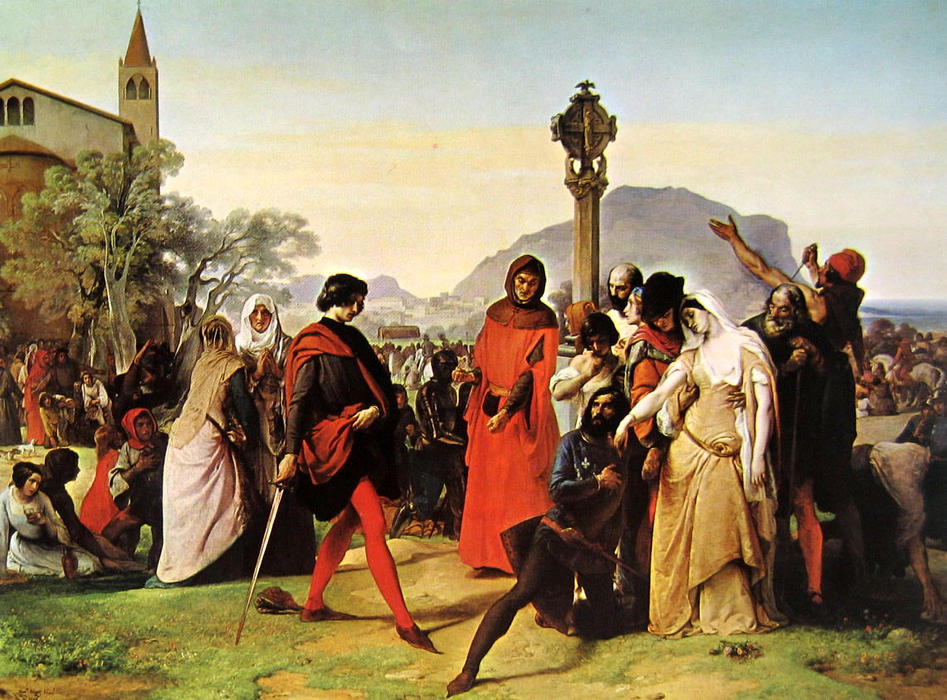
Sicilian Vespers scene 3


 Weiterlesen
Giclée / Kunstdruck
Giclée- oder Leinwanddruck in Museumsqualität mit schneller Produktion und flexiblen Veredelungsoptionen. ( Handgemalte Reproduktion bestellen Bild kaufen)




P118B $10

P118H $10

P118W $10

P438Z $10

P508JH $12

P508YH $12

P805H $10

P805Z $10

P919BZ $10

P919G $10

P919XJ $10

P959ZH $10

P968JZ $12

W106C $8

W218G $10

W218JH $8

W218Y $10

W307PJ $10

W316G $10

W316PJ $8

W316Y $10

W398PJ $8

W4111J $10

W500HY $15

W500JH $15

W692G $12

W849H $8

W940BG $15

W953PJ $8




Wählen Sie aus unseren vordefinierten Formaten, die den ursprünglichen Proportionen des Kunstwerks entsprechen.

Sie können Ihre eigenen Maße eingeben, um ein bestimmtes Format oder einen speziellen Platz einzupassen. Wenn das von Ihnen gewählte Format nicht den Proportionen des Originalbildes entspricht, werden wir das Kunstwerk entweder beschneiden oder das Bild mit einem gespiegelten oder einfarbigen Rand erweitern. Ein digitaler Entwurf wird Ihnen zur Genehmigung zugesandt, bevor die Produktion beginnt.
Bitte beachten Sie, dass die Vorschau auf dem Bildschirm nicht den tatsächlichen Zuschnitt oder die Erweiterung widerspiegelt. Nur der Entwurf zeigt die endgültige Komposition präzise an.
Obwohl Sondermaße verfügbar sind, empfehlen wir die Auswahl eines Maßes aus der vordefinierten Liste, um die ursprünglichen Proportionen zu bewahren.
Weltweiter Versand () innerhalb von 2 Wochen statt der üblichen 4/5 Wochen. (30 August)

Kostenloser weltweiter Expressversand

Hochwertige Leinenleinwand

Umfassender Versicherungsschutz beim Versand

Zollgebühren-Rückerstattungsgarantie

Garantie für exakte Farbtreue

60 Tage Rückgaberecht (nur bei Mängeln)

100% Geld-zurück-Garantie

Mengenrabatt verfügbar
 Die Glasoption ist nur für Größen unter 110 cm verfügbar.

Sicilian Vespers scene 3
Giclée / Kunstdruck
Format der Reproduktion
-


Gesamtpreis
$ 80
A Tempestuous Vision: Hayez’s “Sicilian Vespers”
Francesco Hayez's "Sicilian Vespers" (1846) isn’t merely a historical painting; it’s a visceral eruption of conflict, a meticulously crafted tableau of political intrigue and simmering rebellion. The canvas explodes with the energy of a sudden uprising, capturing not just an event but the very essence of chaos and determination. It's a scene ripped from the annals of 13th-century Sicily, where dynastic ambitions collided with papal authority, resulting in a protracted and bloody struggle for control. More than a chronicle of events, Hayez delivers a potent allegory about power, loyalty, and the volatile nature of governance – themes that resonate powerfully even today.
The painting immediately commands attention through its dramatic composition. The central figure, clad in scarlet, leads a charge against a wall of defenders, his posture radiating both aggression and a desperate urgency. Around him, a swirling mass of soldiers, nobles, and commoners – all rendered with remarkable detail – surge forward, their faces contorted in expressions of fury and resolve. Hayez masterfully employs diagonal lines to create a sense of dynamic movement, pulling the viewer directly into the heart of the fray. The use of light is particularly striking; it illuminates the advancing figures while casting deep shadows over the retreating defenders, further amplifying the painting’s dramatic intensity.
Romanticism and Historical Narrative
Hayez was a pivotal figure in the Italian Romantic movement, and “Sicilian Vespers” exemplifies this style perfectly. Rejecting the cool detachment of Neoclassicism, Romantic artists sought to evoke strong emotions through vivid imagery and dynamic compositions. Hayez’s work is characterized by its theatricality, heightened drama, and focus on emotionally charged subjects – a hallmark of the era. He wasn't interested in simply depicting historical events; he aimed to capture their emotional core, translating them into a powerful visual narrative.
The painting draws heavily on medieval chronicles detailing the Sicilian Vespers revolt, which saw a group of Sicilian nobles overthrow King Peter III and demand the deposition of Pope Innocent IV. This event was fueled by resentment over papal interference in local affairs and a desire to restore Sicily’s independence. Hayez skillfully weaves together historical fact with elements of dramatic license, creating a compelling narrative that transcends mere documentation.
Technique and Symbolism
Hayez's technical skill is evident in every brushstroke. He employs a rich, dark palette dominated by reds, browns, and blacks, which contribute to the painting’s somber mood. The figures are rendered with meticulous detail, capturing their individual expressions and gestures with remarkable accuracy. The artist utilizes a technique of *sfumato*, subtly blurring edges and creating a sense of atmospheric depth, particularly in the background, adding to the overall feeling of chaos and uncertainty.
Beyond its historical subject matter, “Sicilian Vespers” is laden with symbolism. The scarlet garment worn by the leader represents courage, passion, and perhaps even rebellion against established authority. Conversely, the defenders’ armor symbolizes loyalty, tradition, and the weight of the past. The very act of fighting – a brutal, chaotic melee – speaks to the destructive consequences of political conflict and the erosion of social order. The inclusion of the papal banner amongst the defeated highlights the central role of the papacy in this tumultuous episode.
Emotional Resonance and Legacy
“Sicilian Vespers” is not simply a historical painting; it’s an emotionally resonant work that continues to captivate viewers today. Hayez masterfully conveys the sense of urgency, conflict, and human drama inherent in the subject matter. The painting's depiction of a passionate struggle for power—a theme that has resonated throughout history—makes it timeless and universally relatable.
Reproductions of this iconic artwork offer a stunning way to bring Hayez’s dramatic vision into any space. Whether adorning a grand salon or a more intimate setting, “Sicilian Vespers” serves as a powerful reminder of the complexities of human ambition, loyalty, and the enduring legacy of historical conflict. Its vibrant colors and dynamic composition make it an exceptional choice for collectors and interior designers seeking to infuse their surroundings with both beauty and intellectual depth.
Über den Künstler
Frühe Jahre und Ausbildung
Francesco Hayez, ein renommierter italienischer Maler, wurde am 10. Februar 1791 in Venedig, Italien, geboren. Sein Vater, Giovanni, war französischen Ursprungs, während seine Mutter, Chiara Torcella, aus Murano stammte. Der junge Francesco zeigte eine Veranlagung zum Zeichnen und wurde von seinem Onkel an einen Kunstrestaurator ausgebildet.Künstlerische Laufbahn
Hayez' künstlerische Reise begann 1806 mit der Einschreibung an der Neuen Akademie der Schönen Künste in Mailand, wo er unter Teodoro Matteini studierte. 1809 gewann er einen Wettbewerb, der ihm ein Jahr Studium an der Accademia di San Luca in Rom ermöglichte. Diese Begegnung mit verschiedenen künstlerischen Einflüssen prägte seinen Stil, der später zu einem Kennzeichen des italienischen Romantismus werden sollte.Wichtige Werke und Stil
Hayez' Œuvre zeichnet sich durch großartige historische Gemälde, politische Allegorien und außergewöhnlich feine Porträts aus. Zu seinen bemerkenswertesten Werken gehören:- Der Kuss, das von Zeitgenossen als eines seiner besten Werke angesehen wird und im Laufe der Zeit an Wert gewonnen hat.
- Papst Urban II predigt das erste Kreuzzug auf dem Platz von Clermont, ein bedeutendes Werk, das seinen historischen Erzählstil demonstriert.
- Porträt, Matilde Juva-Branca, das seine Fähigkeit unter Beweis stellt, die Essenz seiner Motive einzufangen.
Museen und Sammlungen
Hayez' Werke sind in verschiedenen Museen zu sehen, darunter die Civica Galleria d’Arte Moderna in Mailand, die eine beeindruckende Sammlung moderner und zeitgenössischer Kunst beherbergt.- Papst Urban II predigt das erste Kreuzzug auf dem Platz von Clermont (235 x 157 cm, Fondazione Cariplo, Mailand)
- Profil von Francesco Hayez auf OriginalUniqueArt: Francesco Hayez
- Wikipedia: Francesco Hayez
Vermächtnis und Bedeutung
Hayez' Einfluss auf den italienischen Romantismus ist unbestreitbar. Seine Arbeit war Gegenstand der Studien von Kunsthistorikern und Enthusiasten gleichermaßen, wobei seine Werke weiterhin neue Generationen von Künstlern inspirieren. Wichtige Daten:- 10. Februar 1791: Geburt in Venedig, Italien
- 1806: Einschreibung an der Neuen Akademie der Schönen Künste, Mailand
- 21. Dezember 1882: Versterben und Hinterlassen eines Vermächtnisses in der italienischen Kunst

Francesco Hayez
1791 - 1882 , Italien
Kurzinfos
- Bemerkenswerte Werke:
- Der Kuss
- Papst Urban II predigt
- Porträt Matilde Juva-Branca
- Einflüsse:
- Teodoro Matteini
- Antonio Canova
- Geburtsdatum: 10. Februar 1791
- Geburtsort: Venedig, Italien
- Künstlerische Bewegung: Italienischer Romantik
- Nationalität: Italienisch
- Sterbedatum: 21. Dezember 1882
- Vollständiger Name: Francesco Hayez
Ähnliche Artikel
Meisterwerke des Hochmittelalters: 10 Kunstwerke für Ihr Zuhause | OriginalUniqueArt
Entdecken Sie die 10 bedeutendsten Meisterwerke des Hochmittelalters! Erfahren Sie Geschichten von Romanik, Gotik & berühmten Künstlern. Finden Sie hochwertige Reproduktionen für Ihr Zuhause auf OriginalUniqueArt.com.
Spätmittelalterliche Meisterwerke: 10 Kunstwerke für Ihr Zuhause | OriginalUniqueArt
Entdecken Sie die 10 bedeutendsten Meisterwerke des Spätmittelalters! Erfahren Sie die Geschichten hinter Jan van Eyck, Rogier van der Weyden & mehr. Hochwertige Kunst Reproduktionen für Ihr Zuhause – jetzt auf OriginalUniqueArt.com!
Timeless Elegance: How to Integrate High Medieval Art into Your Modern Interior Design
Discover how to infuse your modern home with the divine light of High Medieval art. From gilded illuminated manuscripts to Gothic-inspired textures, learn expert tips for integrating timeless elegance and historical grandeur into contemporary interior design.

Divine Light & Golden Splendor: A Journey Through the Sacred Grandeur of High Medieval Art
Embark on a soulful journey through High Medieval art. Explore the divine light of Gothic cathedrals, Byzantine splendor, and sacred masterpieces that shaped Western history with our expert-led cultural reflections.

Pre-Raphaelite Romanticism: A Guide to Vivid Detail and Medieval Beauty in Victorian Art
Explore the vivid detail and medieval beauty of Pre-Raphaelite Romanticism. Discover the history of masters like Rossetti and Millais through our expert guide to Victorian art, perfect for collectors and professionals seeking authentic, museum-quality reproductions.



