Vorschau anzeigen
 Versenden
 Teilen
 Details anzeigen
 Leitfaden

 Herunterladen
 Ähnliche Objekte
 Röntgenaufnahme
 Diashow
 Statistiken
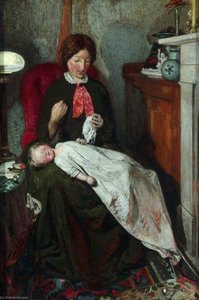
Millie Smith
 Oil
Oil- WallArt
- Pre-Raphaelite Movement
 1846
1846- 19th Century
 23.0 x 18.0 cm
 Walker Art Gallery
 Weiterlesen
Handgefertigte Ölreproduktion
Handgemaltes Ölgemälde auf Leinwand in Ihrer Wunschgröße und mit Rahmen, auf Bestellung von unseren Künstlern angefertigt. ( Zum Druck wechseln Zum digitalen Bild wechseln)




P118B €10

P118H €10

P118W €10

P438Z €10

P508JH €12

P508YH €12

P805H €10

P805Z €10

P919BZ €10

P919G €10

P919XJ €10

P959ZH €10

P968JZ €12

W106C €8

W218G €10

W218JH €8

W218Y €10

W307PJ €10

W316G €10

W316PJ €8

W316Y €10

W398PJ €8

W4111J €10

W500HY €15

W500JH €15

W692G €12

W849H €8

W940BG €15

W953PJ €8




Wählen Sie aus unseren vordefinierten Formaten, die den ursprünglichen Proportionen des Kunstwerks entsprechen.

Geben Sie die Breite und die Höhe an, die Sie für Ihren Rahmen oder Ihre Wand benötigen. Da dieses Werk handgemalt ist, kann der Künstler bei einer anderen Form etwas mehr um das Bild herum malen oder etwas abschneiden – Sie entscheiden. Wir senden Ihnen ein digitales Mockup zur Freigabe, bevor mit dem Malen begonnen wird. Das auf dieser Seite gezeigte Bild stellt nicht das tatsächliche Ergebnis dar – dies tut nur das Mockup.
Nach der Bestellung wird das OriginalUniqueArt.com-Team dem Kunden Anweisungen per E-Mail zusenden und eine Mockup-Vorschau bereitstellen.
Weltweiter Versand () in nur 3 bis 4 Wochen statt der üblichen 5 Wochen. (27 Oktober). Keine Kompromisse bei der Qualität.

Kostenloser weltweiter Expressversand

Hochwertige Leinenleinwand

Umfassender Versicherungsschutz beim Versand

Zollgebühren-Rückerstattungsgarantie

Garantie für exakte Farbtreue

100 Tage Rückgaberecht (nur bei Mängeln)

100% Geld-zurück-Garantie

Mengenrabatt verfügbar
 Die Glasoption ist nur für Größen unter 110 cm verfügbar.

Millie Smith
Art der Reproduktion
Format der Reproduktion
-


Endpreis
€ 264
A Glimpse of Innocence: The Soul of Millie Smith
In the quiet, evocative depths of Ford Madox Brown’s 1846 masterpiece, “Millie Smith,” we encounter more than a mere portrait; we step into a profound moment of Victorian psychological realism. This painting captures the likeness of a young girl, the daughter of a local landlady, during Brown's stay in Southend-on-Sea. At first glance, the viewer is met with the striking, direct gaze of a child—a gaze that possesses an unsettling intimacy, as if she is peering directly into the soul of the observer. This confrontation breaks the traditional boundaries of 19th-century portraiture, moving away from the stiff, idealized poses of the era toward a raw, unvarnished naturalism that would become a hallmark of the burgeoning Pre-Raphaelite spirit.
The composition is anchored by a sense of grounded reality. Seated at a simple table, Millie is framed against the rugged texture of a brick wall, a detail that strips away any aristocratic pretension and places her firmly within the everyday world. A single red flower tucked into her hair serves as a poignant focal point, a small burst of vitality amidst a more somber environment. This subtle use of color, paired with the meticulous rendering of her white dress and the delicate skin tones, demonstrates Brown's extraordinary ability to find extraordinary beauty in the mundane.
Technique and the Pre-Raphaelite Vision
To observe “Millie Smith” is to witness a revolutionary departure from the academic conventions of the mid-19th century. While many of his contemporaries sought refuge in the luminous, soft glazes of the Renaissance masters to create an ethereal glow, Brown took a different path. He embraced a darker, more earth-bound palette dominated by rich browns, ochres, and muted tones. This choice was intentional; it mirrored the grit and truth of Victorian life, eschewing superficial prettiness for a deeper, more tactile reality.
His technique is characterized by an almost scientific precision. Every element—from the weave of the tablecloth to the subtle shadows cast by the flower vase—is rendered with a clarity that demands close inspection. This meticulous attention to detail was not merely a display of skill but a philosophical statement. By avoiding excessive shading and prioritizing sharp, direct light, Brown achieved a graphic intensity that makes the scene feel immediate and alive. For the collector or interior designer, this level of detail ensures that a reproduction of this work remains a captivating centerpiece, offering new discoveries with every viewing.
A Legacy of Emotional Resonance
Beyond its technical brilliance, “Millie Smith” carries an emotional weight that transcends time. The painting was created during a period of intense social anxiety and strict moral codes in Britain, yet Brown’s subject offers a sense of vulnerability and pure, unadulterated innocence. There is a haunting quality to the way Millie looks at us—a mixture of curiosity and a quiet, knowing stillness. This emotional depth makes the piece an ideal acquisition for those looking to add character and narrative weight to a curated space.
Whether placed in a sunlit gallery or a sophisticated study, a high-quality hand-painted reproduction of this work serves as a window into the heart of the Pre-Raphaelite movement. It is a piece that invites conversation, prompting viewers to reflect on the intersection of childhood innocence and the heavy realities of the world. For the discerning art lover, owning such a work is not just about decorating a wall; it is about preserving a moment of profound human connection captured forever in oil.
Fragen & Antworten
Wer hat "Millie Smith" geschaffen und in welchem Jahr?
„Millie Smith“ stammt von Ford Madox Brown und wird auf 1846 datiert.
Wie lässt sich "Millie Smith" von Ford Madox Brown in der Inneneinrichtung verwenden?
"Millie Smith" wird für Accent empfohlen; der ideale Ort dafür ist ein Living Room.
Welche Farbe prägt die Komposition von "Millie Smith" von Ford Madox Brown?
Die dominante Farbe von "Millie Smith" von Ford Madox Brown ist Espresso (#353025).
Künstlerbiografie
Frühe Jahre und Karriere
Ford Madox Brown, ein britischer Maler, wurde am 16. April 1821 in Calais, Frankreich, geboren. Seine frühen Jahre waren geprägt von häufigen Umzügen zwischen Unterkünften im Pas-de-Calais und Verwandten in Kent, was seine Bildungsmöglichkeiten einschränkte. Dennoch zeigte er schon früh künstlerisches Talent, insbesondere beim Kopieren alter Meisterdrucke.Künstlerischer Stil und bedeutende Werke
Browns Gemälde zeichnen sich durch ihre lebendigen Farben und ihren Realismus aus und stellen oft historische und moralische Themen dar. Sein bekanntestes Werk ist wohl Work (1852-1865), ein Gemälde, das seinen unverwechselbaren grafischen und Hogarthian Stil zeigt. Die Manchester-Wandgemälde, eine Reihe von zwölf Werken, die für den Manchester Town Hall geschaffen wurden, sind ein weiteres bemerkenswertes Beispiel für Browns Kunst. Diese Wandgemälde stellen die Geschichte Manchesters dar und gelten als einige der feinsten Beispiele für Präraffaelitische Kunst.- Die Darstellung des einfachen Volkes in seinen Gemälden war revolutionär für seine Zeit.
Einfluss und Vermächtnis
Brown war Berater und Freund der Mitglieder der Präraffaeliten-Bruderschaft, eine Gruppe, die er mit seinem künstlerischen Stil beeinflusste. Seine Arbeit wurde weithin anerkannt, und er gilt als einer der Pioniere der Präraffaelitischen Kunst.- The Pinch of Poverty von Thomas Benjamin Kennington, einem Kollegen, zeigt den Einfluss von Browns Stil auf andere Künstler.
- Browns eigene Werke, wie The Last of England, demonstrieren seine Fähigkeit, die Essenz historischer und moralischer Themen einzufangen.
Persönliches Leben und späte Jahre
Brown heiratete zweimal: zuerst Elizabeth Bromley 1841, die 1846 starb, und dann Emily Hill 1853, die 1890 verstarb. Er hatte fünf Kinder, darunter Lucy Madox Brown und Catherine Madox Brown. Seine Familie spielte eine wichtige Rolle in seinem Leben und beeinflusste oft seine künstlerischen Themen. Wichtige Links: * Ford Madox Browns Profil auf OriginalUniqueArt * Ford Madox Browns Wikipedia-Seite * The Paint Beneath the Prose: Ford Madox Browns Einfluss auf die Präraffaeliten-BruderschaftEntwicklung und Bedeutung
Brown entwickelte seinen Stil im Laufe der Jahre weiter, beeinflusst von Künstlern wie Hans Holbein und den Nazarenern. Er war ein wichtiger Vermittler zwischen verschiedenen künstlerischen Strömungen und trug dazu bei, die Präraffaelitische Bewegung zu definieren. Seine Betonung des Realismus und seiner Darstellung sozialer Themen machten ihn zu einem wichtigen Beobachter der viktorianischen Gesellschaft. Sein Engagement für die Kunst erstreckte sich auch auf das Design, wo er mit William Morris zusammenarbeitete und zur Arts and Crafts-Bewegung beitrug.
Ford Madox Brown
1821 - 1893 , Frankreich
Kurzinfos
- Beeinflusste Künstler:
- Dante Gabriel Rossetti
- William Holman Hunt
- Bemerkenswerte Werke:
- Work (1852-1865)
- Die Manchester Wandgemälde
- The Last of England
- Geburtsdatum: 16. April 1821
- Geburtsort: Calais, Frankreich
- Künstlerische Bewegung: Präraffaeliten
- Nationalität: Britisch
- Sterbedatum: 11. Oktober 1893
- Vollständiger Name: Ford Madox Brown
- Von Künstlern Beeinflusst:
- Hans Holbein
- Nazarener Bewegung
Ähnliche Artikel

Sir John Everett Millais: Präraffaelitische Revolution und viktorianische Erzählkunst
Entdecken Sie das Leben und Werk von Sir John Everett Millais, einem Pionier der Präraffaeliten! Detaillierte Analysen seiner Gemälde, Einblicke in die viktorianische Kunstszene und seine bleibende Bedeutung. Jetzt lesen!
Ford Madox Brown: Pre-Raphaelite Visionary & Victorian Social Commentary
Explore the life & art of Ford Madox Brown, a pivotal Pre-Raphaelite painter renowned for his powerful social commentary and masterpiece 'Work'. Discover his lasting influence on British art history.

Dante Gabriel Rossetti: Die 25 Meisterwerke des Präraffelitismus | OriginalUniqueArt
Entdecken Sie die 25 schönsten Gemälde von Dante Gabriel Rossetti! Tauchen Sie ein in die Welt der Präraffeliten, symbolistischer Kunst & viktorianischer Romantik. Hochwertige Reproduktionen für Ihr Zuhause – jetzt bei OriginalUniqueArt.com!
The Pre-Raphaelite Brotherhood: Reclaiming Beauty, Nature, and Truth in Victorian Art History
Explore the revolutionary Pre-Raphaelite Brotherhood. Discover how these visionary artists rejected academic tradition to reclaim beauty, nature, and truth through luminous detail and literary depth in Victorian art history.

Pre-Raphaelite Romanticism: A Guide to Vivid Detail and Medieval Beauty in Victorian Art
Explore the vivid detail and medieval beauty of Pre-Raphaelite Romanticism. Discover the history of masters like Rossetti and Millais through our expert guide to Victorian art, perfect for collectors and professionals seeking authentic, museum-quality reproductions.