
 Versenden
 Teilen
 Details anzeigen
 Leitfaden

 Herunterladen
 Ähnliche Objekte
 Diashow
 Fragen & Antworten
 Statistiken
Assumption (detail)


 Weiterlesen
Giclée / Kunstdruck
Giclée- oder Leinwanddruck in Museumsqualität mit schneller Produktion und flexiblen Veredelungsoptionen. ( Handgemalte Reproduktion bestellen Zum digitalen Bild wechseln)




































Wählen Sie aus unseren vordefinierten Formaten, die den ursprünglichen Proportionen des Kunstwerks entsprechen.

Geben Sie die benötigte Breite und Höhe an, damit der Druck perfekt in Ihren Rahmen oder an Ihre Wand passt. Ein Druck kann nur beschnitten, aber niemals größer als das Originalbild angefertigt werden; daher verliert ein Format mit anderen Proportionen einen Teil des Bildes. Wir senden Ihnen ein digitales Mockup zur Freigabe, bevor wir den Druck ausführen. Das auf dieser Seite gezeigte Bild zeigt nicht den tatsächlichen Beschnitt – dies ist nur im Mockup ersichtlich.
Weltweiter Versand () innerhalb von 2 Wochen statt der üblichen 4/5 Wochen. (3 November)

Kostenloser weltweiter Expressversand

Hochwertige Leinenleinwand

Umfassender Versicherungsschutz beim Versand

Zollgebühren-Rückerstattungsgarantie

Garantie für exakte Farbtreue

100 Tage Rückgaberecht (nur bei Mängeln)

100% Geld-zurück-Garantie

Mengenrabatt verfügbar
 Die Glasoption ist nur für Größen unter 110 cm verfügbar.

Assumption (detail)
Giclée / Kunstdruck
Format der Reproduktion
-


Endpreis
€ 72
A Window into the Renaissance Soul
In the delicate detail of Filippino Lippi’s Assumption, we are transported far beyond the confines of the modern world and into the vibrant, breathing heart of the late fifteenth century. This breathtaking fresco fragment serves as a portal to an era where the divine and the earthly were inextricably linked through the mastery of line and light. As one gazes upon the scene, there is an immediate sense of movement; a lively, rhythmic procession of figures and horses winds through a valley that feels both mythic and profoundly real. The composition captures a fleeting moment of medieval life, where the grandeur of a distant castle meets the humble, kinetic energy of travelers navigating a lush landscape. It is not merely a depiction of a journey, but an invitation to witness the very pulse of the High Renaissance.
The artistry of Lippi shines through in his sophisticated use of perspective and color, elements that define the transition from the early experimental years of his career to his mature, masterful style. The technique employed here showcases a remarkable ability to layer figures within a deep, atmospheric space, creating a sense of infinite depth that draws the eye toward the horizon. His brushwork—or rather, his masterful application of fresco pigment—utilizes a rich palette that breathes life into the horses' coats and the flowing garments of the travelers. The lighting is particularly evocative, casting soft shadows that define form while maintaining a luminous quality that suggests a sun-drenched afternoon in the Italian countryside. For the discerning collector or interior designer, this piece offers a profound sense of classical elegance and structural balance.
Symbolism and the Majesty of Detail
Beyond its surface beauty, the Assumption (detail) carries a weight of historical and symbolic significance that resonates with anyone captivated by the narrative power of art. As the son of Fra Filippo Lippi, Filippino was raised in the shadow of greatness, yet he carved out a unique identity characterized by a more dramatic and emotionally charged approach than his contemporaries. In this work, the interplay between the bustling human activity below and the monumental landscape above symbolizes the intersection of mortal struggle and divine order. The castle, standing sentinel in the background, represents stability and the enduring legacy of civilization, while the wandering figures embody the transient, beautiful nature of human existence.
For those looking to integrate such a masterpiece into a curated space, the emotional impact of this work is unparalleled. It brings an atmosphere of intellectual depth and historical prestige to any room, acting as a conversation piece that speaks of heritage, exploration, and the timeless pursuit of beauty. Whether displayed in a grand library or a contemporary living area, the Assumption detail provides a sophisticated focal point that inspires contemplation. Owning a high-quality reproduction of this fresco allows one to possess a fragment of history—a piece of the Renaissance spirit that continues to illuminate the modern world with its grace, complexity, and enduring vitality.
Fragen & Antworten
Welcher Kunstrichtung lässt sich "Assumption (detail)" von Filippino Lippi zuordnen?
„Assumption (detail)“ ist ein Werk der High Renaissance. Die Stilrichtung gibt die künstlerische Tradition an, der das Werk angehört.
Gibt es ein Factsheet zu "Assumption (detail)" von Filippino Lippi für Studierende?
Für "Assumption (detail)" von Filippino Lippi ist eine Leitfaden-Seite verfügbar: ein druckbares Infoblatt zum Kunstwerk, konzipiert für Schüler und den Einsatz im Unterricht.
Wie verbinden sich Medium und Bewegung in "Assumption (detail)"?
"Assumption (detail)" ist in Fresco im Stil der High Renaissance-Epoche gefertigt.
Künstlerbiografie
Frühe Jahre und Ausbildung
- Geboren: April 1457, Prato, Italien
- Gestorben: April 1504
- Eltern: Fra Filippo Lippi (Maler) und Lucrezia Buti
- Filippino war der uneheliche Sohn eines renommierten Malers.
- Die frühe Ausbildung unter seinem Vater legte den Grundstein für seine künstlerische Karriere.
Künstlerische Laufbahn und Entwicklung
- Frühe Periode (1475-1480): Anfängliche Werke, wie Madonnen, zeigten einen weniger verfeinerten Stil. Diese wurden zunächst einem anonymen Künstler namens "amico di Sandro" zugeschrieben.
- Entwicklung (1480-1485): Entwicklung eines persönlichen und effektiven Ansatzes in Werken wie den *Reisen des Tobias*.
- Maturität (1485-1504): Beherrschung des Hochrenaissance-Stils, veranschaulicht durch die *Erscheinung Christi der Jungfrau*.
Hauptwerke und Kollaborationen
- Zusammenarbeit mit Perugino, Ghirlandaio und Botticelli an Fresken in Lorenzos de' Medicis Villa.
- Vollendung der unvollendeten Dekoration von Masaccio in der Brancacci-Kapelle zusammen mit Masolino.
- Bemerkenswerte Werke sind: *Die Krönung der Jungfrau*, *Tobias und der Engel*, *St. Hieronymus* und *Szene aus dem Leben des Heiligen Thomas*.
Einflüsse und künstlerischer Stil
- Frühe Einflüsse: Sandro Botticelli, Fra Filippo Lippi.
- Stileigenschaften: Animierte Form und Linie, warmer Kolorit, detaillierte Landschaften, ausdrucksstarke Figuren und eine Mischung aus Perspektivgeometrie mit intimen Innenräumen.
- Römische Altertümer: Studien nach römischen Altertümern während seiner Zeit in Rom beeinflussten seine Arbeit und integrierten einen antiken Wortschatz in seine Kunst.
Historische Bedeutung und Vermächtnis
- Ein führender florentinischer Vertreter der Tradition großer Freskenzyklen.
- Sein Einfluss auf die Hochrenaissance ist unbestreitbar.
- Werke sind in Museen auf der ganzen Welt zu finden, darunter in der Uffizien-Galerie in Florenz.
- Bekannt dafür, die Kluft zwischen früheren Renaissance-Stilen und der entstehenden Hochrenaissance-Ästhetik zu überbrücken.
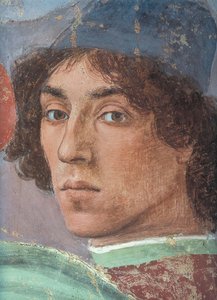
Filippino Lippi
1457 - 1504 , Italien
Kurzinfos
- Beeinflusste Künstler:
- Fra Filippo Lippi
- Sandro Botticelli
- Bemerkenswerte Werke:
- Coronation of the Virgin
- Tobias and the Angel
- St Jerome
- Geburtsdatum: April 1457
- Geburtsort: Prato, Italien
- Künstlerische Richtung: Hochrenaissance
- Nationalität: Italienisch
- Sterbedatum: April 1504
- Vollständiger Name: Filippino Lippi
- Von Künstlern Beeinflusst: ['Masaccio']
Ähnliche Artikel

Kunst, die mit Ihnen lebt: Emotionale Kraft individueller Innenraumfresken
Entdecken Sie die emotionale Kraft individueller Innenraumfresken! Expertenberatung & hochwertige Wandmalerei für Hotels, Wohnräume & mehr. – Ihr Partner für einzigartige Kunst.

The Enduring Legacy of Fresco Painting: Techniques, History & Contemporary Relevance
Explore the rich history & enduring artistry of fresco painting – from Giotto to Michelangelo! Discover techniques, conservation efforts, & modern applications. Learn how OriginalUniqueArt brings this timeless art form to your home.
Meisterwerke des Hochmittelalters: 10 Kunstwerke für Ihr Zuhause | OriginalUniqueArt
Entdecken Sie die 10 bedeutendsten Meisterwerke des Hochmittelalters! Erfahren Sie Geschichten von Romanik, Gotik & berühmten Künstlern. Finden Sie hochwertige Reproduktionen für Ihr Zuhause auf OriginalUniqueArt.com.

The Enduring Legacy of Fresco: Technique, History & Artistic Expression Across Cultures
Explore the rich history & enduring legacy of fresco painting! Discover ancient techniques, Giotto's masterpieces, and modern applications. Expert insights for art lovers & professionals.

Das Familienerbe an die Wand bringen: Wandgemälde als Generationenschatz
Verwandeln Sie Ihre Familiengeschichte in ein beeindruckendes Wandgemälde! Expertenrat & hochwertige Handwerkskunst für einzigartige Kunstwerke, die Generationen verbinden. Entdecken Sie jetzt!


