

 In echtem Maßstab anzeigen
 Versenden als Grußkarte
 Teilen
 Details anzeigen
 Leitfaden öffnen

 Herunterladen
 Ähnliche Objekte
 Röntgenaufnahme
 Diashow
 Besucherstatistiken
Assumption


 Mehr anzeigen
Handgefertigte Ölreproduktion
Handgemaltes Ölgemälde auf Leinwand in Ihrer Wunschgröße und mit Rahmen, auf Bestellung von unseren Künstlern angefertigt. ( Zum Druck wechseln Zum digitalen Bild wechseln)




P118B €10

P118H €10

P118W €10

P438Z €10

P508JH €12

P508YH €12

P805H €10

P805Z €10

P919BZ €10

P919G €10

P919XJ €10

P959ZH €10

P968JZ €12

W106C €8

W218G €10

W218JH €8

W218Y €10

W307PJ €10

W316G €10

W316PJ €8

W316Y €10

W398PJ €8

W4111J €10

W500HY €15

W500JH €15

W692G €12

W849H €8

W940BG €15

W953PJ €8




Wählen Sie aus unseren vordefinierten Formaten, die den ursprünglichen Proportionen des Kunstwerks entsprechen.

Sie können Ihre eigenen Maße eingeben, um einen bestimmten Rahmen oder Platz auszufüllen. Wenn die gewählte Größe nicht den Proportionen des Originalbildes entspricht, werden wir das Kunstwerk entweder beschneiden oder das Gemälde durch zusätzliche, handgemalte Elemente erweitern. Ein digitales Mockup wird Ihnen zur Genehmigung zugesandt, bevor die Produktion beginnt.
Bitte beachten Sie, dass die Bildschirmvorschau nicht die tatsächliche Beschneidung oder Erweiterung widerspiegelt. Nur das Mockup zeigt die endgültige Komposition exakt an.
Obwohl Sondermaße verfügbar sind, empfehlen wir, eine Größe aus der vordefinierten Liste zu wählen, um die ursprünglichen Proportionen beizubehalten.
Nach der Bestellung wird das OriginalUniqueArt.com-Team dem Kunden Anweisungen per E-Mail zusenden und eine Mockup-Vorschau bereitstellen.
Weltweiter Versand () in nur 3 bis 4 Wochen statt der üblichen 5 Wochen. (30 September). Keine Kompromisse bei der Qualität.

Kostenloser weltweiter Expressversand

Hochwertige Leinenleinwand

Vollständiger Versicherungsschutz beim Versand

Zollgebühren-Rückerstattungsgarantie

Garantie für exakte Farbtreue

100-tägiges Rückgaberecht (nur bei Mängeln)

100% Geld-zurück-Garantie

Angebot für Mengenrabatt
 Die Glasoption ist nur für Größen unter 110 cm verfügbar.

Assumption
Reproduktionsmedium
Format der Reproduktion
-


Gesamtpreis
€ 258
A Vision Ascendant: Filippino Lippi’s “Assumption”
Filippino Lippi's "Assumption," completed in 1489 and gracing the walls of Santa Maria sopra Minerva in Rome, is more than just a religious depiction; it’s a vibrant testament to the burgeoning spirit of the late Renaissance. This fresco, brimming with meticulously rendered figures and imbued with a palpable sense of divine grace, offers a profound glimpse into the artistic and spiritual landscape of 15th-century Italy. The painting immediately captivates with its central scene – Mary's ascent into heaven, a pivotal moment in Christian theology powerfully visualized by Lippi’s masterful hand.
- Subject Matter: The Assumption of the Virgin Mary is a cornerstone of Catholic belief, representing her soul being taken to celestial realms after death.
- Composition: Lippi skillfully arranges the figures around Mary, creating a dynamic and layered composition that draws the viewer’s eye upwards towards the luminous heavens.
Renaissance Technique and Artistic Flourish
Lippi's technique exemplifies the High Renaissance style – a period defined by its emphasis on realism, perspective, and anatomical accuracy. Executed as a fresco, a method involving painting directly onto wet plaster, the work demonstrates remarkable detail and luminosity. The artist’s use of color is particularly noteworthy; earth tones dominate, providing a grounding effect while brilliant blues and whites are strategically employed to highlight Mary's robes and the ethereal quality of the heavenly realm. Notice the subtle gradations in tone, achieved through layering thin glazes – a hallmark of Lippi’s approach – that contribute significantly to the fresco’s depth and richness.
The artist’s attention to detail extends beyond mere representation. The figures are not simply static representations; they possess a sense of movement and emotion, reflecting the humanist ideals prevalent at the time. Even the architectural elements—arches and columns—are rendered with precision, subtly guiding the viewer's gaze towards the central event.
Symbolism and Context
"Assumption" is rich in symbolic meaning. The angels surrounding Mary are not merely attendants; they represent divine assistance and support. Their instruments – harps and scrolls – evoke musical praise and sacred texts, underscoring the importance of faith and devotion. The architectural setting, with its suggestion of a celestial threshold, reinforces the painting’s theological message: the transition from earthly life to eternal glory. Created during a period of intense religious fervor and artistic innovation, this work reflects the patronage of the Catholic Church and the growing influence of humanist thought.
A Timeless Masterpiece
Despite the passage of centuries, "Assumption" retains its power to move and inspire. The painting’s well-preserved condition – bearing subtle signs of age that only enhance its historical significance – offers a tangible connection to the artistic genius of Filippino Lippi and the vibrant cultural milieu of Renaissance Rome. A hand-painted reproduction captures not just an image, but the very essence of this extraordinary work, allowing you to experience its beauty and profound symbolism within your own space.
Biografie des Künstlers
Frühe Jahre und Ausbildung
- Geboren: April 1457, Prato, Italien
- Gestorben: April 1504
- Eltern: Fra Filippo Lippi (Maler) und Lucrezia Buti
- Filippino war der uneheliche Sohn eines renommierten Malers.
- Die frühe Ausbildung unter seinem Vater legte den Grundstein für seine künstlerische Karriere.
Künstlerische Laufbahn und Entwicklung
- Frühe Periode (1475-1480): Anfängliche Werke, wie Madonnen, zeigten einen weniger verfeinerten Stil. Diese wurden zunächst einem anonymen Künstler namens "amico di Sandro" zugeschrieben.
- Entwicklung (1480-1485): Entwicklung eines persönlichen und effektiven Ansatzes in Werken wie den *Reisen des Tobias*.
- Maturität (1485-1504): Beherrschung des Hochrenaissance-Stils, veranschaulicht durch die *Erscheinung Christi der Jungfrau*.
Hauptwerke und Kollaborationen
- Zusammenarbeit mit Perugino, Ghirlandaio und Botticelli an Fresken in Lorenzos de' Medicis Villa.
- Vollendung der unvollendeten Dekoration von Masaccio in der Brancacci-Kapelle zusammen mit Masolino.
- Bemerkenswerte Werke sind: *Die Krönung der Jungfrau*, *Tobias und der Engel*, *St. Hieronymus* und *Szene aus dem Leben des Heiligen Thomas*.
Einflüsse und künstlerischer Stil
- Frühe Einflüsse: Sandro Botticelli, Fra Filippo Lippi.
- Stileigenschaften: Animierte Form und Linie, warmer Kolorit, detaillierte Landschaften, ausdrucksstarke Figuren und eine Mischung aus Perspektivgeometrie mit intimen Innenräumen.
- Römische Altertümer: Studien nach römischen Altertümern während seiner Zeit in Rom beeinflussten seine Arbeit und integrierten einen antiken Wortschatz in seine Kunst.
Historische Bedeutung und Vermächtnis
- Ein führender florentinischer Vertreter der Tradition großer Freskenzyklen.
- Sein Einfluss auf die Hochrenaissance ist unbestreitbar.
- Werke sind in Museen auf der ganzen Welt zu finden, darunter in der Uffizien-Galerie in Florenz.
- Bekannt dafür, die Kluft zwischen früheren Renaissance-Stilen und der entstehenden Hochrenaissance-Ästhetik zu überbrücken.
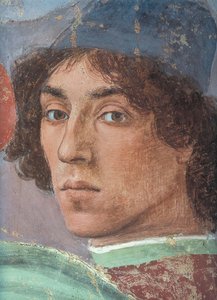
Filippino Lippi
1457 - 1504 , Italien
Eckdaten zum Künstler
- Beeinflusste Künstler:
- Fra Filippo Lippi
- Sandro Botticelli
- Bemerkenswerte Werke:
- Coronation of the Virgin
- Tobias and the Angel
- St Jerome
- Geburtsdatum: April 1457
- Geburtsort: Prato, Italien
- Künstlerische Richtung: Hochrenaissance
- Nationalität: Italienisch
- Sterbedatum: April 1504
- Vollständiger Name: Filippino Lippi
- Von Künstlern Beeinflusst: ['Masaccio']
Verwandte Artikel
Das Familienerbe an die Wand bringen: Wandgemälde als Generationenschatz
Verwandeln Sie Ihre Familiengeschichte in ein beeindruckendes Wandgemälde! Expertenrat & hochwertige Handwerkskunst für einzigartige Kunstwerke, die Generationen verbinden. Entdecken Sie jetzt!
The Enduring Legacy of Fresco Painting: Techniques, History & Contemporary Relevance
Explore the rich history & enduring artistry of fresco painting – from Giotto to Michelangelo! Discover techniques, conservation efforts, & modern applications. Learn how OriginalUniqueArt brings this timeless art form to your home.

The Enduring Legacy of Fresco: Technique, History & Artistic Expression Across Cultures
Explore the rich history & enduring legacy of fresco painting! Discover ancient techniques, Giotto's masterpieces, and modern applications. Expert insights for art lovers & professionals.

Kunst, die mit Ihnen lebt: Emotionale Kraft individueller Innenraumfresken
Entdecken Sie die emotionale Kraft individueller Innenraumfresken! Expertenberatung & hochwertige Wandmalerei für Hotels, Wohnräume & mehr. – Ihr Partner für einzigartige Kunst.
Meisterwerke der Fresko-Kunst: 10 Gemälde, die Kunstgeschichte schrieben | OriginalUniqueArt
Entdecken Sie die 10 legendärsten Fresken der Kunstgeschichte! Von Michelangelo bis Raffael – erfahren Sie die Geschichten hinter den Meisterwerken, Techniken & Farben. Hochwertige Kunstreproduktionen für Ihr Zuhause finden Sie auf OriginalUniqueArt.com.


