
 Vorschau anzeigen
 Versenden
 Teilen
 Details anzeigen
 Leitfaden

 Herunterladen
 Ähnliche Objekte
 Röntgenaufnahme
 Diashow
 Q&A
Q&A Statistiken
Bistro

- 38.0 x 46.0 cm


 Weiterlesen
Die auf dieser Seite dargestellten Kunstwerke sind urheberrechtlich geschützt, was bedeutet, dass wir keine identische Reproduktion rechtmäßig erstellen oder verkaufen dürfen. Dieser Schutz wird durch internationale Abkommen wie die Berner Übereinkunft und durch nationale Gesetze, einschließlich derer, die von den US-Urheberrecht – Titel 17.
Diese Methode entspricht vollumfänglich den Urheberrechtsbestimmungen, da sie keine Kopie oder Vervielfältigung des geschützten Kunstwerks darstellt. Stattdessen handelt es sich um eine kreative Neuinterpretation – ein neues Gemälde, das vom Original inspiriert, aber nicht identisch mit ihm ist.
Giclée / Kunstdruck
Giclée- oder Leinwanddruck in Museumsqualität mit schneller Produktion und flexiblen Veredelungsoptionen. ( Handgemalte Reproduktion bestellen Zum digitalen Bild wechseln)




P118B €10

P118H €10

P118W €10

P438Z €10

P508JH €12

P508YH €12

P805H €10

P805Z €10

P919BZ €10

P919G €10

P919XJ €10

P959ZH €10

P968JZ €12

W106C €8

W218G €10

W218JH €8

W218Y €10

W307PJ €10

W316G €10

W316PJ €8

W316Y €10

W398PJ €8

W4111J €10

W500HY €15

W500JH €15

W692G €12

W849H €8

W940BG €15

W953PJ €8




Wählen Sie aus unseren vordefinierten Formaten, die den ursprünglichen Proportionen des Kunstwerks entsprechen.

Geben Sie die benötigte Breite und Höhe an, damit der Druck perfekt in Ihren Rahmen oder an Ihre Wand passt. Ein Druck kann nur beschnitten, aber niemals größer als das Originalbild angefertigt werden; daher verliert ein Format mit anderen Proportionen einen Teil des Bildes. Wir senden Ihnen ein digitales Mockup zur Freigabe, bevor wir den Druck ausführen. Das auf dieser Seite gezeigte Bild zeigt nicht den tatsächlichen Beschnitt – dies ist nur im Mockup ersichtlich.
Weltweiter Versand () innerhalb von 2 Wochen statt der üblichen 4/5 Wochen. (2 November)

Kostenloser weltweiter Expressversand

Hochwertige Leinenleinwand

Umfassender Versicherungsschutz beim Versand

Zollgebühren-Rückerstattungsgarantie

Garantie für exakte Farbtreue

100 Tage Rückgaberecht (nur bei Mängeln)

100% Geld-zurück-Garantie

Mengenrabatt verfügbar
 Die Glasoption ist nur für Größen unter 110 cm verfügbar.

Bistro
Giclée / Kunstdruck
Format der Reproduktion
-


Endpreis
€ 71
A Vibrant Symphony of Parisian Life
In the evocative masterpiece Bistro, created in 1952, the Turkish avant-garde master Fikret Muallâ Saygı invites us into a world where color and movement dance together on the canvas. The painting serves as a window into a lively social gathering, capturing the quintessential essence of a bustling café or bistro setting. Through his expressive brushwork, Muallively reconstructs a scene of communal joy, where figures are gathered around a table laden with the humble artifacts of daily life—cups, bowls, and bottles that suggest a shared moment of respite. The composition is not merely a depiction of a meal, but a rhythmic arrangement of souls, where the presence of individuals in ties hints at the sophisticated yet casual atmosphere of mid-century European social life.
The technique employed in this work is a breathtaking testament to the influence of Fauvism and Expressionism. Muallâ does not seek to replicate reality with photographic precision; instead, he utilizes a bold, saturated palette to convey the emotional temperature of the room. The greenery of potted plants provides a refreshing organic contrast to the structured social interaction, while the figures on the periphery add depth and a sense of an unfolding narrative that extends beyond the frame. Each stroke feels deliberate yet spontaneous, contributing to an overall atmosphere that is both energetic and deeply nostalgic, making it a captivating centerpiece for any collection focused on the emotive power of color.
The Soul Behind the Canvas
To truly appreciate Bistro, one must understand the poignant duality of Fikret Muallâ’s life. Born in Kadıköy, Istanbul, his journey was marked by profound personal tragedy and a subsequent migration to the heart of the art world: Paris. The shadows of his early life—marked by physical injury and the loss of his mother—often haunted his psyche, yet they also fueled his ability to find beauty in the transient moments of street life and social gatherings. This painting represents the triumph of light over shadow; it is an exploration of the "joie de vivre" that Muallâ sought to capture amidst his own internal emotional turmoil. The lively, social atmosphere of the bistro serves as a sanctuary of connection, a stark and beautiful contrast to the artist's often solitary struggles.
For the discerning collector or interior designer, this reproduction offers more than just aesthetic appeal; it offers a piece of art history that resonates with emotional depth. The work’s ability to anchor a room with its warm tones and dynamic energy makes it an ideal choice for sophisticated living spaces, boutique hotels, or curated galleries. It is a conversation starter that bridges the gap between the historical significance of the Turkish avant-garde and the timeless allure of Parisian cafe culture. Owning a piece of Muallâ’s vision is to possess a fragment of a world where every color tells a story of resilience, community, and the enduring beauty of the human spirit.
Fragen & Antworten
Mit welcher Technik wurde "Bistro" erstellt?
Fikret Muallâ Saygı verwendete die Technik der Oil On Board für „Bistro“. Die Technik bestimmt die materielle Beschaffenheit des Originalwerks.
Aus welchem Land stammt das Expressionism-Werk „Bistro“?
"Bistro" wurde von Fikret Muallâ Saygı geschaffen, der in Türkei geboren wurde, und ist der Expressionism-Bewegung zuzuordnen. Die Herkunft des Künstlers verbindet das Werk mit der Expressionism, wie sie von Künstlern aus Türkei praktiziert wird.
Welche Bedeutung kommt "Bistro" von Fikret Muallâ Saygı in der Kunstgeschichte zu?
Historisch gesehen ist „Bistro“ ein Werk der Expressionism-Strömung aus der umfassenderen Ära der Modern.
Künstlerbiografie
Frühes Leben und Entbehrungen
Fikret Muallâ Saygı, ein avantgardistischer Maler türkischer Abstammung des 20. Jahrhunderts, wurde am 20. Juli 1903 in Kadıköy, Istanbul, im Osmanischen Reich geboren. Sein Leben war von einem frühen Unfall im Alter von 12 Jahren geprägt, der ihn am rechten Fuß verkrüppelte, sowie vom kurz darauf folgenden Verlust seiner Mutter durch eine Influenza-Epidemie. Diese einschneidenden Ereignisse hinterließen tiefe Spuren in seiner psychischen Verfassung und seiner Persönlichkeit.Die künstlerische Reise
Die künstlerische Odyssee von Muallâ Saygı begann unter dem Einfluss des Expressionismus und Fauvismus, wobei sein Fokus auf dem Pariser Straßenleben, gesellschaftlichen Zusammenkünften und Themen wie Cafés und Zirkussen lag. Sein Werk zeichnet sich durch eine enorme emotionale Tiefe und subjektive Interpretation aus, die seine eigenen Kämpfe mit psychischen Erkrankungen und emotionaler Zerrissenheit widerspiegelt.- Paris, Sacré-Cœur (35 x 28 cm, Öl auf Tafel, Sakıp Sabancı Museum, Istanbul, Türkei) verdeutlicht seine Faszination für das pulsierende Leben der Stadt.
- Sein Werk Cannes (37 x 50 cm, Öl auf Leinwand, Sakıp Sabancı Museum, Istanbul, Türkei) zeigt seine Fähigkeit, die Essenz gesellschaftlicher Ereignisse einzufangen.
- Bistro (38 x 46 cm, Mischtechnik, Sakıp Sabancı Museum, Istanbul, Türkei) demonstriert ferner sein Geschick, das urbane Leben aus einer einzigartigen Perspektive darzustellen.
Herausforderungen und Mäzenatentum
Muallâ Saygıs Leben war gezeichnet von Alkoholsucht, psychischer Entfremdung und kognitiver Dissonanz. Dennoch fand er Trost in seiner Kunst und durch die Unterstützung von Mäzenen wie Madame Angles, was es ihm ermöglichte, von seinem Schaffen zu leben.Vermächtnis und bedeutende Meilensteine
- Er pflegte Freundschaften mit renommierten Künstlern, darunter Pablo Picasso, und verkaufte sogar ein signiertes Foto von Picasso gegen eine Flasche Wein.
- Seine zweite Ausstellung markierte den Beginn seiner Anerkennung als Maler, ungeachtet seines berüchtigten Rufes als Trunkenbold und „Verrückter“.
- Schließlich verschlechterte sich Muallâ Saygıs Gesundheitszustand, was 1962 zu einer Lähmung führte und schließlich zu seinem Tod am 20. Juli 1967 in Réillanne, Frankreich, führte.
Das Andenken an Fikret Muallâ Saygı
Muallâ Saygı gilt neben Abidin Dino als einer der bedeutendsten Vertreter der türkischen Kunst des 20. Jahrhunderts. Sein Vermächtnis inspiriert bis heute Künstler und Kunstliebhaber gleichermaßen, da sein Werk ein eindrucksvolles Zeugnis für die Kraft des künstlerischen Ausdrucks angesichts größter Widrigkeiten ist.- Entdecken Sie weitere Kunstwerke von Fikret Muallâ Saygı auf OriginalUniqueArt.com
- Erforschen Sie die Welt des Expressionismus und Fauvismus durch die 5 berühmtesten expressionistischen Künstler aller Zeiten

Fikret Muallâ Saygı
1903 - 1967 , Türkei
Kurzinfos
- Bemerkenswerte Kunstwerke:
- Vision der Predigt
- Iahona und ihr Sohn
- Geburtsdatum: 7. Juli 1848
- Geburtsort: Paris, Frankreich
- Künstler Oder Bewegungen, Die Von Diesem Künstler Beeinflusst Wurden:
- Paul Cézanne
- Fauvismus
- Künstler, Die Diesen Künstler Beeinflusst Haben:
- Camille Pissarro
- Vincent van Gogh
- Künstlerische Bewegung Oder Stil:
- Post-Impressionismus
- Symbolismus
- Nationalität: Französisch
- Sterbedatum: 8. Mai 1903
- Vollständiger Name: Eugène Henri Paul Gauguin
Ähnliche Artikel
Die Inszenierung der Atmosphäre: Wie Kunst die Gästeerfahrung in Restaurants und Gasträumen bereichert
Expertenwissen für die perfekte Restaurantgestaltung! Wir zeigen Ihnen, wie Sie mit Atmosphäre, Farbkonzepten & Kunst ein unvergessliches Kundenerlebnis schaffen. Jetzt lesen!

Atmospheric Resonance: Art as Narrative Catalyst in Contemporary Restaurant Design
Elevate your restaurant's atmosphere & brand with strategic art integration. Discover how curated artwork transforms dining experiences, enhances guest perception, and drives revenue. Expert insights for luxury hospitality.
The Gastronomic Stage: Interior Design as Narrative Framework in the Contemporary Restaurant Experience
Transform your restaurant into an unforgettable experience! Explore expert insights on interior design, art integration & creating immersive dining environments. Elevate your brand and captivate guests.
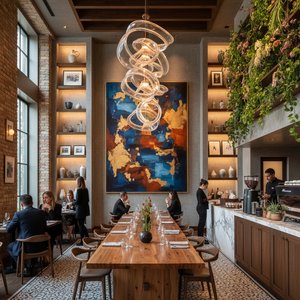
Gastronomiegestaltung mit Kunst: Atmosphäre und Kundenerlebnis steigern
Professionelle Gastronomiegestaltung mit Kunst: Steigern Sie Atmosphäre & Kundenerlebnis! Expertenrat zu Design, Stil und Kosten für Restaurants & Hotels.
Vom leeren Raum zur Markenbotschaft: Die Gestaltungskraft großformatiger Wandmalereien für eine unverwechselbare Restaurantidentität
Gestalten Sie Ihr Restaurant einzigartig! Expertenrat zur Wandmalerei: Markenbotschaft, Farbpsychologie & individuelle Designs für ein unvergessliches Kundenerlebnis. Jetzt informieren!
