- Startseite

- Auf Leinwand drucken
- Fernand Léger
- The Lunch

 Gemälde kaufen Bild kaufen
 Versenden
 Teilen
 Details anzeigen
 Zu Favoriten hinzufügen

 Herunterladen
 Ähnliche Objekte
 Röntgenaufnahme
 Diashow anzeigen
The Lunch

 Weiterlesen
Giclée / Kunstdruck
Giclée- oder Leinwanddruck in Museumsqualität mit schneller Produktion und flexiblen Veredelungsoptionen.




P118B $10

P118H $10

P118W $10

P438Z $10

P508JH $12

P508YH $12

P805H $10

P805Z $10

P919BZ $10

P919G $10

P919XJ $10

P959ZH $10

P968JZ $12

W106C $8

W218G $10

W218JH $8

W218Y $10

W307PJ $10

W316G $10

W316PJ $8

W316Y $10

W398PJ $8

W4111J $10

W500HY $15

W500JH $15

W692G $12

W849H $8

W940BG $15

W953PJ $8




Wählen Sie aus unseren vordefinierten Größen, die den ursprünglichen Proportionen des Kunstwerks entsprechen.

Sie können Ihre eigenen Maße eingeben, um ein bestimmtes Format oder einen speziellen Platz einzupassen. Wenn das von Ihnen gewählte Format nicht den Proportionen des Originalbildes entspricht, werden wir das Kunstwerk entweder beschneiden oder das Bild mit einem gespiegelten oder einfarbigen Rand erweitern. Ein digitaler Entwurf wird Ihnen zur Genehmigung zugesandt, bevor die Produktion beginnt.
Bitte beachten Sie, dass die Vorschau auf dem Bildschirm nicht den tatsächlichen Zuschnitt oder die Erweiterung widerspiegelt. Nur der Entwurf zeigt die endgültige Komposition präzise an.
Obwohl Sondermaße verfügbar sind, empfehlen wir die Auswahl eines Maßes aus der vordefinierten Liste, um die ursprünglichen Proportionen zu bewahren.
Weltweiter Versand () innerhalb von 2 Wochen statt der üblichen 4/5 Wochen. (20 Juli)

Kostenloser weltweiter Expressversand

Hochwertige Leinenleinwand

Umfassender Versicherungsschutz beim Versand

Zollsteuer-Rückerstattungsgarantie

Garantie für echte Farbtreue

60-Tage-Rückgaberecht (nur bei Mängeln)

100% Geld-zurück-Garantie

Mengenrabatt verfügbar
 Die Glasoption ist nur in Größen unter 110 cm verfügbar.

The Lunch
Giclée / Kunstdruck
Größe der Reproduktion
-


Endpreis aller Optionen
-
Beschreibung des Sammlerstücks
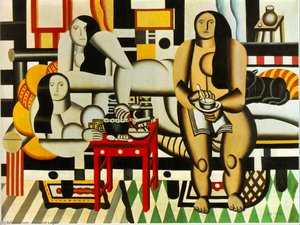
A Symphony of Form and Feeling: Exploring Fernand Léger’s “The Lunch”
Fernand Léger's "The Lunch" isn't merely a depiction of a midday meal; it’s a bold declaration of artistic intent—a masterful synthesis of abstraction and observation that encapsulates the anxieties and aspirations of the early 20th century. Painted in 1916, during the tumultuous years of World War I, this artwork transcends its immediate subject matter to become a profound meditation on humanity's relationship with technology and the shifting contours of modern life. Léger, deeply influenced by Cubism’s fragmentation of perspective and Picasso’s exploration of geometric shapes, sought to liberate painting from representational constraints—to convey not what *is* seen but what *feels* like seeing it.The Style and Technique: Geometric Precision Meets Organic Rhythm
At first glance, “The Lunch” appears strikingly austere – dominated by a palette of muted reds, yellows, and blues punctuated by stark white accents. However, beneath this deceptively simple surface lies an intricate network of geometric forms—circles, squares, triangles—that relentlessly dissect the scene into its constituent parts. Léger meticulously renders these shapes with precise lines and planes, mirroring the mechanized precision of the industrial landscape that surrounded him. Yet, despite this rigid formalism, the painting pulsates with a subtle organic rhythm. The woman’s posture, the positioning of the baby, and even the scattered objects on the table contribute to an illusion of movement—a suggestion that these forms are not merely static representations but active participants in the unfolding drama of existence. Léger achieved this effect through layering techniques—applying thin washes of color over thicker undercoats—creating a textured surface that enhances the visual impact without sacrificing geometric clarity.Historical Context: War, Progress, and the Search for Meaning
The painting’s creation coincided with the height of the First World War, a period marked by unprecedented devastation and disillusionment. Léger's artistic response to this crisis wasn’t one of despair but rather of defiant optimism—a conviction that art could offer solace and inspiration amidst the horrors of conflict. He viewed technology not as an instrument of destruction but as a catalyst for transformation—a force capable of reshaping human consciousness and liberating us from the limitations of traditional thought. “The Lunch” embodies this worldview by presenting a simplified, idealized vision of domestic life—a refuge from the chaos of war—while simultaneously confronting viewers with the unsettling implications of industrialization. Léger’s intention was to provoke contemplation about humanity's place in the evolving cosmos.Symbolism: Representing Humanity Amidst Mechanical Forms
The woman and child at the center of “The Lunch” serve as potent symbols of femininity, nurturing, and continuity—representing the enduring values of family and tradition amidst the encroaching dominance of machinery. Léger deliberately contrasts these organic forms with the geometric shapes that surround them—creating a visual dialogue between nature and technology. The scattered objects on the table—the bowl, vase, apple, banana—further amplify this symbolic tension, suggesting that even seemingly mundane elements can hold profound significance. They represent the fragments of everyday life—the building blocks of human experience—that Léger sought to capture in his abstract style.Emotional Impact: A Quiet Assertion of Artistic Vision
Despite its formal rigor, “The Lunch” possesses a remarkable emotional resonance. The painting’s muted colors convey a sense of melancholy and introspection—reflecting the anxieties of wartime but also hinting at an underlying yearning for beauty and harmony. Léger's masterful use of perspective and layering creates a captivating visual experience that draws viewers into the scene—inviting them to contemplate its complexities and appreciate its artistic achievement. Ultimately, “The Lunch” stands as a testament to Léger’s unwavering belief in the transformative power of art—a quiet assertion of vision amidst the clamor of history.Biografie des Künstlers
frühes Leben und Ausbildung
Fernand Légér, ein französischer Maler, Bildhauer und Filmemacher, wurde am 4. Februar 1881 in Argentan, Orne, Niedergermanien geboren. Sein Vater züchtete Rinder, und Légér erhielt zunächst eine Ausbildung als Architekt von 1897 bis 1899. Er zog dann im Jahr 1900 nach Paris und unterstützte sich dort als Architektenzeichner.Künstlerische Entwicklung
Légers frühe Werke wurden vom Impressionismus beeinflusst, wie in Le Jardin de ma Mère (Mein Muttergarten) (1905) zu sehen ist. Nach dem Besuch der Schule für dekorative Künste und der Académie Julian begann er ab seinem 25. Lebensjahr ernsthaft als Maler zu arbeiten. Sein Stil entwickelte sich zu einer persönlichen Form des Kubismus, der von Kritikern als "Tubism" bezeichnet wurde, da er sich auf zylindrische Formen konzentrierte.Kubismus und die Puteaux-Gruppe
Im Jahr 1910 stellte Légér im Salon d’Automne zusammen mit Jean Metzinger und Henri Le Fauconnier aus. Er schloss sich der Puteaux-Gruppe an, auch bekannt als die Section d’Or (die Goldene Proportion), zusammen mit anderen Künstlern wie Francis Picabia und Marcel Duchamp.Krieg und seine Auswirkungen auf Légers Werk
Légers Erfahrungen im Ersten Weltkrieg hatten einen erheblichen Einfluss auf sein Werk. Während seiner Zeit an der Front produzierte er Skizzen von Artilleriegeschützen, Flugzeugen und Soldaten. Sein Gemälde Soldat mit Pfeife (1916) spiegelt diese Zeit wider.Spätere Werke und Vermächtnis
Légers Nachkriegszeitliche Arbeiten, die von glatten, maschinellen Formen geprägt waren, verknüpften ihn mit der Tradition der französischen figurativen Malerei. Seine "animierten Landschaften" von 1921 zeigten Figuren und Tiere in harmonischen, stromlinienförmigen Formen.- Fernand Légers Werke auf OriginalUniqueArt
- Mehr über Fernand Légér auf Wikipedia
- Entdecken Sie das Musée National Fernand Légér (Frankreich) mit OriginalUniqueArt
- Die Sitzende Frau (100 x 81 cm, Tubism)
- Maschinenelement (Kubismus)

Fernand Léger
1881 - 1955 , Frankreich
Kurzinfos
- Beeinflusste Kunstrichtungen: ['Pop Art']
- Beeinflusste Künstler: ['Paul Cézanne']
- Bemerkenswerte Werke:
- Die Sitzende Frau
- Maschinenelement
- Der Große Umzug
- Die Stadt
- Geburtsdatum: 04. Februar 1881
- Geburtsort: Argentan, Frankreich
- Künstlerische Richtung: Kubismus, Tubismus
- Nationalität: Französisch
- Sterbedatum: 1955
- Vollständiger Name: Fernand Léger
- Von Kunstbewegungen Beeinflusst: ['Cézannismus']
- Von Künstlern Beeinflusst: ['Impressionismus']
Ähnliche Artikel

Willem de Kooning: Abstraktion, Geste und die Entwicklung der Nachkriegsamerikanischen Malerei
Entdecken Sie Willem de Koonings revolutionäre Kunst und die Entwicklung des Abstrakten Expressionismus. Expertenanalyse, Investitionspotenzial & Sammlerwert – erfahren Sie mehr auf OriginalUniqueArt.
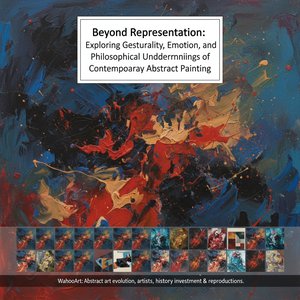
Jenseits der Leinwand: Gesturalität, Emotion und philosophische Grundlagen zeitgenössischer abstrakter Malerei
Entdecken Sie die philosophischen Grundlagen und emotionale Tiefe des Abstrakten Expressionismus. Expertenanalysen zu Rothko, Pollock & Co. – für Kunstliebhaber und Sammler.
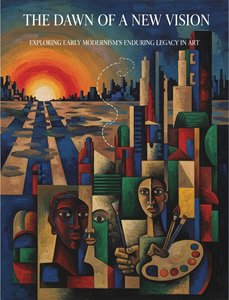
The Dawn of a New Vision: Exploring Early Modernism's Enduring Legacy in Art
Explore the revolutionary world of Early Modernism! Discover key artists like Picasso & Léger, pivotal movements, and lasting philosophical influences. Uncover the seeds of change that shaped 20th-century art.
Die 10 Meisterwerke des Kubismus: Kunstgeschichte für Ihr Zuhause |
Entdecken Sie die 10 prägendsten Meisterwerke des Kubismus! Von Picasso bis Braque – erfahren Sie die Geschichten hinter ikonischen Gemälde und lassen Sie sich von moderner Kunst inspirieren. Kunstreproduktionen in Museumsqualiät auf .
Akryl auf Leinwand: Die 10 Meisterwerke, die Kunst für immer veränderten |
Entdecken Sie die 10 legendärsten Akrylmalereien, die Kunstgeschichte schrieben! Von Jackson Pollock bis Gerhard Richter – erfahren Sie die Geschichten hinter den Meisterwerken und finden Sie hochwertige Reproduktionen für Ihr Zuhause. Jetzt bei entdecken!