

 Vorschau anzeigen
 Versenden
 Teilen
 Details anzeigen

 Herunterladen
 Ähnliche Objekte
 Röntgenaufnahme
 Diashow
Pear Compotoir


 Weiterlesen
Handgefertigte Ölreproduktion
Handgemaltes Ölgemälde auf Leinwand in Ihrer Wunschgröße und mit Rahmen, auf Bestellung von unseren Künstlern angefertigt. ( Druck bestellen Bild kaufen)




P118B $10

P118H $10

P118W $10

P438Z $10

P508JH $12

P508YH $12

P805H $10

P805Z $10

P919BZ $10

P919G $10

P919XJ $10

P959ZH $10

P968JZ $12

W106C $8

W218G $10

W218JH $8

W218Y $10

W307PJ $10

W316G $10

W316PJ $8

W316Y $10

W398PJ $8

W4111J $10

W500HY $15

W500JH $15

W692G $12

W849H $8

W940BG $15

W953PJ $8




Wählen Sie aus unseren vordefinierten Formaten, die den ursprünglichen Proportionen des Kunstwerks entsprechen.

Sie können Ihre eigenen Maße eingeben, um einen bestimmten Rahmen oder Platz auszufüllen. Wenn die gewählte Größe nicht den Proportionen des Originalbildes entspricht, werden wir das Kunstwerk entweder beschneiden oder das Gemälde durch zusätzliche, handgemalte Elemente erweitern. Ein digitales Mockup wird Ihnen zur Genehmigung zugesandt, bevor die Produktion beginnt.
Bitte beachten Sie, dass die Bildschirmvorschau nicht die tatsächliche Beschneidung oder Erweiterung widerspiegelt. Nur das Mockup zeigt die endgültige Komposition exakt an.
Obwohl Sondermaße verfügbar sind, empfehlen wir, eine Größe aus der vordefinierten Liste zu wählen, um die ursprünglichen Proportionen beizubehalten.
Nach der Bestellung wird das OriginalUniqueArt.com-Team dem Kunden Anweisungen per E-Mail zusenden und eine Mockup-Vorschau bereitstellen.
Weltweiter Versand () in nur 3 bis 4 Wochen statt der üblichen 5 Wochen. (22 August). Keine Kompromisse bei der Qualität.

Kostenloser weltweiter Expressversand

Hochwertige Leinenleinwand

Umfassender Versicherungsschutz beim Versand

Zollgebühren-Rückerstattungsgarantie

Garantie für exakte Farbtreue

60 Tage Rückgaberecht (nur bei Mängeln)

100% Geld-zurück-Garantie

Mengenrabatt verfügbar
 Die Glasoption ist nur für Größen unter 110 cm verfügbar.

Pear Compotoir
Art der Reproduktion
Format der Reproduktion
-


Gesamtpreis
$ 300
Beschreibung des Kunstwerks
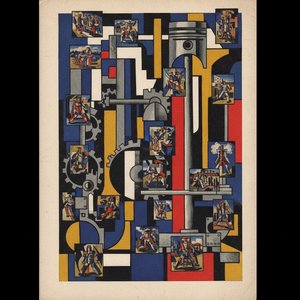
A Symphony of Form and Color: The Mechanical Soul of Pear Compotoir
In the vibrant landscape of early twentieth-century modernism, few works capture the rhythmic pulse of a changing world as evocatively as Fernand Léger’s “Pear Compotoerb,” painted in 1923. This is not merely a still life of fruit resting upon a table; it is an audacious declaration of Cubist principles applied to the most mundane of subjects. Created during a period of intense artistic experimentation following the devastation of World War I, the painting embodies a burgeoning fascination with industrialization and its profound influence on human perception. While the Impressionists sought to capture the fleeting, ethereal qualities of light and atmosphere, Léger deliberately confronts the viewer with something far more grounded and structural. He presents a world where the organic and the mechanical begin to merge, inviting us to see the beauty in the geometric and the strength in the simplified form.
To gaze upon this masterpiece is to witness the Cubist breakthrough in its most energetic state. Léger rejects traditional illusionistic techniques that strive for photographic accuracy, opting instead to dissect reality into interlocking planes. The pear itself is rendered not as a soft, yielding object, but as a series of overlapping geometric shapes—a visual puzzle that challenges our ingrained understanding of space. This technique was deeply personal to Léger; it reflected his belief that art should engage with the underlying structure of reality, mirroring the repetitive patterns and angular contours found in the factories and urban landscapes of the burgeoning machine age. By presenting objects from multiple viewpoints simultaneously, he breaks the stagnant Renaissance perspective, creating a sense of movement and depth that feels both modern and revolutionary.
The Vibrancy of the Machine Age Aesthetic
Beyond its structural complexity, “Pear Compotoir” possesses an emotional resonance driven by a strikingly vibrant color palette. Dominated by bold reds, sunny yellows, and lush greens, the hues are far from arbitrary. Léger utilized color strategically to convey energy and dynamism; the reds evoke the heat and intense movement of industrial furnaces, while the contrasting tones create a visual tension that keeps the eye dancing across the canvas. This use of primary and secondary colors serves to celebrate the strength and unapologetic beauty of modern life. For the collector or interior designer, this painting offers more than just a historical window; it provides a powerful focal point capable of injecting vitality into any contemporary space.
The composition—featuring a carefully arranged collection of a bowl of fruit, a cup, a spoon, and a bottle—functions as a study in Tubism, a style pioneered by Léger himself. Characterized by cylindrical, robust forms, this approach finds profound aesthetic truth in the sleek curves and structural integrity of objects. There is a certain poetic weight to the way the chair is positioned in front of the table, grounding the abstract elements within a recognizable domestic setting. This balance between the abstract and the tangible makes the work incredibly accessible, allowing it to resonate with viewers who seek art that is both intellectually stimulating and visually captivating. Owning a high-quality reproduction of this work means bringing a piece of the industrial revolution's heart into one's home—a celebration of progress, form, and the enduring power of the human gaze.
Über den Künstler
frühes Leben und Ausbildung
Fernand Légér, ein französischer Maler, Bildhauer und Filmemacher, wurde am 4. Februar 1881 in Argentan, Orne, Niedergermanien geboren. Sein Vater züchtete Rinder, und Légér erhielt zunächst eine Ausbildung als Architekt von 1897 bis 1899. Er zog dann im Jahr 1900 nach Paris und unterstützte sich dort als Architektenzeichner.Künstlerische Entwicklung
Légers frühe Werke wurden vom Impressionismus beeinflusst, wie in Le Jardin de ma Mère (Mein Muttergarten) (1905) zu sehen ist. Nach dem Besuch der Schule für dekorative Künste und der Académie Julian begann er ab seinem 25. Lebensjahr ernsthaft als Maler zu arbeiten. Sein Stil entwickelte sich zu einer persönlichen Form des Kubismus, der von Kritikern als "Tubism" bezeichnet wurde, da er sich auf zylindrische Formen konzentrierte.Kubismus und die Puteaux-Gruppe
Im Jahr 1910 stellte Légér im Salon d’Automne zusammen mit Jean Metzinger und Henri Le Fauconnier aus. Er schloss sich der Puteaux-Gruppe an, auch bekannt als die Section d’Or (die Goldene Proportion), zusammen mit anderen Künstlern wie Francis Picabia und Marcel Duchamp.Krieg und seine Auswirkungen auf Légers Werk
Légers Erfahrungen im Ersten Weltkrieg hatten einen erheblichen Einfluss auf sein Werk. Während seiner Zeit an der Front produzierte er Skizzen von Artilleriegeschützen, Flugzeugen und Soldaten. Sein Gemälde Soldat mit Pfeife (1916) spiegelt diese Zeit wider.Spätere Werke und Vermächtnis
Légers Nachkriegszeitliche Arbeiten, die von glatten, maschinellen Formen geprägt waren, verknüpften ihn mit der Tradition der französischen figurativen Malerei. Seine "animierten Landschaften" von 1921 zeigten Figuren und Tiere in harmonischen, stromlinienförmigen Formen.- Fernand Légers Werke auf OriginalUniqueArt
- Mehr über Fernand Légér auf Wikipedia
- Entdecken Sie das Musée National Fernand Légér (Frankreich) mit OriginalUniqueArt
- Die Sitzende Frau (100 x 81 cm, Tubism)
- Maschinenelement (Kubismus)

Fernand Léger
1881 - 1955 , Frankreich
Kurzinfos
- Beeinflusste Kunstrichtungen: ['Pop Art']
- Beeinflusste Künstler: ['Paul Cézanne']
- Bemerkenswerte Werke:
- Die Sitzende Frau
- Maschinenelement
- Der Große Umzug
- Die Stadt
- Geburtsdatum: 04. Februar 1881
- Geburtsort: Argentan, Frankreich
- Künstlerische Richtung: Kubismus, Tubismus
- Nationalität: Französisch
- Sterbedatum: 1955
- Vollständiger Name: Fernand Léger
- Von Kunstbewegungen Beeinflusst: ['Cézannismus']
- Von Künstlern Beeinflusst: ['Impressionismus']
Ähnliche Artikel
Fernand Léger: Die 25 Meisterwerke des Kubismus für Ihr Zuhause | OriginalUniqueArt
Entdecken Sie die 25 Meisterwerke von Fernand Léger! Tauchen Sie ein in die Welt des Kubismus, Tubismus & der Avantgarde. Hochwertige Kunstreproduktionen für Ihr Zuhause – jetzt auf OriginalUniqueArt.com!

Geometrische Abstraktion: Die 10 Meisterwerke, die Kunstgeschichte prägten | OriginalUniqueArt.com
Entdecken Sie die 10 Meisterwerke der geometrischen Abstraktion! Von Kandinsky bis Mondrian – erleben Sie die Geschichte, Farben & Formen dieser revolutionären Kunstrichtung. Hochwertige Kunstreproduktionen auf OriginalUniqueArt.com

Kandinsky: Die 25 Meisterwerke des Abstrakten – Kunst für Ihr Zuhause | OriginalUniqueArt
Entdecken Sie die 25 bedeutendsten Gemälde von Wassily Kandinsky! Tauchen Sie ein in die Welt der abstrakten Kunst, des Expressionismus und der Farbkomposition. Hochwertige Kunstdrucke & Inspiration für Ihr Zuhause auf OriginalUniqueArt.com.

Paul Cézanne: Die 25 Meisterwerke des Impressionismus | OriginalUniqueArt
Entdecken Sie die 25 Meisterwerke von Paul Cézanne! Tauchen Sie ein in die Welt des Impressionismus und Postimpressionismus. Erfahren Sie mehr über seine Stillleben, Landschaften & berühmten Gemälde – jetzt hochwertige Kunstdrucke auf OriginalUniqueArt.com.

Neo-Abstract Art: The High-Impact Evolution of Modern Visual Energy and Geometric Sophistication
Discover the power of Neo-Abstract art. Explore how bold geometric forms and high-impact visual energy are redefining modern design. Learn to curate sophisticated, high-energy spaces with the latest trends in contemporary abstraction and structural color.



