

 Vorschau anzeigen
 Versenden
 Teilen
 Details anzeigen

 Herunterladen
 Ähnliche Objekte
 Röntgenaufnahme
 Diashow
 Statistiken
Komposition mit drei Figuren


 Weiterlesen
Handgefertigte Ölreproduktion
Handgemaltes Ölgemälde auf Leinwand in Ihrer Wunschgröße und mit Rahmen, auf Bestellung von unseren Künstlern angefertigt. ( Zu Druck wechseln Zum digitalen Bild wechseln)




P118B $10

P118H $10

P118W $10

P438Z $10

P508JH $12

P508YH $12

P805H $10

P805Z $10

P919BZ $10

P919G $10

P919XJ $10

P959ZH $10

P968JZ $12

W106C $8

W218G $10

W218JH $8

W218Y $10

W307PJ $10

W316G $10

W316PJ $8

W316Y $10

W398PJ $8

W4111J $10

W500HY $15

W500JH $15

W692G $12

W849H $8

W940BG $15

W953PJ $8




Wählen Sie aus unseren vordefinierten Formaten, die den ursprünglichen Proportionen des Kunstwerks entsprechen.

Sie können Ihre eigenen Maße eingeben, um einen bestimmten Rahmen oder Platz auszufüllen. Wenn die gewählte Größe nicht den Proportionen des Originalbildes entspricht, werden wir das Kunstwerk entweder beschneiden oder das Gemälde durch zusätzliche, handgemalte Elemente erweitern. Ein digitales Mockup wird Ihnen zur Genehmigung zugesandt, bevor die Produktion beginnt.
Bitte beachten Sie, dass die Bildschirmvorschau nicht die tatsächliche Beschneidung oder Erweiterung widerspiegelt. Nur das Mockup zeigt die endgültige Komposition exakt an.
Obwohl Sondermaße verfügbar sind, empfehlen wir, eine Größe aus der vordefinierten Liste zu wählen, um die ursprünglichen Proportionen beizubehalten.
Nach der Bestellung wird das OriginalUniqueArt.com-Team dem Kunden Anweisungen per E-Mail zusenden und eine Mockup-Vorschau bereitstellen.
Weltweiter Versand () in nur 3 bis 4 Wochen statt der üblichen 5 Wochen. (12 September). Keine Kompromisse bei der Qualität.

Kostenloser weltweiter Expressversand

Hochwertige Leinenleinwand

Umfassender Versicherungsschutz beim Versand

Zollgebühren-Rückerstattungsgarantie

Garantie für exakte Farbtreue

100-Tage-Rückgaberecht (nur bei Mängeln)

100% Geld-zurück-Garantie

Mengenrabatt verfügbar
 Die Glasoption ist nur für Größen unter 110 cm verfügbar.

Komposition mit drei Figuren
Art der Reproduktion
Format der Reproduktion
-


Gesamtpreis
$ 300
Fernand Léger’s “Composition with Three Figures”: A Dance of Modernity
Fernand Léger's "Composition with Three Figures" (1932) is more than just a painting; it’s a vibrant snapshot of the burgeoning modern world, captured through the distinctive lens of Cubism and his own unique style – often referred to as “Tubism.” This artwork, housed at the Musée National d'Art Moderne in Paris, immediately draws the viewer into a dynamic scene brimming with figures, objects, and a carefully orchestrated interplay of color. Léger wasn’t simply depicting reality; he was translating its essence—the energy of machines, the rhythm of urban life, and the human experience within that context—into a powerfully abstract visual language.
The painting's composition is immediately striking. Three women dominate the foreground, their hands raised to their faces in an expression of contemplation or perhaps quiet distress. This gesture, combined with their simplified, almost mask-like features – large eyes and oval faces characteristic of Léger’s style – invites us to consider themes of isolation and introspection within a rapidly changing society. Scattered around them are other individuals—a man, a dog, and various objects like clocks, ropes, and bowls—all contributing to the painting's layered narrative. These elements aren’t arranged randomly; they create a sense of controlled chaos, mirroring the complexities of modern life.
The Language of Tubism
Léger developed his own artistic style, “Tubism,” which evolved from Cubism but moved beyond mere geometric deconstruction. He sought to represent objects and figures as if they were viewed through a cylindrical lens – hence the name "Tube." This approach resulted in flattened forms, simplified shapes, and an emphasis on lines and planes. Notice how the figures are rendered with bold, angular outlines, creating a sense of movement and dynamism. The use of color is equally deliberate; Léger favored a palette of grays, blues, and yellows, often juxtaposing them to create visual tension and highlight the forms within the composition. The yellow background acts as a powerful anchor, providing contrast against the cooler tones of the figures and objects.
Technically, Léger employed oil paint on canvas with a confident, almost machine-like precision. His brushstrokes are visible yet controlled, contributing to the painting’s textured surface. The deliberate use of repetition – particularly in the arrangement of bowls – further reinforces the sense of rhythm and order within the seemingly chaotic scene. It's important to note that Léger was deeply influenced by the industrial age; he saw beauty and potential in machines and sought to capture their essence in his art.
Symbolism and Emotional Resonance
While “Composition with Three Figures” appears abstract, it’s rich in symbolic meaning. The raised hands of the women can be interpreted as a gesture of vulnerability or perhaps a plea for understanding in an increasingly impersonal world. The clock, a recurring motif in Léger's work, represents the relentless passage of time and the pressures of modern life. The ropes and bowls might symbolize the tools and necessities of daily existence – elements that are both functional and aesthetically intriguing to the artist.
Despite its somewhat melancholic undertones, the painting ultimately conveys a sense of optimism and vitality. Léger wasn’t simply documenting the hardships of modernity; he was celebrating its energy and potential. “Composition with Three Figures” is a testament to his belief that even in an age dominated by machines, the human spirit could find beauty and meaning.
A Legacy of Modern Art
Fernand Léger’s work profoundly influenced subsequent generations of artists, including Pop Art pioneers like Andy Warhol. His exploration of abstraction, his engagement with industrial forms, and his willingness to challenge traditional artistic conventions paved the way for new approaches to representation. "Composition with Three Figures" stands as a pivotal example of this legacy—a vibrant, dynamic painting that continues to resonate with viewers today. Owning a high-quality reproduction allows you to bring this captivating artwork into your home or office, adding a touch of modern art history and visual energy to your space.
Über den Künstler
frühes Leben und Ausbildung
Fernand Légér, ein französischer Maler, Bildhauer und Filmemacher, wurde am 4. Februar 1881 in Argentan, Orne, Niedergermanien geboren. Sein Vater züchtete Rinder, und Légér erhielt zunächst eine Ausbildung als Architekt von 1897 bis 1899. Er zog dann im Jahr 1900 nach Paris und unterstützte sich dort als Architektenzeichner.Künstlerische Entwicklung
Légers frühe Werke wurden vom Impressionismus beeinflusst, wie in Le Jardin de ma Mère (Mein Muttergarten) (1905) zu sehen ist. Nach dem Besuch der Schule für dekorative Künste und der Académie Julian begann er ab seinem 25. Lebensjahr ernsthaft als Maler zu arbeiten. Sein Stil entwickelte sich zu einer persönlichen Form des Kubismus, der von Kritikern als "Tubism" bezeichnet wurde, da er sich auf zylindrische Formen konzentrierte.Kubismus und die Puteaux-Gruppe
Im Jahr 1910 stellte Légér im Salon d’Automne zusammen mit Jean Metzinger und Henri Le Fauconnier aus. Er schloss sich der Puteaux-Gruppe an, auch bekannt als die Section d’Or (die Goldene Proportion), zusammen mit anderen Künstlern wie Francis Picabia und Marcel Duchamp.Krieg und seine Auswirkungen auf Légers Werk
Légers Erfahrungen im Ersten Weltkrieg hatten einen erheblichen Einfluss auf sein Werk. Während seiner Zeit an der Front produzierte er Skizzen von Artilleriegeschützen, Flugzeugen und Soldaten. Sein Gemälde Soldat mit Pfeife (1916) spiegelt diese Zeit wider.Spätere Werke und Vermächtnis
Légers Nachkriegszeitliche Arbeiten, die von glatten, maschinellen Formen geprägt waren, verknüpften ihn mit der Tradition der französischen figurativen Malerei. Seine "animierten Landschaften" von 1921 zeigten Figuren und Tiere in harmonischen, stromlinienförmigen Formen.- Fernand Légers Werke auf OriginalUniqueArt
- Mehr über Fernand Légér auf Wikipedia
- Entdecken Sie das Musée National Fernand Légér (Frankreich) mit OriginalUniqueArt
- Die Sitzende Frau (100 x 81 cm, Tubism)
- Maschinenelement (Kubismus)

Fernand Léger
1881 - 1955 , Frankreich
Kurzinfos
- Beeinflusste Kunstrichtungen: ['Pop Art']
- Beeinflusste Künstler: ['Paul Cézanne']
- Bemerkenswerte Werke:
- Die Sitzende Frau
- Maschinenelement
- Der Große Umzug
- Die Stadt
- Geburtsdatum: 04. Februar 1881
- Geburtsort: Argentan, Frankreich
- Künstlerische Richtung: Kubismus, Tubismus
- Nationalität: Französisch
- Sterbedatum: 1955
- Vollständiger Name: Fernand Léger
- Von Kunstbewegungen Beeinflusst: ['Cézannismus']
- Von Künstlern Beeinflusst: ['Impressionismus']
Ähnliche Artikel

Modern Geometry & Machine Age Beauty: A Collector's Guide to the Cubist Vision of Fernand Léger
Explore the profound geometric mastery of Fernand Léger. Discover how his 'Tubism' and Machine Age aesthetics redefined modern art, offering timeless inspiration for discerning collectors seeking to integrate Cubist dynamism into sophisticated contemporary interiors.

Paul Cézanne: Die 25 Meisterwerke des Impressionismus | OriginalUniqueArt
Entdecken Sie die 25 Meisterwerke von Paul Cézanne! Tauchen Sie ein in die Welt des Impressionismus und Postimpressionismus. Erfahren Sie mehr über seine Stillleben, Landschaften & berühmten Gemälde – jetzt hochwertige Kunstdrucke auf OriginalUniqueArt.com.
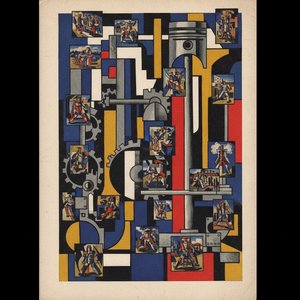
Fernand Léger: Die 25 Meisterwerke des Kubismus für Ihr Zuhause | OriginalUniqueArt
Entdecken Sie die 25 Meisterwerke von Fernand Léger! Tauchen Sie ein in die Welt des Kubismus, Tubismus & der Avantgarde. Hochwertige Kunstreproduktionen für Ihr Zuhause – jetzt auf OriginalUniqueArt.com!

Geometrische Abstraktion: Die 10 Meisterwerke, die Kunstgeschichte prägten | OriginalUniqueArt.com
Entdecken Sie die 10 Meisterwerke der geometrischen Abstraktion! Von Kandinsky bis Mondrian – erleben Sie die Geschichte, Farben & Formen dieser revolutionären Kunstrichtung. Hochwertige Kunstreproduktionen auf OriginalUniqueArt.com

Modern Geometry & Machine Age Beauty: A Collector's Guide to the Cubist Vision of Fernand Léger
Explore the vibrant world of Fernand Léger. Discover how his 'Tubism' and Machine Age aesthetics redefined modern art, offering profound inspiration for discerning collectors seeking geometric beauty and industrial dynamism.


