

 In echtem Maßstab anzeigen
 Versenden als Grußkarte
 Teilen
 Details anzeigen
 Leitfaden

 Herunterladen
 Ähnliche Objekte
 Röntgenaufnahme
 Diashow
 Besucherstatistiken
Annunciation
 Oil On Canvas
- WallArt
- Baroque
 1582
1582 248.0 x 170.0 cm
 Vatikanische Pinakothek
 Mehr anzeigen
Giclée / Kunstdruck
Giclée- oder Leinwanddruck in Museumsqualität mit schneller Produktion und flexiblen Veredelungsoptionen. ( Handgemalte Reproduktion kaufen Zum digitalen Bild wechseln)




P118B $10

P118H $10

P118W $10

P438Z $10

P508JH $12

P508YH $12

P805H $10

P805Z $10

P919BZ $10

P919G $10

P919XJ $10

P959ZH $10

P968JZ $12

W106C $8

W218G $10

W218JH $8

W218Y $10

W307PJ $10

W316G $10

W316PJ $8

W316Y $10

W398PJ $8

W4111J $10

W500HY $15

W500JH $15

W692G $12

W849H $8

W940BG $15

W953PJ $8




Wählen Sie aus unseren vordefinierten Formaten, die den ursprünglichen Proportionen des Kunstwerks entsprechen.

Sie können Ihre eigenen Maße eingeben, um ein bestimmtes Format oder einen speziellen Platz einzupassen. Wenn das von Ihnen gewählte Format nicht den Proportionen des Originalbildes entspricht, werden wir das Kunstwerk entweder beschneiden oder das Bild mit einem gespiegelten oder einfarbigen Rand erweitern. Ein digitaler Entwurf wird Ihnen zur Genehmigung zugesandt, bevor die Produktion beginnt.
Bitte beachten Sie, dass die Vorschau auf dem Bildschirm nicht den tatsächlichen Zuschnitt oder die Erweiterung widerspiegelt. Nur der Entwurf zeigt die endgültige Komposition präzise an.
Obwohl Sondermaße verfügbar sind, empfehlen wir die Auswahl eines Maßes aus der vordefinierten Liste, um die ursprünglichen Proportionen zu bewahren.
Weltweiter Versand () innerhalb von 2 Wochen statt der üblichen 4/5 Wochen. (20 September)

Kostenloser weltweiter Expressversand

Hochwertige Leinenleinwand

Vollständiger Versicherungsschutz beim Versand

Zollgebühren-Rückerstattungsgarantie

Garantie für exakte Farbtreue

100-tägiges Rückgaberecht (nur bei Mängeln)

100% Geld-zurück-Garantie

Angebot für Mengenrabatt
 Die Glasoption ist nur für Größen unter 110 cm verfügbar.

Annunciation
Giclée / Kunstdruck
Format der Reproduktion
-


Gesamtpreis
$ 80
A Divine Revelation: The Annunciation by Federico Barocci
Federico Fiori Barocci’s “Annunciation,” painted in 1582-1584 for the chapel of Francesco Maria II della Rovere in the Basilica of Loreto, is more than just a religious depiction; it's a masterful distillation of Renaissance ideals and a harbinger of the Baroque style. This monumental work transcends mere illustration, offering a profound meditation on faith, grace, and the miraculous—a testament to Barocci’s extraordinary skill as both a painter and a storyteller.
The scene unfolds with arresting immediacy: Mary, rendered in exquisite detail with flowing drapery and an expression of serene contemplation, receives the announcement from the radiant Archangel Gabriel. The composition is anchored by a strong vertical axis, drawing the eye upwards towards the celestial background—a swirling expanse of clouds and distant cityscapes that hint at both earthly realities and divine realms. Barocci’s genius lies not just in his technical prowess but in his ability to imbue this pivotal biblical moment with palpable emotion and dramatic tension. The figures are not static; they are caught in a dynamic exchange, their gestures conveying the weight of the revelation.
The Baroque Spark: Light, Movement, and Emotion
Barocci’s style is characterized by a remarkable synthesis of Mannerist elegance and nascent Baroque dynamism. While rooted in the refined compositions of his early training with Taddeo and Federico Zuccari, he boldly introduces elements that foreshadow the dramatic lighting, swirling movement, and heightened emotionality of Rubens and other Baroque masters. Notice particularly the use of *chiaroscuro* – the masterful interplay of light and shadow – which sculpts the figures, creating a sense of volume and depth. The light source, unseen but powerfully felt, emanates from above and to the left, bathing Mary’s face in a golden glow while casting dramatic shadows that heighten the scene's intensity.
The artist employs a sophisticated technique of layering glazes and meticulous brushwork to achieve an astonishing level of realism. The textures of Mary’s garments, the folds of her veil, and even the subtle details of Gabriel’s wings are rendered with breathtaking precision. Yet, this technical mastery never overwhelms the emotional core of the painting. Barocci's use of sfumato—a delicate blurring effect—softens the edges of forms, creating a luminous quality that contributes to the overall sense of ethereal beauty.
Symbolism and Spiritual Resonance
The “Annunciation” is rich in symbolic meaning. The lilies adorning Mary’s hands represent purity and innocence – a potent visual reminder of her virginity and divine grace. Gabriel, depicted with wings outstretched and holding the lily, embodies divine communication and the promise of salvation. Beyond these immediate symbols, the painting speaks to the fundamental themes of faith, humility, and the transformative power of revelation. The distant cityscape, rendered in atmospheric perspective, serves as a reminder of the earthly realm from which Mary’s destiny emerges—a world awaiting redemption through her acceptance of God's will.
A Legacy of Beauty: Reproduction Possibilities
Reproductions of Barocci’s “Annunciation” offer a remarkable opportunity to bring this masterpiece into your home or office. Available in various sizes and mediums, our high-quality reproductions faithfully capture the painting's luminous beauty, dramatic composition, and profound emotional impact. Whether you seek an authentic representation for your collection or a stunning addition to your interior design scheme, our meticulously crafted prints provide a timeless tribute to one of the Renaissance’s most gifted artists. Consider framing options that complement the artwork’s rich palette and dynamic energy – a simple black frame will allow the painting's brilliance to shine, while a more ornate gilded frame can further enhance its regal presence.
Biografie des Künstlers
Frühes Leben und Ausbildung
- Geboren: Urbino, Italien (1535)
- Gestorben: 1612
- Federico Fiori Barocci, ein italienischer Renaissance-Maler und Grafiker, wurde 1535 in Urbino, Italien, geboren.
- Sein ursprünglicher Name war Federico Fiori, und er erhielt den Spitznamen "il Baroccio", was im nordwestitalienischen Dialekt eine zweirädrige Karre bedeutet, die von Ochsen gezogen wird.
- Barocci erhielt seine erste Ausbildung bei seinem Vater, Ambrogio Barocci, einem Bildhauer von örtlicher Bedeutung.
- Anschließend wurde er beim Maler Battista Franco in Urbino ausgebildet. Diese Ausbildung legte den Grundstein für seinen späteren Erfolg.
Künstlerische Karriere und Einflüsse
- Baroccis Werk war hoch angesehen und einflussreich und kündigte den Stil Peter Paul Rubens' an.
- Er arbeitete im renommierten Studio von Taddeo und Federico Zuccari in Rom, wo er verschiedenen künstlerischen Einflüssen ausgesetzt war.
- Seine erste bemerkenswerte Arbeit war eine St. Margarete, die für die Confraternity of the Holy Sacrament geschaffen wurde.
- Er wurde von Papst Pius IV eingeladen, bei der Dekoration des Vatikan Belvedere Palastes in Rom zu helfen, wo er die Jungfrau Maria und das Jesuskind mit mehreren Heiligen sowie eine Decke in Fresko malte, die die Verkündigung darstellten.
- Baroccis Stil war durch eine Mischung aus Manierismus- und Barockelementen gekennzeichnet.
Bemerkenswerte Werke und Vermächtnis
- Fünf Studien einer männlichen Figur und zwei seiner rechten Hand und Arms (Uffizien Galerie, Florenz, Italien) – ein Beweis für Baroccis Geschick im Festhalten der menschlichen Form.
- Kompositionsstudie (für „Beschneidung“, Paris, Musée du Louvre) – demonstriert seine Fähigkeit, Komposition und Emotion in Einklang zu bringen.
- Kopf eines Mannes (für „Rufer des Heiligen Andreas“, Brüssel, Königliche Museen der Schönen Künste von Belgien) – zeigt Baroccis Liebe zum Detail und Ausdruckskraft.
- Die Mariä Geburt (1597 Öl auf Leinwand im Prado).
- Madonna del Popolo (Uffizien Galerie, Florenz, Italien).
- Die Madonna mit der Katze (La Madonna del Gatto)
- Verkündigung (1582)
Entwicklung und Bedeutung
- Obwohl er sich nach einem vermeintlichen Giftanschlag 1563 dauerhaft aus Rom zurückzog und hauptsächlich in Urbino tätig war, entwickelte Barocci seinen Stil weiter.
- Er nutzte neue Zeichentechniken, die es ihm ermöglichten, unorthodoxe malerische Methoden zu entwickeln.
- Seine Werke zeichnen sich durch Wärme des Gefühls und tiefe Spiritualität aus.
Vermächtnis und Rezeption
- Barocci gilt als ein wichtiger Vorläufer des Barockstils und beeinflusste Künstler wie Peter Paul Rubens maßgeblich. Sein Werk steht für den Übergang von Manierismus zum Barock und spiegelt die religiösen und künstlerischen Strömungen der Gegenreformation wider.
- Er war einer der bedeutendsten und individuellsten Maler seiner Zeit in Mittelitalien.
- Baroccis Einfluss ist in den Werken verschiedener Künstler sichtbar, darunter Peter Paul Rubens, der von Baroccis dramatischem und emotionalem Pinselstrich inspiriert wurde. Sein Vermächtnis wird weiterhin gefeiert durch seine zahlreichen Werke, die sich nun in Museen wie der Uffizien Galerie (Florenz, Italien) und dem Musée du Louvre (Paris, Frankreich) befinden.

Federico Fiori Barocci
1535 - 1612 , Italien
Eckdaten zum Künstler
- Beeinflusste Künstler: ['Battista Franco']
- Bemerkenswerte Werke:
- Die Mariä Geburt
- Madonna del Popolo
- Verkündigung
- Geburtsdatum: 1535
- Geburtsort: Urbino, Italien
- Künstlerischer Stil: Renaissance, Barock
- Nationalität: Italiener
- Sterbedatum: 1612
- Vollständiger Name: Federico Fiori Barocci
- Von Künstlern Beeinflusst: ['Peter Paul Rubens']
Verwandte Artikel

The Dramatic Flourish: Exploring the Baroque Movement's Enduring Legacy in Art History
Explore the dramatic world of Baroque art! Discover iconic artists like Caravaggio & Rubens, defining techniques, and its lasting impact on art history. Expert insights for collectors & enthusiasts at OriginalUniqueArt.

Barock Meisterwerke: Die 10 prägendsten Kunstwerke für Ihr Zuhause |
Entdecken Sie die 10 prägendsten Meisterwerke des Barock! Caravaggio, Rembrandt & Co. – Erfahren Sie die Geschichten hinter ikonischen Gemälde und finden Sie hochwertige Kunst Reproduktionen für Ihr Zuhause auf .

The Visceral Stage: Exploring Dramatic Narratives & Emotional Intensity in Baroque Art
Explore the dramatic world of Baroque art! Discover iconic masters like Caravaggio & Rembrandt, their techniques, and the movement's lasting impact. Expert insights for collectors & enthusiasts at OriginalUniqueArt.

Barocke Pracht: Wie Sie Opulenz und Emotionen in zeitgenössische Innenräume bringen
Entdecken Sie die Pracht des Barock! Expertenratgeber für luxuriöse Innenräume mit barocken Elementen. Inspiration, Tipps & hochwertige Kunst bei .
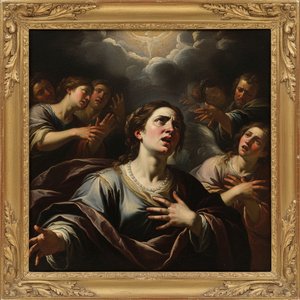
Chiaroscuro and Soul: A Definitive Guide to the Drama and Emotion of Italian Baroque Masterpieces
Embark on a sophisticated journey through Italian Baroque art. Discover the dramatic interplay of light and emotion in Caravaggio’s masterpieces and explore how to bring this timeless grandeur into your collection with expert art insights.


