In echtem Maßstab anzeigen
 Versenden als Grußkarte
 Teilen
 Details anzeigen

 Herunterladen
 Ähnliche Objekte
 Röntgenaufnahme
 Diashow
 Besucherstatistiken
Zwei Studien eines Inders aus Kalkutta, Sitzend und Stehend
 Öl auf Leinwand
- Wandkunst
- Romanticism
 1824
1824- Renaissance
 51.0 x 60.0 cm
 Mehr anzeigen
Handgefertigte Ölreproduktion
Handgemaltes Ölgemälde auf Leinwand in Ihrer Wunschgröße und mit Rahmen, auf Bestellung von unseren Künstlern angefertigt. ( Zum Druck wechseln Zum digitalen Bild wechseln)




P118B $10

P118H $10

P118W $10

P438Z $10

P508JH $12

P508YH $12

P805H $10

P805Z $10

P919BZ $10

P919G $10

P919XJ $10

P959ZH $10

P968JZ $12

W106C $8

W218G $10

W218JH $8

W218Y $10

W307PJ $10

W316G $10

W316PJ $8

W316Y $10

W398PJ $8

W4111J $10

W500HY $15

W500JH $15

W692G $12

W849H $8

W940BG $15

W953PJ $8




Wählen Sie aus unseren vordefinierten Formaten, die den ursprünglichen Proportionen des Kunstwerks entsprechen.

Sie können Ihre eigenen Maße eingeben, um einen bestimmten Rahmen oder Platz auszufüllen. Wenn die gewählte Größe nicht den Proportionen des Originalbildes entspricht, werden wir das Kunstwerk entweder beschneiden oder das Gemälde durch zusätzliche, handgemalte Elemente erweitern. Ein digitales Mockup wird Ihnen zur Genehmigung zugesandt, bevor die Produktion beginnt.
Bitte beachten Sie, dass die Bildschirmvorschau nicht die tatsächliche Beschneidung oder Erweiterung widerspiegelt. Nur das Mockup zeigt die endgültige Komposition exakt an.
Obwohl Sondermaße verfügbar sind, empfehlen wir, eine Größe aus der vordefinierten Liste zu wählen, um die ursprünglichen Proportionen beizubehalten.
Nach der Bestellung wird das OriginalUniqueArt.com-Team dem Kunden Anweisungen per E-Mail zusenden und eine Mockup-Vorschau bereitstellen.
Weltweiter Versand () in nur 3 bis 4 Wochen statt der üblichen 5 Wochen. (19 September). Keine Kompromisse bei der Qualität.

Kostenloser weltweiter Expressversand

Hochwertige Leinenleinwand

Vollständiger Versicherungsschutz beim Versand

Zollgebühren-Rückerstattungsgarantie

Garantie für exakte Farbtreue

100-tägiges Rückgaberecht (nur bei Mängeln)

100% Geld-zurück-Garantie

Angebot für Mengenrabatt
 Die Glasoption ist nur für Größen unter 110 cm verfügbar.

Zwei Studien eines Inders aus Kalkutta, Sitzend und Stehend
Reproduktionsmedium
Format der Reproduktion
-


Gesamtpreis
$ 300
Eugène Delacroix’s Captivating Study of Indian Figures
Eugène Delacroix, a pivotal figure in French Romanticism, possessed an extraordinary ability to transport viewers to distant lands and immerse them in the vibrant cultures he encountered. Among his most compelling works is “Two Studies of an Indian from Calcutta, Seated and Standing,” created in 1824 – a piece that transcends mere portraiture and becomes a profound meditation on identity, observation, and the burgeoning fascination with the East within European artistic circles. This painting isn’t simply a depiction of two men; it's a carefully constructed tableau brimming with symbolic weight and reflecting Delacroix’s deep engagement with both the exotic allure and the complexities of intercultural exchange.
Delacroix’s artistic journey was profoundly shaped by the legacies of Peter Paul Rubens, whose dynamic compositions and masterful use of color, and the Venetian Renaissance, celebrated for its rich textures and theatrical lighting. These influences are immediately apparent in “Two Studies,” where a remarkable attention to detail is lavished upon the subjects' attire – intricate patterns adorning their turbans and robes, meticulously rendered with an almost obsessive precision. The fabrics shimmer with implied luxury, hinting at the wealth and status of these individuals within their Indian context. The artist’s deliberate choice of color—the fiery reds and yellows juxtaposed against the cool whites—creates a visual harmony that is both striking and deeply evocative.
Composition and the Language of Gesture
The painting's composition immediately draws the eye to the two figures, set against a deliberately dark and ambiguous background. This strategic use of darkness serves not as an absence of detail, but rather as a powerful tool for emphasizing the subjects themselves. The seated man, cradling a bowl – a gesture that could represent contemplation, prayer, or perhaps even a moment of quiet reflection – exudes an aura of serenity and introspection. His gaze is directed towards the distance, inviting the viewer to share in his contemplative mood. Conversely, the standing man, adorned with a vibrant red turban and holding a cane, projects an air of authority and dignity. The cane isn’t merely a walking aid; it symbolizes power, status, and perhaps even a hint of guardedness.
The subtle differences in their postures and gestures are crucial to understanding the painting's narrative. They aren’t presented as equals, but rather as distinct individuals with unique roles within their respective worlds. The artist masterfully uses these small details to create a dynamic interplay between stillness and movement, invitation and reserve.
Symbolism and the Romantic Spirit
“Two Studies of an Indian from Calcutta” is far more than a simple portrait; it’s a rich tapestry woven with symbolic threads. The colors themselves – red, yellow, white – carry significant cultural weight within the context of India, representing auspiciousness, spirituality, and royalty respectively. The bowl held by the seated man could symbolize hospitality or offering, while the cane wielded by the standing figure speaks to social hierarchy and perhaps even a warrior’s past. The distant gaze of both men is particularly noteworthy, suggesting a profound sense of detachment from the viewer – an invitation to ponder their inner lives and contemplate the mysteries of the East.
This painting embodies the core tenets of Romanticism: a fascination with the exotic, a celebration of emotion over reason, and a willingness to explore the darker aspects of human experience. Delacroix’s work reflects the broader European trend during this period – a growing interest in distant lands and cultures, often filtered through a lens of romanticized interpretation and artistic license.
Technique and Artistic Legacy
Delacroix's masterful use of oil paint on canvas is instrumental to the painting’s impact. The artist employs a technique that allows for remarkable depth and luminosity, particularly in the rendering of the fabrics – their textures practically shimmering before the viewer’s eyes. The subtle gradations of light and shadow create a sense of three-dimensionality, making the figures appear remarkably lifelike. This attention to detail, combined with Delacroix's expressive brushstrokes, demonstrates his exceptional technical skill and his ability to capture both the physical appearance and the emotional essence of his subjects.
“Two Studies of an Indian from Calcutta” remains a testament to Delacroix’s artistic genius – a captivating example of Romantic art that continues to resonate with viewers today. For those seeking a high-quality reproduction, OriginalUniqueArt offers meticulously crafted hand-painted reproductions that faithfully capture the painting's beauty and nuance. Explore more of Delacroix’s remarkable oeuvre through our collection, including “Massakern pa Chios” and “Liberty Leading the People,” to gain a deeper appreciation for his artistic vision.
Biografie des Künstlers
Ein Pionier der Romantik: Eugène Delacroix
Eugène Delacroix gilt als eine der prägendsten Figuren der französischen Romantik und wurde von Anfang an für seine Führungsrolle innerhalb dieser künstlerischen Bewegung gefeiert. Geboren 1798 in Chantonnay, Frankreich, fand er seinen künstlerischen Weg durch die Beschäftigung mit den Werken großer Meister wie Rubens und den Malern der venezianischen Renaissance – wobei Farbe und Bewegung eine zentrale Rolle spielten und Klarheit von Konturen sowie sorgfältige Modellierung zugunsten eines dynamischen Ausdrucks vernachlässigt wurden. Diese Philosophie prägte sein gesamtes künstlerisches Leben und beeinflusste nachfolgende Generationen von Künstlern nachhaltig.- Frühe Jahre und Ausbildung: Delacroix erhielt eine umfassende künstlerische Ausbildung am École Royale Supérieure des Beaux-Arts in Paris, wo er sich intensiv mit klassischen Formen beschäftigte und dennoch einen eigenen Stil entwickelte, der sich durch eine besondere Sensibilität für Farbe und Bewegung auszeichnete.
- Die ersten Erfolge: Bereits früh beeindruckte Delacroix sein Publikum mit seinen Gemälden und erhielt zahlreiche Aufträge von wohlhabenden Mäzenen und Mitgliedern des französischen Königshauses. Besonders bekannt wurde sein Werk „Die Barque von Dante“, das eine außergewöhnliche technische Virtuosität und eine tiefgründige künstlerische Vision demonstriert.
Der Einfluss der Romantik und die Suche nach neuen Ausdrucksformen
Delacroix war tief beeindruckt von den Ideen der französischen Romantik, insbesondere von deren Betonung von Gefühl und Leidenschaft sowie ihrer Ablehnung der klassischen Regeln und Konventionen. Er sah sich als Aufgabe, neue Wege zu beschreiten und eine künstlerische Sprache zu entwickeln, die die komplexen Emotionen und Erfahrungen des menschlichen Lebens einfangen konnte. Diese Suche nach neuen Ausdrucksformen fand ihren Ausgang in einer umfassenden Beschäftigung mit historischen Ereignissen und literarischen Werken sowie in einer ersten Reise nach Nordafrika.Nordafrika und die Geburt eines einzigartigen Stil
Die Reise nach Nordafrika im Jahr 1830 markierte einen entscheidenden Wendepunkt für Delacroixs künstlerische Entwicklung. Er ließ sich von der exotischen Landschaft und Kultur dieser Region inspirieren und schuf beeindruckende Gemälde wie „Arabische Pferde im Kampf“ und „Der Tod des Sardanapalus“, die durch ihre lebendige Farbgebung, dynamische Komposition und dramatische Darstellung außergewöhnlich sind. Diese Werke gelten als Schlüssel zum Verständnis seines unverwechselbaren künstlerischen Stils und verkörpern die Essenz der romantischen Kunst.Die Meisterwerke und ihr Vermächtnis
Delacroix hinterließ ein beeindruckendes Oeuvre, das bis heute weltweit Anerkennung findet. Zu seinen berühmtesten Gemälden zählen „Freiheit führt das Volk an“, eine monumentale Darstellung der Julirevolution von 1830, und „Die Schlacht von Zaragoza“, die eine außergewöhnliche historische Dokumentation darstellt. Seine Werke haben einen tiefgreifenden Einfluss auf die Entwicklung der französischen Kunst des 19. Jahrhunderts ausgeübt und inspirierten zahlreiche Künstler nachfolgender Generationen.Ein Erbe für die Zukunft
Eugène Delacroix gilt als einer der bedeutendsten Künstler seiner Zeit und sein Werk wird bis heute intensiv studiert und gefeiert. Seine künstlerische Vision und sein außergewöhnlicher Stil haben einen nachhaltigen Eindruck auf die Kunstgeschichte hinterlassen und werden weiterhin von Künstlern weltweit bewundert und nachgeahmt.
Eugène Delacroix
1798 - 1863 , Frankreich
Eckdaten zum Künstler
- Artistic Movement Or Style: Romantik
- Artists Or Movements Influenced By This Artist:
- Impressionismus
- Postimpressionismus
- Artists Who Influenced This Artist:
- Rubens
- Venezianische Renaissance
- Date Of Birth: 26. April 1798
- Date Of Death: 13. August 1863
- Full Name: Eugène Delacroix
- Nationality: Französisch
- Notable Artworks:
- Liberty Leading the People
- Der Tod des Sardanapales
- Arabische Pferde im Kampf
- Place Of Birth: Chantonnay, Frankreich
Verwandte Artikel
Romantik in der Kunst: Die 10 Meisterwerke, die eine Epoche prägten |
Entdecken Sie die 10 Meisterwerke der Romantik! Von Caspar David Friedrich bis Delacroix – erleben Sie Gefühl, Landschaft & Historie. Hochwertige Kunst Reproduktionen auf . Jetzt entdecken!

Eugène Delacroix: Leidenschaft, Politik und malerische Innovation im Sturm der Romantik
Entdecken Sie das Leben und Werk von Eugène Delacroix – einem Pionier der Romantik! Analysen seiner ikonischen Gemälde, Einflüsse & sein Vermächtnis für die moderne Kunst. Expertenwissen auf OriginalUniqueArt.
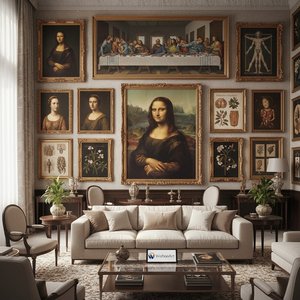
Leonardo da Vinci: Die 25 Meisterwerke für Ihr Zuhause | OriginalUniqueArt
Entdecken Sie die 25 Meisterwerke von Leonardo da Vinci! Erfahren Sie faszinierende Geschichten hinter Gemälden wie der Mona Lisa & Das letzte Abendmahl. Hochwertige Reproduktionen für Ihr Zuhause – jetzt bei OriginalUniqueArt entdecken!

The Enduring Legacy of Formal Portraiture: Power, Identity & Artistic Exploration
Explore the rich history of formal portraiture & its enduring power to capture identity and shape perception. Discover investment-worthy artworks, expert appraisals, and custom reproduction services at OriginalUniqueArt.

Raja Ravi Varma: Bridging Tradition & Modernity in 19th-Century Indian Art
Explore the life & art of Raja Ravi Varma, a pioneer who fused European techniques with Indian iconography. Discover his iconic paintings, lasting legacy, and influence on modern Indian art at OriginalUniqueArt.