
 Vorschau anzeigen
 Versenden
 Teilen
 Details anzeigen

 Herunterladen
 Ähnliche Objekte
 Röntgenaufnahme
 Diashow
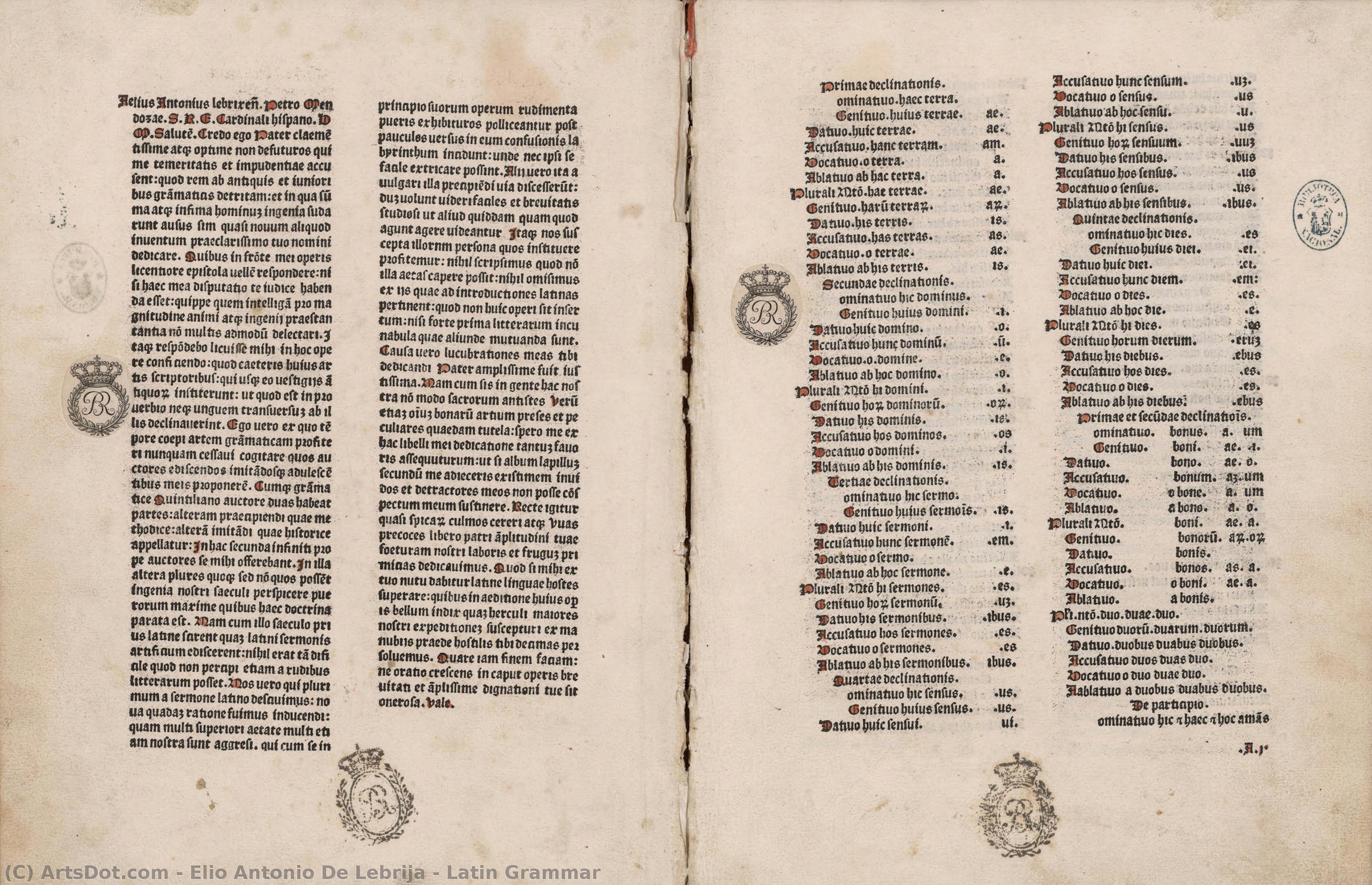
Latin Grammar

 Weiterlesen
Erwerben Sie ein hochauflösendes, optimiertes digitales Bild, das der Online-Vorschau weit überlegen ist.
Jede Datei wird von unseren hauseigenen Spezialisten mit modernsten Werkzeugen und fachmännischer manueller Retusche sorgfältig vorbereitet. Wir stellen sicher, dass jedes Bild eine außergewöhnliche Klarheit, präzise Farbgenauigkeit und feinste Details aufweist.
Die endgültige Datei wird innerhalb von 72 Stunden per E-Mail zugestellt und ist für den sofortigen Einsatz in professionellen, redaktionellen und Druckumgebungen optimiert. Es handelt sich um dieselbe Qualität, der führende Designstudios, Verlage und Galerien vertrauen.
Digitales Bild
Laden Sie eine hochauflösende Datei für die persönliche Präsentation, den Druck und kreative Projekte herunter. ( Druck bestellen Handgemalte Reproduktion bestellen)
In jeder Bestellung digitaler Bilder enthalten
Professionelle digitale Bereitstellung, garantiert
Wenn Sie sich für OriginalUniqueArt.com entscheiden, erhalten Sie nicht nur ein Bild – Sie erhalten ein professionell aufbereitetes digitales Kunstwerk, das mit höchster Präzision erstellt und durch eine Zufriedenheitsgarantie abgesichert wird. Hier ist alles, was automatisch mit Ihrer Bestellung geliefert wird:

Schnelle E-Mail-Zustellung
Ihre hochauflösende digitale Bilddatei wird Ihnen innerhalb von 72 Stunden nach der Bestellung per E-Mail zugestellt – bereit zur sofortigen Verwendung.

KI-optimierte digitale Datei
Ihre Kunstwerke werden professionell mithilfe fortschrittlicher KI-Tools und manueller Bearbeitung optimiert, um maximale Detailtreue, Klarheit und Farbgenauigkeit zu gewährleisten.

Lebenslanger kostenloser Neudruckservice
Datei versehentlich gelöscht oder verloren? Keine Sorge – wir senden sie Ihnen jederzeit kostenlos erneut zu.

Keine Einfuhrgebühren – jemals
Genießen Sie Ihr Kunstwerk sofort ohne Zollgebühren, Einfuhrabgaben oder Versandkosten – digitale Downloads sind immer steuerfrei.

Garantierte Farbtreue
Wir garantieren, dass Ihr digitales Bild mithilfe professioneller Werkzeuge und Farbmanagement die Originalfarben so präzise wie möglich wiedergibt.

60-Tage-Zufriedenheitsgarantie
Sollten Sie mit Ihrem digitalen Bild nicht zufrieden sein, werden wir es überarbeiten oder Ihnen innerhalb von 60 Tagen 100% erstatten – ohne Wenn und Aber.

100% Geld-zurück-Garantie
Nicht zufrieden? Erhalten Sie innerhalb von 60 Tagen nach Erhalt Ihrer digitalen Datei eine vollständige Rückerstattung – ohne Angabe von Gründen.

Rabatte bei Großbestellungen
3 Bilder kaufen, 10% sparen – 5 Bilder kaufen, 15% sparen – Ab 10 Bildern 20% sparen. Ideal für kreative Projekte, Galerien und Agenturen.
Biografie des Künstlers
Elio Antonio de Nebrija (1444–1522): Pioneer of Spanish Linguistics
Elio Antonio de Nebrija stands as a towering figure in the annals of Spanish intellectual history—a man whose singular contribution irrevocably shaped the trajectory of linguistic scholarship and profoundly influenced Spain’s cultural identity. Born in Lebrija, Andalusia, around 1444, his life unfolded during a period of momentous upheaval: the culmination of centuries-long Reconquista struggles and the dawn of a new era under the burgeoning Catholic Monarchs—a context that instilled within him an unwavering conviction that language possessed the transformative power to forge unity and elevate intellectual discourse. Far from merely observing linguistic evolution; Nebrija actively championed its standardization, recognizing it as the bedrock upon which a cohesive national spirit could flourish. His formative years were spent in Salamanca, where he immersed himself in the classical traditions of Iberian scholarship—a crucible of humanist thought that instilled within him a critical perspective and an ardent devotion to unlocking the wisdom enshrined in antiquity. This immersion proved pivotal when he ventured to Bologna around 1474, securing access to the University’s renowned Latin curriculum and encountering the vibrant intellectual currents of the Italian Renaissance. The encounter ignited his scholarly imagination, propelling him toward a deeper understanding of humanist principles—a pursuit that would ultimately culminate in his most enduring legacy: the *Gramática de la lengua castellana*.The Birth of Castilian Grammar
The year 1492 marks an epochal moment not only for European exploration but also for Spain itself—the triumphant culmination of centuries-long Reconquista battles and the commencement of a transformative era under Ferdinand and Isabella. Amidst this dynamic landscape, Nebrija undertook a monumental task: to codify and elevate Castilian Spanish from its vernacular status into a vehicle of national identity and scholarly prestige. This wasn’t simply an academic endeavor; it was a deliberate act of cultural assertion—a conscious effort to solidify the language's role as the cornerstone of Spain’s intellectual and social cohesion. Nebrija grasped intuitively that a unified linguistic framework would bolster morale, foster civic engagement, and propel Spain toward greater prominence on the European stage. His magnum opus, published in 1492, stands as the inaugural grammar dedicated to a Romance language—a feat unparalleled in its time and one that irrevocably altered the landscape of linguistic scholarship across Europe. Unlike preceding treatises which often relied upon fragmented observations or anecdotal evidence, Nebrija approached his task with meticulous rigor—analyzing existing texts, formulating explicit rules governing pronunciation and morphology, and establishing paradigms for grammatical conjugation. He meticulously documented the intricacies of Castilian speech, recognizing that its expressive potential could only be fully realized when governed by consistent standards. The *Gramática* wasn’t merely a descriptive account; it was an instrument of cultural reform—a subtle yet potent catalyst for shaping Spain’s intellectual and literary traditions.Beyond Grammar: Lexicography and Pedagogical Innovation
Nebrija's scholarly pursuits extended far beyond the confines of grammatical analysis. Recognizing the importance of comprehensive linguistic knowledge, he embarked upon a ambitious lexicographical project—the *Vocabulario en Romance y Latín* (Vocabulary in Romance and Latin)—a pioneering effort to compile a bilingual dictionary that bridged the gap between Latin scholarship and vernacular usage. This undertaking demanded painstaking research into both classical texts and contemporary Spanish parlance—a testament to Nebrija’s unwavering commitment to advancing linguistic understanding. The resulting lexicon served as an invaluable resource for scholars, translators, and educators alike—facilitating communication across languages and fostering a deeper appreciation for the richness of Iberian culture. Furthermore, Nebrija championed pedagogical innovation—developing *Introductiones Latinae*, a groundbreaking textbook designed to impart Latin proficiency to aspiring students. Unlike traditional methods that often prioritized rote memorization, Nebrija’s approach emphasized comprehension and active engagement—recognizing that true mastery demanded more than mere recitation; it necessitated an intuitive grasp of grammatical principles and their application in practical contexts. *Introductiones Latinae* quickly gained widespread acclaim throughout Europe—establishing Nebrija as a visionary educator who anticipated the burgeoning interest in humanist learning. His pedagogical legacy continues to resonate today, underscoring his conviction that language education should cultivate not only linguistic skills but also intellectual curiosity and critical thinking. ## Influence and Legacy Nebrija’s impact on Spain’s intellectual landscape extended far beyond his immediate achievements—solidifying his position as a foundational figure in the history of European scholarship. His meticulous grammatical analysis served as a model for subsequent linguists—inspiring them to adopt rigorous methodologies and prioritize clarity and precision in their formulations. Moreover, his lexicographical work fostered a more nuanced understanding of linguistic diversity—demonstrating that effective communication required sensitivity to both formal conventions and colloquial expressions. As Walter Pater eloquently observed, Nebrija “was the first painter since antiquity to treat such mythological themes on a large scale,” reflecting the broader humanist spirit that permeated Renaissance Spain. His enduring legacy resides not merely in his scholarly accomplishments but also in his unwavering belief that language—understood as both instrument of thought and vehicle of cultural identity—holds paramount importance for shaping human experience. Elio Antonio de Nebrija’s contribution to Spanish linguistics remains unparalleled, securing his place as a cornerstone of Iberian intellectual heritage and an inspiration for generations of scholars striving to illuminate the complexities of human communication.
elio antonio de lebrija
1444 - 1522 , Spanien
Kurzinfos
- Artistic Movement Or Style: Humanismus
- Artists Or Movements Influenced By This Artist: ['Spanische Sprache']
- Artists Who Influenced This Artist: ['Klassische Literatur']
- Date Of Birth: 1444
- Date Of Death: 1522
- Full Name: Elio Antonio de Nebrija
- Nationality: Spanier
- Notable Artworks:
- Gramática de la lengua castellana
- Vocabulario en Romance y Latín
- Introductiones Latinae
- Place Of Birth: Lebrija, Spanien

