Vorschau anzeigen
 Versenden
 Teilen
 Details anzeigen

 Herunterladen
 Ähnliche Objekte
 Röntgenaufnahme
 Diashow
Proun


 Weiterlesen
Handgefertigte Ölreproduktion
Handgemaltes Ölgemälde auf Leinwand in Ihrer Wunschgröße und mit Rahmen, auf Bestellung von unseren Künstlern angefertigt. ( Druck bestellen Bild kaufen)




P118B $10

P118H $10

P118W $10

P438Z $10

P508JH $12

P508YH $12

P805H $10

P805Z $10

P919BZ $10

P919G $10

P919XJ $10

P959ZH $10

P968JZ $12

W106C $8

W218G $10

W218JH $8

W218Y $10

W307PJ $10

W316G $10

W316PJ $8

W316Y $10

W398PJ $8

W4111J $10

W500HY $15

W500JH $15

W692G $12

W849H $8

W940BG $15

W953PJ $8




Wählen Sie aus unseren vordefinierten Formaten, die den ursprünglichen Proportionen des Kunstwerks entsprechen.

Sie können Ihre eigenen Maße eingeben, um einen bestimmten Rahmen oder Platz auszufüllen. Wenn die gewählte Größe nicht den Proportionen des Originalbildes entspricht, werden wir das Kunstwerk entweder beschneiden oder das Gemälde durch zusätzliche, handgemalte Elemente erweitern. Ein digitales Mockup wird Ihnen zur Genehmigung zugesandt, bevor die Produktion beginnt.
Bitte beachten Sie, dass die Bildschirmvorschau nicht die tatsächliche Beschneidung oder Erweiterung widerspiegelt. Nur das Mockup zeigt die endgültige Komposition exakt an.
Obwohl Sondermaße verfügbar sind, empfehlen wir, eine Größe aus der vordefinierten Liste zu wählen, um die ursprünglichen Proportionen beizubehalten.
Nach der Bestellung wird das OriginalUniqueArt.com-Team dem Kunden Anweisungen per E-Mail zusenden und eine Mockup-Vorschau bereitstellen.
Weltweiter Versand () in nur 3 bis 4 Wochen statt der üblichen 5 Wochen. (17 August). Keine Kompromisse bei der Qualität.

Kostenloser weltweiter Expressversand

Hochwertige Leinenleinwand

Umfassender Versicherungsschutz beim Versand

Zollgebühren-Rückerstattungsgarantie

Garantie für exakte Farbtreue

60 Tage Rückgaberecht (nur bei Mängeln)

100% Geld-zurück-Garantie

Mengenrabatt verfügbar
 Die Glasoption ist nur für Größen unter 110 cm verfügbar.

Proun
Art der Reproduktion
Format der Reproduktion
-


Gesamtpreis
$ 300
Beschreibung des Kunstwerks
El Lissitzky’s Proun: A Revolutionary Geometry of Space
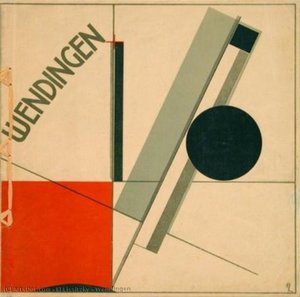
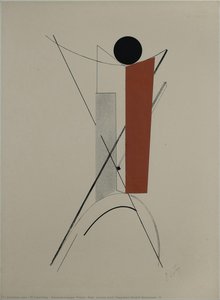
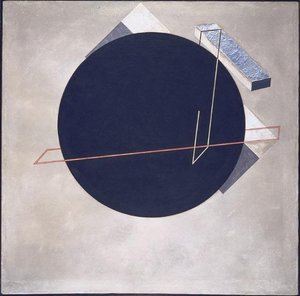
The photograph presented here offers a glimpse into “Proun 19D,” a seminal work by El Lissitzky, created in 1923 and embodying the radical principles of Constructivism. More than simply a painting, Proun (derived from the Czech word for ‘pronunciation’) represented Lissitzky’s ambitious attempt to redefine art's relationship with space – to move it beyond mere representation and into the realm of pure form and experience. This piece, executed in stark black and white, showcases his signature geometric abstraction: a carefully orchestrated arrangement of circles, crosses (the “X”), and lines that seem to defy conventional perspective. The composition isn’t about depicting an object; instead, it aims to reveal the underlying structure of space itself, suggesting a dynamic interplay between positive and negative forms.
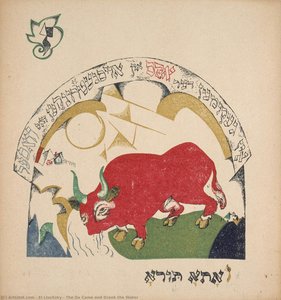
Lissitzky's journey to this groundbreaking style was deeply rooted in his early life and artistic training. Born Lazar Markovich Lissitzky in 1890 in Pochinki, Russia, he initially pursued architecture and engineering, disciplines that were frustratingly closed off to him due to restrictions placed on Jewish students. This experience fueled a desire to create art that transcended social barriers and actively shaped the world around it. His early illustrations for Yiddish children’s books – works like ‘Chad Gadya’ – demonstrated an innate understanding of narrative and visual storytelling, foreshadowing his later explorations into abstract forms. His time in Berlin and Darmstadt exposed him to European avant-garde movements, particularly Cubism and Futurism, which profoundly influenced his thinking about space and form. However, it was upon returning to Russia that Lissitzky truly developed his unique vision, culminating in the creation of Proun.
The Principles of Constructivism and the Birth of Proun
Proun emerged from the broader context of Constructivism, a Russian artistic movement advocating for art’s role in building a new socialist society. Constructivists believed that art should be functional, accessible, and directly contribute to practical design – influencing architecture, furniture, typography, and even propaganda. Lissitzky embraced this philosophy wholeheartedly, rejecting traditional notions of illusionistic painting and instead focusing on the inherent properties of geometric forms. He theorized that a “Proun” was not merely a flat image but a three-dimensional projection of space, a ‘stage’ upon which the world could be reconfigured. The X shape, for instance, represented the intersection of two planes, while circles symbolized the sun and the cosmos – fundamental elements in his vision of a new spatial order.
Crucially, Lissitzky developed a system of “Proun stages,” believing that each work evolved through a series of transformations. “Proun 19D” is considered an early example, demonstrating the gradual shift from representational imagery to pure abstraction. He meticulously documented these changes in his diaries and drawings, creating a visual record of his artistic process – a testament to his belief in art as a dynamic, evolving entity.
Symbolism and Emotional Impact
While seemingly austere, “Proun 19D” is rich with symbolic meaning. The geometric forms aren’t arbitrary; they represent fundamental forces and relationships within the universe. The circle, often associated with wholeness and unity, suggests a harmonious balance between opposing elements. The X, representing intersection and connection, symbolizes the dynamic interaction of space and form. Lissitzky's work wasn't simply about aesthetics; it was an attempt to create a visual language that could communicate complex ideas about space, time, and social transformation.
The stark black and white palette further amplifies the piece’s impact, stripping away distractions and focusing attention on the essential forms. It evokes a sense of clarity, precision, and intellectual rigor – reflecting Lissitzky's commitment to rationalism and his belief in art as a tool for social progress. “Proun 19D” remains a powerful example of how abstract art can be both intellectually stimulating and emotionally resonant, inviting viewers to contemplate the fundamental nature of reality itself.
OriginalUniqueArt Reproductions: Bringing Proun to Life
OriginalUniqueArt is proud to offer meticulously crafted hand-painted reproductions of El Lissitzky’s “Proun 19D.” Our artists utilize traditional techniques and archival-quality materials to faithfully recreate the artwork's intricate details and subtle nuances. Whether you are an art collector, interior designer, or simply a lover of modern art, our reproductions provide a stunning way to experience the power and beauty of this iconic work. Explore our selection of sizes and framing options to find the perfect addition to your home or office – a tangible connection to one of the 20th century’s most visionary artists.
Über den Künstler
frühes Leben und Ausbildung
El Lissitzky, ein renommierter russischer Künstler, Designer, Fotograf, Typograf, Polemik und Architekt, wurde am 23. November 1890 in Pochinok, Russland, geboren. Sein frühes Leben war geprägt von einem angeborenen Interesse am Zeichnen, das ihn dazu veranlasste, Unterricht bei Yehuda Pen, einem lokalen jüdischen Künstler, im Alter von 13 Jahren zu erhalten.Karriere und Einflüsse
Lissitzkys Karriere war durch seine Zusammenarbeit mit Kazimierz Malevich bei der Entwicklung der Suprematistik gekennzeichnet und beeinflusste maßgeblich die Bauhaus- und Konstruktivismusbewegungen. Seine Werke, die über verschiedene Medien erstreckten, spielten eine entscheidende Rolle bei der Gestaltung des Grafikdesigns im 20. Jahrhundert.- Wichtige Beiträge:
- Entwicklung der suprematistischen Kunstgruppe Unovis mit Kazimierz Malevich
- Erstellung der Reihe "Proun", eine Variante der suprematistischen Serie
- Dienst als russischer Kulturbotschafter in Weimar, Deutschland, und Einfluss auf wichtige Persönlichkeiten des Bauhaus- und De Stijl-Bewegung
- Innovationen:
- Typografie
- Ausstellungsdesign
- Fotomontage
- Buchgestaltung
Bekannte Werke und Vermächtnis
Zu Lissitzkys bekanntesten Werken gehören:- Der Baumeister (1924), ein Fotomontage-Selbstporträt mit wiederkehrenden Themen wie der Hand Gottes und einer Verknüpfung seines jüdischen Erbes mit zeitgenössischen künstlerischen Bewegungen.
- Ein sowjetisches Propaganda-Plakat (1941), eines seiner letzten Werke, das die Bevölkerung aufforderte, mehr Panzer für den Kampf gegen Nazi-Deutschland zu bauen.
Museen und Sammlungen
Lissitzkys Werk befindet sich in verschiedenen Museen, darunter:- Taganrogs Kunstmuseum, Russland /de/art/show/art-d3bb5m-de/
- Novokuznetsks Kunstmuseum, Russland /de/art/show/art-d3akex-de/
Stiftung und Werkverzeichnis
Im Jahr 2014 wurde die Lissitzky-Stiftung in Zusammenarbeit mit dem Van Abbemuseum und führenden internationalen Wissenschaftlern gegründet, um das Erbe des Künstlers zu bewahren und ein Werkverzeichnis seines Oeuvres vorzubereiten.- Für weitere Informationen über El Lissitzky besuchen Sie bitte: https://OriginalUniqueArt.com/@/el-lissitzky
- Erkunden Sie die in Taganrogs Kunstmuseum ausgestellten Werke: /de/art/show/to-explore-the-artworks-exhibited-in-taganrog-art-museum/
Referenzen:
- https://en.wikipedia.org/wiki/el_lissitzky
- https://OriginalUniqueArt.com/@/el-lissitzky

El Lissitzky
1890 - 1941 , Russland
Kurzinfos
- Artistic Movement Or Style:
- Suprematismus
- Konstruktivismus
- Artists Or Movements Influenced By This Artist:
- Bauhaus
- De Stijl
- Artists Who Influenced This Artist: ['Kazimir Malevich']
- Date Of Birth: 23. November 1890
- Date Of Death: 1941
- Full Name: El Lissitzky
- Nationality: Russisch/Jüdisch
- Notable Artworks:
- Der Baumeister (1924)
- Proun-Serie
- Sowjetisches Propaganda-Plakat
- Place Of Birth (City And Country): Pochinki, Russland
Ähnliche Artikel

El Greco: Die 25 Meisterwerke – Kunst für Ihr Zuhause | OriginalUniqueArt
Entdecken Sie die 25 bedeutendsten Meisterwerke von El Greco! Erleben Sie die spirituelle Tiefe und den dramatischen Stil des griechischen Malers. Hochwertige Kunstdrucke & Inspiration für Ihr Zuhause auf OriginalUniqueArt.com.

Geometrische Abstraktion: Die 10 Meisterwerke, die Kunstgeschichte prägten | OriginalUniqueArt.com
Entdecken Sie die 10 Meisterwerke der geometrischen Abstraktion! Von Kandinsky bis Mondrian – erleben Sie die Geschichte, Farben & Formen dieser revolutionären Kunstrichtung. Hochwertige Kunstreproduktionen auf OriginalUniqueArt.com

Beyond Form & Color: Geometric Abstraction's Evolution in 20th/21st Century Art
Explore the evolution of geometric abstraction from Cubism to contemporary art. Discover key artists like Malevich & Mondrian, investment insights, and expert collecting advice at OriginalUniqueArt.
Kazimir Malevich: Die 25 Meisterwerke des Suprematismus für Ihr Zuhause | OriginalUniqueArt
Entdecken Sie die 25 Meisterwerke von Kazimir Malevich! Tauchen Sie ein in die Welt des Suprematismus, abstrakter Kunst & geometrischer Formen. Hochwertige Kunstdrucke und Reproduktionen auf OriginalUniqueArt.com – für Ihr Zuhause.
Geometric Design in Art: A Historical Survey & Contemporary Appeal for Collectors
Explore the enduring legacy of geometric abstraction! Discover key artists, historical movements & investment insights for discerning art collectors. Expert guidance from OriginalUniqueArt.