In echtem Maßstab anzeigen
 Versenden als Grußkarte
 Teilen
 Details anzeigen
 Leitfaden öffnen

 Herunterladen
 Ähnliche Objekte
 Röntgenaufnahme
 Diashow
 Besucherstatistiken
Saint Andrew
 Acryl auf Leinwand
- Wandkunst
- Baroque
 1610
1610- Renaissance
 110.0 x 64.0 cm
 Metropolitan Museum of Art
 Mehr anzeigen
Giclée / Kunstdruck
Giclée- oder Leinwanddruck in Museumsqualität mit schneller Produktion und flexiblen Veredelungsoptionen. ( Handgemalte Reproduktion kaufen Zum digitalen Bild wechseln)




P118B €10

P118H €10

P118W €10

P438Z €10

P508JH €12

P508YH €12

P805H €10

P805Z €10

P919BZ €10

P919G €10

P919XJ €10

P959ZH €10

P968JZ €12

W106C €8

W218G €10

W218JH €8

W218Y €10

W307PJ €10

W316G €10

W316PJ €8

W316Y €10

W398PJ €8

W4111J €10

W500HY €15

W500JH €15

W692G €12

W849H €8

W940BG €15

W953PJ €8




Wählen Sie aus unseren vordefinierten Formaten, die den ursprünglichen Proportionen des Kunstwerks entsprechen.

Geben Sie die Breite und die Höhe an, die Sie benötigen, damit der Druck perfekt in Ihren Rahmen oder an Ihre Wand passt. Ein Druck kann nur beschnitten werden und niemals größer als das Originalbild gemacht werden; daher verliert ein Format mit einer anderen Proportion einen Teil des Bildes. Wir senden Ihnen ein digitales Mockup zur Freigabe, bevor wir den Druck ausführen. Das auf dieser Seite gezeigte Bild zeigt nicht den tatsächlichen Beschnitt – dies ist nur im Mockup ersichtlich.
Weltweiter Versand () innerhalb von 2 Wochen statt der üblichen 4/5 Wochen. (17 Oktober)

Kostenloser weltweiter Expressversand

Hochwertige Leinenleinwand

Vollständiger Versicherungsschutz beim Versand

Zollgebühren-Rückerstattungsgarantie

Garantie für exakte Farbtreue

100-tägiges Rückgaberecht (nur bei Mängeln)

100% Geld-zurück-Garantie

Angebot für Mengenrabatt
 Die Glasoption ist nur für Größen unter 110 cm verfügbar.

Saint Andrew
Giclée / Kunstdruck
Format der Reproduktion
-


Gesamtpreis
€ 70
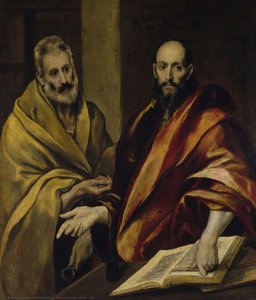
Saint Andrew: A Byzantine Echo in Toledo’s Light
Saint Andrew is more than just an apostle; he embodies a profound spiritual quest encapsulated within Doménikos Theotokopoulos’s (El Greco) masterful depiction. Completed around 1610, this painting residing at The Metropolitan Museum of Art transcends mere representation, offering a glimpse into the artistic sensibilities of its time and resonating with enduring themes of faith and sacrifice. It's a remarkable workshop replica of Christ’s apostle Andrew, reflecting El Greco’s distinctive style—a fusion of Byzantine solemnity and Western innovation—that continues to captivate audiences centuries later.The Painting: Composition and Technique
Measuring 110 x 64 cm, the canvas is dominated by Saint Andrew, positioned centrally against a backdrop of turbulent clouds rendered in luminous ochres and blues. El Greco’s signature technique – elongated figures achieved through meticulous anatomical distortion—is evident throughout the composition. The artist skillfully employs sfumato, blurring contours to create an ethereal atmosphere that enhances the saint's contemplative stance. Notice the painstaking detail invested in Andrew’s drapery, meticulously rendered with subtle folds and textures, mirroring the Byzantine tradition of portraying religious subjects with unwavering realism. The muted palette contributes to a sense of solemn grandeur, emphasizing the spiritual significance of the scene.Historical Context: Venetian Influence and Artistic Dialogue
This painting stands as a testament to El Greco’s engagement with artistic currents circulating during his lifetime. While rooted in Byzantine iconography—particularly evident in the stylized depiction of Saint Andrew's face—the artwork demonstrates a conscious dialogue with Venetian Mannerism, characterized by dramatic lighting and expressive gestures. The influence of Venetian painters like Titian is palpable in the luminous quality of the clouds and the subtle dynamism conveyed through Andrew’s posture. Furthermore, it’s important to consider El Greco’s connection to Luis Tristán de Escamilla and Juan de las Roelas—artists who similarly explored the boundaries between Mannerism and Baroque styles—creating a vibrant artistic ecosystem within Toledo.Symbolism: The Cross as Emblem of Sacrifice
The central motif – Saint Andrew holding two crosses – speaks volumes about Christian symbolism. The X-shaped cross, representing Christ’s crucifixion and symbolizing redemption, is elevated to prominence, reflecting the apostle's unwavering devotion to his faith. El Greco’s masterful portrayal captures not merely the physical form of the cross but also its spiritual essence—a visual embodiment of sacrifice and divine grace. This gesture underscores Andrew’s role as a martyr, highlighting the profound theological implications embedded within the artwork.Relevance in Modern Art: A Precursor to Expressionism
El Greco's stylistic innovations anticipated developments in later artistic movements, notably Expressionism and Cubism. His emotionally charged depictions of religious figures—characterized by distorted forms and intense coloration—challenged conventional aesthetic norms and paved the way for artists seeking to convey subjective experience. As Walter Liedtke eloquently noted, “El Greco’s style was met with puzzlement by his contemporaries but found appreciation by the 20th century.” Indeed, El Greco remains a pivotal figure in art history, inspiring poets and writers like Rainer Maria Rilke and Nikos Kazantzakis—artists who recognized the profound spiritual depth inherent within his oeuvre.- Artist: El Greco (Doménikos Theotokopoulos)
- Painting Title: Saint Andrew
- Museum: The Metropolitan Museum of Art (New York, United States)
- Medium: Oil On Canvas
- Date: 1610
Fragen & Antworten
In welche Phase von El Grecos Schaffen lässt sich "Saint Andrew" einordnen?
„Saint Andrew“ entstammt der Mature Period von El Greco. Diese Einordnung setzt das Werk in Bezug zur künstlerischen Entwicklung des Künstlers.
Gibt es einen Leitfaden für "Saint Andrew" von El Greco?
Der Leitfaden zu „Saint Andrew“ ist die Leitfaden-Seite des Kunstwerks – ein druckbares Infoblatt, das das Kunstwerk mit seiner Bildunterschrift, dem Urhebervermerk und einer Identifikationstabelle (Künstler, Daten, Medium, Originalgröße, Sammlung) zeigt.
Wie alt war El Greco, als „Saint Andrew“ im Jahr 1610 geschaffen wurde?
El Greco war 69 Jahre alt, als Saint Andrew im Jahr 1610 geschaffen wurde. Das Alter berechnet sich aus dem Geburtsjahr des Künstlers, 1541.
Biografie des Künstlers
**frühes Leben und Ausbildung**
El Greco (Doménikos Theotokopoulos), ein renommierter griechischer Maler, Bildhauer und Architekt, wurde 1541 in Kreta geboren, das damals unter venezianischer Herrschaft stand. Sein Geburtsname war Doménikos Theotokopoulos. El Grecos frühe Ausbildung als Ikonenmaler der kreter Schule, einem führenden Zentrum für byzantinische Kunst nach dem Fall des Reiches, legte den Grundstein für seine zukünftigen künstlerischen Bemühungen.**Künstlerische Entwicklung und Einflüsse**
El Gredos künstlerischer Stil wurde durch seine Reisen nach Venedig und Rom geprägt, wo er Manierismus- und Renaissance-Stile aufnahm, insbesondere von Tintoretto und Tizian beeinflusst. Seine Umsiedlung nach Toledo, Spanien, im Jahr 1577 markierte eine Periode fruchtbarer Schaffenskraft, die zu Meisterwerken wie Ansicht von Toledo und das Öffnen des fünften Siegels führte.**Bekannte Werke und Stil**
* Allegorie der Camaldulitenorden (Manierismus, Öl) – ein Zeugnis für El Gredos einzigartige Mischung aus byzantinischen Traditionen und westlichen stilistischen Elementen. * Fabel (Manierismus, Öl) – demonstriert seine Verwendung ungewöhnlicher, lebhafter Farben. * Giacomo Bosio (Manierismus, Öl) – zeigt El Gredos Meisterschaft im Manierismus-Stil.**Vermächtnis und Einfluss**
El Gredos dramatischer und expressiver Stil, der durch verlängerte Figuren und fantastische Pigmentierung gekennzeichnet ist, war eine Quelle der Inspiration für Dichter und Schriftsteller. Er gilt als Vorläufer des Expressionismus und Kubismus. Für mehr Informationen über das Leben und Werk von El Greco besuchen Sie [https://OriginalUniqueArt.com/@/el-greco-(domenikos-theotokopoulos)](https://OriginalUniqueArt.com/@/el-greco-(domenikos-theotokopoulos)).- **Betrachten Sie El Gredos Gemälde** unter [https://OriginalUniqueArt.com/@@/85fr95-el-greco-(domenikos-theotokopoulos)-allegory-of-the-camaldolite-order](https://OriginalUniqueArt.com/@@/85fr95-el-greco-(domenikos-theotokopoulos)-allegory-of-the-camaldolite-order)
- **Erfahren Sie mehr über das Leben und Werk von El Greco** unter [https://en.wikipedia.org/wiki/el_greco](https://en.wikipedia.org/wiki/el_greco)
- **Entdecken Sie das Hellenische Institut für byzantinische und post-byzantinische Studien**, das eine breite Palette von Artefakten umfasst, die das reiche künstlerische Erbe Byzants zu reflektieren, unter /de/art/show/art-d3b8bv-de/

El Greco
1541 - 1614 , Griechenland
Eckdaten zum Künstler
- Beeinflusste Künstler:
- Tintoretto
- Tizian
- Bemerkenswerte Werke:
- Grablegung des Grafen Orgaz
- Blick auf Toledo
- Öffnung des fünften Siegels
- Geburtsdatum: 1541
- Geburtsort: Kreta, Griechenland
- Künstlerische Richtung: Manierismus, Spanische Renaissance
- Nationalität: Griechisch-Spanisch
- Todatum: 1614
- Vollständiger Name: El Greco (Doménikos Theotokópoulos)
- Von Künstlern Beeinflusst: ['Byzantinische Traditionen']
Verwandte Artikel

The Enduring Legacy of Oil on Canvas: Technique, History & Aesthetic Impact
Explore the rich history & techniques of oil painting – from Renaissance masters to Impressionism. Discover pigments, layering methods, and why this timeless medium endures. Expert insights for artists & art enthusiasts.

El Greco: Die 25 Meisterwerke – Kunst für Ihr Zuhause | OriginalUniqueArt
Entdecken Sie die 25 bedeutendsten Meisterwerke von El Greco! Erleben Sie die spirituelle Tiefe und den dramatischen Stil des griechischen Malers. Hochwertige Kunstdrucke & Inspiration für Ihr Zuhause auf OriginalUniqueArt.com.
El Greco: Spiritualität, Stil und Innovation – Das Vermächtnis eines Renaissance-Meisters
Entdecken Sie das faszinierende Werk von El Greco! Erfahren Sie mehr über seine einzigartigen Stilmerkmale, den Manierismus und sein spirituelles Vermächtnis. Expertenwissen zur Renaissance-Malerei.

Öl auf Leinwand: Eine historische und technische Erkundung eines zeitlosen künstlerischen Mediums
Entdecken Sie die faszinierende Welt der Ölmalerei! Von historischen Techniken bis zur modernen Anwendung – wir bieten Expertenwissen, Restaurierungstipps und hochwertige Reproduktionen. Jetzt informieren!

The Enduring Power of Painting: A Historical & Contemporary Exploration of Form and Emotion
Explore the rich history & enduring techniques of oil painting with OriginalUniqueArt. Discover masterpieces, learn about art collecting, and find authentic handmade reproductions crafted by skilled artists.