In echtem Maßstab anzeigen
 Versenden als Grußkarte
 Teilen
 Details anzeigen
 Leitfaden öffnen

 Herunterladen
 Ähnliche Objekte
 Röntgenaufnahme
 Diashow
 Besucherstatistiken
Zwei Frauen


 Mehr anzeigen
Giclée / Kunstdruck
Giclée- oder Leinwanddruck in Museumsqualität mit schneller Produktion und flexiblen Veredelungsoptionen. ( Handgemalte Reproduktion kaufen Zum digitalen Bild wechseln)




P118B €10

P118H €10

P118W €10

P438Z €10

P508JH €12

P508YH €12

P805H €10

P805Z €10

P919BZ €10

P919G €10

P919XJ €10

P959ZH €10

P968JZ €12

W106C €8

W218G €10

W218JH €8

W218Y €10

W307PJ €10

W316G €10

W316PJ €8

W316Y €10

W398PJ €8

W4111J €10

W500HY €15

W500JH €15

W692G €12

W849H €8

W940BG €15

W953PJ €8




Wählen Sie aus unseren vordefinierten Formaten, die den ursprünglichen Proportionen des Kunstwerks entsprechen.

Geben Sie die Breite und die Höhe an, die Sie benötigen, damit der Druck perfekt in Ihren Rahmen oder an Ihre Wand passt. Ein Druck kann nur beschnitten werden und niemals größer als das Originalbild gemacht werden; daher verliert ein Format mit einer anderen Proportion einen Teil des Bildes. Wir senden Ihnen ein digitales Mockup zur Freigabe, bevor wir den Druck ausführen. Das auf dieser Seite gezeigte Bild zeigt nicht den tatsächlichen Beschnitt – dies ist nur im Mockup ersichtlich.
Weltweiter Versand () innerhalb von 2 Wochen statt der üblichen 4/5 Wochen. (22 Oktober)

Kostenloser weltweiter Expressversand

Hochwertige Leinenleinwand

Vollständiger Versicherungsschutz beim Versand

Zollgebühren-Rückerstattungsgarantie

Garantie für exakte Farbtreue

100-tägiges Rückgaberecht (nur bei Mängeln)

100% Geld-zurück-Garantie

Angebot für Mengenrabatt
 Die Glasoption ist nur für Größen unter 110 cm verfügbar.

Zwei Frauen
Giclée / Kunstdruck
Format der Reproduktion
-


Gesamtpreis
€ 70
Egon Schiele’s “Two Women”: A Study in Intimacy and Existential Angst
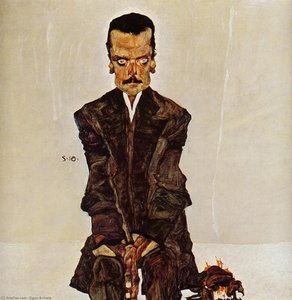
Egon Schiele’s “Two Women” (1915) is not merely a depiction of two figures; it's a raw, intensely personal exploration of human connection, vulnerability, and the unsettling undercurrents of the early 20th century. Created during a period of profound social upheaval and artistic experimentation – a time when Expressionism was pushing the boundaries of representation – this painting stands as a testament to Schiele’s unique ability to distill complex emotions onto canvas with startling directness. The work, housed in the Albertina Museum in Vienna, immediately draws the viewer into its world of shadowed intimacy, where the lines between physical closeness and psychological unease are deliberately blurred.
Schiele's signature style is powerfully evident here. Bold, almost violent brushstrokes dominate the composition, creating a sense of dynamism and urgency. The figures aren’t rendered with delicate precision; instead, they are sculpted from thick layers of paint, their forms distorted and elongated to convey an underlying tension. Notice how Schiele employs a restricted palette – primarily ochres, browns, and muted reds – contributing to the painting's somber mood. These colors don’t simply describe the scene; they actively shape our emotional response, evoking feelings of melancholy, isolation, and perhaps even a hint of foreboding.
Expressionism and the Exploration of Inner Turmoil
“Two Women” is firmly rooted in the principles of Expressionism. This movement, which flourished between the World Wars, rejected academic realism in favor of subjective emotional experience. Artists like Schiele sought to capture not just what they *saw*, but what they *felt*. The painting’s distorted forms and exaggerated features are deliberate attempts to bypass rational thought and directly access the viewer's emotions. The figures aren’t presented as idealized beauties; rather, they are portrayed with a frankness that reveals their vulnerability and inner struggles – a characteristic deeply influenced by Schiele’s own turbulent personal life.
Schiele’s preoccupation with mortality, fueled by his father’s illness and subsequent death, permeates much of his work. “Two Women” can be interpreted as an exploration of the fragility of human relationships in the face of inevitable loss. The intertwined bodies suggest a desperate attempt to find solace and connection amidst the anxieties of existence. The painting's unsettling atmosphere reflects the broader sense of uncertainty and disillusionment that characterized Europe at the time – a world grappling with rapid industrialization, political instability, and the looming threat of war.
Nudity, Intimacy, and Social Context
The depiction of nudity in “Two Women” is significant within the context of early 20th-century art. While representations of the nude had a long history in Western art, Schiele’s approach was markedly different. He wasn't interested in celebrating beauty or portraying idealized forms; instead, he used nudity to expose the raw physicality and emotional vulnerability of his subjects. The painting challenges conventional notions of modesty and sexuality, inviting viewers to confront uncomfortable truths about human desire and intimacy.
Furthermore, it’s important to consider the social context surrounding the work. Vienna at the turn of the century was a city known for its vibrant artistic scene but also for its restrictive social norms. Schiele's exploration of female sexuality, particularly within the confines of his art, was considered provocative and even scandalous by some. The painting’s subtle suggestion of illicit desire adds another layer of complexity to its interpretation, hinting at the hidden tensions beneath the surface of Viennese society.
A Reproduction for Collectors and Interior Designers
OriginalUniqueArt offers meticulously crafted hand-painted reproductions of “Two Women” by Egon Schiele. Our artists replicate Schiele’s distinctive style with remarkable accuracy, capturing not only the visual details but also the emotional intensity of the original painting. These reproductions are available in a range of sizes and materials, making them suitable for both private collectors and interior designers seeking to add a touch of Expressionist drama to their spaces. A OriginalUniqueArt reproduction allows you to experience the power and beauty of this iconic work of art in your own home, bringing Schiele’s profound insights into the human condition directly to your gaze.
Fragen & Antworten
Wie viele Personen sehen "Zwei Frauen"?
Die Seite Statistiken von "Zwei Frauen" von Egon Schiele präsentiert öffentliche Besucherstatistiken: die monatlichen Aufrufe dieses Kunstwerks, einen Vergleich mit den meistbesuchten Werken des Künstlers sowie die Herkunft der Besucher.
Wer ist der Künstler hinter "Zwei Frauen"?
"Zwei Frauen" wird Egon Schiele zugeschrieben.
Inwiefern steht das Sujet von „Zwei Frauen“ in Beziehung zu den üblichen Themen von Egon Schiele?
Unter den dokumentierten Themen von Egon Schiele – expressionist angst, sexuality, mortality, post-war trauma, social critique, exploring vulnerability, intimacy themes, schiele’s signature style – legt „Zwei Frauen“ einen ganz eigenen Fokus auf nudity, intimacy, expressionism, women, vulnerability, tension, psychological, 1915.
Biografie des Künstlers
Egon Schiele: Leben und Werk
Frühes Leben und Einflüsse
- Geboren am 12. Juni 1890 in Tulln an der Donau, Niederösterreich, erlebte Egon Schiele ein Kindheitsleben, das von künstlerischem Interesse und persönlicher Notlage geprägt war.
- Sein Vater, Adolf Schiele, war Stationsmeister und vermittelte seinem Sohn eine Faszination für Züge – ein Motiv, das sich später subtil in seiner Arbeit wiederfinden würde.
- Der frühe Tod seines Vaters durch Syphilis im Alter von 14 Jahren hatte einen tiefgreifenden Einfluss auf ihn und führte zu seiner Erziehung durch seinen Onkel mütterlicherseits, Leopold Czihaczek.
- Czihaczek bot Unterstützung, übte aber auch eine kontrollierende Einflüsse aus, die zur komplexen emotionalen Landschaft beitrugen, die in Schieles Kunstwerke reflektiert werden.
Künstlerische Reise und Entwicklung
- Schieles künstlerisches Ausbildung begann an der Kunstgewerbeschule (Kunstgewerbeschule) in Wien, aber er wechselte bald an die Akademie der bildenden Künste (Akademie der Bildenden Künste).
- Er wurde schnell disillusioned mit dem konservativen Ansatz der Akademie und fand ihn behindernd für seine ausdrucksstarke Vision. Er verließ schließlich die formale Ausbildung.
- Frühe Einflüsse waren Gustav Klimt, eine führende Figur der Wiener Secession, dessen dekorativer Stil und die Erforschung von Symbolik Schiele resonierten. Schiele entwickelte jedoch bald einen eigenständigen Stil.
- Seine frühen Werke zeigten oft verstörender Portraits und Selbstporträts, die durch verzerrte Figuren und intensive Emotionalität gekennzeichnet waren.
Wesentliche Merkmale und Themen
- Schieles Kunst ist bekannt für ihre Rohheit, Ehrlichkeit und psychologische Tiefe. Er erforschte mutig Themen wie Sexualität, Tod, Angst und Isolation.
- Sein unverwechselbarer Stil zeichnet sich durch verlängerte Figuren, verzerrte Posen und ausdrucksstarke Linien aus, die ein Gefühl von Verletzlichkeit und emotionalem Aufruhr vermitteln.
- Selbstporträts machen einen bedeutenden Teil seines Œuvres aus und bieten intime Einblicke in seine innere Welt.
- Er schuf auch zahlreiche Porträts anderer Personen, die oft mit unverblümender Realismus und psychologischem Verständnis dargestellt wurden.
- Landschaftsbildung spielte eine Rolle in seiner Arbeit und demonstrierte sein Können in Form und Farbe, obwohl sie weniger zentral war als seine figurativen Werke.
Wichtige Leistungen und Anerkennung
- Trotz Zensur und rechtlicher Herausforderungen (einschließlich einer kurzzeitigen Inhaftierung wegen angeblichen Korrupterns von Minderjährigen mit seiner Kunst) erlangte Schiele innerhalb der Wiener Avantgarde Anerkennung.
- Er gründete 1909 die Neues Wiener Kunstgruppe (Neue Wiener Künstlergruppe) und präsentierte seine Werke neben anderen progressiven Künstlern.
- Signifikante Werke sind unter anderem Selbstporträt mit Physalis, Paar Umarmend und Feldschlag (Kreuzberg bei Krumau).
- Bis zu seinem frühzeitigen Tod hatte sich Schiele als eine führende Figur des österreichischen Expressionismus etabliert.
Historische Bedeutung und Vermächtnis
- Egon Schiele starb 1918 während der Spanischen Grippeepidemie im Alter von 28 Jahren und beendete damit eine vielversprechende Karriere.
- Seine Arbeit beeinflusste nachfolgende Generationen von Künstlern, insbesondere diejenigen, die sich für die Erforschung psychologischer Themen und die Herausforderung konventioneller künstlerischer Normen interessierten.
- Schieles mutiger Ansatz in Bezug auf Form und Gegenstandsmaterial spiegelt sich bis heute wider und macht ihn zu einer der wichtigsten und einflussreichsten Figuren der frühen 20. Jahrhunderts Kunst.
- Seine Gemälde werden heute in wichtigen Museumsammlungen weltweit aufbewahrt, und Reproduktionen seiner Werke sind weit verbreitet, was sein künstlerisches Vermächtnis sicherstellt.

Egon Schiele
1890 - 1918 , kroatien
Eckdaten zum Künstler
- Beeinflusste Künstler: ['Nachfolgende Generationen']
- Bemerkenswerte Werke:
- Selbstporträt mit Wucherblume
- Paar Umarmend
- Feldbild (Kreuzberg bei Krumau)
- Einflussreiche Künstler: ['Gustav Klimt']
- Geburtsdatum: 12. Juni 1890
- Geburtsort: Tulln, Österreich
- Künstlerische Richtung: Expressionismus
- Nationalität: Österreichisch
- Todatum: 1918
- Vollständiger Name: Egon Schiele
Verwandte Artikel
Egon Schiele: Die 25 Meisterwerke des Expressionismus für Ihr Zuhause | OriginalUniqueArt
Entdecken Sie die 25 bedeutendsten Gemälde von Egon Schiele! Tauchen Sie ein in die Welt des Expressionismus, erfahren Sie mehr über seine Technik und emotionale Tiefe. Hochwertige Kunstdrucke & Leinwandbilder auf OriginalUniqueArt.com.

The Enduring Muse: Women as Subject & Symbol in Art History
Explore the rich history of women in art – from iconic muses to groundbreaking artists. Discover feminist movements, global perspectives & reclaim female narratives with OriginalUniqueArt.
Egon Schiele: Ausdrucksstil, Angst und die Moderne – Eine umfassende Betrachtung
Entdecken Sie die tiefgründige Welt von Egon Schiele! Unsere umfassende Analyse beleuchtet seinen expressiven Stil, die Darstellung von Angst und seinen Einfluss auf die Moderne. Jetzt lesen!
Expressionismus: Die 10 Meisterwerke, die eine Kunstepoche prägten | OriginalUniqueArt
Entdecken Sie die 10 prägendsten Meisterwerke des Expressionismus! Von Munchs Schrei bis Kandinskys Abstraktionen – erfahren Sie die Geschichten berühmter Maler und ihre emotionale Farbgebung. Kunstreproduktionen in Museumsqualiät auf OriginalUniqueArt.com.
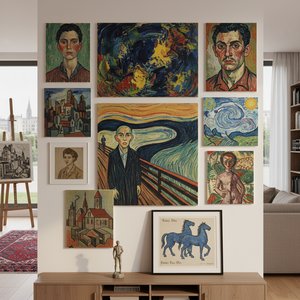
Expressionismus: Die 10 Meisterwerke, die eine Ära prägten – Kunst für Ihr Zuhause |
Entdecken Sie die 10 prägendsten Meisterwerke des Expressionismus! Von Munch bis Kandinsky – erfahren Sie die Geschichten hinter den berühmtesten Gemälde und Künstler. Hochwertige Kunstdrucke online bei kaufen & Ihr Zuhause mit Emotionen füllen.