

 In echtem Maßstab anzeigen
 Versenden als Grußkarte
 Teilen
 Details anzeigen
 Leitfaden öffnen

 Herunterladen
 Ähnliche Objekte
 Röntgenaufnahme
 Diashow
 Besucherstatistiken
Glacier de Saleinaz
 Oil On Canvas
- WallArt
 1906
1906- 19th Century
 115.0 x 89.0 cm
 Torre Abbey
 Mehr anzeigen
Handgefertigte Ölreproduktion
Handgemaltes Ölgemälde auf Leinwand in Ihrer Wunschgröße und mit Rahmen, auf Bestellung von unseren Künstlern angefertigt. ( Zum Druck wechseln Zum digitalen Bild wechseln)




P118B €10

P118H €10

P118W €10

P438Z €10

P508JH €12

P508YH €12

P805H €10

P805Z €10

P919BZ €10

P919G €10

P919XJ €10

P959ZH €10

P968JZ €12

W106C €8

W218G €10

W218JH €8

W218Y €10

W307PJ €10

W316G €10

W316PJ €8

W316Y €10

W398PJ €8

W4111J €10

W500HY €15

W500JH €15

W692G €12

W849H €8

W940BG €15

W953PJ €8




Wählen Sie aus unseren vordefinierten Formaten, die den ursprünglichen Proportionen des Kunstwerks entsprechen.

Geben Sie die Breite und die Höhe an, die Sie für Ihren Rahmen oder Ihre Wand benötigen. Da dieses Werk handgemalt ist, kann der Künstler bei einer anderen Form etwas mehr um das Bild herum malen oder etwas abschneiden – Sie entscheiden. Wir senden Ihnen ein digitales Mockup zur Freigabe, bevor mit dem Malen begonnen wird. Das auf dieser Seite gezeigte Bild stellt nicht das tatsächliche Ergebnis dar – dies tut nur das Mockup.
Nach der Bestellung wird das OriginalUniqueArt.com-Team dem Kunden Anweisungen per E-Mail zusenden und eine Mockup-Vorschau bereitstellen.
Weltweiter Versand () in nur 3 bis 4 Wochen statt der üblichen 5 Wochen. (24 Oktober). Keine Kompromisse bei der Qualität.

Kostenloser weltweiter Expressversand

Hochwertige Leinenleinwand

Vollständiger Versicherungsschutz beim Versand

Zollgebühren-Rückerstattungsgarantie

Garantie für exakte Farbtreue

100-tägiges Rückgaberecht (nur bei Mängeln)

100% Geld-zurück-Garantie

Angebot für Mengenrabatt
 Die Glasoption ist nur für Größen unter 110 cm verfügbar.

Glacier de Saleinaz
Reproduktionsmedium
Format der Reproduktion
-


Gesamtpreis
€ 263
Glacier de Saleinaz: A Frozen Symphony of Light and Ice
Edward Theodore Compton’s “Glacier de Saleinaz” is more than just a depiction of a mountain landscape; it's a visceral encounter with the raw, untamed beauty of the Alpine world. Painted in 1906 during a period of intense exploration and artistic fascination with these icy realms, the artwork captures the sublime power of nature – a theme central to much late 19th-century art and particularly resonant within Compton’s own experiences as a mountaineer and artist.
The scene itself is dominated by the imposing presence of the Saleina Glacier, its blue-white hues rendered with meticulous detail. The snow-capped peaks, partially obscured by swirling clouds, create a dramatic interplay of light and shadow, emphasizing the glacier’s immense scale and suggesting an almost perpetual state of movement. Compton's masterful use of color – primarily cool blues, grays, and whites – evokes the chilling atmosphere and ethereal quality associated with these high-altitude environments. Subtle hints of yellow and orange peek through the clouds, representing the fleeting moments of sunlight that illuminate the glacial ice, adding a touch of warmth to the otherwise stark scene.
A Pioneer's Vision: Compton and the Alpine Aesthetic
Edward Theodore Compton was a true pioneer in his approach to depicting the Alps. Unlike many artists who relied solely on idealized representations, Compton sought to capture the *actual* experience of being amongst these mountains – their harshness, their beauty, and their overwhelming sense of scale. His time spent documenting the Saleina Glacier during his travels directly informed his artistic vision, resulting in a remarkably accurate and emotionally resonant portrayal.
Born into a Quaker family with strong moral values, Compton’s artistic journey was driven by a desire for authenticity and a profound respect for nature. This ethos is evident in every brushstroke of “Glacier de Saleinaz,” reflecting his commitment to honest observation and skillful execution. His self-taught approach, combined with his adventurous spirit, allowed him to develop a unique style characterized by both realism and a deeply felt sense of awe.
Technique and Texture: A Masterful Impression
Compton’s technique is immediately apparent in the artwork's rich texture. Employing thick impasto strokes for the rocky terrain and smoother, more delicate brushwork for the snow and clouds, he creates a palpable sense of depth and volume. The artist skillfully uses light and shadow to model the forms, giving the impression that one could almost reach out and touch the icy surface. The visible brushstrokes are not merely accidental; they contribute significantly to the artwork's overall impact, conveying both the physical presence of the glacier and the energy of the artist’s hand.
Symbolism and Emotion: A Reflection of the Sublime
"Glacier de Saleinaz" transcends a simple landscape painting. It embodies the Romantic concept of the sublime – that feeling of awe and terror inspired by encountering something vast, powerful, and ultimately beyond human comprehension. The sheer scale of the glacier, combined with its icy beauty, evokes a sense of vulnerability and respect for nature’s forces. The painting's melancholic atmosphere hints at the isolation and remoteness often associated with these high-altitude environments, inviting contemplation on humanity’s place within the natural world.
Fragen & Antworten
Wie alt war Edward Theodore Compton, als „Glacier de Saleinaz“ im Jahr 1906 geschaffen wurde?
Edward Theodore Compton schuf „Glacier de Saleinaz“ im Alter von 57. Der Künstler wurde 1849 geboren, und das Werk datiert auf 1906.
Zeigt "Glacier de Saleinaz" starke Hell-Dunkel-Kontraste?
Der Hell-Dunkel-Kontrast von „Glacier de Saleinaz“ wird mit Gentle angegeben. Der Kontrast beschreibt, wie stark sich helle und dunkle Bereiche voneinander unterscheiden.
Welche Stimmung und welche Emotion vermittelt "Glacier de Saleinaz" von Edward Theodore Compton?
"Glacier de Saleinaz" von Edward Theodore Compton vermittelt ein Reflective Gefühl innerhalb einer insgesamt Calm Stimmung.
Biografie des Künstlers
Edward Theodore Compton: Pionier der alpinen Aquarellmalerei
Edward Theodore Compton, eine singuläre Gestalt in der künstlerischen Landschaft des späten 19. und frühen 20. Jahrhunderts in Europa, steht als außergewöhnliches Zeugnis für die Schnittstelle von Kunst und Abenteuer. Geboren 1849 in Stoke Newington, London, prägte die Erziehung in einem Quäker-Haushalt eine tiefe Wertschätzung für Einfachheit und moralische Integrität – Werte, die zweifellos seine künstlerische Vision formen sollten. Trotz des Besuchs verschiedener Kunstschulen, darunter der Royal Academy, verfolgte er weitgehend einen Weg der Selbstbildung und verfeinerte seine Fähigkeiten durch akribische Beobachtung und unermüdliches Experimentieren. Seine Reise nach Darmstadt im Jahr 1ng67 markierte einen entscheidenden Wendepunkt, der ihn in eine lebendige künstlerische Gemeinschaft unter der Leitung von Großherzog Ludwig III. führte und eine dauerhafte Faszination für die alpine Landschaft entfachte.- Frühe Einflüsse: Comptons prägende Jahre waren tief in der Spiritualität der Quäker verwurzelt und wurden durch die Leidenschaft seines Vaters für die Kunst genährt, was ihn mit einflussreichen impressionistischen Malern wie Claude Monet und Pierre-Auguste Renoir vertraut machte.
- Akademische Ausbildung & Darmstadt: Obwohl er keinen formellen Abschluss der Royal Academy erlangte, profitierte Compton maßgeblich vom Studium an der Seite von Alice, Prinzessin von Hessen, wodurch er unschätzbare Erfahrungen in künstlerischer Technik sammelte und Verbindungen innerhalb eines aufstrebenden künstlerischen Milieus knüpfte.
Die alpine Obsession: Von Skizzen zu Meisterwerken
Eine transformative Reise ins Berner Oberland im Jahr 1868 entfachte Comptons lebenslange Hingabe, die majestätische Pracht der Alpen einzufangen, insbesondere das ikonische Trio aus Eiger, Mönch und Jungfrau. Das atemberuchtende Panorama fesselte ihn und inspirierte eine Serie von Aquarellmalereien, die bald synonym mit der alpinen Kunst werden sollten. Seine akribischen Skizzen dokumentierten das raue Gelände und die dramatischen Lichtverhältnisse und bewiesen ein unerschütterliches Engagement für Genauigkeit gepaart mit künstlerischer Sensibilität. Diese Erfahrung festigte seinen Glauben an die Kraft der Beobachtung als Eckpfeiler der künstlerischen Schöpfung.- Technik: Comptons unverwechselbarer Stil basierte auf dem Übereinanderschichten dünner Lasuren von Aquarellpigmenten auf Papier, wodurch leuchtende Effekte erzielt wurden, die die ätherische Schönheit der Gebirgslandschaften vermittelten.
- Bedeutende Werke: Zu seinen am meisten gefeierten Gemälden gehören „Deutsch Im Wald von Valdoniello“ und „Deutsch Grohmannspitze und (rechts) Fünffingerspitzen“, welche seine meisterhafte Darstellung alpiner Ausblicke exemplarisch verdeutłichen.
Das Auge eines Bergsteigers: Jenseits der Leinwand
Compton war nicht nur ein Maler; er war ein unerschrockener Bergsteiger, der über 300 Gipfel bestieg, darunter 27 Erstbesteigungen – eine bemerkenswerte Leistung, die seinen Ruf als einer der führenden Kletterer Britanniens festigte. Seine Expeditionen nach Österreich, Skandinavien, Nordafrika, Korsika und Spanien lieferten unschätzbares visuelles Material für sein Werk und bereicherten seine Kompositionen mit unmittelbaren Erfahrungen aus der Bergwelt. Die Fotografie „Deutsch Allalin, Strahl und Rimpfischhorn von der Ostflanke des Alphubel“ zeigt Comptons Hingabe zur topografischen Genauigkeit in Verbindung mit künstlerischer Vision.- Einfluss auf die Kunst: Comptons Bergsteiger-Abenteuer beeinflussten seine Kunst zutiefst, indem sie seinen Gemälden ein Gefühl von Dynamik verliehen und die Herausforderungen vermittelten, denen Kletterer in gegenüber unerbittlichem Gelände stehen.
- Vermächtnis: Comptons Beitrag zur alpinen Kunst ist unbestreitbar; er erhob die Aquarellmalerei zu neuen Höhen und etablierte sie als das bevorzugte Medium, um Gebirgslandschaften mit unvergleichlicher Schönheit und Realismus darzustellen.
Villa Compton & Fortgesetzte künstlerische Erkundung
Mit seiner Niederlassung in Feldafing am Starnberger See im Jahr 1874 schuf Compton zusammen mit seiner Frau Auguste Plotz ein ruhiges Heim, das eine Umgebung förderte, die ideal für künstlerische Bestrebungen war. Er reiste weiterhin ausgiebig und dokumentierte seine Eindrücke in Aquarellen und Tuschezeichnungen – ein Zeugnis seiner unerschütterlichen Neugier und seines künstlerischen Drangs. Sein Werk spiegelt nicht nur die Erhabenheit der alpinen Szenerie wider, sondern auch die subtilen Nuancen von Licht und Atmosphäre, was Comptons Meisterschaft der impressionistischen Techniken demonstriert.- Spätere Karriere: Comptons künstlerische Produktion blieb sein Leben lang produktiv und zeigte eine bemerkenswerte Anpassungsfähigkeit an verschiedenste Themen und Medien.
- Historische Bedeutung: Das Erbe von Compton reicht weit über seine künstlerischen Errungenschaften hinaus; er verkörpert den Geist der Entdeckung und Kreativität – eine Persönlichkeit, die Leidenschaft für die Kunst nahtlos mit gewagtem Abenteuer verband.
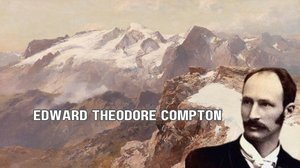
Edward Theodore Compton
1849 - 1921 , England
Eckdaten zum Künstler
- Artistic Movement Or Style: Alpine Art
- Artists Who Influenced This Artist:
- Claude Monet
- Pierre-Auguste Renoir
- Date Of Birth: 1849
- Date Of Death: 1921
- Full Name: Edward Theodore Compton
- Nationality: Englisch
- Notable Artworks:
- Deutsch Im Wald von Valdoniello
- Deutsch Grohmannspitze und (rechts) Fünffingerspitzen
- Place Of Birth: Stoke Newington, London