

 In echtem Maßstab anzeigen
 Versenden als Grußkarte
 Teilen
 Details anzeigen
 Leitfaden öffnen

 Herunterladen
 Ähnliche Objekte
 Röntgenaufnahme
 Diashow
 Besucherstatistiken
Ibreem


 Mehr anzeigen
Handgefertigte Ölreproduktion
Handgemaltes Ölgemälde auf Leinwand in Ihrer Wunschgröße und mit Rahmen, auf Bestellung von unseren Künstlern angefertigt. ( Zum Druck wechseln Zum digitalen Bild wechseln)




P118B €10

P118H €10

P118W €10

P438Z €10

P508JH €12

P508YH €12

P805H €10

P805Z €10

P919BZ €10

P919G €10

P919XJ €10

P959ZH €10

P968JZ €12

W106C €8

W218G €10

W218JH €8

W218Y €10

W307PJ €10

W316G €10

W316PJ €8

W316Y €10

W398PJ €8

W4111J €10

W500HY €15

W500JH €15

W692G €12

W849H €8

W940BG €15

W953PJ €8




Wählen Sie aus unseren vordefinierten Formaten, die den ursprünglichen Proportionen des Kunstwerks entsprechen.

Geben Sie die Breite und die Höhe an, die Sie für Ihren Rahmen oder Ihre Wand benötigen. Da dieses Werk handgemalt ist, kann der Künstler bei einer anderen Form etwas mehr um das Bild herum malen oder etwas abschneiden – Sie entscheiden. Wir senden Ihnen ein digitales Mockup zur Freigabe, bevor mit dem Malen begonnen wird. Das auf dieser Seite gezeigte Bild stellt nicht das tatsächliche Ergebnis dar – dies tut nur das Mockup.
Nach der Bestellung wird das OriginalUniqueArt.com-Team dem Kunden Anweisungen per E-Mail zusenden und eine Mockup-Vorschau bereitstellen.
Weltweiter Versand () in nur 3 bis 4 Wochen statt der üblichen 5 Wochen. (21 Oktober). Keine Kompromisse bei der Qualität.

Kostenloser weltweiter Expressversand

Hochwertige Leinenleinwand

Vollständiger Versicherungsschutz beim Versand

Zollgebühren-Rückerstattungsgarantie

Garantie für exakte Farbtreue

100-tägiges Rückgaberecht (nur bei Mängeln)

100% Geld-zurück-Garantie

Angebot für Mengenrabatt
 Die Glasoption ist nur für Größen unter 110 cm verfügbar.

Ibreem
Reproduktionsmedium
Format der Reproduktion
-


Gesamtpreis
€ 262
A Whisper of Winter's Soul: Exploring Edward Lear’s “Ibreem”
Edward Lear (1812–1888), a British artist whose career spanned decades and encompassed diverse artistic pursuits—from watercolor painting to poetry, musical composition, and theatrical design—remained an enigma to many. Yet, beneath the surface of his whimsical verse and fantastical illustrations lay a profound sensitivity to the natural world, particularly the stark beauty of winter landscapes. “Ibreem,” painted in 1867, exemplifies this artistic core, presenting a deceptively simple depiction that speaks volumes about Lear’s meticulous observation and masterful technique. This small watercolor captures a coastal scene bathed in muted light—a rocky shoreline dominated by a towering mountain silhouette against an overcast sky. The artist's deliberate use of color contributes significantly to the painting's emotive power; browns and yellows dominate the mountain mass, conveying solidity and permanence, while cool blues and greens delineate the sea and surrounding vegetation, hinting at tranquility and hidden depths.- Technique: Lear employed a layered watercolor technique—wet-on-wet—allowing for subtle blending and atmospheric haze. The artist skillfully captured the ephemeral qualities of winter light, creating an illusion of depth and luminosity that transcends its diminutive size.
- Composition: The pyramidal composition directs the viewer’s gaze upwards towards the mountain peak, emphasizing grandeur and majesty. Lear's careful placement of elements—the cliff face, the sea spray, and the distant peaks—creates a harmonious balance that enhances the overall visual impact.
- Symbolism: Consider the muted palette as mirroring the subdued emotions associated with winter—a period of dormancy and introspection. Yet, Lear’s masterful rendering captures not merely bleakness but also a quiet dignity, suggesting that beauty can be found even in moments of apparent stillness.
Fragen & Antworten
Wie verbinden sich Kontrast und Harmonie in "Ibreem"?
Die Farbkomposition von "Ibreem" von Edward Lear vereint einen Serene Kontrast mit einer Unified Palette Harmonie.
In welcher Größe wird empfohlen, "Ibreem" zu drucken?
Für "Ibreem" von Edward Lear wird eine Reproduktion im Format Medium empfohlen. Die Größe kann angepasst werden, wobei die Proportionen erhalten bleiben.
Wie harmonisch sind die Farben von "Ibreem" von Edward Lear?
"Ibreem" von Edward Lear zeigt eine Unified Palette Farbharmonie.
Biografie des Künstlers
Frühes Leben und Karriere
Edward Lear, ein renommierter englischer Künstler, Illustrator, Musiker, Autor und Dichter, wurde am 12. Mai 1812 in Holloway, Nord-London, geboren. Als vorletztes von 21 Kindern war Lears Leben durch einen frühen Beginn seiner Karriere im Alter von 15 Jahren geprägt. Sein Vater, Jeremiah Lear, ein Börsenmakler, hatte nach den napoleonischen Kriegen finanzielle Schwierigkeiten, was zu einer Verringerung der finanziellen Mittel der Familie und zur Notwendigkeit führte, dass Lear sich von jung an selbst unterstützen musste.Künstlerische Beiträge
Lears künstlerische Beiträge sind vielfältig:- Illustrationen von Vögeln und Tieren: Im Dienst des Zoologischen Vereins demonstrierte Lears frühe Arbeit seine Fähigkeiten bei der Illustration von Vögeln und Tieren.
- Landschaftsmalerei: Nach seinen ausgedehnten Reisen durch Europa und Asien widmete sich Lear der Landschaftsmalerei und fing das Wesen dieser Regionen in seinen Werken ein.
- Autor und Dichter: Lears Ruhm beruht auf seiner Nonsense-Poesie, Limerick und humorvollen Versen, wie man sie in seinen Büchern "A Book of Nonsense" (1846), "Nonsense Songs" (1871) und "Laughable Lyrics" (1877) findet.
- Musikalische Kompositionen: Lear komponierte musikalische Settings für Alfred Tennysons Gedichte, wobei zwölf Werke veröffentlicht wurden.
Bemerkenswerte Werke und Vermächtnis
Zu Lears bemerkenswertesten Werken gehören:- "The Owl and the Pussycat", ein Gedicht, das zu seinem Stil geworden ist.
- "The Dong with the Luminous Nose", das seinen fantastischen Ansatz in der Poesie zeigt.
- Illustrationen der Familie der Psittaciden (Papageien) (1830), seine erste Veröffentlichung im Alter von 19 Jahren.
Museen und Sammlungen
Lears Werke finden sich in verschiedenen Museen, darunter:- Das Ashmolean Museum, Oxford, das sein Gemälde "The Plains of Lombardy from Monte Generoso" zeigt.
- Andere bemerkenswerte Sammlungen und Museen, die Lears Kunst zeigen, finden sich in der umfangreichen Datenbank von OriginalUniqueArt.com.
Fazit
Lears Vermächtnis ist ein Beweis für seinen innovativen Ansatz in der Kunst, der Humor, Nonsense-Poesie und Landschaftsmalerei vereint. Sein Einfluss auf die Welt der Kunst und Literatur bleibt unübertroffen, wobei seine Werke weiterhin neue Generationen inspirieren. Mehr von Edward Lears Werken finden Sie auf OriginalUniqueArt.com Erfahren Sie mehr über Edward Lear auf Wikipedia
Edward Lear
1812 - 1888 , Vereinigtes Königreich
Eckdaten zum Künstler
- Bemerkenswerte Werke:
- The Owl and the Pussycat
- The Dong with the Luminous Nose
- Illustrationen der Papageienfamilie
- Geburtsdatum: 12. Mai 1812
- Geburtsort: London, Vereinigtes Königreich
- Künstlerische Richtung: Viktorianische Kunst, Nonsense-Literatur
- Nationalität: Britisch
- Sterbedatum: 1888
- Vollständiger Name: Edward Lear
Verwandte Artikel
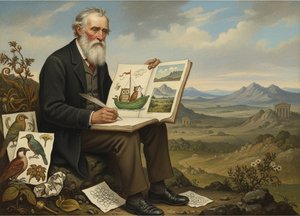
Edward Lear: Jenseits der Nonsens-Verse – Landschaft, Illustration und die Poetik der Isolation
Entdecken Sie das vielschichtige Werk Edward Lear's – jenseits der Nonsens-Verse! Analysieren Sie mit uns seine Landschaftsmalerei, Illustrationen und die Poetik der Isolation im viktorianischen Kontext. Expertenwissen & tiefe Einblicke.

Romantische Landschaften: Die 10 Meisterwerke, die eine Epoche prägten | OriginalUniqueArt
Entdecken Sie die 10 Meisterwerke der Romantischen Landschaftsmalerei! Von Caspar David Friedrich bis Turner – erleben Sie die Kunst, Emotion & Natur. Hochwertige Reproduktionen auf OriginalUniqueArt.com
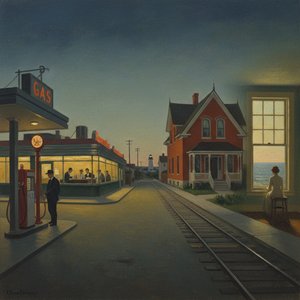
Edward Hopper: Die 25 Meisterwerke des amerikanischen Realismus | OriginalUniqueArt
Entdecken Sie die 25 Meisterwerke von Edward Hopper! Tauchen Sie ein in amerikanische Kunst, Realismus & Isolation. Hochwertige Reproduktionen & Inspiration für Ihr Zuhause bei OriginalUniqueArt.com.

Evocations of Place: A Historical Journey Through Landscape Art
Explore the rich history of landscape art with OriginalUniqueArt. Discover renowned artists, movements like Impressionism & Romanticism, and expert guidance for collecting timeless pieces. Find your perfect serene escape today!

The Sublime and the Picturesque: Exploring Emotion & Nature in Romantic Landscape Painting
Explore the emotional power of Romantic landscape painting! Discover the sublime & picturesque traditions, key artists like Friedrich & Cole, and find your perfect artwork at OriginalUniqueArt.


