Vorschau anzeigen
 Versenden
 Teilen
 Details anzeigen
 Leitfaden

 Herunterladen
 Ähnliche Objekte
 Röntgenaufnahme
 Diashow
 Statistiken
Peaceable Kingdom (31)


 Weiterlesen
Handgefertigte Ölreproduktion
Handgemaltes Ölgemälde auf Leinwand in Ihrer Wunschgröße und mit Rahmen, auf Bestellung von unseren Künstlern angefertigt. ( Zum Druck wechseln Zum digitalen Bild wechseln)




P118B €10

P118H €10

P118W €10

P438Z €10

P508JH €12

P508YH €12

P805H €10

P805Z €10

P919BZ €10

P919G €10

P919XJ €10

P959ZH €10

P968JZ €12

W106C €8

W218G €10

W218JH €8

W218Y €10

W307PJ €10

W316G €10

W316PJ €8

W316Y €10

W398PJ €8

W4111J €10

W500HY €15

W500JH €15

W692G €12

W849H €8

W940BG €15

W953PJ €8




Wählen Sie aus unseren vordefinierten Formaten, die den ursprünglichen Proportionen des Kunstwerks entsprechen.

Geben Sie die Breite und die Höhe an, die Sie für Ihren Rahmen oder Ihre Wand benötigen. Da dieses Werk handgemalt ist, kann der Künstler bei einer anderen Form etwas mehr um das Bild herum malen oder etwas abschneiden – Sie entscheiden. Wir senden Ihnen ein digitales Mockup zur Freigabe, bevor mit dem Malen begonnen wird. Das auf dieser Seite gezeigte Bild stellt nicht das tatsächliche Ergebnis dar – dies tut nur das Mockup.
Nach der Bestellung wird das OriginalUniqueArt.com-Team dem Kunden Anweisungen per E-Mail zusenden und eine Mockup-Vorschau bereitstellen.
Weltweiter Versand () in nur 3 bis 4 Wochen statt der üblichen 5 Wochen. (27 Oktober). Keine Kompromisse bei der Qualität.

Kostenloser weltweiter Expressversand

Hochwertige Leinenleinwand

Umfassender Versicherungsschutz beim Versand

Zollgebühren-Rückerstattungsgarantie

Garantie für exakte Farbtreue

100 Tage Rückgaberecht (nur bei Mängeln)

100% Geld-zurück-Garantie

Mengenrabatt verfügbar
 Die Glasoption ist nur für Größen unter 110 cm verfügbar.

Peaceable Kingdom (31)
Art der Reproduktion
Format der Reproduktion
-


Endpreis
€ 263
The Serene Harmony of “Peaceable Kingdom”
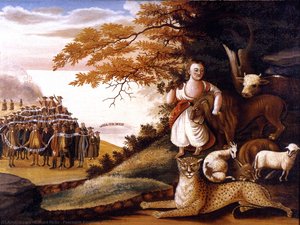
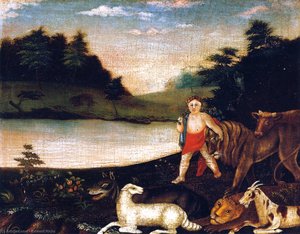
Edward Hicks’ “Peaceable Kingdom” (31), painted in 1845, isn't merely a pastoral scene; it’s a profound meditation on faith, community, and the enduring hope for a world united. This iconic work, currently residing within the Yale University Art Gallery in Hartford, Connecticut, transcends its simple depiction of animals and humans coexisting peacefully to become a powerful symbol of Quaker ideals and American identity. Hicks, a devout Quaker minister and self-taught artist, imbued this canvas with layers of meaning drawn from Isaiah 11:6 – “The wolf also shall dwell with the lamb…” – transforming a biblical prophecy into a tangible representation of his spiritual vision. The painting’s enduring appeal lies not just in its aesthetic beauty but in its ability to resonate deeply with viewers seeking solace and inspiration in an often-turbulent world.A Testament to Quaker Belief
At the heart of “Peaceable Kingdom” is the unwavering commitment to peace that defined the Society of Friends, or Quakers. Hicks’ artistic choices—the deliberate inclusion of diverse species, the gentle expressions on the animals' faces, and the harmonious arrangement of figures – all speak to this core belief. The painting isn’t a utopian fantasy; it acknowledges the presence of conflict (represented subtly by the fractured tree trunk in the background), yet firmly asserts that true peace is attainable through understanding, compassion, and a shared commitment to justice. The inclusion of indigenous people alongside European settlers underscores Hicks' broader vision of a nation built on principles of equality and mutual respect – a sentiment remarkably forward-thinking for its time. The painting’s composition deliberately avoids hierarchy, presenting all creatures as equals within this idyllic realm.Technique and Style: A Masterful Blend
Hicks’ distinctive style is immediately recognizable—a blend of folk art simplicity and meticulous detail. Executed in oil on canvas, the piece showcases his remarkable ability to render textures with astonishing realism, from the soft fur of a lamb to the rough bark of a tree. The color palette is muted yet vibrant, dominated by earthy tones punctuated by splashes of warm yellows and greens, creating a sense of warmth and tranquility. Notably, Hicks employed a technique known as “grisaille,” using monochrome underpainting to establish values before adding color, which contributes significantly to the painting’s depth and luminosity. The figures are rendered with a gentle humanity, their expressions conveying a quiet contentment that invites the viewer into this peaceful scene.Symbolism and Historical Context
Beyond its immediate depiction of animals and people, “Peaceable Kingdom” is rich in symbolism. The fractured tree trunk represents the divisions within Quaker society at the time – the Hicksite and Orthodox factions – while the harmonious gathering of creatures symbolizes the hope for reconciliation and unity. The inclusion of figures reminiscent of William Penn’s treaty with Native American tribes adds a layer of historical significance, reflecting Hicks' commitment to social justice and his belief in the importance of peaceful coexistence between cultures. The painting emerged during a period of significant social and political upheaval in America, marked by growing tensions over slavery and westward expansion. “Peaceable Kingdom” offered a powerful counter-narrative—a vision of a nation founded on principles of peace, equality, and respect for all living beings.A Legacy Enduring Through Reproductions
Today, Edward Hicks’ "Peaceable Kingdom" continues to captivate audiences worldwide. High-quality reproductions, meticulously crafted by OriginalUniqueArt.com, allow art enthusiasts to bring this timeless masterpiece into their homes and offices. Owning a reproduction is not merely acquiring an image; it's embracing the enduring message of peace, harmony, and hope that Hicks so eloquently conveyed over 175 years ago. The painting’s continued popularity speaks volumes about its universal appeal—a testament to the power of art to inspire, uplift, and remind us of our shared humanity.Fragen & Antworten
Wo kann ich eine digitale Abbildung von "Peaceable Kingdom (31)" von Edward Hicks kaufen?
Ein digitales Bild von "Peaceable Kingdom (31)" von Edward Hicks kann auf der entsprechenden Digitales Kunstwerk-Seite erworben werden: hochauflösender digitaler Bild-Download.
Zu welcher Stilrichtung gehört "Peaceable Kingdom (31)"?
"Peaceable Kingdom (31)" von Edward Hicks lässt sich der Strömung des Quaker Folk Art zuordnen. Diese Stilrichtung bildet den künstlerischen Kontext des Werkes.
Welche Größe wird für "Peaceable Kingdom (31)" in einem Wohnbereich empfohlen?
Die ideale Kombination für "Peaceable Kingdom (31)" von Edward Hicks: ein Druck im Format Format für einen Wohnbereich.
Künstlerbiografie
Frühes Leben und Hintergrund
- Geboren: 4. April 1780 in Attleboro (heute Langhorne), Bucks County, Pennsylvania
- Gestorben: 23. August 1849
- Seine Eltern waren Anglikaner, aber er wurde von Matron Elizabeth Twining, einer Quäkerin, aufgezogen. Dies führte ihn schon in jungen Jahren an die quakerischen Glaubensvorstellungen heran.
- Im Alter von dreizehn Jahren begann er eine Lehre bei den Karrenbauern William und Henry Tomlinson und lernte dort Karrenmaltechniken.
- Er verließ die Firma im Jahr 1800, um als unabhängiger Haus- und Karrenmaler zu arbeiten.
Quäkerisches Wirken und künstlerische Entwicklung
- Er wurde 1803 in die Religious Society of Friends aufgenommen und begann regelmäßig an Quäkerversammlungen teilzunehmen.
- Er heiratete Sarah Worstall, ebenfalls eine Quäkerin, und wurde im ganzen Philadelphia ein reisender Prediger.
- Um seine Familie zu unterstützen, erweiterte er seine Malerei um Haushaltsgegenstände, landwirtschaftliche Geräte und Wirtshausschilder.
- Er gab 1815 aufgrund finanzieller Schwierigkeiten kurzzeitig die Zierdekorationsmalerei auf, nahm sie aber 1816 wieder auf.
Künstlerischer Stil und Hauptwerke
- Autodidakt: Hicks war weitgehend autodidaktisch tätig und entwickelte einen einzigartigen Folk-Art-Stil.
- Quäkerische Einflüsse: Seine Arbeit spiegelte die quäkerischen Glaubensvorstellungen vom "Inneren Licht" wider, wobei er persönliche spirituelle Erfahrungen betonte. Dies zeigt sich in seinen einfachen Kompositionen und seinem Fokus auf die Natur.
- Die Friedensreich-Serie: Seine berühmteste Serie umfasst 62 Versionen und stellt eine Vision der Harmonie zwischen Mensch und Tier dar, die Frieden und Koexistenz symbolisiert.
- Bemerkenswerte Gemälde:
- Friedensreich (31) – Beherbergt in der Yale University Art Gallery
- Niagarafälle – Beherbergt im Abby Aldrich Rockefeller Folk Art Center
- George Washington mit seiner Armee, die den Delaware überquert – Ebenfalls beherbergt im Abby Aldrich Rockefeller Folk Art Center
- Friedensreich (34) - Stellt in einem ruhigen Ölgemälde Noahs Arche dar.
- Grab von William Penn in Jordans, England - Eine Darstellung ländlicher englischer Szenerie, die das quäkerische Erbe zeigt.
Vermächtnis und historische Bedeutung
- Folk-Art-Ikone: Edward Hicks gilt als bedeutende Figur der amerikanischen Folk Art, bekannt für seinen unverwechselbaren Stil und seine wiederkehrenden Themen.
- Darstellung quäkerischer Werte: Seine Gemälde geben wertvolle Einblicke in die Glaubensvorstellungen und Werte der Religious Society of Friends im 19. Jahrhundert.
- Einzigartige künstlerische Vision: Hicks verband religiösen Glauben mit künstlerischem Ausdruck und schuf ein Werk, das sowohl optisch ansprechend als auch spirituell bedeutsam ist.
- Fortwährende Wertschätzung: Seine Werke werden in wichtigen Museen ausgestellt und werden weiterhin für ihre historische und künstlerische Bedeutung studiert und geschätzt.

Edward Hicks
1780 - 1849 , Vereinigte Staaten von Amerika
Kurzinfos
- Artistic Movement Or Style: Volkskunst
- Date Of Birth: 4. April 1780
- Date Of Death: 23. August 1849
- Full Name: Edward Hicks
- Nationality: Amerikanisch
- Notable Artworks:
- Peaceable Kingdom (31)
- Falls of Niagara
- George Washington Crossing Delaware
- Peaceable Kingdom (34)
- Grave of William Penn
- Place Of Birth (City And Country): Attleboro, USA
Ähnliche Artikel

Amerikanischer Realismus: Die 10 Meisterwerke, die eine Ära prägten | OriginalUniqueArt
Entdecken Sie die 10 Meisterwerke des Amerikanischen Realismus! Von Edward Hopper bis Winslow Homer – erleben Sie die Geschichten, Techniken & zeitlose Schönheit. Hochwertige Kunstdrucke auf OriginalUniqueArt.com.

Grant Wood und der amerikanische Regionalismus: Identität, Mythos und die ländliche Landschaft
Entdecken Sie Grant Wood und den amerikanischen Regionalismus! Erfahren Sie mehr über 'American Gothic', Woods Leben, Einflüsse und sein Vermächtnis in der Kunstgeschichte. Expertenwissen & hochwertige Reproduktionen.
Edward Hopper: Die 25 Meisterwerke des amerikanischen Realismus | OriginalUniqueArt
Entdecken Sie die 25 Meisterwerke von Edward Hopper! Tauchen Sie ein in amerikanische Kunst, Realismus & Isolation. Hochwertige Reproduktionen & Inspiration für Ihr Zuhause bei OriginalUniqueArt.com.
Shadow Catcher: Edward S. Curtis & the Ethnographic Portraiture of a Vanishing West
Explore the life & work of Edward S. Curtis, the 'Shadow Catcher,' and his groundbreaking photographic documentation of Native American cultures. Discover iconic images from *The North American Indian* and a critical look at his lasting legacy.

Edward Hicks’ ‘Peaceable Kingdom’: American Folk Art & the Shaping of a National Identity
Explore the profound symbolism & historical context of Edward Hicks’ ‘Peaceable Kingdom.’ Discover how this iconic American folk art masterpiece reflects Quaker values and shaped a nation's identity. Learn more at OriginalUniqueArt.