- Startseite

- Auf Leinwand drucken
- Edward Hicks
- Peaceable Kingdom (16)
 Gemälde kaufen Bild kaufen
 Versenden
 Teilen
 Details anzeigen
 Zu Favoriten hinzufügen

 Herunterladen
 Ähnliche Objekte
 Röntgenaufnahme
 Diashow anzeigen
Peaceable Kingdom (16)


 Weiterlesen
Giclée / Kunstdruck
Giclée- oder Leinwanddruck in Museumsqualität mit schneller Produktion und flexiblen Veredelungsoptionen.




P118B $10

P118H $10

P118W $10

P438Z $10

P508JH $12

P508YH $12

P805H $10

P805Z $10

P919BZ $10

P919G $10

P919XJ $10

P959ZH $10

P968JZ $12

W106C $8

W218G $10

W218JH $8

W218Y $10

W307PJ $10

W316G $10

W316PJ $8

W316Y $10

W398PJ $8

W4111J $10

W500HY $15

W500JH $15

W692G $12

W849H $8

W940BG $15

W953PJ $8




Wählen Sie aus unseren vordefinierten Größen, die den ursprünglichen Proportionen des Kunstwerks entsprechen.

Sie können Ihre eigenen Maße eingeben, um ein bestimmtes Format oder einen speziellen Platz einzupassen. Wenn das von Ihnen gewählte Format nicht den Proportionen des Originalbildes entspricht, werden wir das Kunstwerk entweder beschneiden oder das Bild mit einem gespiegelten oder einfarbigen Rand erweitern. Ein digitaler Entwurf wird Ihnen zur Genehmigung zugesandt, bevor die Produktion beginnt.
Bitte beachten Sie, dass die Vorschau auf dem Bildschirm nicht den tatsächlichen Zuschnitt oder die Erweiterung widerspiegelt. Nur der Entwurf zeigt die endgültige Komposition präzise an.
Obwohl Sondermaße verfügbar sind, empfehlen wir die Auswahl eines Maßes aus der vordefinierten Liste, um die ursprünglichen Proportionen zu bewahren.
Weltweiter Versand () innerhalb von 2 Wochen statt der üblichen 4/5 Wochen. (23 Juli)

Kostenloser weltweiter Expressversand

Hochwertige Leinenleinwand

Umfassender Versicherungsschutz beim Versand

Zollsteuer-Rückerstattungsgarantie

Garantie für echte Farbtreue

60-Tage-Rückgaberecht (nur bei Mängeln)

100% Geld-zurück-Garantie

Mengenrabatt verfügbar
 Die Glasoption ist nur in Größen unter 110 cm verfügbar.

Peaceable Kingdom (16)
Giclée / Kunstdruck
Größe der Reproduktion
-


Endpreis aller Optionen
-
Beschreibung des Sammlerstücks
A Vision of Eternal Harmony
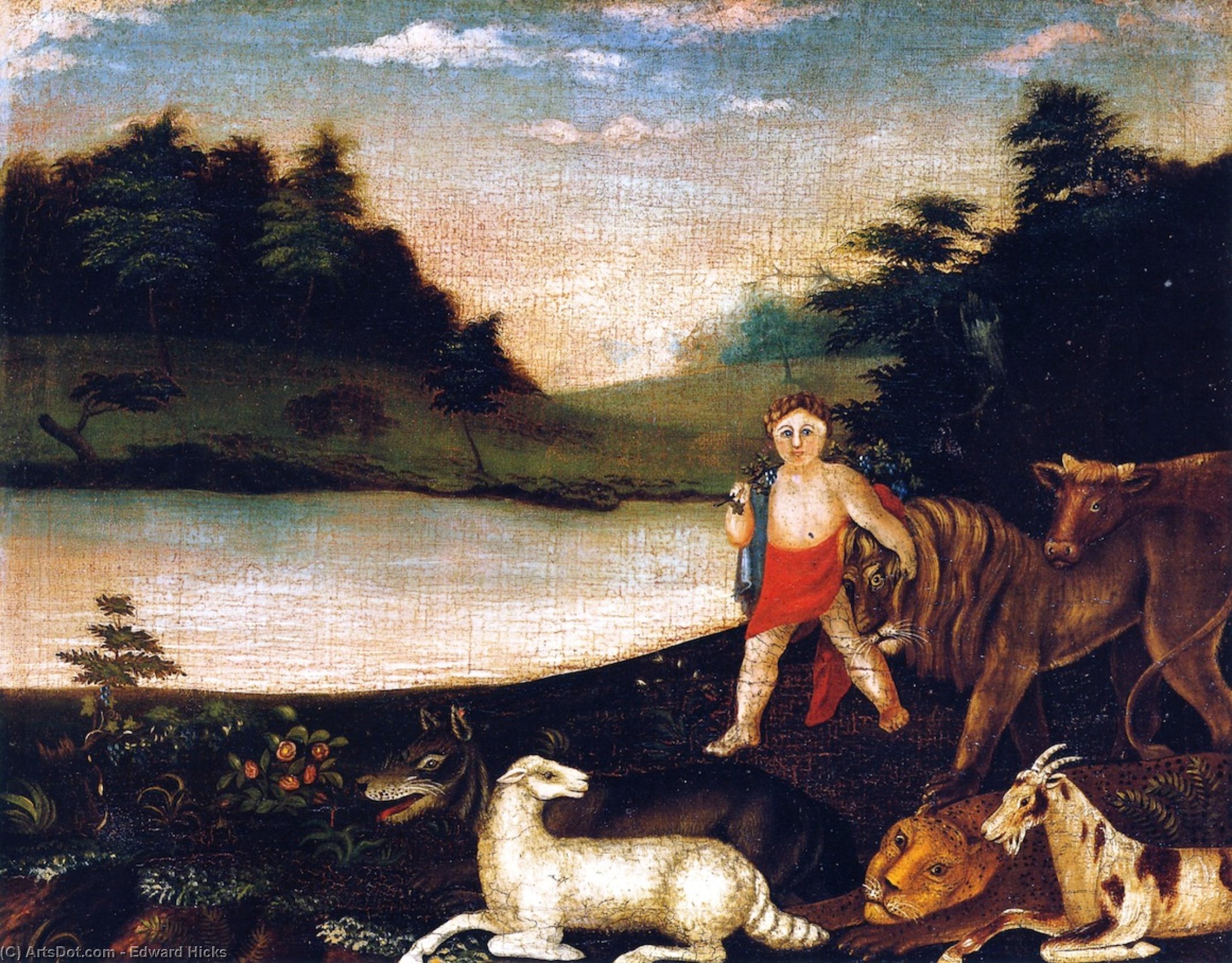
In the quiet, profound stillness of Edward Hicks’s Peaceable Kingdom (16), we are invited into a realm where the boundaries between the wild and the domestic dissolve into a singular, breathtaking moment of tranquility. Painted in 1816, this oil on canvas masterpiece serves as more than just a landscape; it is a spiritual manifesto rendered in pigment. The scene unfolds with a masterful sense of balance, presenting a man standing poised before a formidable assembly of lions and a tiger. Yet, there is no scent of fear in the air, nor any tension in the brushstrokes. Instead, Hicks utilizes his unique folk-art sensibility to weave a tapestry of coexistence, where the predatory instinct is replaced by a divine, quieted grace.
The composition is a delicate dance of subjects, ranging from the majestic, heavy presence of the big cats to the gentle, unassuming forms of sheep and goats scattered throughout the meadow. A solitary bird, perched near the top left corner, acts as a silent witness to this earthly paradise, adding a layer of lightness to the grounded, earthy tones of the landscape. For the discerning collector or interior designer, this painting offers a profound focal point—a window into a world where chaos is conquered by peace, making it an ideal centerpiece for spaces dedicated to reflection, meditation, or sophisticated, soulful decor.
The Soul of the Quaker Painter
To understand the depth of this work, one must look toward the heart of its creator. Edward Hicks was not merely a painter; he was a Quaker minister whose life was defined by the pursuit of the "inner light." This spiritual foundation is etched into every layer of Peaceable Kingdom (16). The symbolism embedded within the arrangement of animals is deeply rooted in biblical prophecy, specifically the vision of a time when the wolf shall dwell with the lamb. Through his meticulous use of oil on canvas, Hicks achieves a rich, vibrant color palette that breathes life into these symbolic figures, transforming a theological concept into a tangible, visual reality.
The technique employed by Hicks reflects his background in decorative painting, characterized by a clarity of form and an honest, unpretentious approach to detail. There is a rhythmic quality to the way he places each creature, ensuring that the eye wanders through the scene without ever feeling unsettled. This sense of order and equilibrium provides an emotional sanctuary for the viewer. For those seeking to adorn a home with art that inspires stability and hope, this reproduction captures the essence of Hicks’s ability to find the divine within the natural world, offering a timeless aesthetic that transcends the era of its creation.
An Enduring Legacy for Modern Spaces
As a significant work of American art, Peaceable Kingdom (16) continues to resonate with contemporary audiences who find themselves yearning for the very harmony depicted on the canvas. The painting’s ability to evoke a sense of profound stillness makes it an extraordinary choice for high-end residential or gallery settings. It does not merely decorate a wall; it alters the atmosphere of a room, inviting a slower pace of life and a deeper contemplation of our relationship with nature.
Whether you are an art historian captivated by the nuances of Hicks’s Quaker symbolism or an interior enthusiast looking for a piece that embodies strength and serenity, this artwork stands as a testament to the power of vision. Owning a high-quality reproduction of such a masterpiece allows the spirit of 1816 to live on in the modern era, providing a constant, beautiful reminder that even in a turbulent world, the dream of a peaceful kingdom remains eternally attainable.
Biografie des Künstlers
Frühes Leben und Hintergrund
- Geboren: 4. April 1780 in Attleboro (heute Langhorne), Bucks County, Pennsylvania
- Gestorben: 23. August 1849
- Seine Eltern waren Anglikaner, aber er wurde von Matron Elizabeth Twining, einer Quäkerin, aufgezogen. Dies führte ihn schon in jungen Jahren an die quakerischen Glaubensvorstellungen heran.
- Im Alter von dreizehn Jahren begann er eine Lehre bei den Karrenbauern William und Henry Tomlinson und lernte dort Karrenmaltechniken.
- Er verließ die Firma im Jahr 1800, um als unabhängiger Haus- und Karrenmaler zu arbeiten.
Quäkerisches Wirken und künstlerische Entwicklung
- Er wurde 1803 in die Religious Society of Friends aufgenommen und begann regelmäßig an Quäkerversammlungen teilzunehmen.
- Er heiratete Sarah Worstall, ebenfalls eine Quäkerin, und wurde im ganzen Philadelphia ein reisender Prediger.
- Um seine Familie zu unterstützen, erweiterte er seine Malerei um Haushaltsgegenstände, landwirtschaftliche Geräte und Wirtshausschilder.
- Er gab 1815 aufgrund finanzieller Schwierigkeiten kurzzeitig die Zierdekorationsmalerei auf, nahm sie aber 1816 wieder auf.
Künstlerischer Stil und Hauptwerke
- Autodidakt: Hicks war weitgehend autodidaktisch tätig und entwickelte einen einzigartigen Folk-Art-Stil.
- Quäkerische Einflüsse: Seine Arbeit spiegelte die quäkerischen Glaubensvorstellungen vom "Inneren Licht" wider, wobei er persönliche spirituelle Erfahrungen betonte. Dies zeigt sich in seinen einfachen Kompositionen und seinem Fokus auf die Natur.
- Die Friedensreich-Serie: Seine berühmteste Serie umfasst 62 Versionen und stellt eine Vision der Harmonie zwischen Mensch und Tier dar, die Frieden und Koexistenz symbolisiert.
- Bemerkenswerte Gemälde:
- Friedensreich (31) – Beherbergt in der Yale University Art Gallery
- Niagarafälle – Beherbergt im Abby Aldrich Rockefeller Folk Art Center
- George Washington mit seiner Armee, die den Delaware überquert – Ebenfalls beherbergt im Abby Aldrich Rockefeller Folk Art Center
- Friedensreich (34) - Stellt in einem ruhigen Ölgemälde Noahs Arche dar.
- Grab von William Penn in Jordans, England - Eine Darstellung ländlicher englischer Szenerie, die das quäkerische Erbe zeigt.
Vermächtnis und historische Bedeutung
- Folk-Art-Ikone: Edward Hicks gilt als bedeutende Figur der amerikanischen Folk Art, bekannt für seinen unverwechselbaren Stil und seine wiederkehrenden Themen.
- Darstellung quäkerischer Werte: Seine Gemälde geben wertvolle Einblicke in die Glaubensvorstellungen und Werte der Religious Society of Friends im 19. Jahrhundert.
- Einzigartige künstlerische Vision: Hicks verband religiösen Glauben mit künstlerischem Ausdruck und schuf ein Werk, das sowohl optisch ansprechend als auch spirituell bedeutsam ist.
- Fortwährende Wertschätzung: Seine Werke werden in wichtigen Museen ausgestellt und werden weiterhin für ihre historische und künstlerische Bedeutung studiert und geschätzt.

Edward Hicks
1780 - 1849 , Vereinigte Staaten von Amerika
Kurzinfos
- Artistic Movement Or Style: Volkskunst
- Date Of Birth: 4. April 1780
- Date Of Death: 23. August 1849
- Full Name: Edward Hicks
- Nationality: Amerikanisch
- Notable Artworks:
- Peaceable Kingdom (31)
- Falls of Niagara
- George Washington Crossing Delaware
- Peaceable Kingdom (34)
- Grave of William Penn
- Place Of Birth (City And Country): Attleboro, USA
Ähnliche Artikel

Edward Hicks’ ‘Peaceable Kingdom’: American Folk Art & the Shaping of a National Identity
Explore the profound symbolism & historical context of Edward Hicks’ ‘Peaceable Kingdom.’ Discover how this iconic American folk art masterpiece reflects Quaker values and shaped a nation's identity. Learn more at OriginalUniqueArt.
Edward Hopper: Die 25 Meisterwerke des amerikanischen Realismus | OriginalUniqueArt
Entdecken Sie die 25 Meisterwerke von Edward Hopper! Tauchen Sie ein in amerikanische Kunst, Realismus & Isolation. Hochwertige Reproduktionen & Inspiration für Ihr Zuhause bei OriginalUniqueArt.com.
Majestic Lions: Capturing the Power and Soul of the King of Beasts through Art History
Explore the majesty of the King of Beasts through art history. From Baroque drama to Romantic realism, discover how master painters capture the power and soul of lions in exquisite oil reproductions and fine art prints for discerning collectors.
Edward Lear: Jenseits der Nonsens-Verse – Landschaft, Illustration und die Poetik der Isolation
Entdecken Sie das vielschichtige Werk Edward Lear's – jenseits der Nonsens-Verse! Analysieren Sie mit uns seine Landschaftsmalerei, Illustrationen und die Poetik der Isolation im viktorianischen Kontext. Expertenwissen & tiefe Einblicke.
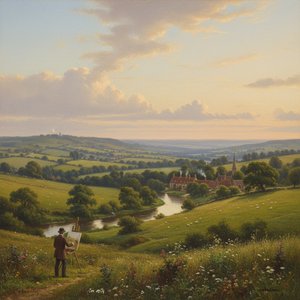
Edward Wilkins Waite: A Victorian Vision of Surrey's Serene Landscapes & Artistic Legacy
Explore the serene landscapes of Edward Wilkins Waite (1854-1924), a prolific Victorian painter celebrated for his depictions of Surrey's countryside. Discover his artistic influences, career highlights & collecting guide.



