In echtem Maßstab anzeigen
 Versenden als Grußkarte
 Teilen
 Details anzeigen
 Leitfaden öffnen

 Herunterladen
 Ähnliche Objekte
 Röntgenaufnahme
 Diashow
 Besucherstatistiken
Peaceable Kingdom (12)


 Mehr anzeigen
Handgefertigte Ölreproduktion
Handgemaltes Ölgemälde auf Leinwand in Ihrer Wunschgröße und mit Rahmen, auf Bestellung von unseren Künstlern angefertigt. ( Zum Druck wechseln Zum digitalen Bild wechseln)




P118B €10

P118H €10

P118W €10

P438Z €10

P508JH €12

P508YH €12

P805H €10

P805Z €10

P919BZ €10

P919G €10

P919XJ €10

P959ZH €10

P968JZ €12

W106C €8

W218G €10

W218JH €8

W218Y €10

W307PJ €10

W316G €10

W316PJ €8

W316Y €10

W398PJ €8

W4111J €10

W500HY €15

W500JH €15

W692G €12

W849H €8

W940BG €15

W953PJ €8




Wählen Sie aus unseren vordefinierten Formaten, die den ursprünglichen Proportionen des Kunstwerks entsprechen.

Geben Sie die Breite und die Höhe an, die Sie für Ihren Rahmen oder Ihre Wand benötigen. Da dieses Werk handgemalt ist, kann der Künstler bei einer anderen Form etwas mehr um das Bild herum malen oder etwas abschneiden – Sie entscheiden. Wir senden Ihnen ein digitales Mockup zur Freigabe, bevor mit dem Malen begonnen wird. Das auf dieser Seite gezeigte Bild stellt nicht das tatsächliche Ergebnis dar – dies tut nur das Mockup.
Nach der Bestellung wird das OriginalUniqueArt.com-Team dem Kunden Anweisungen per E-Mail zusenden und eine Mockup-Vorschau bereitstellen.
Weltweiter Versand () in nur 3 bis 4 Wochen statt der üblichen 5 Wochen. (22 Oktober). Keine Kompromisse bei der Qualität.

Kostenloser weltweiter Expressversand

Hochwertige Leinenleinwand

Vollständiger Versicherungsschutz beim Versand

Zollgebühren-Rückerstattungsgarantie

Garantie für exakte Farbtreue

100-tägiges Rückgaberecht (nur bei Mängeln)

100% Geld-zurück-Garantie

Angebot für Mengenrabatt
 Die Glasoption ist nur für Größen unter 110 cm verfügbar.

Peaceable Kingdom (12)
Reproduktionsmedium
Format der Reproduktion
-


Gesamtpreis
€ 262
A Vision of Eternal Harmony
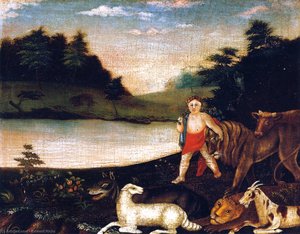
In the quiet, profound depths of Edward Hicks’s 1826 masterpiece, Peaceable Kingdom (12), we encounter more than just a painting; we enter a spiritual sanctuary. This captivating oil on canvas serves as a window into a utopian realm where the boundaries between the wild and the domestic dissolve into a singular, breathtaking peace. At the heart of this composition, a young boy cradles a lion cub with an intimacy that defies nature, standing beside a steady horse in a scene that radiates innocence and safety. The landscape is alive with a gentle congregation of cows, sheep, and birds, all coexisting in a state of grace that feels both otherworldly and deeply grounded in the American pastoral tradition.
The technique employed by Hicks reflects his unique journey as a self-taught artist and Quaker minister. Using oil on canvas, he achieved a rich, vibrant texture that breathes life into every creature depicted. There is a rhythmic quality to the way the animals are arranged, guiding the viewer’s eye through a lush, natural setting framed by soft, verdant trees. The light in the painting does not merely illuminate the subjects; it seems to emanate from within the scene itself, highlighting the symbolic purity of the boy and the cub. For collectors and decorators, this work offers a profound sense of tranquility, making it an exquisite centerpiece for any space seeking to evoke calm, stability, and a connection to the natural world.
Symbolism and the Quaker Spirit
To understand Peaceable Kingdom (12), one must look through the lens of Hicks’s profound religious convictions. As a man shaped by the Quaker principles of simplicity and the "inner light," Hicks utilized his brush to manifest the biblical prophecy of Isaiah, where predators and prey dwell together without fear. The inclusion of the lion cub—a creature typically feared—held so tenderly by a human child, serves as a powerful metaphor for the triumph of peace over violence and the reconciliation of all living things. This is not merely a pastoral landscape; it is a theological statement rendered in pigment.
Every element within the frame contributes to this narrative of universal harmony. The presence of various species, from the heavy-set cattle to the delicate birds, represents a diverse yet unified creation. Even the subtle inclusion of a book in the lower corner invites contemplation on knowledge, faith, and the recorded history of human spiritual evolution. For those looking to adorn their homes with art that carries deep intellectual and emotional weight, this painting provides an endless well of inspiration. It is a testament to the idea that even in a fractured world, the vision of a peaceful, unified existence remains a beautiful and attainable aspiration.
An Enduring Legacy for Modern Interiors
For the discerning interior designer or art enthusiast, a high-quality reproduction of this work offers much more than aesthetic appeal. It brings a sense of historical gravity and narrative depth to a room. The Peaceable Kingdom (12) possesses a timeless quality that transcends era; its soft palette and emotive subject matter complement both classical traditional settings and contemporary spaces that value organic, soulful elements. Whether placed in a sunlit library or a quiet study, the painting acts as a meditative focal point, inviting guests to pause and reflect on the beauty of coexistence.
Owning a piece inspired by Hicks’s vision allows one to curate an environment defined by serenity and grace. The artwork’s ability to bridge the gap between the wildness of nature and the tenderness of human emotion makes it a versatile and impactful choice for any sophisticated collection. It remains a cornerstone of American folk art, reminding us that even centuries after its creation, the dream of a peaceful kingdom continues to resonate with the human heart.
Fragen & Antworten
Wofür wird ein Druck von "Peaceable Kingdom (12)" empfohlen?
Die empfohlene Verwendung für "Peaceable Kingdom (12)" von Edward Hicks ist Conversation. Es kann jedoch auch für andere Zwecke genutzt werden.
Unter welchen Pseudonymen oder Alternativnamen ist Edward Hicks bekannt?
Weitere unter denen Edward Hicks, Schöpfer von „Peaceable Kingdom (12)“, bekannt ist, umfassen Isaac Hicks, Elias Hicks.
Welche Farbe prägt die Komposition von "Peaceable Kingdom (12)" von Edward Hicks?
Die Farbe, die in „Peaceable Kingdom (12)“ am stärksten hervorsticht, ist Phthalo Green (#282638). Die dominante Farbe ist hilfreich, um ein Kunstwerk auf eine Inneneinrichtung abzustimmen.
Biografie des Künstlers
Frühes Leben und Hintergrund
- Geboren: 4. April 1780 in Attleboro (heute Langhorne), Bucks County, Pennsylvania
- Gestorben: 23. August 1849
- Seine Eltern waren Anglikaner, aber er wurde von Matron Elizabeth Twining, einer Quäkerin, aufgezogen. Dies führte ihn schon in jungen Jahren an die quakerischen Glaubensvorstellungen heran.
- Im Alter von dreizehn Jahren begann er eine Lehre bei den Karrenbauern William und Henry Tomlinson und lernte dort Karrenmaltechniken.
- Er verließ die Firma im Jahr 1800, um als unabhängiger Haus- und Karrenmaler zu arbeiten.
Quäkerisches Wirken und künstlerische Entwicklung
- Er wurde 1803 in die Religious Society of Friends aufgenommen und begann regelmäßig an Quäkerversammlungen teilzunehmen.
- Er heiratete Sarah Worstall, ebenfalls eine Quäkerin, und wurde im ganzen Philadelphia ein reisender Prediger.
- Um seine Familie zu unterstützen, erweiterte er seine Malerei um Haushaltsgegenstände, landwirtschaftliche Geräte und Wirtshausschilder.
- Er gab 1815 aufgrund finanzieller Schwierigkeiten kurzzeitig die Zierdekorationsmalerei auf, nahm sie aber 1816 wieder auf.
Künstlerischer Stil und Hauptwerke
- Autodidakt: Hicks war weitgehend autodidaktisch tätig und entwickelte einen einzigartigen Folk-Art-Stil.
- Quäkerische Einflüsse: Seine Arbeit spiegelte die quäkerischen Glaubensvorstellungen vom "Inneren Licht" wider, wobei er persönliche spirituelle Erfahrungen betonte. Dies zeigt sich in seinen einfachen Kompositionen und seinem Fokus auf die Natur.
- Die Friedensreich-Serie: Seine berühmteste Serie umfasst 62 Versionen und stellt eine Vision der Harmonie zwischen Mensch und Tier dar, die Frieden und Koexistenz symbolisiert.
- Bemerkenswerte Gemälde:
- Friedensreich (31) – Beherbergt in der Yale University Art Gallery
- Niagarafälle – Beherbergt im Abby Aldrich Rockefeller Folk Art Center
- George Washington mit seiner Armee, die den Delaware überquert – Ebenfalls beherbergt im Abby Aldrich Rockefeller Folk Art Center
- Friedensreich (34) - Stellt in einem ruhigen Ölgemälde Noahs Arche dar.
- Grab von William Penn in Jordans, England - Eine Darstellung ländlicher englischer Szenerie, die das quäkerische Erbe zeigt.
Vermächtnis und historische Bedeutung
- Folk-Art-Ikone: Edward Hicks gilt als bedeutende Figur der amerikanischen Folk Art, bekannt für seinen unverwechselbaren Stil und seine wiederkehrenden Themen.
- Darstellung quäkerischer Werte: Seine Gemälde geben wertvolle Einblicke in die Glaubensvorstellungen und Werte der Religious Society of Friends im 19. Jahrhundert.
- Einzigartige künstlerische Vision: Hicks verband religiösen Glauben mit künstlerischem Ausdruck und schuf ein Werk, das sowohl optisch ansprechend als auch spirituell bedeutsam ist.
- Fortwährende Wertschätzung: Seine Werke werden in wichtigen Museen ausgestellt und werden weiterhin für ihre historische und künstlerische Bedeutung studiert und geschätzt.

Edward Hicks
1780 - 1849 , Vereinigte Staaten von Amerika
Eckdaten zum Künstler
- Artistic Movement Or Style: Volkskunst
- Date Of Birth: 4. April 1780
- Date Of Death: 23. August 1849
- Full Name: Edward Hicks
- Nationality: Amerikanisch
- Notable Artworks:
- Peaceable Kingdom (31)
- Falls of Niagara
- George Washington Crossing Delaware
- Peaceable Kingdom (34)
- Grave of William Penn
- Place Of Birth (City And Country): Attleboro, USA
Verwandte Artikel
Majestic Lions: Capturing the Power and Soul of the King of Beasts through Art History
Explore the majesty of the King of Beasts through art history. From Baroque drama to Romantic realism, discover how master painters capture the power and soul of lions in exquisite oil reproductions and fine art prints for discerning collectors.
Edward Hopper: Die 25 Meisterwerke des amerikanischen Realismus | OriginalUniqueArt
Entdecken Sie die 25 Meisterwerke von Edward Hopper! Tauchen Sie ein in amerikanische Kunst, Realismus & Isolation. Hochwertige Reproduktionen & Inspiration für Ihr Zuhause bei OriginalUniqueArt.com.

Edward Hicks’ ‘Peaceable Kingdom’: American Folk Art & the Shaping of a National Identity
Explore the profound symbolism & historical context of Edward Hicks’ ‘Peaceable Kingdom.’ Discover how this iconic American folk art masterpiece reflects Quaker values and shaped a nation's identity. Learn more at OriginalUniqueArt.
Edward Wilkins Waite: A Victorian Vision of Surrey's Serene Landscapes & Artistic Legacy
Explore the serene landscapes of Edward Wilkins Waite (1854-1924), a prolific Victorian painter celebrated for his depictions of Surrey's countryside. Discover his artistic influences, career highlights & collecting guide.
Edward Lear: Jenseits der Nonsens-Verse – Landschaft, Illustration und die Poetik der Isolation
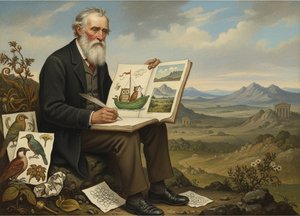
Entdecken Sie das vielschichtige Werk Edward Lear's – jenseits der Nonsens-Verse! Analysieren Sie mit uns seine Landschaftsmalerei, Illustrationen und die Poetik der Isolation im viktorianischen Kontext. Expertenwissen & tiefe Einblicke.