

 Vorschau anzeigen
 Versenden
 Teilen
 Details anzeigen
 Leitfaden

 Herunterladen
 Ähnliche Objekte
 Röntgenaufnahme
 Diashow
 Statistiken
El Grito (The Cry) – left panel distant view


 Weiterlesen
Die auf dieser Seite dargestellten Kunstwerke sind urheberrechtlich geschützt, was bedeutet, dass wir keine identische Reproduktion rechtmäßig erstellen oder verkaufen dürfen. Dieser Schutz wird durch internationale Abkommen wie die Berner Übereinkunft und durch nationale Gesetze, einschließlich derer, die von den US-Urheberrecht – Titel 17.
Diese Methode entspricht vollumfänglich den Urheberrechtsbestimmungen, da sie keine Kopie oder Vervielfältigung des geschützten Kunstwerks darstellt. Stattdessen handelt es sich um eine kreative Neuinterpretation – ein neues Gemälde, das vom Original inspiriert, aber nicht identisch mit ihm ist.
Giclée / Kunstdruck
Giclée- oder Leinwanddruck in Museumsqualität mit schneller Produktion und flexiblen Veredelungsoptionen. ( Handgemalte Reproduktion bestellen Zum digitalen Bild wechseln)




P118B €10

P118H €10

P118W €10

P438Z €10

P508JH €12

P508YH €12

P805H €10

P805Z €10

P919BZ €10

P919G €10

P919XJ €10

P959ZH €10

P968JZ €12

W106C €8

W218G €10

W218JH €8

W218Y €10

W307PJ €10

W316G €10

W316PJ €8

W316Y €10

W398PJ €8

W4111J €10

W500HY €15

W500JH €15

W692G €12

W849H €8

W940BG €15

W953PJ €8




Wählen Sie aus unseren vordefinierten Formaten, die den ursprünglichen Proportionen des Kunstwerks entsprechen.

Geben Sie die benötigte Breite und Höhe an, damit der Druck perfekt in Ihren Rahmen oder an Ihre Wand passt. Ein Druck kann nur beschnitten, aber niemals größer als das Originalbild angefertigt werden; daher verliert ein Format mit anderen Proportionen einen Teil des Bildes. Wir senden Ihnen ein digitales Mockup zur Freigabe, bevor wir den Druck ausführen. Das auf dieser Seite gezeigte Bild zeigt nicht den tatsächlichen Beschnitt – dies ist nur im Mockup ersichtlich.
Weltweiter Versand () innerhalb von 2 Wochen statt der üblichen 4/5 Wochen. (26 Oktober)

Kostenloser weltweiter Expressversand

Hochwertige Leinenleinwand

Umfassender Versicherungsschutz beim Versand

Zollgebühren-Rückerstattungsgarantie

Garantie für exakte Farbtreue

100 Tage Rückgaberecht (nur bei Mängeln)

100% Geld-zurück-Garantie

Mengenrabatt verfügbar
 Die Glasoption ist nur für Größen unter 110 cm verfügbar.

El Grito (The Cry) – left panel distant view
Giclée / Kunstdruck
Format der Reproduktion
-


Endpreis
€ 70
A Window into Chicano Life: The Essence of El Grito
In the sweeping, evocative left panel of El Grito (The Cry), artist Eduardo Carrillo Nava invites us to step onto a bustling city sidewalk, where the rhythm of daily existence unfolds with profound intimacy. This particular view offers a distant perspective on a vibrant urban tableau, capturing a moment in time from 1979 that feels both fleeting and eternal. As we gaze upon the scene, we encounter a tapestry of human movement; pedestrians drift across the frame, some lost in their own thoughts, others engaged in the quiet choreography of street life. The presence of a horse, positioned toward the right, introduces a striking element of vitality and historical resonance, bridging the gap between the modern urban landscape and the deep-rooted pastoral traditions of Mexican heritage.
The composition serves as more than just a depiction of a street; it is a masterful study in atmosphere and social connection. Through his skilled use of perspective, Nava directs the eye through the layers of the crowd, creating a sense of depth that pulls the viewer into the very heart of the community. The painting captures the essence of Chicano life—a delicate balance between the individual journey and the collective experience of the city. For the collector or interior designer, this piece offers a narrative richness that transforms a space, providing a focal point that is both intellectually stimulating and visually soothing.
The Intersection of Surrealism and Heritage
Eduardo Carrillo Nava was a pivotal figure in the Chicano art movement, and his technical approach in El Grito reflects a sophisticated blend of surrealist-inspired landscapes and figurative realism. His brushwork does not merely replicate reality; it interprets it through a lens of cultural memory. The way light interacts with the figures and the architecture suggests a dreamlike quality, where the boundaries between the mundane and the mythic begin to blur. This technique allows the mural to transcend simple documentation, turning a street scene into a symbolic exploration of identity and resilience.
The emotional impact of this work lies in its ability to evoke nostalgia and a sense of belonging. There is a quiet dignity in the way Nava portrays his subjects, treating the everyday motions of city dwellers with the reverence typically reserved for grand historical portraits. For those seeking to adorn a home or gallery with art that carries weight and soul, this reproduction offers an opportunity to possess a fragment of a monumental legacy. It is a piece that speaks of movement, of the "cry" of a people finding their voice, and of the enduring beauty found in the shared spaces of our urban existence.
Fragen & Antworten
In welchem Jahr wurde "El Grito (The Cry) – left panel distant view" von Eduardo Carrillo Nava geschaffen?
"El Grito (The Cry) – left panel distant view" von Eduardo Carrillo Nava entstand im Jahr 1979.
Wann wurde "El Grito (The Cry) – left panel distant view" von Eduardo Carrillo Nava geschaffen und welcher Stil liegt ihm zugrunde?
"El Grito (The Cry) – left panel distant view" entstand im Jahr 1979 als Werk der Chicano Art Movement-Bewegung. Entstehungsjahr und Stilrichtung verankern das Kunstwerk in der Kunstgeschichte.
Aus welcher Epoche stammt "El Grito (The Cry) – left panel distant view" von Eduardo Carrillo Nava?
"El Grito (The Cry) – left panel distant view" stammt aus der Epoche der Modern.
Künstlerbiografie
Frühes Leben und Einflüsse
Eduardo Carrillo Nava, ein mexikanisch-amerikanischer Künstler, wurde am 8. April 1937 in Santa Monica, Kalifornien, USA, geboren. Er verstarb am 14. Juli 1997 in Tijuana, Baja California, Mexiko. Die künstlerische Reise von Carrillo war tief verwurzelt in seinem umfassenden Studium der europäischen und mexikanischen Kunst sowie deren Geschichte.Künstlerische Beiträge
Carrillo ist bekannt für seine Gemälde und Wandmalereien, die nicht nur sein technisches Können eindrucksvoll zur Schau stellten, sondern auch sein kulturelles Erbe widerspiegelten. Als Schlüsselfigur der Chicano-Kunstbewegung spielte er eine entscheidende Rolle bei der Förderung von Chicano/a/x-Künstlern, ihrer Kultur und der Bürgerrechte.- El Grito, Las Tropicanas, Geburt sowie Tod und Regeneration sind einige seiner bemerkenswerten Werke, die seine künstlerische Bandbreite exemplarisch verdeutlichen.
- Sein Kunststil umfasste vom Surrealismus inspirierte Landschaften, die Schnittstelle zwischen mexikanischer Geschichte und Mythologie, figurative Malerei und Porträts, traditionelle Landschaften sowie Stillleben.
- Im Jahr 1982 organisierte er die wegweisende Konferenz Califas: Chicano Art and Culture in California, was seinen Einfluss auf die Kunstwelt weiter festigte.
Vermächtnis und Sammlungen
Carrillos Werk findet sich in verschiedenen Sammlungen wieder, darunter die Colección Andrés Blaisten (Mexiko), die eine vielfältige Auswahl lateinamerikanischer Kunstwerke präsentiert. /de/art/show/art-d3bsg9-de/ bietet weitere Informationen zu dieser Sammlung. Bemerkenswerte Kunstwerke- • Ein Gemälde von Angel Zarraga, ein bedeutendes Stück in der Colección Andrés Blaisten (Mexiko), zeigt Zarragas Meisterschaft der Ölmalerei. /de/art/show/painting-by-angel-zarragahttpsOriginalUniqueArtcomartnsfart-enopen/
- • English Greek Girls Picking Up Pebbles by the Sea, ein Gemälde von Lord Frederic Leighton, ist ein weiteres Highlight der Sammlung. /de/art/list/
Fazit
Der Einfluss von Eduardo Carrillo Nava auf die Kunstwelt ist unbestreitbar. Seine Beiträge zur Chicano-Kunstbewegung und sein umfangreiches Werk inspirieren bis heute Künstler und Kunstliebhaber gleichermaßen. Durch seine Kunst hat er der amerikanischen und mexikanischen Kunstgeschichte ein unvergängliches Vermächtnis hinterlassen.- Entdecken Sie weitere Kunstwerke von Eduardo Carrillo Nava unter [https://OriginalUniqueArt.com/@/eduardo-carrillo-nava](https://OriginalUniqueArt.com/@/eduardo-carrillo-nava)
- Erkunden Sie die Colección Andrés Blaisten (Mexiko) und ihre vielfältige Sammlung lateinamerikanischer Kunstwerke unter /de/art/show/art-d3bsg9-de/

Eduardo Carrillo Nava
1937 - 1997 , Vereinigte Staaten von Amerika
Kurzinfos
- Beeinflusste Künstler:
- Angel Zarraga
- Lord Frederic Leighton
- Bemerkenswerte Werke:
- El Grito
- Las Tropicanas
- Geburt, Tod und Regeneration
- Einfluss Auf Künstler: Chicano/a/x Künstler
- Geburtsdatum: 8. April 1937
- Geburtsort: Santa Monica, USA
- Künstlerische Bewegung: Chicano Kunst, Surrealismus
- Nationalität: Amerikanisch-Mexikaner
- Todatum: 14. Juli 1997
- Vollständiger Name: Eduardo Carrillo Nava
Ähnliche Artikel
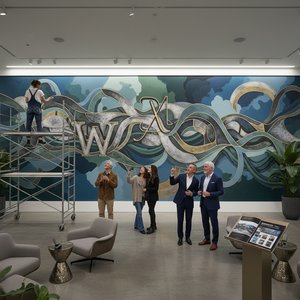
Maßgeschneiderte Wandmalerei: Wie sie Ihre Markenidentität visuell stärkt
Maßgeschneiderte Wandmalereien für Hotels & Gastronomie! Experten-Beratung, hochwertige Materialien & einzigartige Designs. Verleihen Sie Ihrem Raum Persönlichkeit – .
Foyer als Kunstwerk: Wandbilder für einen unvergesslichen ersten Eindruck
Verwandeln Sie Ihr Foyer in ein Kunstwerk! Entdecken Sie exklusive Wandbilder & maßgefertigte Lösungen für einen stilvollen ersten Eindruck. Expertenberatung von .
Wandmalereien als Gestaltungselement: Raumkonzepte durch Kunst und Stil definieren
Entdecken Sie die transformative Kraft von Wandmalereien! Expertenratgeber für Hotellerie & Innenarchitektur. Individuelle Kunstwerke für einzigartige Räume – jetzt informieren!

Von Dschungelmotiven zu Goldblattgeometrie: Die Top Wandmalereitrends für Hotels
Entdecken Sie die neuesten Wandmalereitrends für Hotels! Exklusive Designs, hochwertige Materialien & Expertenberatung von – Ihr Partner für einzigartige Raumgestaltung.

Designers lieben Wandgemälde: So verwandeln sie Räume in stilvolle Rückzugsorte
Entdecken Sie die Welt der Wandmalerei für Hotels & Design! Expertenratgeber zu Materialien, Stilen & individuellen Lösungen. Verwandeln Sie Räume in Kunstwerke – mit .