Zum Druck wechseln
 Weiterlesen







































 Bei Kunstwerken oder Reproduktionen, die an einer Seite größer als 105 cm (ca. 41 Zoll) sind, wird der Rahmen zerlegt als Bausatz geliefert. Diese Methode gewährleistet eine sichere Zustellung und verhindert Schäden während des Transports.


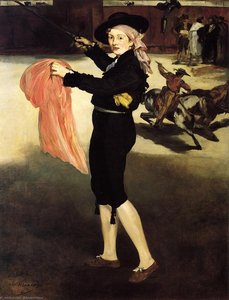
Portrait of Faure as Hamlet
Édouard Manet’s *Portrait of Faure as Hamlet* stands as an arresting testament to the artist's revolutionary spirit and his ability to capture the essence of both artistic innovation and cultural fascination. Painted in 1877 using pastel on paper, this artwork resides at the Hamburger Kunsthalle in Hamburg, Germany, offering viewers a glimpse into a pivotal moment in Impressionist history. More than just a likeness of Jean-Baptiste Faure, a celebrated French baritone known for his interpretations of Shakespearean roles—particularly Hamlet—the painting embodies Manet’s daring exploration of theatrical representation and psychological depth.The Painting's Details
Manet meticulously crafted this portrait with painstaking attention to detail. The pastel medium lends the image a velvety texture and luminous quality, contrasting sharply with the muted tones of the snowy backdrop. Faure is depicted in a formal black suit, holding a sword—a deliberate allusion to Hamlet’s iconic weapon—and gazing intently at the viewer. This gaze conveys an aura of seriousness and contemplation, mirroring the character's internal turmoil. The artist skillfully utilizes chiaroscuro – dramatic contrasts between light and shadow – to sculpt Faure’s form and heighten the emotional impact of the scene. Subtle brushstrokes contribute to a sense of movement and dynamism, capturing not only Faure’s physical presence but also his inner state.Artistic Style and Composition
Manet's stylistic approach aligns perfectly with the burgeoning Impressionist movement, rejecting academic conventions in favor of spontaneity and subjective perception. Unlike traditional portraiture that prioritized idealized beauty, Manet presents Faure as a complex human being grappling with profound emotions. The composition is carefully balanced, drawing the eye towards Faure’s face while subtly incorporating supporting figures—primarily a woman seated beside him—who serve to amplify the drama of the scene. The artist's masterful use of color – predominantly cool blues and whites – reinforces the icy atmosphere and underscores Faure’s isolation. This deliberate stylistic choice reflects Manet’s desire to portray reality as he experienced it, rather than imposing preconceived notions of beauty or grandeur.Historical Context
The painting emerged during a period of significant artistic upheaval in France. The Impressionists challenged the established Salon system and championed a new aesthetic that prioritized capturing fleeting moments of sensory experience. Influenced by artists like Eugène Delacroix and Gustave Courbet, Manet pushed boundaries and questioned accepted standards of representation. *Portrait of Faure as Hamlet* exemplifies this spirit of experimentation and serves as a powerful symbol of the artistic revolution unfolding in Paris during the 1870s. It reflects the broader cultural preoccupation with theater and literature—particularly Shakespeare—which profoundly impacted artistic sensibilities at the time.Relevance and Legacy
Manet’s *Portrait of Faure as Hamlet* continues to resonate with audiences today, prompting contemplation on themes of identity, performance, and psychological complexity. The painting's enduring appeal lies in its ability to convey a profound sense of human emotion—a characteristic that distinguishes it from many earlier portraits. It stands as an exemplar of Impressionist art’s commitment to capturing the immediacy of experience and challenging conventional artistic norms. For those seeking inspiration or desiring to adorn their homes with a piece of art history, reproductions of *Portrait of Faure as Hamlet* offer a captivating glimpse into Manet's visionary genius. Explore more masterpieces by Édouard Manet at OriginalUniqueArt.com – including *The Painter of Animals*, *A Young Girl*, and *Eva Gonzales* – to appreciate the breadth of his artistic vision.Fragen & Antworten
Welches Druckformat wird für "Porträt von Faure als Hamlet" von Édouard Manet empfohlen?
Für „Porträt von Faure als Hamlet“ wird ein Druckformat von Großformatig in der Ausrichtung Hochformat empfohlen.
Ist "Porträt von Faure als Hamlet" insgesamt eher hell oder eher dunkel?
"Porträt von Faure als Hamlet" weist eine Gesamthelligkeit von ausgewogen auf, und die Luminanz beträgt Sanfter Schatten.
Wie lässt sich "Porträt von Faure als Hamlet" in das Gesamtwerk von Édouard Manet einordnen?
"Porträt von Faure als Hamlet" teilt mit anderen Werken von Édouard Manet den Stil der Impressionismus sowie die wiederkehrenden Themen: realismus und impressionismus verschmelzung, theater und literatur als inspirationsquelle, symbolische darstellung von hamlet figurenrolle, manets künstlerischer stil und innovation, gesellschaftliche bedeutung im kontext der zeit, kontrast zwischen dunkelheit und licht, dramatik und ruhe.
 Vorschau anzeigen
 Versenden
 Teilen
 Details anzeigen
 Leitfaden

 Herunterladen
 Ähnliche Objekte
 Röntgenaufnahme
 Diashow
 Q&A
Q&A Statistiken