

 Vorschau anzeigen
 Versenden
 Teilen
 Details anzeigen

 Herunterladen
 Ähnliche Objekte
 Röntgenaufnahme
 Diashow
 Statistiken
Der Philosoph


 Weiterlesen
Handgefertigte Ölreproduktion
Handgemaltes Ölgemälde auf Leinwand in Ihrer Wunschgröße und mit Rahmen, auf Bestellung von unseren Künstlern angefertigt. ( Zu Druck wechseln Zum digitalen Bild wechseln)




P118B $10

P118H $10

P118W $10

P438Z $10

P508JH $12

P508YH $12

P805H $10

P805Z $10

P919BZ $10

P919G $10

P919XJ $10

P959ZH $10

P968JZ $12

W106C $8

W218G $10

W218JH $8

W218Y $10

W307PJ $10

W316G $10

W316PJ $8

W316Y $10

W398PJ $8

W4111J $10

W500HY $15

W500JH $15

W692G $12

W849H $8

W940BG $15

W953PJ $8




Wählen Sie aus unseren vordefinierten Formaten, die den ursprünglichen Proportionen des Kunstwerks entsprechen.

Sie können Ihre eigenen Maße eingeben, um einen bestimmten Rahmen oder Platz auszufüllen. Wenn die gewählte Größe nicht den Proportionen des Originalbildes entspricht, werden wir das Kunstwerk entweder beschneiden oder das Gemälde durch zusätzliche, handgemalte Elemente erweitern. Ein digitales Mockup wird Ihnen zur Genehmigung zugesandt, bevor die Produktion beginnt.
Bitte beachten Sie, dass die Bildschirmvorschau nicht die tatsächliche Beschneidung oder Erweiterung widerspiegelt. Nur das Mockup zeigt die endgültige Komposition exakt an.
Obwohl Sondermaße verfügbar sind, empfehlen wir, eine Größe aus der vordefinierten Liste zu wählen, um die ursprünglichen Proportionen beizubehalten.
Nach der Bestellung wird das OriginalUniqueArt.com-Team dem Kunden Anweisungen per E-Mail zusenden und eine Mockup-Vorschau bereitstellen.
Weltweiter Versand () in nur 3 bis 4 Wochen statt der üblichen 5 Wochen. (12 September). Keine Kompromisse bei der Qualität.

Kostenloser weltweiter Expressversand

Hochwertige Leinenleinwand

Umfassender Versicherungsschutz beim Versand

Zollgebühren-Rückerstattungsgarantie

Garantie für exakte Farbtreue

100-Tage-Rückgaberecht (nur bei Mängeln)

100% Geld-zurück-Garantie

Mengenrabatt verfügbar
 Die Glasoption ist nur für Größen unter 110 cm verfügbar.

Der Philosoph
Art der Reproduktion
Format der Reproduktion
-


Gesamtpreis
$ 300
Édouard Manet’s “Le Philosophe”: A Window into Parisian Contemplation
Édouard Manet's "Le Philosophe" (1867) isn’t merely a portrait; it’s a carefully constructed tableau vivant, a snapshot of late 19th-century Paris imbued with an atmosphere of quiet introspection. The painting immediately draws the viewer in with its stark black and white palette – a deliberate choice that elevates the scene beyond simple representation, lending it a timeless quality reminiscent of early photography or even charcoal sketches. At first glance, the subject appears unremarkable: a man standing on a street corner, hands tucked into his pockets, gazing down as if lost in thought. However, closer observation reveals a wealth of subtle details and symbolic elements that speak to Manet’s innovative approach to depicting modern life.
Manet's technique is characterized by a loose, almost sketch-like quality, eschewing the meticulous detail favored by academic painters of the time. Brushstrokes are visible, creating a sense of immediacy and capturing the fleeting moment. He employs a limited range of tones – primarily grays and whites – to sculpt form and create depth without relying on traditional shading. This deliberate simplification was revolutionary for its era, moving away from the illusionistic realism of earlier painters and embracing a more direct, observational approach. The composition itself is carefully balanced; the man’s solitary figure occupies the center of the frame, while figures in the background—a woman carrying a bowl and another individual further down the street—add context without disrupting the primary focus.
The Symbolism of Solitude
“Le Philosophe” isn't simply about depicting a man on a street; it’s about conveying an emotional state. The figure’s posture – slumped shoulders, downward gaze – immediately communicates a sense of solitude and contemplation. He appears lost in thought, perhaps wrestling with philosophical questions or simply observing the world around him. The setting itself—a bustling Parisian street—contrasts sharply with his internal state, highlighting his isolation. The bowl near the bottom center could represent nourishment for the mind, suggesting that the philosopher’s journey is one of intellectual sustenance.
Manet was deeply interested in capturing the psychological realities of modern life, and this painting exemplifies his ability to do so. He wasn't simply recording a scene; he was attempting to evoke an atmosphere—a feeling of quiet melancholy and profound reflection. The lack of vibrant color further enhances this mood, creating a sense of detachment and emphasizing the subject’s internal world.
A Bridge Between Realism and Impressionism
“Le Philosophe” stands as a pivotal work in Manet's artistic development, bridging the gap between Realism and Impressionism. While rooted in the observational techniques of Realism—his focus on contemporary life and rejection of idealized forms—it also anticipates the loose brushwork and emphasis on light and atmosphere characteristic of Impressionism. Manet’s use of stark contrasts and simplified forms paved the way for later artists to explore new ways of representing the world around them.
The painting's initial reception was mixed, as with many of Manet’s works. Critics were initially perplexed by his unconventional style and subject matter, struggling to reconcile it with established artistic conventions. However, over time, “Le Philosophe” has come to be recognized as a masterpiece—a poignant meditation on the human condition and a testament to Manet's groundbreaking vision.
Bringing "Le Philosophe" Home
OriginalUniqueArt offers meticulously hand-painted reproductions of Édouard Manet’s “Le Philosophe,” allowing you to experience this iconic artwork in stunning detail. Our skilled artists faithfully recreate Manet’s unique style and atmosphere, ensuring that your reproduction captures the painting's emotional depth and artistic brilliance. Whether displayed as a statement piece in your living room or a thoughtful addition to your study, a OriginalUniqueArt reproduction of “Le Philosophe” will serve as a constant reminder of Manet’s legacy and his profound insights into the complexities of human experience.
Über den Künstler
frühes Leben und Karriere
Édouard Manet, ein französischer modernistischer Maler, wurde am 23. Januar 1832 in Paris geboren. Er widersetzte sich seinen bürgerlichen Wurzeln und einem vorgezeichneten Seekriegspfad und etablierte sich als mutiger französischer Modernist, dessen Leinwände die Lebendigkeit des 19. Jahrhunderts einfingen. Er wird weithin für seine Rolle bei der Pionierarbeit des Impressionismus gelobt, der die Kunst von der Malerei in unbekannte Gebiete lenkte.Bekannte Werke
Manets frühe Meisterwerke, Das Picknick auf der Wiese (Le déjeuner sur l'herbe) (1863) und Olympia (1865), waren radikal, stellten künstlerische Normen in Frage und lösten Empörung bei Traditionalisten aus. Diese provokanten Werke wurden von fortschrittlichen Kollegen anerkannt und säten die Saat des Impressionismus. * Das Picknick auf der Wiese (Le déjeuner sur l'herbe) (1863) - ein Gemälde, das sowohl bei Kritikern als auch bei der Kunstakademie für Kontroversen sorgte. * Olympia (1865) – ein Werk, das aufgrund seiner Darstellung einer nackten weißen Frau in Begleitung einer schwarzen Dienstmädchen große Aufregung auslöste.Museen und Sammlungen
Manets Werke befinden sich in verschiedenen Museen auf der ganzen Welt, darunter: * Musée d'Orsay (Paris, Frankreich) – beherbergt eine umfangreiche Sammlung von Manets Gemälden, darunter Olympia. * Museum of Fine Arts (Boston, USA) – zeigt Manets Porträt von Victorine Meurent, ein bemerkenswertes Werk seines Oeuvres.Vermächtnis und Einfluss
Manets innovativer Stil, der durch breite, schnelle Pinselstriche, Studiobeleuchtung und geringe Tiefenwirkung gekennzeichnet ist, hat zukünftige Maler maßgeblich beeinflusst. Sein Vermächtnis kann in den Werken zahlreicher Künstler gesehen werden, die auf seinen Füßen folgen.- Impressionismus: Seine Pionierarbeit in diesem Stil hat ihn zu einer bekannten Figur unter Kunstliebhabern gemacht.
- Realismus: Seine Ablehnung traditioneller realistischer Ansätze ebnete den Weg für eine neue Generation von Künstlern.
- Moderne Kunst: Manets Beiträge zur Entwicklung der modernen Kunst sind unbestreitbar und festigen seinen Platz in den Annalen der Kunstgeschichte.
Weitere Literatur und Erkundung
* Entdecken Sie mehr über das Leben und Werk von Édouard Manet auf OriginalUniqueArt. * Erkunden Sie die Musée d'Orsay Sammlung, die eine umfangreiche Auswahl von Manets Gemälden, darunter Olympia, auf OriginalUniqueArt’s Museum Seite bietet.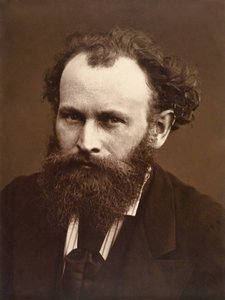
Édouard Manet
1832 - 1883 , Frankreich
Kurzinfos
- Beeinflusste Künstler:
- Claude Monet
- Pierre-Auguste Renoir
- Edgar Degas
- Bemerkenswerte Werke:
- Le Déjeuner sur l'herbe
- Olympia
- A Bar at the Folies-Bergère
- Einflussreiche Künstler:
- Caravaggio
- Diego Velázquez
- Gustave Courbet
- Geburtsdatum: 23. Januar 1832
- Geburtsort: Paris, Frankreich
- Künstlerische Richtung: Impressionismus, Realismus
- Nationalität: Französisch
- Todatum: 1883
- Vollständiger Name: Édouard Manet
Ähnliche Artikel

Impressionismus Meisterwerke: Die Top 10 Kunstwerke für Ihr Zuhause | OriginalUniqueArt
Entdecken Sie die Top 10 Meisterwerke des Impressionismus! Von Monet bis Renoir – erfahren Sie die Geschichten hinter berühmten Gemälden, Techniken & Farben. Hochwertige Kunstdrucke auf OriginalUniqueArt.com.
Impressionismus: Die 10 Meisterwerke, die eine Kunstbewegung prägten |
Entdecken Sie die 10 Meisterwerke des Impressionismus! Von Monet bis Renoir – erfahren Sie die Geschichten hinter berühmten Gemälden & ihre einzigartigen Techniken. Kunstdrucke in Museumsqualiät auf .

10 Meisterwerke des Romantischen Realismus: Wenn Emotion auf Wahrheit trifft
Entdecken Sie 10 Meisterwerke des Romantischen Realismus. Erleben Sie die emotionale Tiefe von Künstlern wie Constable und Friedrich – perfekt als Inspiration für Ihre Kunstsammlung oder Wandgestaltung. Finden Sie museale Reproduktionen auf OriginalUniqueArt.com.

Impressionistic Realism's Finest: 10 Masterpieces for Your Home | OriginalUniqueArt
Journey through Impressionistic Realism with 10 iconic masterpieces by Monet, Renoir & Van Gogh. Explore art history, techniques & find museum-quality reproductions for your home at OriginalUniqueArt.com. Discover all masterpieces online!
Édouard Manet: Die 25 Meisterwerke des Impressionismus für Ihr Zuhause | OriginalUniqueArt
Entdecken Sie die 25 Meisterwerke von Édouard Manet! Tauchen Sie ein in Impressionismus, Pariser Leben & revolutionäre Kunst. Hochwertige Reproduktionen für Ihr Zuhause – jetzt auf OriginalUniqueArt.com!


