
 Vorschau anzeigen
 Versenden
 Teilen
 Details anzeigen

 Herunterladen
 Ähnliche Objekte
 Röntgenaufnahme
 Diashow
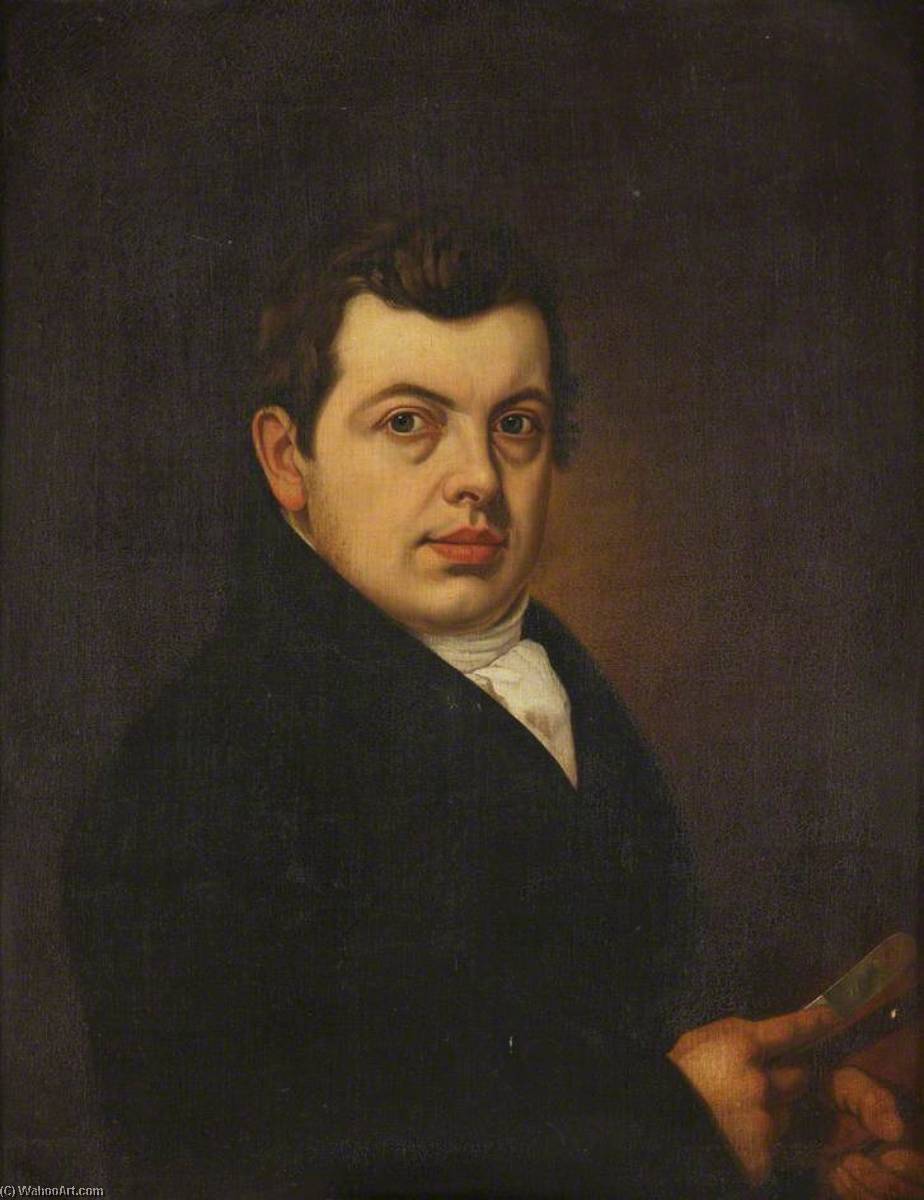
Self Portrait
 1827
1827 80.0 x 66.0 cm
 Weiterlesen
Handgefertigte Ölreproduktion
Handgemaltes Ölgemälde auf Leinwand in Ihrer Wunschgröße und mit Rahmen, auf Bestellung von unseren Künstlern angefertigt. ( Druck bestellen Bild kaufen)




































Wählen Sie aus unseren vordefinierten Formaten, die den ursprünglichen Proportionen des Kunstwerks entsprechen.

Sie können Ihre eigenen Maße eingeben, um einen bestimmten Rahmen oder Platz auszufüllen. Wenn die gewählte Größe nicht den Proportionen des Originalbildes entspricht, werden wir das Kunstwerk entweder beschneiden oder das Gemälde durch zusätzliche, handgemalte Elemente erweitern. Ein digitales Mockup wird Ihnen zur Genehmigung zugesandt, bevor die Produktion beginnt.
Bitte beachten Sie, dass die Bildschirmvorschau nicht die tatsächliche Beschneidung oder Erweiterung widerspiegelt. Nur das Mockup zeigt die endgültige Komposition exakt an.
Obwohl Sondermaße verfügbar sind, empfehlen wir, eine Größe aus der vordefinierten Liste zu wählen, um die ursprünglichen Proportionen beizubehalten.
Nach der Bestellung wird das OriginalUniqueArt.com-Team dem Kunden Anweisungen per E-Mail zusenden und eine Mockup-Vorschau bereitstellen.
Weltweiter Versand () in nur 3 bis 4 Wochen statt der üblichen 5 Wochen. (30 August). Keine Kompromisse bei der Qualität.

Kostenloser weltweiter Expressversand

Hochwertige Leinenleinwand

Umfassender Versicherungsschutz beim Versand

Zollgebühren-Rückerstattungsgarantie

Garantie für exakte Farbtreue

60 Tage Rückgaberecht (nur bei Mängeln)

100% Geld-zurück-Garantie

Mengenrabatt verfügbar
 Die Glasoption ist nur für Größen unter 110 cm verfügbar.

Self Portrait
Art der Reproduktion
Format der Reproduktion
-


Gesamtpreis
$ 300
Über den Künstler
The Quiet Observer: Edmund Ward Gill and the English Landscape
Edmund Ward Gill (1794–1868) was an artist whose work serves as a profound, intimate window into the soul of nineteenth-century British life. While his name may not command the thunderous headlines reserved for the giants of the Romantic era, his canvases possess a quietly assured grace that captures the subtle textures of both person and place. Born in London, Gill’s artistic foundation was built upon the rigorous discipline of traditional methods. His early journey was defined by a deliberate apprenticeship under the established portrait painter Thomas Busby, a formative period that instilled in him a meticulous attention to detail and a reverence for capturing the true essence of his subjects. This technical grounding would later become the hallmark of his most celebrated works, ranging from his deeply personal self-portraits to his dignified depictions of prominent historical figures such as Sir Charles Napier.
As his career matured, Gill’s artistic spirit began to drift away from the formal constraints of purely academic portraiture, drawn instead by the burgeoning influence of the Romantic movement. This era, which celebrated the sublime beauty of nature and the individual's emotional connection to the wilder world, provided the catalyst for Gill to explore the expansive English countryside. His formative years in Devon played a pivotal role in this evolution; surrounded by dramatic coastlines and rolling hills, he developed an unparalleled sensitivity to the interplay of light, shadow, and atmosphere. He did not merely seek to document a view, but rather to convey a palpable mood—a sense of connection to something much larger than oneself. This is most exquisitely realized in his many depictions of the River Dart, where he masterfully captured the river's shifting character, from the tranquil, silver stillness of dawn to the turbulent, energetic rush of an approaching storm.
A Legacy of Rural Harmony and Animal Portraiture
Beyond the sweeping vistas of the English landscape, Gill found immense beauty in the humble, rhythmic scenes of rural existence. He possessed a rare ability to elevate the everyday, finding profound harmony in the quiet corners of farm life. His work often focused on the peaceful coexistence of humans and animals, characterized by a warmth that evokes a sense of comfort and nostalgia. One of his most striking achievements in this vein is his depiction of livestock, such as his celebrated Hereford Cow. In such works, Gill utilizes a rich palette of warm colors to create a sense of coziness within the barnyard setting. He meticulously renders the texture of hay and the soft presence of animals, often surrounding them with smaller elements like chickens to add a touch of natural dynamism to an otherwise tranquil scene.
The technical brilliance of his later works lies in this ability to balance realism with emotion. Whether he was painting a detailed portrait of W.W. Gill or the dignified Thomas Andrew Knight, his brushwork remained rooted in the precision learned from Busby, yet infused with the atmospheric depth inspired by the natural world. His legacy is not merely found in the subjects he chose, but in the way he invited the viewer to slow down and observe the quiet dignity of the world around them. Through his eyes, the English landscape became more than just scenery; it became a living, breathing entity, captured with a tenderness that continues to resonate with those who seek beauty in the understated and the authentic.

edmund ward gill
1794 - 1868
Kurzinfos
- Artistic Movement Or Style: Portraiture, Dog Art
- Artists Or Movements Influenced By This Artist: ['Conservative Art']
- Artists Who Influenced This Artist: ['David Cox']
- Date Of Birth: 1794
- Date Of Death: 1868
- Full Name: Edmund Ward Gill
- Nationality: British
- Notable Artworks:
- PORTRAIT OF SIR CHARLES NAPIER
- A HOUND BY A KENNEL
- On the Lledr, North Wales

