Menü
Kostenlose Kunstberatung
Vorschau anzeigenVorschau anzeigen In AR erlebenIn AR erleben Druck bestellen Druck bestellenBild kaufen Bild kaufen VersendenVersenden
Details anzeigenDetails anzeigen Zu Favoriten hinzufügen Zu Favoriten hinzufügen HerunterladenHerunterladen Ähnliche ObjekteÄhnliche Objekte RöntgenaufnahmeRöntgenaufnahme DiashowDiashow

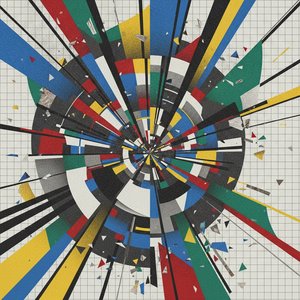
Thomson No. 3 (Sunset Bay)

Explore Douglas Coupland’s ‘Thomson No. 3 (Sunset Bay)’ – a geometric abstraction reimagining Canadian landscapes. Inspired by the Group of Seven, this digital artwork questions national identity.

Douglas Coupland: Kanadischer Autor & Künstler, der Gen X, digitale Kultur & moderne Themen erkundet. Bekannt für QR-Code-Kunst, Skulpturen & provokante Werke weltweit.

Handgefertigte Ölreproduktion

Handgemaltes Ölgemälde auf Leinwand in Ihrer Wunschgröße und mit Rahmen, auf Bestellung von unseren Künstlern angefertigt. (Druck bestellen Druck bestellenBild kaufen Bild kaufen)

P118B $10
P118H $10
P118W $10
P438Z $10
P508JH $12
P508YH $12
P805H $10
P805Z $10
P919BZ $10
P919G $10
P919XJ $10
P959ZH $10
P968JZ $12
W106C $8
W218G $10
W218JH $8
W218Y $10
W307PJ $10
W316G $10
W316PJ $8
W316Y $10
W398PJ $8
W4111J $10
W500HY $15
W500JH $15
W692G $12
W849H $8
W940BG $15
W953PJ $8

Standard
custom
CM
INCH

Wählen Sie aus unseren vordefinierten Formaten, die den ursprünglichen Proportionen des Kunstwerks entsprechen.

Breite
Höhe

Sie können Ihre eigenen Maße eingeben, um einen bestimmten Rahmen oder Platz auszufüllen. Wenn die gewählte Größe nicht den Proportionen des Originalbildes entspricht, werden wir das Kunstwerk entweder beschneiden oder das Gemälde durch zusätzliche, handgemalte Elemente erweitern. Ein digitales Mockup wird Ihnen zur Genehmigung zugesandt, bevor die Produktion beginnt.
Bitte beachten Sie, dass die Bildschirmvorschau nicht die tatsächliche Beschneidung oder Erweiterung widerspiegelt. Nur das Mockup zeigt die endgültige Komposition exakt an.
Obwohl Sondermaße verfügbar sind, empfehlen wir, eine Größe aus der vordefinierten Liste zu wählen, um die ursprünglichen Proportionen beizubehalten.

Beispiele für Anpassungsmöglichkeiten: Gesicht durch Kundenfoto ersetzen; Haustier hinzufügen (z. B. Katze durch Hund ersetzen); eine versteckte Nachricht im Hintergrund einfügen; Hintergrundlandschaft oder -elemente ändern.
Nach der Bestellung wird das OriginalUniqueArt.com-Team dem Kunden Anweisungen per E-Mail zusenden und eine Mockup-Vorschau bereitstellen.

Weltweiter Versand () in nur 3 bis 4 Wochen statt der üblichen 5 Wochen. (18 August). Keine Kompromisse bei der Qualität.

why_choose_icon
Kostenloser weltweiter Expressversand
why_choose_icon
Hochwertige Leinenleinwand
why_choose_icon
Umfassender Versicherungsschutz beim Versand
why_choose_icon
Zollgebühren-Rückerstattungsgarantie
why_choose_icon
Garantie für exakte Farbtreue
why_choose_icon
60 Tage Rückgaberecht (nur bei Mängeln)
why_choose_icon
100% Geld-zurück-Garantie
why_choose_icon
Mengenrabatt verfügbar

Gesamtpreis

$ 300

reproduction

Thomson No. 3 (Sunset Bay)

Art der Reproduktion

Format der Reproduktion

-

Gesamtpreis

$ 300

Eckdaten

  • Location: WahooArt.com
  • Notable elements or techniques: Geometric shapes, color blocks
  • Subject or theme: Canadian landscape
  • Artist: Douglas Coupland
  • Influences:
    • Emily Carr
    • Group of Seven
  • Medium: pigment print on watercolour paper
  • Dimensions: 79 x 58 cm

Kunst-Quiz

Jede Frage hat nur eine richtige Antwort.

Frage 1:
What artistic movement is most closely associated with Douglas Coupland’s ‘Thomson No. 3 (Sunset Bay)’?
Frage 2:
The artwork’s use of flat planes of color and angular shapes is most reminiscent of which group of Canadian artists?
Frage 3:
What is a key theme explored through Coupland’s reimagining of Canadian landscapes?
Frage 4:
What material is primarily used to create Douglas Coupland's artwork?
Frage 5:
Tom Thomson, the inspiration for this piece, is known for his depictions of:

Beschreibung des Kunstwerks

The Genesis of a Fragmented Vision

Douglas Coupland’s “Thomson No. 3 (Sunset Bay)” isn't merely a depiction of a sunset over rolling hills; it’s an interrogation, a deliberate dismantling and reimagining of the very notion of ‘Canadianness.’ Born from a digital alchemy – a process of meticulously reducing iconic landscapes to their most fundamental geometric components – this artwork invites us to consider what remains when the romanticism of nature is stripped bare. Coupland began his exploration with degraded digital images of masterpieces by Emily Carr, the Group of Seven, and Tom Thomson, artists deeply intertwined with the formation of Canada’s visual identity. He then employed a unique, almost architectural language, breaking down these familiar vistas into a series of angular planes and bold blocks of color, creating an effect both strikingly modern and profoundly nostalgic.

The work's foundation lies in the legacy of Tom Thomson, a tragically short-lived artist whose evocative depictions of Ontario’s wilderness captured the spirit of a nascent nation. Coupland’s choice to reference Thomson is particularly potent; the painter’s romanticized portrayal of nature – his emphasis on light, color, and the sublime beauty of the Canadian landscape – provides a crucial counterpoint to the geometric austerity of Coupland's approach. Coupland isn’t simply replicating these scenes; he’s using them as a springboard for a commentary on how we perceive and represent our national identity in the 21st century.

Deconstructing the Sublime: A Geometric Language

Technically, “Thomson No. 3 (Sunset Bay)” is a masterful example of digital painting, executed with an almost clinical precision. Coupland’s process involved manipulating these images through sophisticated software, reducing them to their essential shapes and colors. The result is a flattened, abstracted landscape where the familiar forms of hills and sky are rendered as interlocking triangles and polygons. This deliberate simplification isn't intended to diminish the beauty of the original scenes; rather, it forces us to reconsider how we experience them. The absence of traditional perspective creates a sense of detachment, inviting the viewer to actively engage with the composition and interpret its meaning.

Coupland’s use of color is equally significant. The palette – dominated by warm oranges, yellows, and reds – evokes the drama of a sunset, yet these colors are presented in a deliberately flat, almost schematic manner. This contrasts sharply with the nuanced gradations of light and shadow found in traditional landscape paintings. The effect is both visually arresting and subtly unsettling, suggesting that even our most cherished memories and experiences can be reduced to their basic components.

Symbolism and the Shifting Landscape of Identity

Beyond its purely formal qualities, “Thomson No. 3 (Sunset Bay)” carries a potent symbolic weight. By referencing both Tom Thomson and the Group of Seven – two pivotal figures in Canadian art history – Coupland raises questions about how we define ‘Canadianness’ today. The artwork suggests that this identity is no longer solely rooted in a romanticized connection with nature, but rather shaped by contemporary tools and perspectives. The geometric abstraction can be interpreted as a metaphor for the fragmented and increasingly mediated reality of modern life.

Furthermore, Coupland's choice to utilize degraded digital images adds another layer of meaning. These aren’t pristine reproductions; they are remnants of a bygone era, hinting at the ephemeral nature of memory and representation. The artwork becomes a meditation on how our understanding of the past is constantly being reshaped by technology and cultural shifts. The title itself – “Thomson No. 3 (Sunset Bay)” – subtly underscores this process of deconstruction and reinterpretation.

A Contemporary Masterpiece: Reproduction and Reflection

“Thomson No. 3 (Sunset Bay)” is a compelling work that transcends the boundaries between art history, digital technology, and cultural commentary. Its striking visual impact, combined with its layered symbolism, makes it a significant addition to Coupland’s body of work. A high-quality reproduction captures much of the original's power, offering an accessible way to engage with this thought-provoking piece. Consider framing this artwork in a contemporary setting – its bold geometric forms will complement a range of interior design styles, sparking conversation and inviting contemplation about the nature of Canadian identity.


Über den Künstler

Douglas Coupland: Eine Biografie

  • Geboren: Vancouver, Kanada (30. Dezember 1961)
  • Herkunft: OriginalUniqueArt
  • Status: Lebt

Frühes Leben und literarischer Durchbruch

  • Der Werdegang von Douglas Coupland begann am 30. Dezember 1961 in Vancouver, Kanada. Sein frühes Leben prägte seine scharfen Beobachtungen der zeitgenössischen Kultur, die später sein Werk definieren sollten.
  • Er erlangte weitreichende Anerkennung mit der Veröffentlichung seines Debütromans "Generation X: Geschichten für eine beschleunigte Kultur" im Jahr 1991. Dieses bahnbrechende Werk fand bei einer Generation großen Anklang, die mit Fragen der Identität und des Zwecks in einer sich schnell verändernden Welt ringt.
  • Der Roman popularisierte Begriffe wie "Generation X" und "McJob", was Couplands Position als Kulturkommentator festigte und den Zeitgeist der Ära einfing.

Entwicklung als Künstler und Designer

  • Über seinen literarischen Erfolg hinaus hat Coupland eine vielfältige künstlerische Praxis entwickelt, die visuelle Kunst und Design umfasst. Er hat 13 Romane, zwei Kurzgeschichtensammlungen, sieben Sachbücher und zahlreiche Drehbücher für Film und Fernsehen verfasst.
  • Seine visuellen Werke wurden in renommierten Einrichtungen wie der Vancouver Art Gallery und der McMichael Canadian Art Collection ausgestellt.
  • Couplands künstlerische Erkundung erstreckt sich auf innovative Medien wie QR-Codes, die er in seine Gemälde integriert, um versteckte Botschaften preiszugeben, wenn sie gescannt werden – wodurch Abstraktion mit Funktionalität verschmilzt.

Wichtige künstlerische Themen und bemerkenswerte Werke

  • QR-Code-Serie: Couplands Serie von Gemälden, die QR-Codes enthalten, veranschaulicht seinen einzigartigen Ansatz, Technologie und Kunst zu verbinden, um prägnante Kommentare abzugeben.
  • Dead Grads-Serie: Diese ergreifende Reihe dient als Hommage an junge Menschen, deren Leben tragisch verkürzt wurden, wobei Titel wie "Gun", "Car Crash" und "Overdose" eine tiefe Reflexion hervorrufen.
  • Silver Boogeyman: Ein auffälliges Werk, das beim Betrachten durch ein Smartphone das Gesicht von Osama bin Laden enthüllt, was Couplands Fähigkeit demonstriert, zum Nachdenken anzuregen und die Wahrnehmung herauszufordern.
  • The Ice Storm: Eine monumentale Stahlskulptur, die kanadische Identität und Fragilität widerspiegelt und seine Erkundung nationaler Themen zeigt.
  • God: Eine Mixed-Media-Collage mit symbolischen Elementen wie "Lord Jim" und einem geometrischen 'D', die seine Schichttechniken und Designfähigkeiten demonstriert.

Anerkennung und Vermächtnis

  • Couplands Beiträge zur Literatur und Kunst wurden weithin anerkannt, was ihm den Titel Officer of the Order of Canada und eine Mitgliedschaft in der Order of British Columbia einbrachte.
  • Seine Arbeit findet weiterhin Anklang beim Publikum auf der ganzen Welt und regt den Dialog über zeitgenössische Kultur, Technologie und gesellschaftliche Fragen an.
  • Er bleibt eine bedeutende Figur in den kanadischen Künsten und Briefen, bekannt für seine aufschlussreichen Beobachtungen und innovative künstlerische Ausdrucksformen.
Douglas Coupland

Douglas Coupland

1961 - , Kanada

Kurzinfos

  • Artistic Movement Or Style: Zeitgenössische Kunst, Pop Art
  • Date Of Birth: 30. Dezember 1961
  • Full Name: Douglas Coupland
  • Nationality: Kanadisch
  • Notable Artworks:
    • Jumbo Boogeyman in the Sky...
    • Silver Boogeyman
    • God
    • The Ice Storm
    • The Poet
    • Thomson No. 5 (Yellow Sunset)
  • Place Of Birth (City And Country): Vancouver, Kanada
Entdecken Sie Kunstwerke, die nach Themen, Stilen und Merkmalen sortiert sind.